The best family-friendly hikes and walks around Baginton
4.5
(960)
8,088
hikers
491
hikes
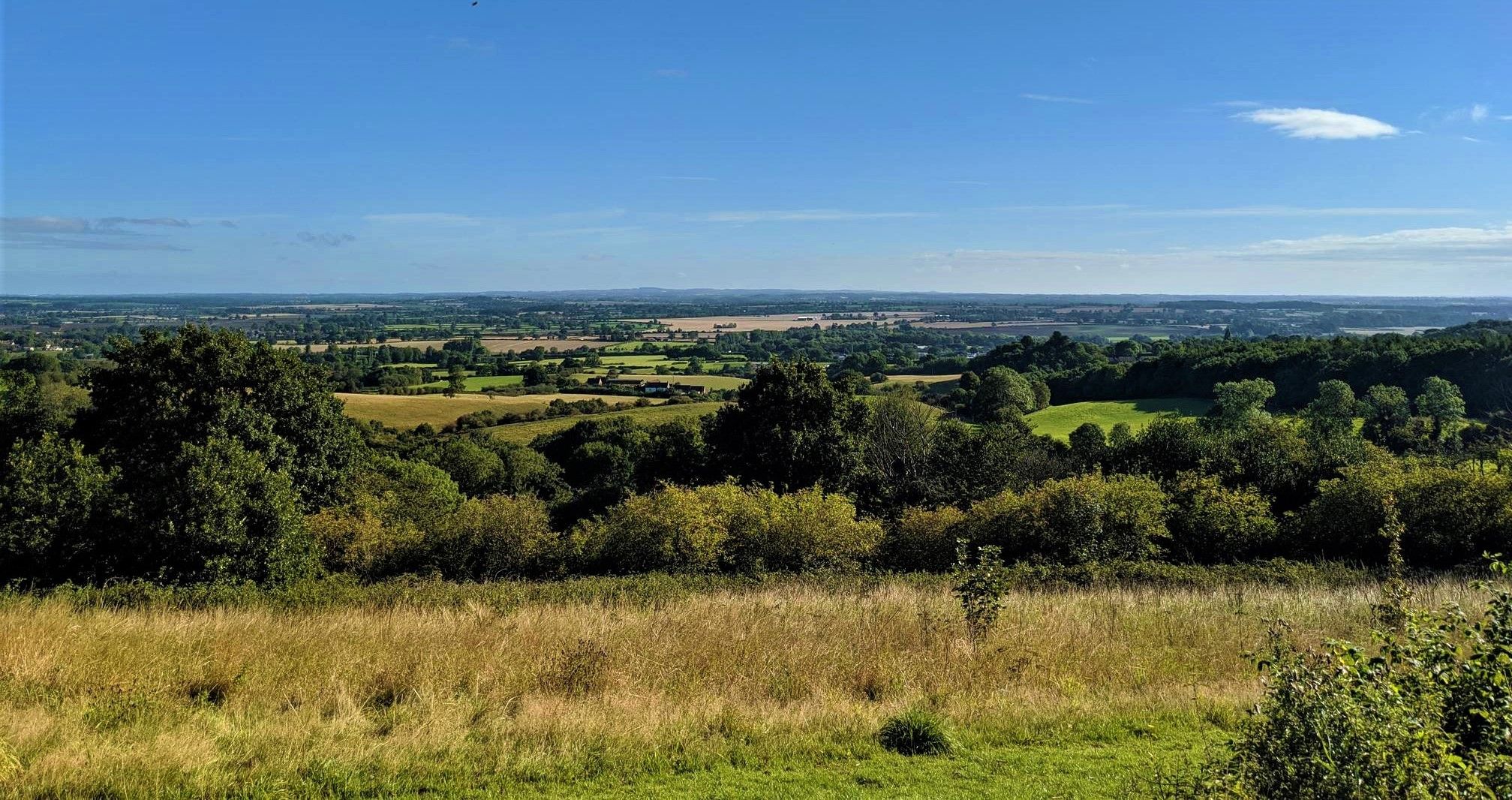
Family friendly hiking trails around Baginton are characterized by gentle, rolling landscapes and generally flat terrain, making them suitable for various fitness levels. The region features meandering riverside paths along the River Sowe and River Leam, expansive open fields, and accessible woodlands. Natural highlights include the Leam Valley Local Nature Reserve, which offers diverse habitats for wildlife. Elevation changes are minimal, providing many easy hiking opportunities.
Best family friendly hiking trails around Baginton
- The most popular family friendly hiking route…
Last updated: July 11, 2026
5.0
(2)
11
hikers
8.36km
02:10
50m
50m
Moderate hike. Good fitness required. Easily-accessible paths. Suitable for all skill levels.
6
hikers
Easy hike. Great for any fitness level. Easily-accessible paths. Suitable for all skill levels.
1
hikers
Moderate hike. Good fitness required. Easily-accessible paths. Suitable for all skill levels.
Get access to more routes and recommendations from other explorers.
Sign up for free
Already have an account?
Our route recommendations are based on thousands of hikes, rides, and runs completed by other people on komoot.
Start today with a free account
Your next adventure awaits.
Login or Signup
Popular around Baginton
Other adventures around Baginton

Tips from the Community


If you have an interest in old churches you will like it very much.
0
0
Should have gone anticlockwise so as to get the streets out of the way first. The detour around HS2 site was a pain as not clearly sign posted. Apart from that a good walk.
0
0

The primary structure of St. Giles Parish Church dates back to the 13th and 14th centuries, while the chapel's origins can be traced back to a period prior to 1153. In the church, you'll come across a pair of "green men" that hail from the 13th century, a Norman font, and stained glass created by Kempe. Additionally, the medieval tower houses a set of six bells.
1
0
St John the Baptist Church stands on a plateau 30m above the River Sowe. It is first mentioned in the reign of Henry II (1154-1189) as a chapel attached to the church at Stoneleigh. Nothing of this chapel remains and the present church was built in the 13th century. In 1285 the first parish priest, Thomas de Dunton, was appointed by the Prior of Kenilworth. The story of the church revolves around 3 families, who held the manor (Ensors, Herthills and Bagots), plus the Bromleys of Baginton Hall. The church is now part of a combined benefice with patrons the Bishop of Coventry and Lord Leigh.
1
0
The Norman Church of St Mary the Virgin across Stoneleigh Meadows was created by the villagers into a Trust for the public in 1982. The Domesday Book of 1086 mentions two priests at Stoneleigh, but nothing about the church. Any building was probably of wood and rebuilt in red sandstone during the 12th century, representing over 800 years of births, marriages and deaths. Many of the old village names are on the headstones in the churchyard and have been researched by the Stoneleigh History Society.
1
0

The church of ST. GILES is situated in a cul-de-sac at the western end of the village on the north side of the LeamingtonWolston road. It has a small churchyard. The church consists of chancel, nave, west tower, vestry, and south porch. The church was built late in the 13th century, when it consisted of chancel and nave. The tower was added early in the 14th century and the top stage late in the same century. The only evidence of an earlier church is the 12th-century font in the tower. A modern vestry and boiler-house have been built on the north side. The 13th-century church is built with a dark red sandstone in roughly coursed rubble with ashlar dressings; for the later work a lighter coloured stone was used. The roofs are modern, covered with tiles. The east gable wall of the chancel has been completely rebuilt, with twin buttresses, in a light-coloured sandstone. It has a three-light tracery window with a hood-moulding. The south side has three late-13thcentury single-light windows with pointed arches of two splayed orders; a splayed string-course runs at sill level, and below the westernmost window is a blocked low-side chamfered window with a flat head, the sill 1 ft. 9 in. above ground. (fn. 42) The north side is similar but with only two windows; a third has probably been built up. It has a tiled roof finishing on a splayed eavescourse, and a plinth of one splay. The south wall of the nave has two single-light windows with pointed arches of two splayed orders, and towards the east another with two orders of wave-mouldings and a hood-mould. The string-course continues from the chancel and is carried round twin buttresses at its west end; the east buttress is modern. The 13th-century south door has a richly moulded pointed arch, the moulding continued down the jambs to a square stop of modern cement. It has a label-moulding with both stops broken off. Outside this door is a modern brick porch with a tiled roof; the roof timbers are re-used from elsewhere and have the initials IB: PA: C: W and the date 1616. On the north side the string-and eaves-courses carry on from the chancel, and the string is taken across a large buttress with a gabled head and twin buttresses at the west end There are two single-light windows corresponding in detail with the western on the south side. The early14th-century north doorway has a pointed arch with a single wave-moulding continued down the jambs and a hood-moulding with mask stops. Above, there is a modern triangular window enclosing a cusped circle. At the east end, overlapping the chancel, is a modern vestry built of sandstone ashlar. The tower rises in four stages, unmarked by string-courses, but with a splayed offset for the later top stage. There are twin buttresses in three stages at the north-east and south-west angles, which only reach to the top of the first stage. On the west side a battered brick base has been built between the buttresses, and it extends to the height of the second stage of the buttresses. There are single lights with pointed arches of two splayed orders to the second and third stages, except on the north side, which has one to the third stage only. On the south side there is a similar modern window to the lower stage. The wall is built of light-coloured sandstone ashlar, patched with red bricks, and the upper stages of the buttresses at the south-west angle are rebuilt with red brick. The top stage is built of a mixture of red and light-coloured sandstone ashlar, with a plain parapet and crocketed pinnacles at the angles. On each face is a tracery window of two trefoil lights, of two splayed orders, with four-centred arches and hood-mouldings with grotesque head stops. On the east face there is a roof line of steep pitch with a clock-face above. The chancel (25 ft. 6 in. by 18 ft. 3 in.) has a modern hammer-beam roof resting on stone corbels, and a modern tiled floor. The window recesses have widesplayed reveals and pointed arches with stopped hollow splays, and at the sill level there is a large continuous roll-moulding which is carried on round the nave. The splayed window-recess at the west end of the south wall is carried down to the floor to embrace the blocked lowside window, the sill moulding being stopped against its moulded arris. The nave (43 ft. by 20 ft.) has a modern roof similar to that over the chancel, and a modern tiled floor. The window recesses are splayed and have segmentalpointed arches with stop-chamfers; the arches over both the north and south doorways are similar. The large roll-moulding at sill level in the chancel is continued on both sides of the nave. The chancel arch is tall and narrow with a pointed arch of two hollow splays supported on moulded corbels decorated with carved knots, and on either side are similar arches, but lower, which appear to be modern. The centre arch has been rebuilt 2 ft. east of its original position, and the wall now overlaps the splay of the low-side window recess. The tower (9 ft. 3 in. by 9 ft. 3 in.) has no staircase, and access is now by a ladder from a modern boiler-house to a door broken through the wall on the north side of the tower. The pointed tower arch has two orders, the inner a wave-moulding, the other a splay on the nave side, and two chamfers towards the tower. It rests on moulded corbels with grotesque masks. The modern window recess has a segmentalpointed arch. The font dates from the 12th century and has a tapered circular basin, supported by a central shaft and eight detached columns with moulded capitals and bases on a modern step. The seating is modern varnished pitch-pine. The pulpit is a large modern one of stone and coloured marbles, and is placed on the south side of the chancel arch. Opposite is a reading-desk of similar materials. There are three bells: (fn. 43) one (c. 1600) by Newcombe, the second by Henry Bagley, 1670, and the third by T. Mears, 1803. The registers begin in 1698, but the first volume is imperfect.
0
0
Frequently Asked Questions
How many family-friendly hiking trails are available around Baginton?
There are over 490 family-friendly hiking trails around Baginton. With 305 of these rated as easy, you'll find plenty of options suitable for all ages and abilities.
What makes Baginton a good destination for family hikes?
Baginton offers a tranquil setting with generally gentle landscapes, minimal elevation changes, and a mix of open fields, woodlands, and riverside paths along the River Sowe. It's ideal for families seeking easy, relaxing walks with natural beauty and historical points of interest.
What do other hikers say about the family-friendly trails in Baginton?
The family-friendly trails around Baginton are highly rated by the komoot community, with an average score of 4.5 stars. Hikers often praise the peaceful environment, the well-maintained paths, and the blend of natural scenery with historical elements.
Are there easy walks suitable for young children or pushchairs?
Yes, many trails around Baginton are suitable for young children and some are pushchair-friendly due to the generally flat terrain. For example, the The Old Mill – View Along the River Sowe loop from Coventry Airport is an easy 4.5 km route that offers gentle paths along the river.
What kind of terrain can we expect on family hikes in Baginton?
You can expect a variety of terrain, including flat riverside paths along the River Sowe, open fields, and accessible woodland areas. The region is known for its gentle, rolling landscapes, making most trails comfortable for families.
Are there any historical sites or landmarks to explore on family hikes?
Yes, Baginton is rich in history. You can explore trails that pass by the remnants of Baginton Castle or the Lunt Roman Fort. Other nearby historical highlights include Kenilworth Castle Ruins and Kenilworth Castle, offering fascinating glimpses into the past.
Can we see any wildlife or natural features on the trails?
Absolutely. The Leam Valley Local Nature Reserve is a haven for wildlife, with diverse habitats where you might spot kingfishers, otters, grass snakes, and various dragonflies and wildflowers. Many trails also follow the picturesque River Sowe.
Are there any circular routes suitable for families?
Yes, many family-friendly routes in Baginton are circular, allowing you to start and end at the same point. An example is the River Sowe – Bagot's Castle loop from Coventry Airport, which is a moderate 8.36 km loop offering varied scenery.
Are the family-friendly trails in Baginton dog-friendly?
Most trails in Baginton are dog-friendly, especially those through open fields and woodlands. However, it's always best to keep dogs on a lead, particularly near livestock or in nature reserves like Leam Valley, to protect wildlife.
Where can we park for family hikes in Baginton?
Parking is generally available at key starting points for trails, often near village centers or designated car parks for nature reserves and country parks. Specific parking details can usually be found on individual route pages on komoot.
Is it possible to reach family hiking trails in Baginton by public transport?
While Baginton is a village, some routes may be accessible via local bus services connecting to Coventry or nearby towns. Planning your route in advance and checking local bus schedules is recommended for public transport access.
What is the best time of year to go hiking with family in Baginton?
Spring and summer are particularly pleasant for family hikes in Baginton, with wildflowers blooming and wildlife active in areas like the Leam Valley Local Nature Reserve. Autumn offers beautiful foliage, while winter walks can be charming, though paths might be muddy.
Are there places to eat or drink near the family-friendly trails?
Baginton village itself has local pubs and cafes where families can refresh after a hike. Additionally, nearby Coventry and other surrounding towns offer a wider selection of dining options.
Most popular attractions around Baginton

Get inspired with the komoot mobile app


Explore more
Browse the best Hikes in other regions.
