The best traffic-free bike rides around Sainte-Marie-D'Attez
4
riders
2
rides
Gravel biking around Sainte-Marie-D'Attez, located in the Eure department of Normandy, offers varied terrain suitable for outdoor activities. The region features forested hills, river valleys, and open spaces, with altitudes ranging from 155m to 189m. This landscape provides a mix of natural environments for gravel cyclists. The area is known for its network of routes, including former railway lines repurposed into paths, which offer tranquil alternatives to paved roads.
Best no traffic gravel bike trails around Sainte-Marie-D'Attez
- The most popular…
Last updated: May 24, 2026
2
riders
21.7km
01:27
130m
130m
Easy gravel ride. Great for any fitness level. Mostly paved surfaces. Suitable for all skill levels.
1
riders
22.4km
01:31
140m
140m
Easy gravel ride. Great for any fitness level. Mostly paved surfaces. Suitable for all skill levels.

Sign up for free
1
riders
Moderate gravel ride. Good fitness required. Mostly paved surfaces. Suitable for all skill levels.
Our route recommendations are based on thousands of hikes, rides, and runs completed by other people on komoot.
Start today with a free account
Your next adventure awaits.
Login or Signup
Popular around Sainte-Marie-D'Attez
Tips from the Community

Construction of the church began in the 12th century, and the building was subsequently remodeled, particularly in the 16th century.
0
0
The church is located near a departmental road and is surrounded by a cemetery. Church oriented with a longitudinal plan composed of a single nave. The entrance to the building is via a porch body. An annex building is attached to the north side of the choir. The western facade of the porch body rises on two levels delimited by a projecting cornice. It is pierced by a low-arched door as well as a rose window in the upper part. The bell tower, of polygonal plan, is positioned on the ridge of the roof. It is covered with a polygonal spire surmounted by a ridge cross and has two roof eaves. The building is covered with a gable roof. That of the annex building ends in a hip. The side walls are pierced with arched bays and supported by buttresses. The annex building is pierced by a quadrangular window and door. The buttresses of the choir bear witness to the Romanesque origins of the church. The nave, built in the 16th century, was enlarged in the 19th century by a bay to the west. The bays of the building were re-pierced around 1822.
0
0
Saint-Pierre Church. The village is spread out over the Douze valley. The church, of large dimensions, is composed of two chronologically distinct parts: a Romanesque nave and, on the other hand, a false transept and a 16th century choir. Although the nave is not vaulted, it is supported by three almost flat buttresses which divide it into three "bays". The oldest parts of the construction seem to be the western part of the nave and a portion of the herringbone wall. The hypothesis of the Drouais and Thimerais Archaeology Society would be that the choir and the south chapel date from the 15th century and the north chapel from the 16th century. According to the Archaeological Society of Eure-et-Loir, all the transformations date from the 16th century: we would be inclined to agree with this latter opinion, given the size of the south chapel and the coherence of the whole of the eastern part of the church, particularly highlighted by the presence of a vigorous dripstone cordon that underlines the base of the building, structuring the elevation all around the chevet and the two chapels. The two chapels forming a transept are lit by two large windows: those of the south chapel are in a pointed arch, divided by a tracery into two lancets and a polylobed arch, perhaps traced during a later restoration. Three sculpted buttresses support this elevation, two were placed at the corners, the third between the two windows that light the chapel to the south. The applique of the west wall of the south chapel is very neat. The upper part of the south gable wall has been rebuilt, but the base in the lower part is also carefully dressed. The chevet built in fine stone is also supported by elegant buttresses. However, it is the chapel built symmetrically to the north that appears to be the most refined by the quality of its limestone with live joints, by the design of the buttresses and the tracery of the large windows. On the north side, the "door of the dead" communicating with the cemetery, was pierced on the west wall of the chapel. It is surmounted by a pediment, the jambs are decorated with pilasters, not protruding. It is certainly a seigneurial chapel. We enter the church by the west door under an 18th century porch covered with a beautiful frame. The door is also old. At the entrance to the church, we find ourselves under the stool of the frame spire. There may be remains of ancient decorations under the whitewash of the nave. A beam of glory separates the nave from the choir: it is a complete polychrome wooden ensemble, Christ on the cross surrounded by the Virgin Mary and Saint John and below, the Virgin of Pity. The work bench has been preserved. Inside the north chapel, we can see at the corners bundles of ribbed vaults which seem to be waiting for a vault which may have collapsed, or, more likely, which was never erected. In the south wall is embedded a pile whose capital, with an angel's head, bears the barely legible date of 1514. The high altar, from the 18th century, in carved wood, has been preserved in place; the painting of the altarpiece represents the denial of Saint Peter. The fragments of stained glass from the 16th century were removed during the work. The church preserves a wooden Education of the Virgin, split, a Saint Peter, a Saint George, a Saint Sebastian, a naïve Saint Eligius. The Sauvegarde de l’Art français granted aid of €5,000 in 2005 for drainage, masonry and framework repairs and tile roofing.
0
0

Église Saint Madeleine is a church where beautiful various statues of Saints, famous and less famous. The reason for so many different statues is that the school of sculpture was established here.
0
0
Located on the edge of the plateau that dominates the Vigne valley to the north, the church of Rueil is of great interest both for its architecture and its furnishings. The construction of the nave dates back to the Romanesque period (11th-13th century) but this nave was modified in the 16th century by the opening of semi-circular windows and consolidated by powerful buttresses. The bell tower with a pyramidal spire on an octagonal base, pierced with louvers, is covered with slate like most of the bell towers of Thymerais and the Avre valley. Inside, one is struck by the size of the nave covered with a shingle vault resting on tie beams whose ends are sculpted into monsters' mouths.
0
0

On the water line, taken to Paris
0
0
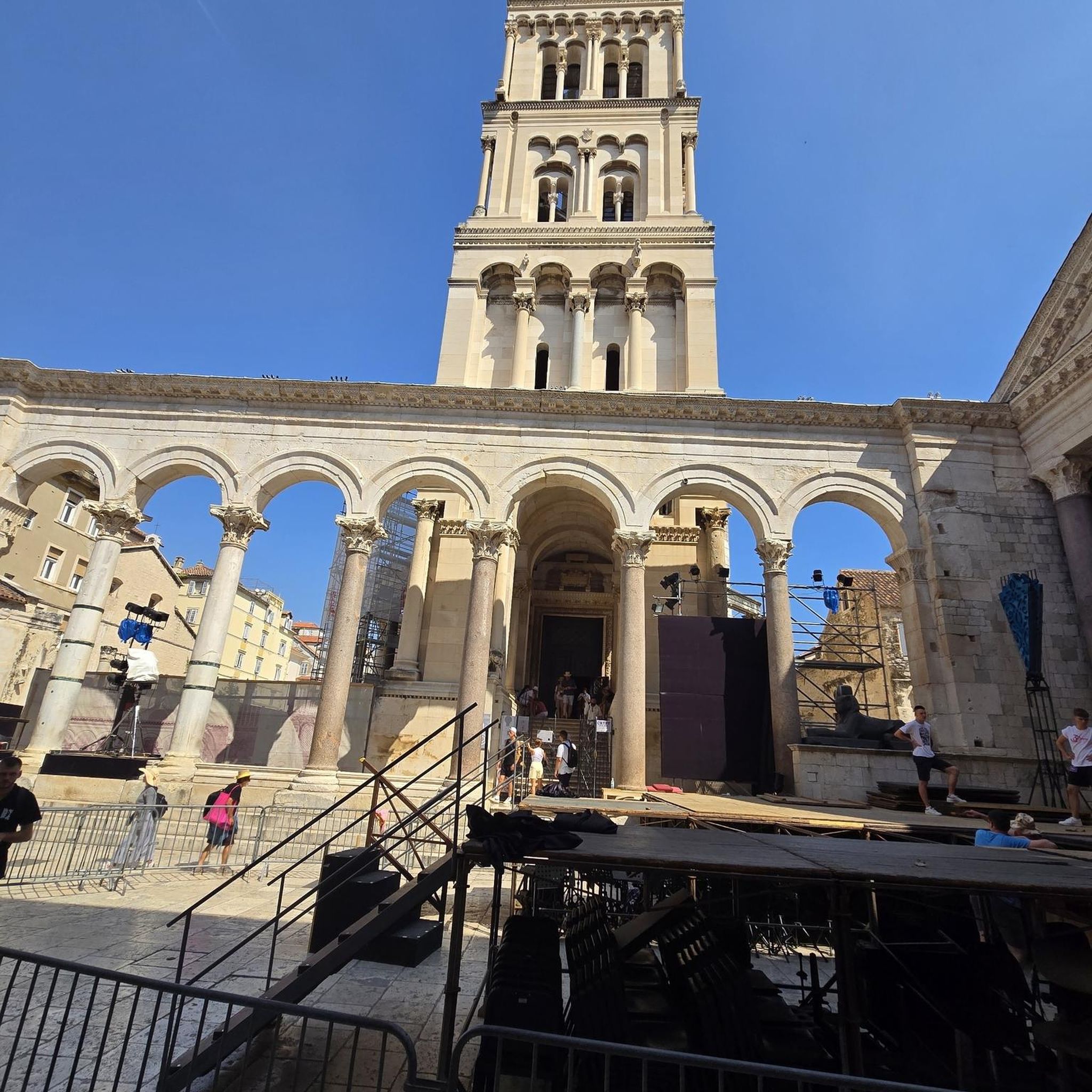
The Madeleine Tower overlooks a beautiful square, surrounded by numerous terraces where it is good to quench your thirst after your exercise!
0
0

Medieval heritage of the town of Verneuil which preserves numerous traces of this past and its former flourishing activities: first of all, the market square, just opposite the imposing and sumptuous Madeleine church (12th century). This “enormous and graceful stone flower”, in the words of the painter Maurice Vlaminck, underwent numerous embellishments in the medieval period to become one of the great jewels of flamboyant Gothic in Normandy.
0
0
Frequently Asked Questions
What kind of no-traffic gravel bike trails can I find around Sainte-Marie-D'Attez?
The Sainte-Marie-D'Attez area offers a selection of easy to moderate gravel bike trails designed to keep you away from traffic. These routes often feature a mix of gravel paths and mostly paved surfaces, making them accessible for various skill levels. You'll find yourself cycling through diverse landscapes, including fields, forests, and charming local villages.
Are there any easy, traffic-free gravel bike routes suitable for beginners?
Yes, several routes are categorized as easy, perfect for beginners or those looking for a relaxed ride. For instance, the Saint-Denis Church – Notre-Dame Church loop from Montigny-sur-Avre is an easy 21.7 km ride with gentle elevation changes. Another great option is the Le Trianon Cinema – Saint-Hilaire Church loop from Verneuil-sur-Avre, which covers 22.4 km with similar easy characteristics.
What is the typical length and duration of no-traffic gravel bike trails in this region?
Most no-traffic gravel bike trails in the Sainte-Marie-D'Attez area are designed as loops, typically ranging from 20 to 24 kilometers in length. Depending on your pace, these rides usually take between 1.5 to 2 hours to complete. For example, the Saint-Denis Church of Acon – Saint Peter's Church loop from Dampierre-sur-Avre is 23.3 km long and takes approximately 1 hour and 28 minutes.
What are some notable landmarks or scenic viewpoints I can discover along these routes?
The region is rich in historical and natural sights. You might pass by the impressive Château de Condé-sur-Iton, or catch a glimpse of the striking La Madeleine Church in Verneuil-d'Avre-et-d'Iton with its Flamboyant Gothic architecture. The Bois Francs Greenway, a repurposed railway line, offers continuous scenic views of the countryside.
Are there any family-friendly no-traffic gravel bike options?
Yes, the prevalence of easy gravel rides and former railway lines converted into paths makes the area suitable for families. The routes often feature mostly paved or well-maintained gravel surfaces, providing a safe and enjoyable environment away from vehicle traffic. The gentle elevation gains on many trails are also ideal for younger riders or those seeking a less strenuous outing.
What kind of terrain can I expect on the gravel bike trails around Sainte-Marie-D'Attez?
You can expect varied terrain, typical of the Eure department. The trails combine gravel paths, often on former railway lines like the Bois Francs Greenway, with sections of paved roads. The landscape includes forested hills, open fields, and river valleys, offering a dynamic and engaging ride without significant technical challenges.
When is the best time of year to go gravel biking in Sainte-Marie-D'Attez?
The diverse landscapes and generally moderate climate make Sainte-Marie-D'Attez enjoyable for gravel biking across multiple seasons. Spring and autumn offer pleasant temperatures and beautiful scenery with changing foliage. Summer is also great, though it's always wise to check local weather forecasts. Even in winter, many of the trails remain accessible, offering a different perspective of the region's natural beauty.
Are there any routes that offer a moderate challenge for more experienced gravel bikers?
While many routes are easy, some offer slightly more elevation gain for a moderate challenge. The Saint-Denis Church of Acon – Saint Peter's Church loop from Dampierre-sur-Avre, for example, features over 200 meters of elevation gain over its 23.3 km, providing a good workout while still being traffic-free.
Can I find circular gravel bike routes to start and end in the same place?
Absolutely. Most of the no-traffic gravel bike trails in the Sainte-Marie-D'Attez area are designed as circular loops. This allows you to conveniently start and finish your ride at the same point, making logistics like parking much simpler. Examples include the Saint-Denis Church – Notre-Dame Church loop and the Le Trianon Cinema – Saint-Hilaire Church loop.
What makes Sainte-Marie-D'Attez a good destination for no-traffic gravel biking?
Sainte-Marie-D'Attez is an excellent destination due to its combination of natural beauty, varied terrain, and dedicated infrastructure. The region boasts numerous gravel paths, including repurposed railway lines, that offer a tranquil alternative to paved roads, ensuring a safe and enjoyable experience away from vehicle traffic. The charming villages and historical landmarks along the routes add cultural interest to your ride.
Most popular routes around Sainte-Marie-D'Attez
Most popular attractions around Sainte-Marie-D'Attez

Get inspired with the komoot mobile app


Explore more
Browse the best Gravel rides in other regions.
