The best hikes from bus stations around Bajo Deba
4.5
(2543)
17,739
hikers
28
hikes
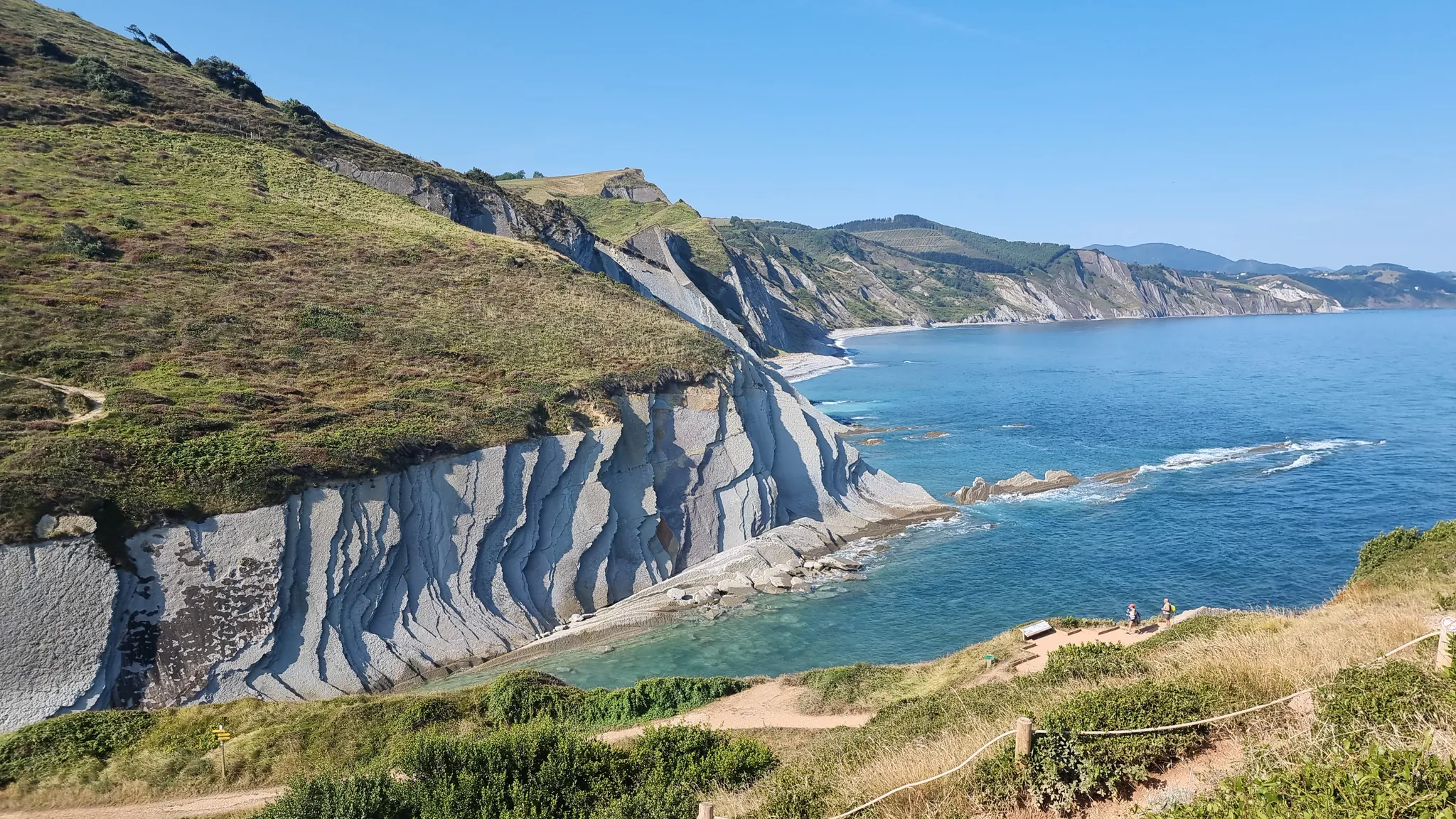
Bus station hiking trails around Bajo Deba offer access to a diverse landscape where the mountains meet the Cantabrian Sea in the Basque Country. This region, also known as Debabarrena, is characterized by its rugged coastline, featuring dramatic cliffs and the unique geological formations of the Flysch Route. Inland, hikers encounter lush green mountains, river valleys, and varied terrain suitable for different skill levels.
Best bus station hiking trails around Bajo Deba
- The most popular bus station hiking route is…
Last updated: July 7, 2026
4.7
(10)
70
hikers
8.62km
02:31
220m
220m
Moderate hike. Good fitness required. Mostly accessible paths. Sure-footedness required.
4.3
(7)
33
hikers
10.9km
03:24
400m
410m
Hike a moderate 6.8-mile (10.9 km) loop from Mutriku, exploring coastal views, Saturrarán beach, and the historic towns of Ondarroa and Mutr

Sign up for free
4.5
(4)
31
hikers
20.9km
06:46
800m
790m
Hard hike. Very good fitness required. Mostly accessible paths. Sure-footedness required.
4.4
(8)
130
hikers
8.11km
02:21
200m
210m
Moderate hike. Good fitness required. Easily-accessible paths. Suitable for all skill levels.
4.1
(34)
93
hikers
13.4km
03:34
150m
150m
Moderate hike. Good fitness required. Easily-accessible paths. Suitable for all skill levels.
Get access to more routes and recommendations from other explorers.
Sign up for free
Already have an account?
Our route recommendations are based on thousands of hikes, rides, and runs completed by other people on komoot.
Start today with a free account
Your next adventure awaits.
Login or Signup
Other adventures around Bajo Deba

Tips from the Community

As its name says in Basque, the sand on this 120-meter beach is fine and dark. Although it is very close to Deba, on the left bank of the mouth of the estuary, it really belongs to Mutriku. In the area there is a bar and parking.
1
0
From this viewpoint you can have very good views of the coastline and you can see the tip of Alkolea perfectly.
1
0
In this section made for pedestrians at the tip of Alkolea you will have splendid views over Alkolea beach, frequented by surfers due to its wave known as Punta Pitxarri. It is also a good point to observe the coast and its orography, especially on this side, since the other, although you can see Mutriku, is somewhat more covered by trees.
2
0
As you walk along the sidewalk next to the road you will have splendid views over the port and the different stacked houses of Mutriku.
0
0
This 386 meter high summit is located in the Arno massif, above the town of Ondarroa. This is a good point from which to observe the Cantabrian Sea and some of the peaks that surround you.
0
0
Next to the GR123 is this small, but beautiful hermitage, surrounded by green mountains and right on the dividing line between Bizkaia and Gipuzkoa.
0
0
Next to the Txori Haitz point, at a modest 513 meters of altitude, is this crossroads that is duly marked, since there are multiple options to follow once you get here, such as taking some of the PRs that continue after the fork.
0
0
This building is part of the history of the town of Mutriku and its ethnographic culture. In it, fishermen traded with newly brought fish. Recently, the city council managed to recover a crane from this market, documented in the 18th century.
0
0
Frequently Asked Questions
How many bus station hiking trails are there in Bajo Deba?
There are over 25 hiking routes in Bajo Deba that are easily accessible from bus stations, offering a variety of experiences for different skill levels. These trails allow you to explore the region's diverse landscapes without needing a car.
What types of landscapes can I expect on bus-accessible hikes in Bajo Deba?
Hikes from bus stations in Bajo Deba offer a dynamic mix of landscapes. You can explore the dramatic coastline with its unique Flysch rock formations, lush inland mountains, and serene valleys. The region is known for its 'intense green of its mountains inland' contrasting with the rugged Cantabrian Sea.
Are there easy hiking routes from bus stations suitable for beginners?
Yes, Bajo Deba offers several easy routes accessible by bus. These are perfect for beginners or those looking for a relaxed stroll. For example, the From Deba to Mutriku — circular route is a moderate option that can be adapted for a more leisurely pace, offering coastal views and manageable terrain.
What are some popular circular walks accessible by bus in Bajo Deba?
Many routes in Bajo Deba are designed as circular walks, making them convenient for public transport users. A popular option is the From Deba to Mutriku — circular route, which offers stunning coastal views. Another great choice is the Mutriku Loop Trail, providing a comprehensive experience of the area around Mutriku.
What can I see along the bus station hiking trails in Bajo Deba?
Along the bus-accessible trails, you can discover a wealth of natural and cultural attractions. Highlights include the impressive geological formations of the Basque Coast Geopark, beaches like Santiago and Lapari, and historical sites such as the Santa Catalina hermitage. You might also encounter viewpoints like Portutxiki Viewpoint or the Viewpoint of the Virgin of Itziar, offering spectacular panoramas.
Are there any challenging hikes from bus stations for experienced hikers?
Yes, for those seeking a more demanding adventure, Bajo Deba offers difficult routes accessible by bus. The Txori Haitz y Tontorramendi — circular desde Mutriku is a challenging option, covering nearly 21 km with significant elevation gain, perfect for experienced hikers looking to explore the region's peaks like Tontorramendi Summit.
What do other hikers enjoy the most about hiking in Bajo Deba?
The komoot community highly rates the hiking experience in Bajo Deba, with an average score of 4.5 stars. Reviewers often praise the region's diverse landscapes, from the dramatic coastal Flysch to the lush inland mountains, and the accessibility of many trails via public transport. The well-maintained paths and stunning viewpoints are frequently highlighted.
Can I find family-friendly hikes accessible by bus in Bajo Deba?
Yes, Bajo Deba has routes suitable for families, often with easier terrain and shorter durations. While specific family-focused routes from bus stations are not explicitly listed, many easy to moderate trails can be enjoyed by families. Look for routes with less elevation gain and shorter distances, focusing on coastal paths or gentle inland trails.
What is the best time of year for hiking from bus stations in Bajo Deba?
Bajo Deba offers hiking opportunities year-round. Spring and autumn provide pleasant temperatures and vibrant scenery, ideal for exploring both coastal and inland trails. Summer is great for coastal walks, though it can be warmer. Even winter can be suitable for hiking, especially on lower-elevation routes, but be prepared for potentially wet weather.
Are there any specific natural monuments or geological features to look out for on these trails?
Absolutely. The most prominent feature is the Basque Coast Geopark and its Flysch route, showcasing millions of years of geological history along the coast between Deba and Zumaia. You can also visit natural monuments like Playa de Sakoneta, known for its unique rock formations and tidal flats.
Are there any routes that combine historical or cultural elements with nature?
Yes, some trails in Bajo Deba weave through areas with historical significance. For instance, the Deba Beach – Hermitage of Santa Catalina loop from Deba takes you past the Santa Catalina hermitage, a historical landmark for local fishermen. Portions of the Camino de Santiago also pass through the region, offering a blend of pilgrimage history and natural beauty.
Most popular routes around Bajo Deba
Most popular attractions around Bajo Deba

Get inspired with the komoot mobile app


Didn’t find what you were looking for?
Check out more Hikes throughout Bajo Deba below and find the perfect route in your destination.
Explore more
Browse the best Hikes in other regions.
