The best traffic-free bike rides around Bornel
4.5
(149)
2,630
riders
45
rides
Road cycling around Bornel offers a diverse landscape of rolling agricultural fields and wooded sections. The terrain features undulating roads with moderate climbs and gentle hills, providing a scenic backdrop for rides. This area in the Oise department of France caters to various fitness levels, with routes traversing open countryside and shaded areas.
Best no traffic road cycling routes around Bornel
- The most popular no traffic road cycling route is The Collegiate Church of Saint-Barthélemy – Beauvais Cathedral loop from Sainte-Geneviève, a 36.1 miles (58.1 km) trail that takes 2 hours 40 minutes to complete. This route offers a moderate challenge through rural landscapes and past significant landmarks.
- Another top favourite among local road cyclists is Côte de Ronquerolles – The chapel and the chestnut tree loop from Chambly, a moderate 14.3 miles (23.1 km) path. This route features undulating terrain and showcases local charm.
- Local road cyclists also love the Château de Montherlant loop from Méru, a 24.9 miles (40.2 km) trail leading through varied countryside, often completed in about 1 hour 50 minutes.
- Road cycling around Bornel is defined by rolling agricultural fields, wooded areas, and historical villages. The network offers options for different ability levels, from easy to challenging.
- The routes in Bornel are highly rated by the komoot community with an average score of 4.5 stars from over 80 reviews. More than 1,500 road cyclists have used komoot to explore Bornel's varied terrain.
Last updated: July 7, 2026
11
riders
Moderate road ride. Good fitness required. Some segments of this route may be unpaved and difficult to ride.
5.0
(1)
16
riders
22.9km
01:16
310m
310m
Moderate road ride. Good fitness required. Mostly well-paved surfaces and easy to ride.

Sign up for free
5
riders
40.2km
01:50
380m
380m
Moderate road ride. Good fitness required. Mostly well-paved surfaces and easy to ride.
5.0
(9)
7
riders
32.8km
01:44
270m
270m
Easy road ride. Great for any fitness level. Mostly well-paved surfaces and easy to ride.
5.0
(4)
2
riders
23.3km
01:05
190m
190m
Easy road ride. Great for any fitness level. Mostly well-paved surfaces and easy to ride.
Get access to more routes and recommendations from other explorers.
Sign up for free
Already have an account?
Our route recommendations are based on thousands of hikes, rides, and runs completed by other people on komoot.
Start today with a free account
Your next adventure awaits.
Login or Signup
Popular around Bornel

Tips from the Community


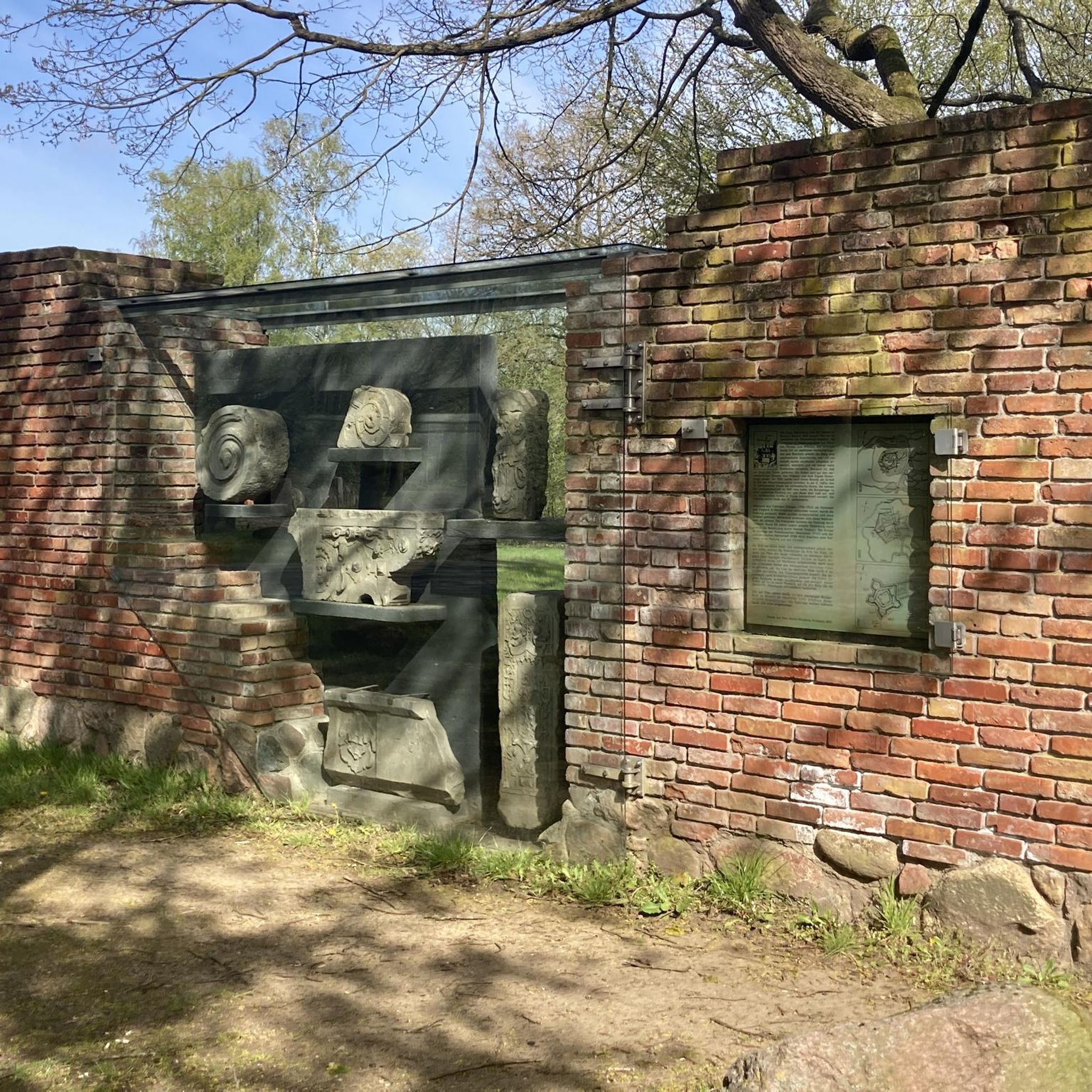
A wall now traces its original layout onto the ground, offering visitors a glimpse into its religious and architectural past.
1
0
The Cathedral of Beauvais is one of the most important Gothic churches in France 🇫🇷!
2
0

Behind the cathedral you can still find a piece of the city fortifications dating from the 4th century, originally 1370 meters long and with 18 towers. The wall is decorated with cubic stones in the Pastoreaux pattern, which can be found similarly on the remains of the historic Roman city wall around Cologne. In the Middle Ages, the wall served to demarcate the episcopal district.
1
0
It is always nice to meet old friends again, especially when it happens unexpectedly. When you enter the wonderful but only half-finished cathedral of Beauvais, you are greeted by the famous image of St. Peter from St. Peter's Basilica. This fits with the building's claim: the highest Gothic vault, the highest church tower, the largest church in France. However, it is a Gothic Babel: the vault and tower collapsed, and that was the end of money and Gothic architecture. The cathedral is a huge torso, the nave of which is a comparatively tiny Romanesque building that stands lost in front of the huge, centuries-old temporary dividing wall that the nave was supposed to replace.
1
0
The collegiate church of Saint Barthelemy, founded in 1037, was secularized during the French Revolution and converted into a residential building. After war damage and demolition, the preserved choir today reminds us of the former building.
2
0
The cathedral beckons. Curious, you want to rush into the interior, but the entrance is worth slowing down. The huge portal rises high into the sky. There are no religious figurines here: one wonders whether this is a financial consequence of the failed construction of the tower of Beauvais or whether the iconoclastic French Revolution has struck. Instead, the tendrils hide many mythical creatures and monsters worth seeing, waiting to be discovered. A somewhat threatening fairy-tale world. Behind them are the enormous carved doors, which are unparalleled with their sculptural Gothic scenes. And finally, Peter himself welcomes you into the church. You know him: an image of the famous statue in St. Peter's Basilica, which illustrates the claim of the cathedral's builders: Amiens was supposed to have the largest church in France, but unfortunately the over-high vaults and the world's highest over-high tower collapsed and inside, massive wooden struts hold up the fragile statics. A Gothic Babel. But the cathedral also holds the record as a torso: the highest vaults are 48.5 metres high.
1
0
Beauvais Cathedral was the most ambitious cathedral building project in France. Construction began in 1247 and the aim was to build nothing less than the largest church with the highest vault. Unfortunately, construction technology was not yet advanced enough. The towering choir was finished in 1275 and partially collapsed in 1284. The vaults, which were then built with no less ambition, reached 48.5 metres and are the highest Gothic cathedral vaults ever. Instead of a nave, the highest tower in the world was built over the crossing, 153 metres high. It was completed in 1569 and was the highest building in the world for four years, then the tower collapsed too. After that, money and Gothic architecture ran out and the church remained a gigantic torso. A slated wall closes off the church behind the crossing to the planned nave; the comparatively tiny Romanesque nave still stands here. This is probably how Cologne Cathedral looked before further construction in the 19th century. You enter the church through the wonderful south façade with its magnificent carved doors, past a statue of Peter, which is a replica of Peter in St. Peter's Basilica in Rome, and are overwhelmed by the feeling of space. The vault rises infinitely high, huge, bright windows bathe the room in bright light. The blue of the windows in the chapel ring of the apse glows mysteriously. Between the enormous pillars of the transept, powerful wooden auxiliary structures support the sensitive statics (which have now held for 700 years). Interestingly, the crossing pillars are different: one pillar, which may have survived the tower's collapse, has the familiar, diversely sharply contoured Gothic appearance, three pillars have distinctly round profiles. We are lucky enough to experience a baptism service and see the church "in operation". But it is a space of peace and contemplation: only a few visitors find their way to this building, which makes it all the more impressive. And there is another marvel that amazes visitors: a tower-sized astronomical clock from the 19th century, which displays an almost incalculable variety of astronomical data on numerous, beautifully designed dials.
1
0
Frequently Asked Questions
How many no-traffic road cycling routes are available around Bornel?
Bornel offers a diverse selection of nearly 40 no-traffic road cycling routes. These routes cater to various skill levels, with 13 easy, 24 moderate, and 2 difficult options, ensuring a suitable ride for almost everyone.
What kind of terrain can I expect on no-traffic road cycling routes near Bornel?
The routes around Bornel feature varied terrain, including rolling agricultural fields and wooded sections. You'll encounter undulating roads with moderate climbs and gentle hills, providing a scenic and engaging experience for road cyclists.
Are there any easy, no-traffic road cycling routes suitable for beginners or families?
Yes, there are several easy no-traffic road cycling routes. For instance, the Côte de Ronquerolles – View of the Château de Chambly loop from Chambly is an easy 32.8 km ride, perfect for those looking for a less strenuous option. Another easy choice is the View of the Château de Chambly – Côte de Ronquerolles loop from Chambly, covering 23.3 km.
What do other cyclists say about the no-traffic road cycling routes in Bornel?
The no-traffic road cycling routes around Bornel are highly regarded by the komoot community, boasting an average rating of 4.5 stars from over 1,500 visitors. Cyclists frequently praise the region's picturesque landscapes, varied terrain, and the peaceful, traffic-free nature of the routes.
Can I find circular no-traffic road cycling routes in the Bornel area?
Yes, many of the no-traffic road cycling routes around Bornel are circular, allowing you to start and end your ride in the same location. An example is the The Collegiate Church of Saint-Barthélemy – Beauvais Cathedral loop from Sainte-Geneviève, a moderate 58.1 km ride.
What historical sites or attractions can I see along the no-traffic road cycling routes?
Many routes pass by or near significant historical sites. You might encounter the Villa Daumier, or even the grand Conti Castle. The region also features historical villages and the notable Royaumont Abbey on some longer trails.
Are there any natural viewpoints or scenic spots on these routes?
Absolutely. The region offers beautiful natural features like rolling agricultural fields and wooded areas. You can find scenic spots such as the Butte de Rosne or enjoy a Breathtaking view of the Stors Marsh, providing stunning vistas during your ride.
What is the best time of year for no-traffic road cycling in Bornel?
The region around Bornel is enjoyable for road cycling throughout the warmer months. Spring and autumn offer pleasant temperatures and beautiful scenery with blooming fields or colorful foliage. Summer is also ideal, though it's always wise to check local weather conditions before heading out.
Are there any longer, more challenging no-traffic road cycling routes for experienced riders?
For experienced riders seeking a challenge, Bornel offers routes with substantial climbs and descents. The Château de Montherlant loop from Méru is a moderate 40.2 km route with significant elevation gain, providing a good workout through varied landscapes.
Where can I find more information about the Bornel area beyond cycling?
For general information about Bornel and its surroundings, including local attractions and services, you can visit the official tourism website for the Vexin-Thelle region: tourisme-vexin-nacre.fr.
Are there any specific villages or towns worth visiting along the no-traffic routes?
Many routes connect charming small villages, allowing you to experience local architecture and culture. The town of Chantilly, known for its castle, is also within cycling distance and makes for a grand destination or a point of interest on a longer ride.
Most popular attractions around Bornel

Get inspired with the komoot mobile app


Explore more
Browse the best Road cycling routes in other regions.
