The best traffic-free bike rides around Muzy
4.2
(54)
790
riders
154
rides
No traffic road cycling routes around Muzy explore a landscape defined by woodlands, such as Dreux Forest, and the presence of water bodies like Mézières-Écluzelles Lake. The terrain generally features rolling hills and gentle ascents, with routes often incorporating historical landmarks including the Donjon of Gilles and the Avre Aqueduct. This region offers varied road cycling experiences across its rural roads and scenic paths, providing options for different skill levels.
Best no traffic road cycling routes around Muzy
- The most…
Last updated: October 23, 2026
6
riders
43.1km
01:49
240m
240m
Easy road ride. Mostly well-paved surfaces and easy to ride.
4.0
(1)
11
riders
53.4km
02:09
240m
240m
Moderate road ride. Good fitness required. Mostly well-paved surfaces and easy to ride.

3.3
(3)
12
riders
45.0km
01:48
200m
200m
Easy road ride. Mostly well-paved surfaces and easy to ride.
5.0
(1)
8
riders
Moderate road ride. Good fitness required. Some segments of this route may be unpaved and difficult to ride.
7
riders
Moderate road ride. Good fitness required. Mostly well-paved surfaces and easy to ride.
Get access to more routes and recommendations from other explorers.
Already have an account?
Our route recommendations are based on thousands of hikes, rides, and runs completed by other people on komoot.

Tips from the Community

The first mention of the existence of the Church of Saint-Martin de Nonancourt is a 12th-century charter, but the original building probably dates back to the 7th or 8th century. The bell tower that now occupies the middle of the façade dates from the reconstructions of 1204. During the Hundred Years' War, the church was largely destroyed, like many buildings in the region. The side aisles, nave, and choir were rebuilt in the 16th century. The Chapel of the Virgin, also known as the Chapel of the Rosary, was also added. The Church of Saint-Martin contains numerous works of art, some of which are listed: neo-Gothic and Renaissance furnishings, including the centerpiece, the pulpit, a veritable wooden lacework; a variety of statuary, a 16th-century organ case and finally an enigmatic fresco discovered during recent works in 2001. The stained-glass windows of the church constitute a truly remarkable collection, both in terms of their number (26 in total) and their quality. The lower windows of the nave are the oldest pieces, dating from the 1500s, while the upper windows date from the 1520s and 1530s.
0
0
The current church was almost entirely rebuilt in 1542 on Gothic foundations. The Gothic church was reportedly destroyed in 1424 by the English. According to legend, Saint Lubin, Bishop of Chartres, came to rest in this place, which housed a recluse inhabited by a monk. A chapel was built there towards the end of the 6th century.
0
0

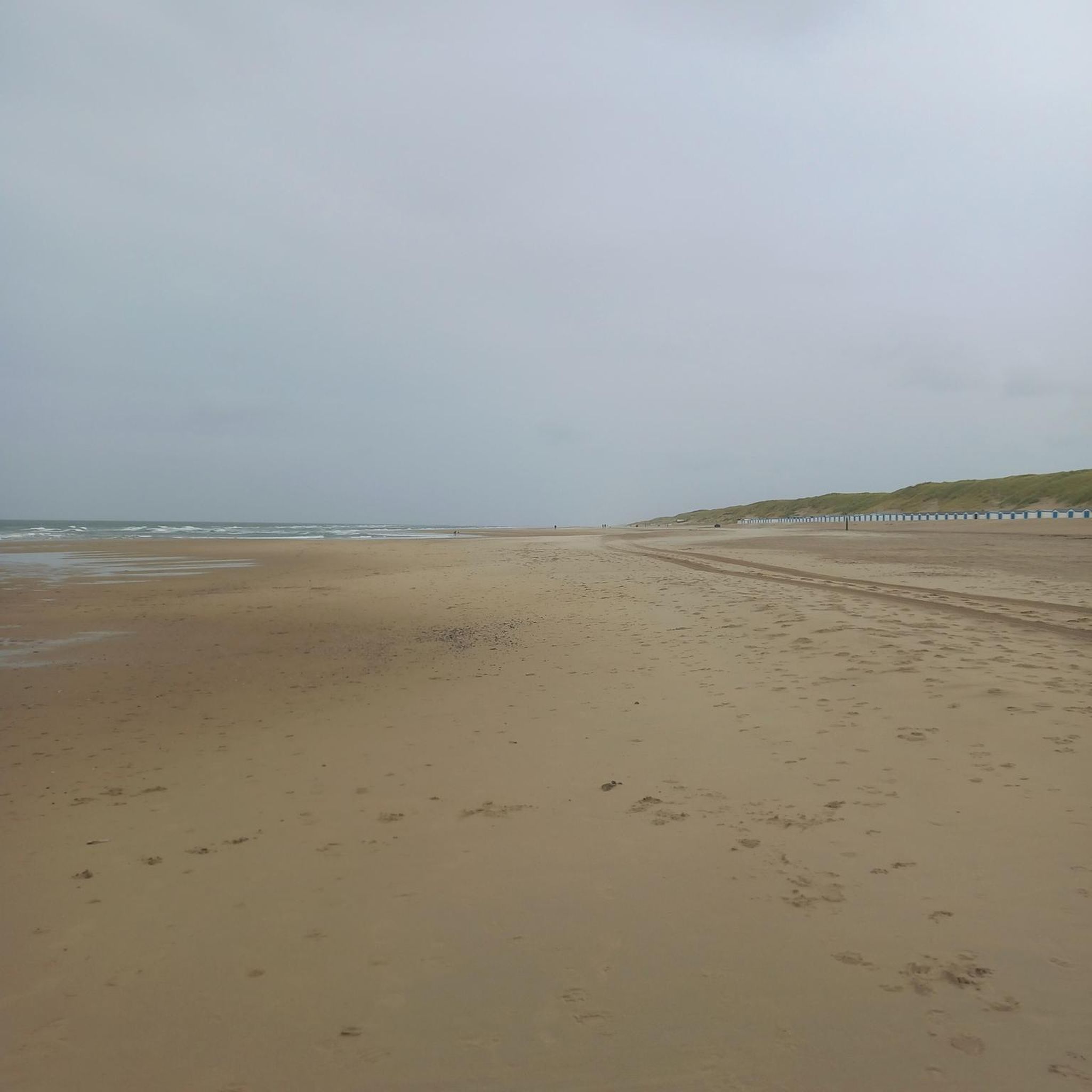
Very beautiful pond
0
0

The Church of Saint-Martin, located on a slight rise, is surrounded by land corresponding to the former cemetery. It is built of pebble masonry, with stone frames, buttresses, and corner walls. The plan consists of a three-bay nave, a choir bay onto which two asymmetrical chapels open, and a three-sided apse. To the west, the nave is preceded by a small porch, while the bell tower is located in the southwest corner. Externally, this ordinary plan is contradicted by the elevation of the western facade: the impression of imbalance comes in particular from the fact that the wall enclosing the nave rises to the upper cornice of the bell tower, buttressed by three heavy buttresses. The bell tower bears the date 1322. A large Gothic window was opened in the axis of the nave, above the porch. The windows pierced in the dripstone walls are pointed arches, almost pointed. The interior of the building is of high quality. The nave is covered with a paneled vault, dated 1733 and signed with the name Beauchais. The antique pews and the nave paving, although damaged by moisture, contribute to the church's charm. To the north, the seigneurial chapel has retained its 19th-century neoclassical decor. The church contains several notable objects: a 15th-century chest, used as an altar, a 16th-century baptismal font, and two paintings depicting members of the Brotherhood of Charity, one dated 1621, the other painted in the 19th century. The charitons, identified by their names, are depicted in robes, with stoles and birettas, carrying the brotherhood's banner, the cross, and candles. In 2001, the Sauvegarde de l’Art français (French Art Protection Agency) awarded a grant of €18,294 for the repair of the roof and framework, with related zinc work and the installation of a lightning conductor.
0
0
Built in the 15th century on the foundations of a chapel whose origins can be traced back to a papal bull from Pope Alexander in 1142, Saint Apollonia was worshipped there.
0
0
The Notre-Dame Priory, founded around 1128 by Rahier de Muzy, was dependent on Coulombs Abbey and housed a community of Benedictines. This community was apparently never very large, as Eudes Rigaud's repeated visits in the 13th century only recorded four monks. In 1255, the monks no longer lived together at the priory due to lack of space. By 1269, the buildings were in too poor condition to accommodate the archbishop. Adjoining the convent buildings, the choir of the parish church of Saint John the Baptist was used by the monks. This 12th-century church, built "in a single heap," underwent several embellishments in the 18th century, but on July 21, 1794, it was probably converted into a saltpeter works, along with the entire priory. The church reopened for worship on March 22, 1795. A campaign of renovations restored the buttresses of the west facade with bricks at the end of the 19th century. The bell tower, damaged in 1944 during the fighting on the Avre, was restored in 1959. The monument was closed for another period from 1939 to 1950. The bells were electrified in 1985. Heating was installed in 1990. A restoration project for the entire building was adopted by the municipality in 2003. The roofing work—repairing the roof box—and the complete restoration of the north facade—raising the apron of the openings by approximately 40 centimeters, repairing all the buttresses and old lime plaster—were completed in 2006. The Church of St. John the Baptist has been listed on the supplementary list of historic monuments since December 2005. A competition to select a master glassmaker was held in April 2009. The winning candidate, Coline Fabre, was entrusted with the task of creating The stained-glass windows throughout the building. Four bays were installed in the spring of 2010 and eight in the summer of 2014, so that all bays on the north, east, and south facades were fitted with stained-glass windows. Rehabilitation work on the east and west facades and the installation of the stained-glass windows on the west facade began on November 20, 2018, and was completed at the end of June 2019. The stained-glass windows were inaugurated on September 13, 2019. Since February 2021, the bells have once again rung daily at 12:00 p.m. and 7:00 p.m.
0
0

large bird reserve and nautical activities
0
0
Frequently Asked Questions
How many traffic-free road cycling routes are available around Muzy?
There are over 140 traffic-free road cycling routes around Muzy, offering a wide range of options for different skill levels. You'll find 44 easy routes and 100 moderate routes to explore.
What kind of terrain can I expect on the no-traffic road cycling routes near Muzy?
The routes around Muzy generally feature gentle elevation changes, making them suitable for road cycling. For example, the Dreux Forest and Mézières-Écluzelles Lake Loop has an elevation gain of about 240 meters over 43 km, indicating a relatively flat to rolling landscape.
Are there any easy, family-friendly traffic-free road cycling routes around Muzy?
Yes, there are 44 easy routes perfect for families or those looking for a relaxed ride. Routes like The Donjon of Gilles – Arm of the Avre loop from Muzy, at just under 28 km with minimal elevation, are excellent choices for a pleasant, car-free experience.
What are some notable landmarks or points of interest along the traffic-free road cycling routes?
While cycling, you can discover several historical sites and natural features. Keep an eye out for impressive structures like The Donjon of Gilles. The region also features several castles, such as Château de Louye and Sorel Castle, which add historical charm to your ride.
What do other road cyclists think about the traffic-free routes around Muzy?
The komoot community highly rates the traffic-free road cycling routes around Muzy, with an average score of 4.3 out of 5 stars from 39 ratings. Cyclists often praise the quiet roads and scenic landscapes, making for an enjoyable and peaceful ride.
Are there any longer distance traffic-free road cycling options available?
Yes, you can find routes that offer a good distance for longer rides. For instance, the Avre Aqueduct – The Donjon of Gilles loop from Chapelle royale de Dreux covers over 52 km, providing a substantial ride without traffic concerns.
Can I find circular traffic-free road cycling routes in the Muzy area?
Many of the routes around Muzy are designed as loops, allowing you to start and end at the same point. Examples include the Dreux Forest and Mézières-Écluzelles Lake Loop and The Donjon of Gilles – Avre Aqueduct loop from Chapelle royale de Dreux, which are perfect for a round trip.
What is the best time of year to cycle the traffic-free routes around Muzy?
While specific seasonal data isn't available, generally, spring and autumn offer pleasant temperatures and beautiful scenery for road cycling. Summer can also be enjoyable, especially during cooler mornings or evenings, while winter might require more preparation for colder weather.
Are there any routes that pass by significant natural features or bodies of water?
Yes, some routes incorporate natural beauty. The Dreux Forest and Mézières-Écluzelles Lake Loop, for example, takes you through the Dreux Forest and past Mézières-Écluzelles Lake, offering scenic views and a refreshing environment.
How challenging are the traffic-free road cycling routes around Muzy?
The routes are categorized as easy and moderate, with no difficult routes listed. This means you can expect manageable climbs and generally smooth surfaces suitable for road bikes. The most challenging routes typically involve moderate elevation gains over longer distances, such as the 52 km Avre Aqueduct – The Donjon of Gilles loop with around 250 meters of ascent.
Can I find routes that explore historical aqueducts?
Yes, routes like The Donjon of Gilles – Avre Aqueduct loop specifically highlight the Avre Aqueduct, allowing you to cycle alongside this impressive historical engineering marvel.
Most popular attractions around Muzy

Get inspired with the komoot mobile app


Explore more
Browse the best Road cycling routes in other regions.
