The best traffic-free bike rides around Chardonnay
4.6
(617)
3,915
riders
97
rides
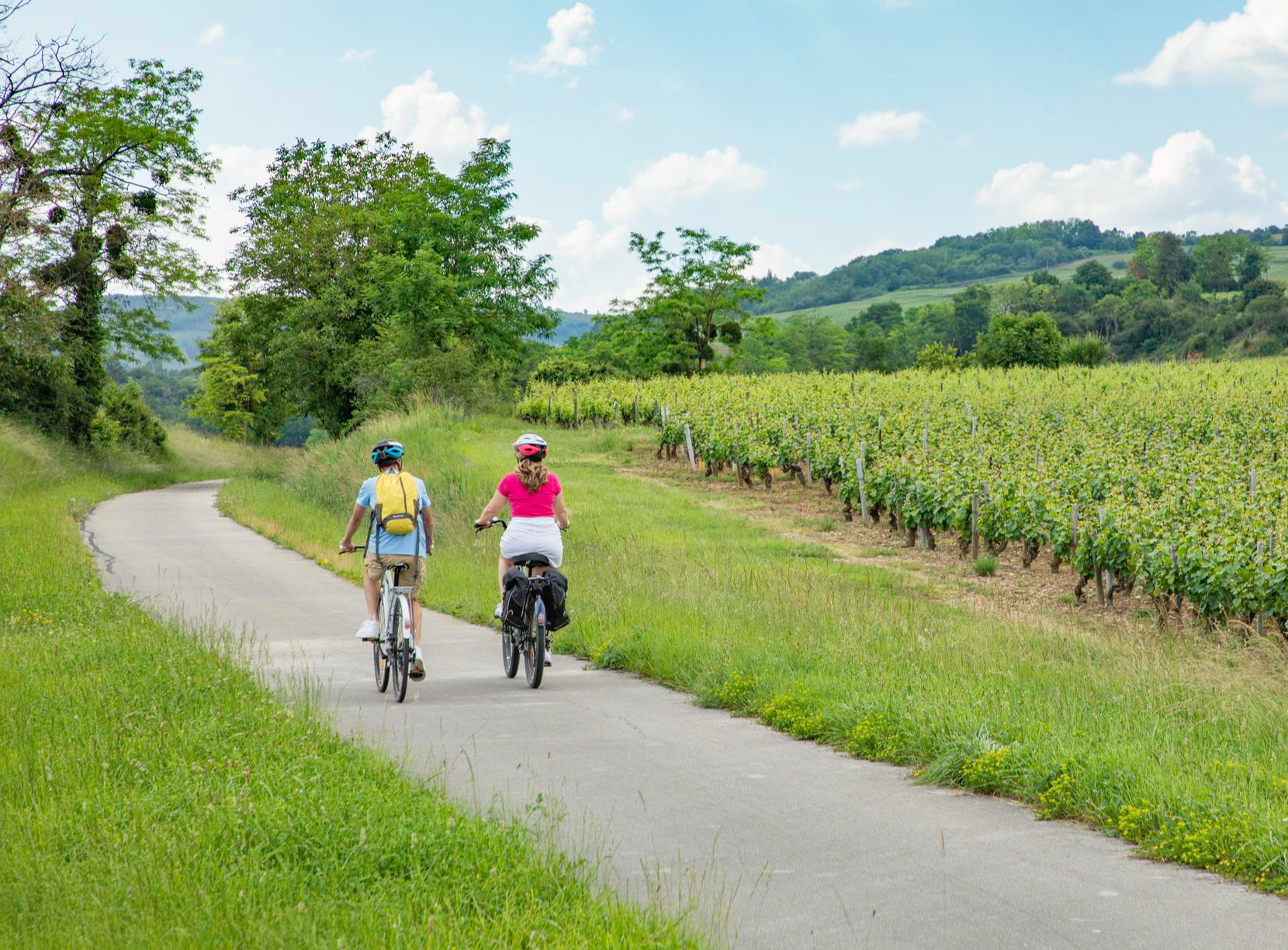
Touring cycling around Chardonnay features a landscape of rolling hills and extensive vineyards, particularly across areas like the Côte de Nuits and Côte de Beaune. The region is characterized by its unique limestone and clay soils, which contribute to the distinct character of the area. Beyond the vineyards, cyclists encounter diverse natural beauty including dense broadleaf forests and tranquil canal ways, such as the Canal de Bourgogne. These features provide varied terrain for no traffic touring cycling routes.
Best no traffic touring cycling routes around Chardonnay
- The most popular no traffic touring cycling route is In the footsteps of the emblematic Chardonnay – La Vélœno71, a 19.1 miles (30.8 km) trail that takes 2 hours 15 minutes to complete, winding through the region's iconic vineyards.
- Another top favourite among local touring cyclists is Brancion – Église d' Ozenay loop from Chardonnay, a difficult 26.8 miles (43.2 km) path. This route offers views of historic villages and expansive vineyard landscapes.
- Local touring cyclists also love the Église d' Ozenay – Chardonnay loop from Chardonnay, a 18.4 miles (29.6 km) trail leading through rolling vineyards and past historic sites, often completed in about 2 hours 34 minutes.
- Touring cycling around Chardonnay is defined by rolling hills, extensive vineyards, broadleaf forests, and peaceful canal ways. The network offers options for easy, moderate, and difficult routes, catering to various ability levels.
- The routes in Chardonnay are highly rated by the komoot community with an average score of 4.6 stars from more than 500 reviews. More than 3,000 touring cyclists have used komoot to explore Chardonnay's varied terrain.
Last updated: July 6, 2026
2
riders
30.8km
02:15
480m
470m
Hard bike ride. Very good fitness required. Mostly paved surfaces. Suitable for all skill levels.
5.0
(1)
44
riders
43.5km
03:42
880m
880m
Hard bike ride. Very good fitness required. You may need to push your bike for some segments of this route.

Sign up for free
5.0
(2)
22
riders
29.5km
02:34
550m
550m
Hard bike ride. Very good fitness required. You may need to push your bike for some segments of this route.
14
riders
8.00km
00:45
180m
180m
Moderate bike ride. Good fitness required. Mostly paved surfaces. Suitable for all skill levels.
3
riders
41.5km
02:32
310m
310m
Moderate bike ride. Good fitness required. Mostly paved surfaces. Suitable for all skill levels.
Get access to more routes and recommendations from other explorers.
Sign up for free
Already have an account?
Our route recommendations are based on thousands of hikes, rides, and runs completed by other people on komoot.
Start today with a free account
Your next adventure awaits.
Login or Signup

Other adventures around Chardonnay

Tips from the Community

The historic washhouse of Collonges (often also referred to as Lavoir de Cruzille), located in the French municipality of Cruzille in the Saône-et-Loire department in the Burgundy region. Such covered public wash places (French: Lavoir) were built in the 18th and 19th centuries in many French villages to make it easier for women to wash clothes. The building in the selected area has an open front with striking stone columns and a forelying fountain basin with a decorative pillar in the middle.
1
0
The historic church Église Saint-Pierre de Cruzille originally dates from the early 12th century and was built in the Romanesque style. Despite numerous renovations over the centuries, the church has retained its overall Romanesque character.
1
0
The Roman Catholic Church of St-Gervais-St-Protais in the municipality of Ozenay is an outstanding example of medieval regional architecture. A first church building on this site was already mentioned in documents around 950. The current building was largely constructed in the 12th century in two phases by the canons of Chalon. The transept, the choir, and the last bay of the nave are the oldest parts and date from the mid-12th century. The first three bays of the nave were added towards the end of the 12th century.
1
0
More of a landing stage, but there are also numerous bathing spots.
1
0
Cozy spot for a break in the shade.
1
0
In this small town with its surrounding endless vineyards, everyone seems to live from viticulture.
1
0
The Romanesque church originally dates from the 11th to 12th centuries. It is a classic example of the early Romanesque art of the Haut-Mâconnais region. The nave, the choir, and the distinctive square bell tower are entirely preserved in this style. Over the centuries (in the Gothic period as well as in the 19th century) there were minor architectural changes. Monument protection: The building has been classified as an official French cultural monument (Monument historique) since 1979.
1
0
The historic old town of Tournus, a French town in the Burgundy region (Saône-et-Loire department). Main attractions: Saint-Philibert Abbey Church: One of the most important Romanesque buildings in France from the 11th and 12th centuries. Picturesque alleys: The old town is characterized by narrow, right-angled streets, colorful facades, and flat roofs with round tiles that have a Mediterranean feel. Hôtel-Dieu: A historic hospital with a well-preserved, ornate 17th-century pharmacy. Greuze Monument: A statue in honor of the famous painter Jean-Baptiste Greuze, born in Tournus in 1725.
0
0
Frequently Asked Questions
How many no-traffic touring cycling routes are available around Chardonnay?
There are approximately 90 dedicated no-traffic touring cycling routes around Chardonnay. These routes cater to various skill levels, with 15 easy, 31 moderate, and 44 difficult options, ensuring a suitable ride for every touring cyclist looking to avoid traffic.
What do other touring cyclists enjoy most about the no-traffic routes in Chardonnay?
The komoot community rates the touring cycling routes in Chardonnay highly, with an average score of 4.6 stars. Cyclists frequently praise the serene vineyard landscapes, the peaceful canal paths, and the opportunity to explore charming villages without vehicle interference. The region's commitment to 'slow travel' is a significant draw.
Are there family-friendly no-traffic touring cycling routes in Chardonnay?
Yes, the region offers several excellent options for families. The Canal de Bourgogne, for instance, provides a peaceful, dedicated bike path, often without traffic, ideal for all ages. Additionally, an easier, less challenging section of the Voie des Vignes, running from Beaune to Santenay, is suitable for a relaxed family outing through the vineyards.
What are some scenic viewpoints or hidden gems along the no-traffic touring routes?
Beyond the famous vineyards, you can discover hidden gems like Mount Saint-Romain, offering panoramic views of the surrounding countryside. The tranquil paths along the Canal de Bourgogne also provide unique perspectives of 200 to 300-year-old locks and idyllic natural environments, away from main roads.
Are there any circular no-traffic touring cycling routes in the Chardonnay region?
Yes, many routes are designed as loops, allowing you to start and end in the same location. For example, the Brancion – Église d' Ozenay loop from Chardonnay offers a challenging circular ride through picturesque landscapes. Another option is the Église d' Ozenay – Chardonnay loop from Chardonnay, providing a slightly shorter but equally engaging circular experience.
What historical attractions or landmarks can I see along these routes?
The Chardonnay region is rich in history. Along your rides, you can visit the impressive Chapaize Church, the historic Brancion Castle, and the magnificent Saint-Philibert Abbey in Tournus. Many routes also pass through charming medieval villages with traditional limestone houses.
What is the best season for no-traffic touring cycling in Chardonnay?
Spring and autumn are generally considered the best seasons. In spring, the vineyards burst into life, and the weather is mild. Autumn offers stunning fall foliage and the excitement of the grape harvest. Summer can be pleasant, but it's advisable to start early to avoid the midday heat. Winter cycling is possible but less common due to colder temperatures.
Are there any challenging no-traffic touring cycling routes for experienced riders?
Absolutely. While many routes are gentle, the region also offers more demanding options. For instance, the In the footsteps of the emblematic Chardonnay – La Vélœno71 route presents significant elevation changes over its 30 km, making it a difficult but rewarding ride. The Chardonnay Church – Chardonnay loop from Chardonnay is another challenging option with considerable elevation gain.
Where can I find parking for my touring bike near the no-traffic routes?
Many of the historic towns and villages along the routes, such as Beaune or Dijon, offer designated parking areas. For routes starting directly from Chardonnay, local parking is available. It's always recommended to check specific starting points for the most convenient parking options, especially in smaller villages.
Are there bike-friendly cafes or places to rest along the no-traffic touring trails?
Yes, the region is well-equipped for cyclists. The picturesque villages along routes like the Voie des Vignes and the Canal de Bourgogne often feature charming cafes, bakeries (patisseries), and small restaurants where you can refuel and rest. Many wineries also offer tasting opportunities and facilities for visitors.
Can I combine cycling with wine tasting on these no-traffic routes?
Definitely! The Chardonnay region is world-renowned for its wines. Routes like the Voie des Vignes and the iconic Route des Grands Crus (which has quieter sections) pass directly through prestigious vineyards and wine villages such as Pommard, Volnay, and Meursault. Many châteaux and family-owned wineries offer tours and tastings (dégustation), providing a perfect blend of cycling and culinary exploration.
What kind of natural landscapes will I encounter on these routes?
You'll experience a diverse range of natural beauty. The routes primarily traverse rolling hills covered in verdant vineyards, often enclosed by ancient stone walls. Beyond the vines, you'll find dense broadleaf forests, tranquil canal ways like the Canal de Bourgogne, and serene lakes such as Fleurville Lake. The unique limestone and clay soils, testament to the region's ancient geological past, also contribute to the distinct character of the landscape.
Most popular attractions around Chardonnay

Get inspired with the komoot mobile app


Explore more
Browse the best Cycling routes in other regions.
