The best traffic-free bike rides around Sauveterre-De-Guyenne
4.3
(254)
1,383
riders
61
rides
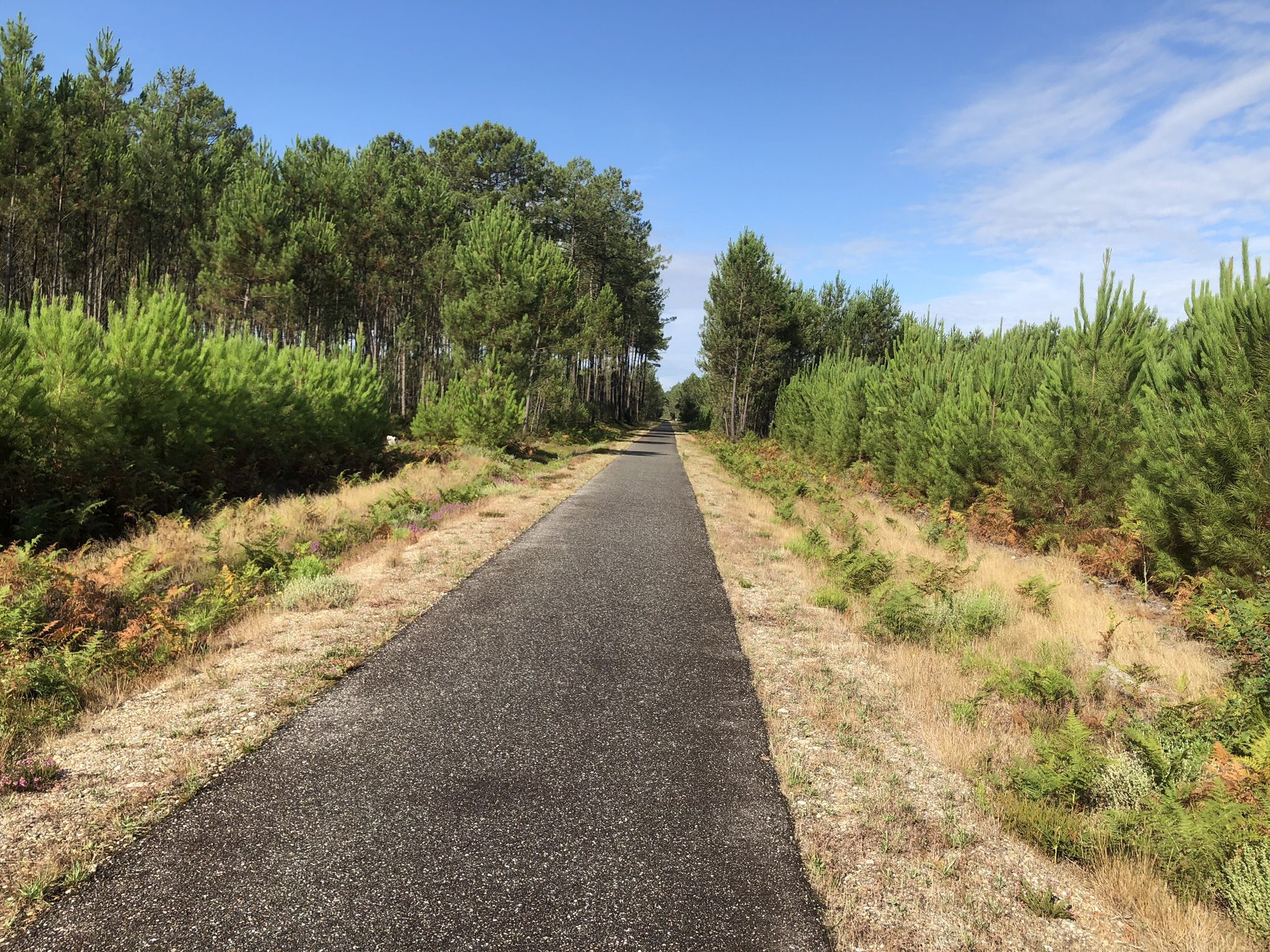
No traffic touring cycling routes around Sauveterre-De-Guyenne traverse a landscape characterized by extensive vineyards, gentle rolling hills, and fertile valleys within France's Entre-deux-Mers region. The area features greenways like the Roger Lapébie cycle path, offering flat and safe routes away from motorized traffic. Cyclists can explore medieval bastide towns, historical châteaux, and natural features such as the Garonne Valley and Laubesc lake. The terrain provides a mix of easy paths and more challenging routes with moderate elevation changes.
Best no…
Last updated: May 25, 2026
4.8
(123)
687
riders
88.4km
05:09
520m
520m
Hard bike ride. Very good fitness required. Mostly paved surfaces. Suitable for all skill levels.
4.0
(4)
16
riders
Hard bike ride. Very good fitness required. Mostly paved surfaces. Suitable for all skill levels.

Sign up for free
5.0
(1)
12
riders
38.8km
02:24
370m
370m
Moderate bike ride. Good fitness required. Mostly paved surfaces. Suitable for all skill levels.
5.0
(3)
8
riders
35.0km
02:11
340m
340m
Moderate bike ride. Good fitness required. Mostly paved surfaces. Suitable for all skill levels.
5.0
(1)
4
riders
70.4km
04:14
490m
490m
Hard bike ride. Very good fitness required. Mostly paved surfaces. Suitable for all skill levels.
Get access to more routes and recommendations from other explorers.
Sign up for free
Already have an account?
Our route recommendations are based on thousands of hikes, rides, and runs completed by other people on komoot.
Start today with a free account
Your next adventure awaits.
Login or Signup
Popular around Sauveterre-De-Guyenne

Other adventures around Sauveterre-De-Guyenne

Tips from the Community

Majestic in its size and appearance, the Loubens mill is one of the most remarkable in the Entre-deux-Mers region. Its installation seems to date back to the 11th century. A square, medieval tower, built on an island, bears similarities to the Bagas mill located 2 km downstream. It includes three sets of millstones still in place. However, it is not a fortified building; it is a weir mill. To the north construction, a bridge with a double row of arches was added in the 18th century, containing two more pairs of millstones and a fulling mill (a machine used not for grinding grain, but for fulling textiles. These mills were often called "beating mills"). This southern part of the mill earned it the name "little Chenonceau". The mill has been classified as a Historic Monument since 2000.
0
0
Built by John Lackland, Duke of Normandy (1199-1204), Duke of Aquitaine (1199-1216) and King of England from 1199 to 1216, the castle was built on a rock occupied since antiquity. Witness to the Hundred Years' War, the castle of Rauzan was taken twice by the French, including by Bertrand Du Guesclin in 1377. Classified as a historic monument in 1862, it was only revived in people's minds from the 1970s onwards when the municipality of Rauzan, owner since 1900, and some enthusiasts of medieval architecture undertook clearing and restoration work. (sources Wikipedia)
0
0

Beautiful view of the ivy-covered mill.
1
0
Good place for a coffee, crepes.. or lunch.
0
0


Sauveterre-de-Guyenne is a bastide. A bastide is a type of French medieval town, founded in the 13th and 14th centuries, primarily in southwestern France. A bastide is characterized by a rectangular street pattern that divides the town into eight blocks around a central market square. The Treaty of Paris (1229) prohibited the building of walls around new towns. Many bastides were provided with some form of fortification, such as gates, after their founding to provide some protection during turbulent times. Most bastides had only local significance and did not develop into large towns. As a result, many bastides, such as that of Sauveterre-de-Guyenne, have been preserved in their original state.
1
0
Frequently Asked Questions
How many no-traffic touring cycling routes are available around Sauveterre-de-Guyenne?
There are over 10 dedicated no-traffic touring cycling routes around Sauveterre-de-Guyenne, offering a variety of experiences for different skill levels. These routes are designed to keep you away from motorized traffic, providing a peaceful and scenic ride through the region's vineyards and historical landscapes.
What is the best time of year to enjoy no-traffic touring cycling in Sauveterre-de-Guyenne?
The spring and autumn seasons are generally recommended for cycling in the region. Spring offers blooming landscapes and milder temperatures, while autumn showcases vibrant colors in the vineyards, making for particularly picturesque rides.
What is the Roger Lapébie Cycle Path and how does it contribute to traffic-free cycling in the region?
The Roger Lapébie Cycle Path is a significant "voie verte" (greenway) built on an old railway line, offering a largely flat, safe, and tranquil route. It stretches 54 km from Bordeaux and passes directly through the Entre-deux-Mers region, connecting Sauveterre-de-Guyenne to Créon and beyond. It's a major highlight for touring cyclists seeking routes away from motorized traffic, immersing them in nature and the local scenery. You can explore a section of it on the Roger Lapébie track - Sauveterre to Cessac.
Are there family-friendly no-traffic cycling routes suitable for all ages?
Yes, many of the no-traffic routes, especially sections of the Roger Lapébie Cycle Path, are ideal for families due to their flat terrain and absence of car traffic. Routes like the Castelmoron d'Albret loop from Sauveterre-de-Guyenne are rated as moderate, but offer manageable distances and beautiful scenery suitable for a family outing.
What historical sites or natural attractions can I discover along these traffic-free routes?
The routes often pass by a wealth of historical and natural attractions. You can cycle past the medieval bastide town of Sauveterre-de-Guyenne itself, visit the impressive Château de Rauzan, or enjoy the tranquility of the Laubesc lake and its surrounding wetlands. The Laubesc lake and wetland – Château de Rauzan loop from Sauveterre-de-Guyenne is a great option to combine both.
Are there any circular no-traffic touring routes available?
Yes, several routes are designed as circular loops, allowing you to start and end in the same location without retracing your steps. An example is the Espiet tunnel – Roger Lapébie trail loop from Sauveterre-de-Guyenne, which combines sections of the greenway with other quiet roads to form a complete circuit.
What is the general terrain and difficulty level of these no-traffic routes?
The terrain around Sauveterre-de-Guyenne features gentle rolling hills, prairies, and forests. While many routes, especially the dedicated greenways like the Roger Lapébie path, are relatively flat, some touring routes will include moderate ascents and descents through vineyards. The guide includes routes ranging from easy to difficult, with 2 easy, 5 moderate, and 7 difficult options.
Can I bring my dog on the no-traffic touring cycling routes?
Many of the greenways and quiet country roads are suitable for cycling with dogs, provided they are well-behaved and kept on a leash, especially in areas where you might encounter other cyclists, walkers, or wildlife. Always ensure your dog is comfortable with the distance and terrain, and carry enough water for both of you.
Where can I find parking for these traffic-free cycling routes?
Parking is generally available in and around Sauveterre-de-Guyenne, particularly near the start points of popular routes or access points to the Roger Lapébie Cycle Path. Look for designated parking areas within the town or at trailheads. Specific parking information can often be found on individual route descriptions.
Are there cafes or places to stop for refreshments along the no-traffic routes?
Yes, the region is dotted with charming villages and towns where you can find cafes, bakeries, and restaurants. The Roger Lapébie Cycle Path, in particular, passes through several communities that offer opportunities for refreshments. The medieval bastide town of Sauveterre-de-Guyenne itself has a central market square with various amenities.
What do other touring cyclists enjoy the most about touring cycling in Sauveterre-de-Guyenne?
The area is highly rated by the komoot community, with an average score of 4.4 stars. Reviewers often praise the tranquility of the traffic-free paths, the picturesque vineyard landscapes, and the opportunity to discover historical towns and châteaux away from busy roads. The well-maintained greenways are frequently highlighted as a major draw.
Are there any routes that explore the famous Bordeaux wine region?
Absolutely. The region is part of the Bordeaux Wine Route, and many no-traffic touring routes wind through sprawling vineyards. For example, the Saint-Émilion Village – Vines loop from Sauveterre-de-Guyenne offers an immersive experience through renowned wine-producing landscapes, allowing you to enjoy the scenery without the distraction of car traffic.
Most popular routes around Sauveterre-De-Guyenne
Most popular attractions around Sauveterre-De-Guyenne

Get inspired with the komoot mobile app


Explore more
Browse the best Cycling routes in other regions.
