The best traffic-free bike rides around Magnac-Lavalette-Villars
4.5
(13)
133
riders
26
rides
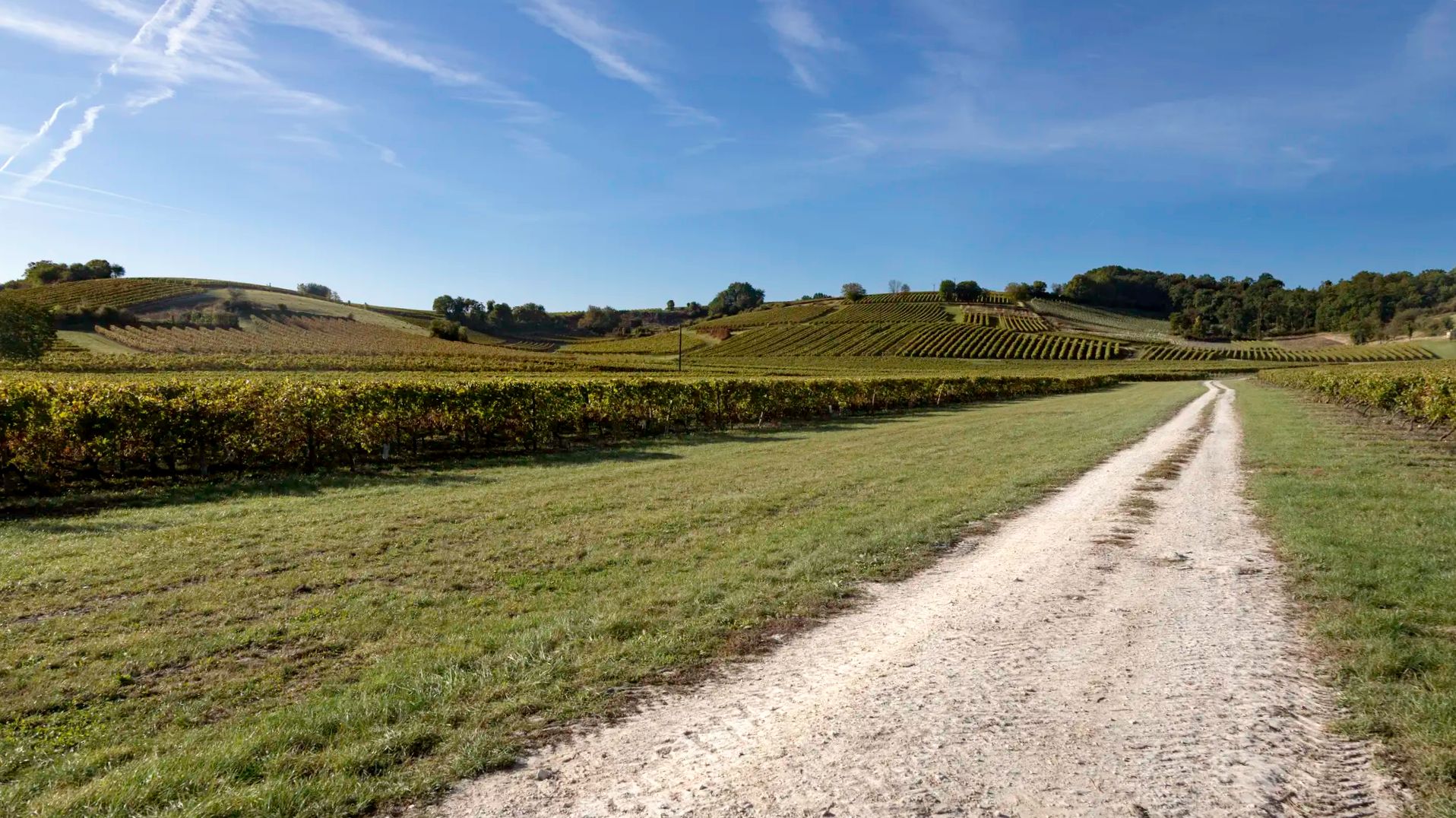
No traffic touring cycling routes around Magnac-Lavalette-Villars traverse a verdant, rolling landscape in the Charente department of Nouvelle-Aquitaine. The area features quiet country roads, vineyards, and forests, providing varied terrain for cyclists. Elevations range from approximately 100 meters to over 200 meters, offering gentle gradients and scenic agricultural plains. This region is well-suited for exploring historical sites and natural beauty by bike.
Best no traffic touring cycling routes around Magnac-Lavalette-Villars
- The most popular no traffic touring cycling route is The Haberdashery – Château de la Mercerie loop from Boisné-la-Tude, a 21.0 miles (33.8 km) moderate trail that takes 2 hours 12 minutes to complete. This route offers views of the impressive Château de la Mercerie.
- Another top favourite among local touring cyclists is Villebois-Lavalette Castle – Château de la Mercerie loop from Gardes-le-Pontaroux - La Challerie, a moderate 23.8 miles (38.2 km) path. It connects two significant historical châteaux through the Charente countryside.
- Local touring cyclists also love the The Cluzeaux of Argentine loop from Nadaillac, a 15.2 miles (24.5 km) trail leading through the local landscape, often completed in about 1 hour 38 minutes.
- Touring cycling around Magnac-Lavalette-Villars is defined by quiet country roads, vineyards, and historical châteaux. The network offers options for different ability levels, from moderate rides to more difficult routes.
- The routes in Magnac-Lavalette-Villars are highly rated by the komoot community with an average score of 4.6 stars from 10 reviews. More than 100 touring cyclists have used komoot to explore Magnac-Lavalette-Villars's varied terrain.
Last updated: July 6, 2026
12
riders
44.0km
03:33
610m
610m
Hard bike ride. Very good fitness required. Mostly paved surfaces. Suitable for all skill levels.
2
riders
33.6km
02:11
310m
310m
Moderate bike ride. Good fitness required. Mostly paved surfaces. Suitable for all skill levels.

Sign up for free
4
riders
Moderate bike ride. Good fitness required. Mostly paved surfaces. Suitable for all skill levels.
4
riders
46.9km
03:00
550m
560m
Hard bike ride. Very good fitness required. Mostly paved surfaces. Suitable for all skill levels.
4
riders
36.9km
02:50
470m
470m
Hard bike ride. Very good fitness required. Mostly paved surfaces. Suitable for all skill levels.
Get access to more routes and recommendations from other explorers.
Sign up for free
Already have an account?
Our route recommendations are based on thousands of hikes, rides, and runs completed by other people on komoot.
Start today with a free account
Your next adventure awaits.
Login or Signup
Popular around Magnac-Lavalette-Villars

Other adventures around Magnac-Lavalette-Villars

Tips from the Community

This is a wayside cross located on the Route des Menots, at the southern exit of Fouquebrune,
0
0
Romanesque church fortified in the 14th century during the Hundred Years' War. The bell tower is imposing, and the oldest parts are located at the base of the side walls, the semicircular apse, and the façade. The rectangular bell tower is pierced by two lintel openings on each side. Powerful buttresses surround the building; one of the two on the façade is higher because it supports the bell tower staircase. The three-bay nave is lit by narrow, ribbed-vaulted windows. https://chateauruine.fr/16-eglise-fortifiee-fouquebrune.html
0
0
The building, constructed in the 12th century, was enlarged in the 15th century by the north and south aisles dedicated to the Virgin and Saint John the Baptist. It was restored in 1875-1876. It has a basilica plan with a single nave, on which is grafted to the east a false square surmounted by a dome on pendentives and which ends in a vaulted apse. Side chapels with flat chevet were added, to the north and south, in the 15th century. The facade is pierced by a door with a triple projection and an open window. The building was fortified at the time of the Hundred Years' War. The whole is surmounted, to the east, at the level of the dome, by a square bell tower on two levels. The base is decorated with three blind arcades; The upper floor is decorated, on each side, with three semicircular arches mounted on small columns, highlighted by a circular stringcourse and enclosing twin bay windows. https://www.dignac.fr/histoire-et-patrimoine/ https://monumentum.fr/monument-historique/pa00104355/dignac-eglise-saint-cybard
0
0
Marie atypical and picturesque which is located in a former small manor beautifully restored. There is a lighted well placed in the center of its hall of honor. This town hall is undoubtedly one of the most beautiful in Charente. https://www.montmoreau.fr/index-module-orki-page-view-id-114.html
0
0
Passage which allows you to see the town hall building, authentic and well restored, that of the church and a beautiful panorama of Montmoreau.
0
0
This is one of the six Romanesque churches in the new commune of Montmoreau. It is located in the heart of a very hilly landscape, perched on top of a hill, and offers a beautiful view of the center of Montmoreau. The construction of this Romanesque church dates back to the 12th century. At that time, it was a former vicarage of the diocese of Périgueux, dependent on the abbey of Nanteuil-en-Vallée. The nave now houses a set of well-preserved neo-Gothic furniture from the 19th century. There are a Stations of the Cross, a pulpit, and a painting of Saint-Amand (Bishop of Bordeaux in the 5th century). On the south wall of the nave, there are traces of a wall painting that is unfortunately very damaged, but one of the characters can still be distinguished: a light tonsured man. These remains are a reminder that religious buildings were generally painted in medieval times. The painted scenes covered the interior space, more the sanctuary, reserved for the religious, than the nave where the laity were confined. https://www.montmoreau.fr/index-module-orki-page-view-id-115.html
0
0
The parish church of Saint-Saturnin was built in the 12th century. Its nave was re-vaulted in bricks in 1856, then in 2005. The bell tower, victim of lightning, was reassembled in 1874 https://monumentum.fr/monument-historique/pa00104270/chadurie-eglise-saint-saturnin https://fr.wikipedia.org/wiki/Chadurie
1
0
Church located near the cemetery. It is a Romanesque church, pierced by an ogival door on important corner buttresses. Rebuilt in the 15th century, it was restored from 1656 to 1668, then in 1830. Two side chapels were added, and an arcade bell tower on the facade. https://fr.wikipedia.org/wiki/Juillaguet
0
0
Frequently Asked Questions
How many no traffic touring cycling routes are available in Magnac-Lavalette-Villars?
There are 25 dedicated no traffic touring cycling routes around Magnac-Lavalette-Villars. These routes vary in difficulty, with 15 moderate and 10 difficult options, ensuring there's something for every touring cyclist looking for quiet roads.
What kind of terrain can I expect on these no traffic touring cycling routes?
The routes in Magnac-Lavalette-Villars traverse a verdant, rolling landscape, featuring quiet country roads, vineyards, and forests. While the elevation ranges from 103 to 223 meters, you'll encounter varied terrain suitable for different abilities, from leisurely rides to more challenging ascents and descents.
Are there any circular no traffic touring cycling routes?
Yes, many of the no traffic touring cycling routes in the region are designed as loops. For example, you can enjoy The Haberdashery – Château de la Mercerie loop from Boisné-la-Tude, which is a moderate 33.8 km ride, or the The Cluzeaux of Argentine loop from Nadaillac, covering 24.5 km.
What historical attractions can I see along the no traffic touring cycling routes?
The region is rich in history. You can cycle past impressive landmarks such as the Château de la Mercerie, often called the 'Petit Versailles Charentais', or the medieval Château de Villebois-Lavalette. The Villebois-Lavalette Castle – Château de la Mercerie loop is a great option to visit both.
Are there any routes suitable for families or beginners looking for easy no traffic rides?
While there are no routes specifically categorized as 'easy' in this guide, the 15 'moderate' routes are generally suitable for those with some cycling experience. These routes often follow quiet country roads, making them enjoyable for families or beginners comfortable with slightly longer distances and gentle inclines. The region's extensive network of greenways also provides very safe options.
What is the average length of the no traffic touring cycling routes?
The no traffic touring cycling routes in Magnac-Lavalette-Villars vary in length. For instance, The Cluzeaux of Argentine loop from Nadaillac is about 24.5 km, while the Villebois-Lavalette Castle – Château de la Mercerie loop extends to 38.2 km. Most routes fall within this range, offering a good day's ride.
What do other touring cyclists say about the no traffic routes in Magnac-Lavalette-Villars?
The no traffic touring cycling routes in Magnac-Lavalette-Villars are highly rated by the komoot community, with an average score of 4.6 stars. Reviewers often praise the peaceful countryside, the charming villages, and the well-maintained, quiet roads that make for a truly immersive cycling experience.
Are there any natural features or unique sites to explore on these routes?
Beyond the rolling green landscapes and forests, you can discover unique natural sites. The Cluzeaux of Argentine, a series of ancient caves, is a notable point of interest. The broader Charente region also features streams, moorland, and the intensely colored reservoirs of the Carrières de Touvérac, offering diverse scenery.
Can I connect to longer-distance cycling routes from Magnac-Lavalette-Villars?
Yes, Magnac-Lavalette-Villars is well-situated to access major long-distance cycling routes. The Flow Vélo®, connecting Périgord to the Atlantic Ocean, and La Scandibérique®, part of a larger European route, both pass through or are accessible from the Charente region, offering extensive touring opportunities.
Where can I find parking for these no traffic touring cycling routes?
Many of the routes start from villages or towns that offer public parking facilities. For example, routes like Fouquebrune roadside cross loop from Fouquebrune begin directly from Fouquebrune, where you can typically find parking. It's advisable to check specific starting points for available parking options.
Are there any religious landmarks along the routes?
Yes, you can encounter historical religious sites. The Saint-Cybard Church of Dignac is a notable example, which you can visit on the Saint-Cybard Church of Dignac – Lover's oak loop. The region's small Romanesque villages often feature charming local churches.
Most popular routes around Magnac-Lavalette-Villars
Most popular attractions around Magnac-Lavalette-Villars

Get inspired with the komoot mobile app


Explore more
Browse the best Cycling routes in other regions.
