The best traffic-free bike rides around Châteauneuf-De-Vernoux
4.6
(231)
2,322
riders
20
rides
No traffic touring cycling routes around Châteauneuf-De-Vernoux are situated within the Monts d'Ardèche Regional Natural Park, offering diverse landscapes for cycling. The region features the Gorges of the Eyrieux with lush greenery and rock formations, alongside the agricultural Plateau of Vernoux. This area provides a network of well-developed cycling infrastructure, including sections of the Dolce Via.
Best no traffic touring cycling routes around Châteauneuf-De-Vernoux
- The most popular no traffic touring cycling route is Dolce Via Rail Trail – Eyrieux loop…
Last updated: July 6, 2026
4.8
(33)
228
riders
83.9km
06:12
1,390m
1,390m
Hard bike ride. Very good fitness required. Mostly paved surfaces. Suitable for all skill levels.
3.0
(2)
51
riders
60.5km
04:20
1,110m
1,110m
Hard bike ride. Very good fitness required. Mostly paved surfaces. Suitable for all skill levels.

Sign up for free
4.5
(2)
31
riders
51.7km
03:39
880m
880m
Hard bike ride. Very good fitness required. Mostly paved surfaces. Suitable for all skill levels.
22
riders
81.4km
05:52
1,670m
1,660m
Hard bike ride. Very good fitness required. Mostly paved surfaces. Suitable for all skill levels.
7
riders
47.0km
03:23
950m
950m
Hard bike ride. Very good fitness required. Mostly paved surfaces. Suitable for all skill levels.
Get access to more routes and recommendations from other explorers.
Sign up for free
Already have an account?
Our route recommendations are based on thousands of hikes, rides, and runs completed by other people on komoot.
Start today with a free account
Your next adventure awaits.
Login or Signup
Popular around Châteauneuf-De-Vernoux
Tips from the Community

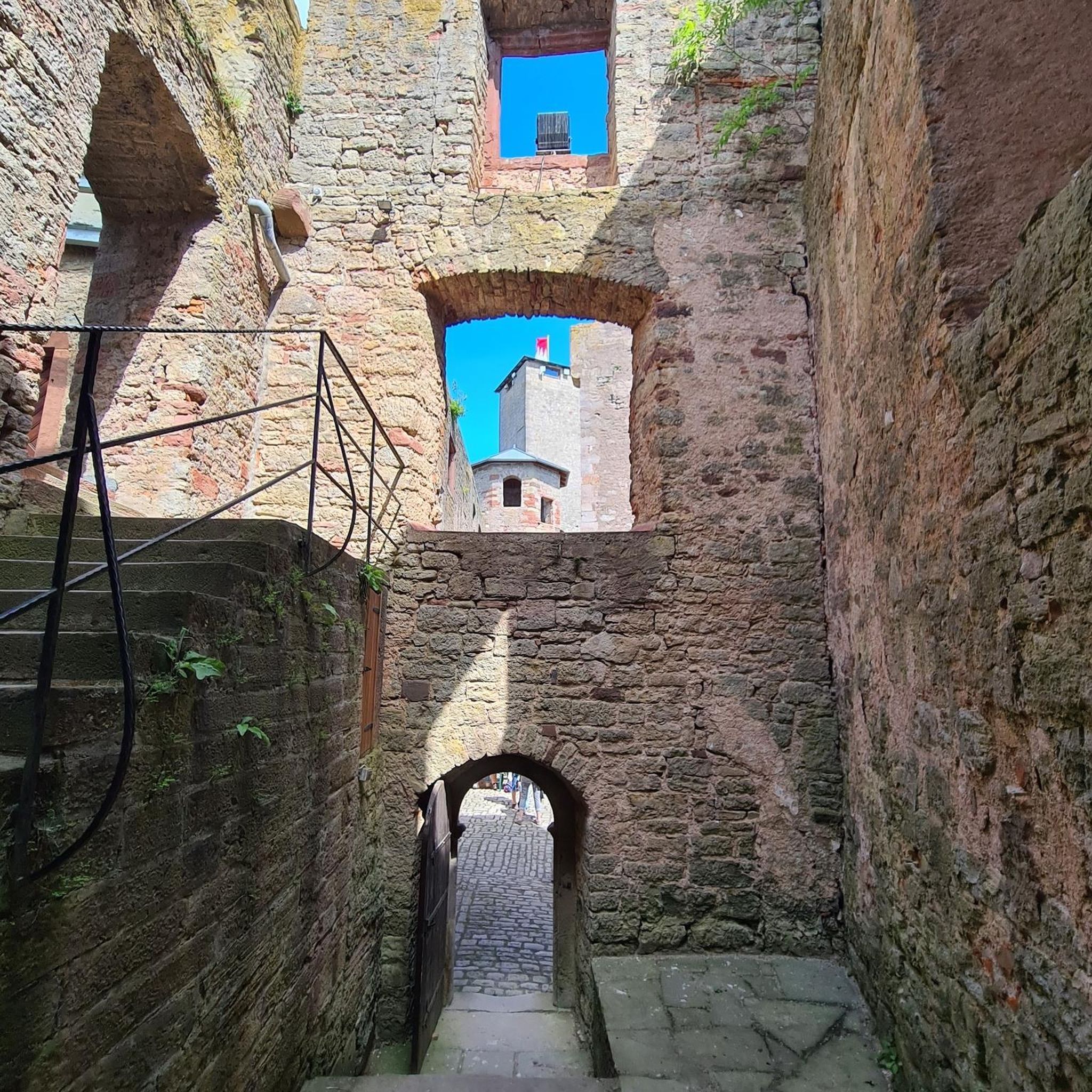
It is classified as a historical monument and houses a museum designated as a Museum of France. Primarily built between the 15th and 16th centuries, the Château de Tournon stands on the remains of a first building from the 10th century. (...) The site still presents exceptional works of art today, such as a triptych by Giovanni Capassini, but also collections on river navigation or the history of the town and the castle. Reconstructions of rooms, as well as sculptures, paintings, drawings or engravings, highlight the tour.
0
0
The following sentence is attributed to the French writer Victor Hugo (1802-1885): „One day, cannons will be exhibited in museums, like old torture instruments are now, and people will marvel that such things were ever in use.“ If only this vision of his had already become a reality! Then there would be no need for the many 'Monument aux Morts' with which villages and towns, across the country, commemorate their inhabitants who lost their lives in war.
0
0

A rare testimony of Gothic architecture in Ardèche, the Saint-Julien church is one of the best-preserved in the region. Listed as a historical monument, it recalls the ancient character of Tournon's heritage. https://www.tournon-sur-rhone.fr/ma-ville/decouvrir-tournon-sur-rhone/patrimoine/eglise-saint-julien/
0
0
The Château de Tournon is one of the most beautiful castles in the Ardèche. Its massive character and elevated position give it an imposing appearance. Built between the 15th and 16th centuries, its architecture bears witness to the evolution of society, between the medieval period and the dawn of the Renaissance. http://www.chateaumusee-tournon.com/index.php?option=com_content&view=article&id=549&Itemid=443
1
0
The first footbridge built by Marc Seguin between Tournon and Tain in 1825 was revolutionary for its time. It was the world's first iron cable suspension bridge, a true technical feat for the era. This footbridge helped facilitate trade and strengthen ties between the two towns. However, the original footbridge underwent several transformations over time. It was first raised to allow the passage of steamships, then a second footbridge was built by Marc Seguin in 1847, still based on the iron cable suspension principle. The two footbridges coexisted for a time, the first being used for pedestrian traffic and the second for road traffic. As road traffic intensified over time, it became necessary to build a new bridge to facilitate circulation. This is how the Gustave Toursier bridge was built in 1958. Located about 350 meters downstream from the Marc Seguin footbridge, this suspension bridge over 240 meters long comprises three spans. It is designed to support road traffic, thus facilitating exchanges between the two municipalities. The current footbridge, inaugurated in 1972, is therefore the fourth of its name. It was designed to resemble the 1847 footbridge, while meeting current safety standards and needs. https://www.ardeche-hermitage.com/fr/zoom-sur/la-passerelle-marc-seguin-celebre-son-bicentenaire/
0
0
The bridge called the King's Bridge was erected at the beginning of the 13th century. Indeed, in 1291, Philip the Fair officially declared the foundation of Boucieu and thus created a co-lordship with the lord Geronton de Valmordane. Boucieu le Roi was endowed with a charter of franchise (tax exemption for its inhabitants) and a bailiwick (court of justice). The charter of franchise would attract numerous merchants and notables. Access routes were therefore paramount, hence the construction of this 3-arch bridge. It would later be widened in 1773. https://www.ardeche-hermitage.com/fr/catalogue/detail/pont-du-roi-129249/
0
0
Go back up the Gorges du Doux aboard the Mastrou and stop at Boucieu le Roi, the village nicknamed “village of a thousand secrets”. Overlooking a wide meander of the Doux, this former capital of Haut-Vivarais owes its name to Philippe le Bel. The Maison du Bailli is one of the witnesses to this rich past: classified as a historic monument since 1927, this very beautiful house, with its corbelled turret, was the seat of the royal court of justice. The village was also deeply marked by Pierre Vigne, a missionary priest from Vivarais, whose tomb is in the church. Awarded the “village of character” label, Boucieu le Roi is one of the most beautiful villages in the Nord-Ardèche. https://www.trainardeche.fr/destination-boucieu/
0
0
Board the Mastrou and discover our entire line, from the T. St Jean de Muzols station to Lamastre. The railway is the only way to admire the wild landscapes of the Doux Valley, a river it follows for 28 kilometers, crossing bridges, viaducts, and tunnels. From the Gorges du Doux to the Ardèche plateau, passing through orchards and chestnut groves, you won't miss a thing in the Ardèche verte! https://www.trainardeche.fr/
0
0
Frequently Asked Questions
How many no-traffic touring cycling routes are available around Châteauneuf-De-Vernoux?
There are over 15 dedicated no-traffic touring cycling routes around Châteauneuf-De-Vernoux, offering a variety of distances and elevations. These routes are carefully selected to provide a serene and safe cycling experience away from vehicular traffic.
What makes the cycling routes around Châteauneuf-De-Vernoux particularly suitable for no-traffic touring?
The region is nestled within the Monts d'Ardèche Regional Natural Park and features well-developed cycling infrastructure, including sections of the renowned Dolce Via. This ensures many paths are specifically designed for cyclists, offering stunning natural scenery like the Gorges of the Eyrieux without the disturbance of cars.
Are there any dedicated greenways or 'voie verte' for traffic-free cycling?
Yes, a major highlight is the Dolce Via, recognized as one of Europe's most beautiful easy cycle trails. A particularly scenic section winds through the Gorges of the Eyrieux, providing a truly traffic-free experience.
How can I access the famous Dolce Via from Châteauneuf-De-Vernoux for a traffic-free experience?
While Châteauneuf-De-Vernoux is not directly on the Dolce Via, it's a short distance to access points. You can connect to the Dolce Via via routes like the Dolce Via Rail Trail – Eyrieux loop from Vernoux-en-Vivarais, which offers a fantastic way to experience this car-free path.
Are there family-friendly, no-traffic cycling routes suitable for all ages?
Absolutely. The Dolce Via, with its gentle gradients and dedicated car-free paths, is ideal for families. Its sections through the Gorges of the Eyrieux are particularly popular for their safety and scenic beauty, making them perfect for cyclists of all ages and abilities.
What is the best time of year for traffic-free touring cycling in Châteauneuf-De-Vernoux?
The spring (April to June) and autumn (September to October) months generally offer the most pleasant conditions for cycling. Temperatures are mild, and the natural landscapes are vibrant with spring blooms or autumn colors. Summer can also be enjoyable, but it's advisable to start early to avoid the midday heat.
What kind of natural landmarks or attractions can I expect to see along these routes?
The routes often pass through diverse landscapes. You can expect stunning views of the Eyrieux loop and its gorges, lush greenery, and impressive rock formations. Some routes might offer distant panoramic views of the Alps or the Vercors from higher points.
Are there any circular no-traffic bike routes available?
Yes, there are several circular routes designed for touring cyclists. For example, the Dolce Via Rail Trail – Eyrieux loop from Vernoux-en-Vivarais provides a fantastic circular option that incorporates sections of the famous greenway.
What do other touring cyclists enjoy the most about touring cycling in Châteauneuf-De-Vernoux?
The area is highly rated by the komoot community, with an average score of 4.6 stars. Reviewers often praise the tranquility of the car-free paths, the breathtaking scenery of the Gorges of the Eyrieux, and the well-maintained surfaces of routes like the Dolce Via, making for a truly relaxing and immersive cycling experience.
Are there options for more challenging no-traffic routes for experienced cyclists?
While many no-traffic routes are designed for ease, the broader region offers connections to more challenging terrain. Some routes, while not entirely traffic-free, incorporate significant climbs like the Col de la Mure, providing a good workout for experienced riders seeking elevation gains alongside quieter roads.
Can I find places to eat or rest along the no-traffic cycling routes?
Yes, especially along popular routes like the Dolce Via, you'll find villages and towns with amenities. It's always a good idea to plan your route and check for available cafes, restaurants, or picnic spots in advance, particularly in smaller, more remote sections.
Is it possible to combine a bike tour with other activities, such as a train ride?
Yes, the region offers unique combinations. The Old Lamastre train station is the starting point for the Ardèche train, "Le Mastrou," which travels through the Gorges du Doux and can accommodate bicycles. This offers a charming way to experience the landscape from a different perspective.
Most popular routes around Châteauneuf-De-Vernoux
Most popular attractions around Châteauneuf-De-Vernoux

Get inspired with the komoot mobile app


Explore more
Browse the best Cycling routes in other regions.
