The best traffic-free bike rides around Le Ménil-De-Briouze
4.3
(8)
693
riders
65
rides
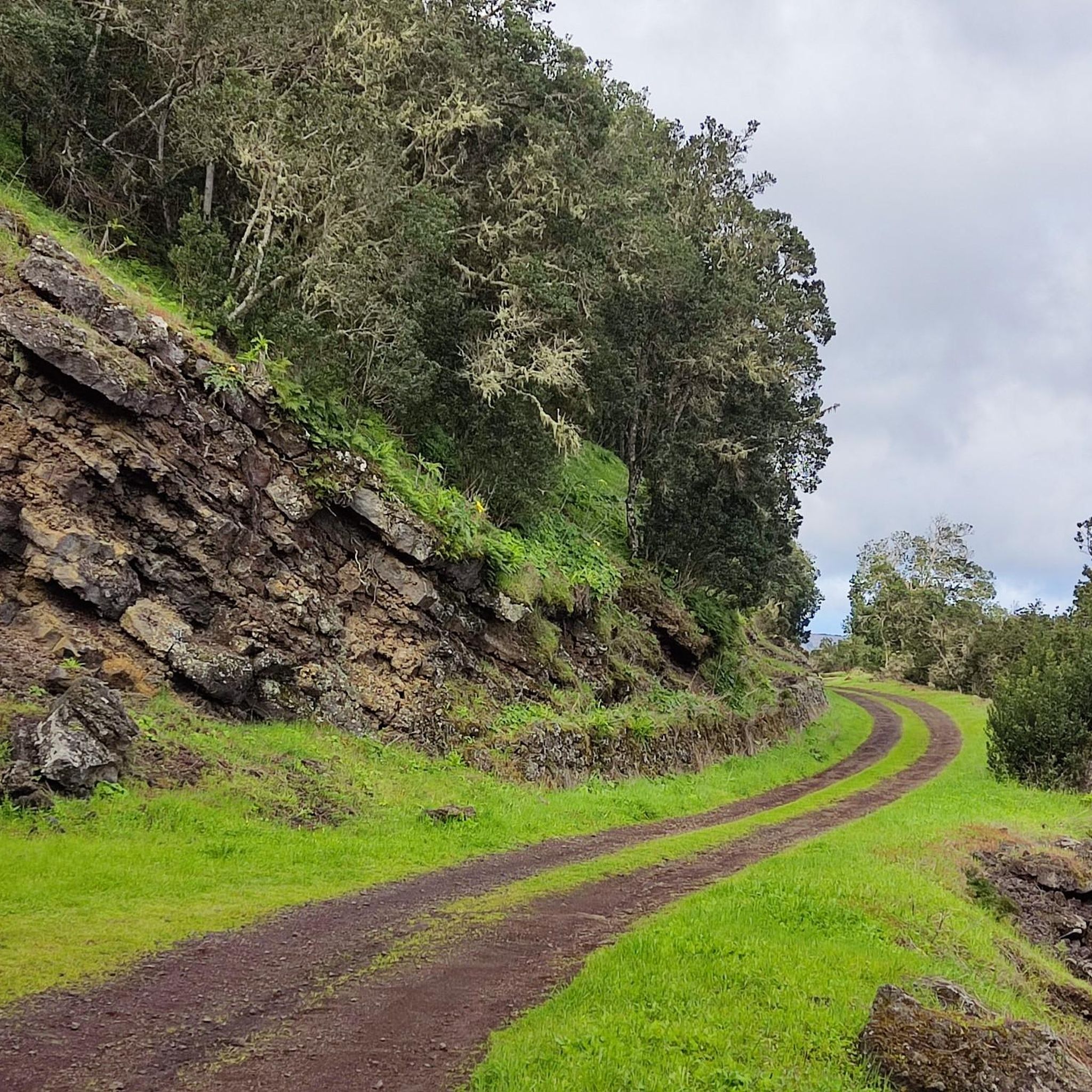
No traffic road cycling routes around Le Ménil-De-Briouze traverse an undulating terrain characterized by dense forests and the distinctive bocage landscape. The region, situated in the Orne department of Normandy, France, features rolling hills that provide varied ascents and descents. This topography, influenced by the ancient Armorican Massif, offers diverse routes for road cyclists. The area includes extensive broadleaf forests and scenic rural charm.
Best no traffic road cycling routes around Le Ménil-De-Briouze
- The most popular no traffic road cycling…
Last updated: May 24, 2026
13
riders
Easy road ride. Great for any fitness level. Mostly well-paved surfaces and easy to ride.
14
riders
104km
04:34
1,040m
1,040m
Hard road ride. Very good fitness required. Mostly well-paved surfaces and easy to ride.

Sign up for free
4
riders
46.0km
02:05
520m
520m
Moderate road ride. Good fitness required. Mostly well-paved surfaces and easy to ride.
5
riders
70.0km
03:18
770m
770m
Moderate road ride. Good fitness required. Mostly well-paved surfaces and easy to ride.
4
riders
56.2km
02:31
470m
470m
Moderate road ride. Good fitness required. Mostly well-paved surfaces and easy to ride.
Get access to more routes and recommendations from other explorers.
Sign up for free
Already have an account?
Our route recommendations are based on thousands of hikes, rides, and runs completed by other people on komoot.
Start today with a free account
Your next adventure awaits.
Login or Signup
Popular around Le Ménil-De-Briouze

Tips from the Community

Magnificent, a must-see.
0
0


Located to the west of the Orne, the medieval town of Domfront, perched on its promontory, is one of the “Most Beautiful Detours in France” and the “Small Towns of Character”.
0
0

There was already a church in Bellou-en-Houlme in 1053, when the building was donated by Guillaume de la Ferté-Macé to the Abbey of Saint-Julien in Tours. The bell tower-porch appears to be of Romanesque origin, having been built in the 11th century and then remodeled in the 12th century. Several architectural elements bear witness to this: "the semicircular arches, the small round interior door above the gallery, the narrow openings of the bell tower, the modillions bordering the dripstone" recall the 11th century, while "the pointed arches which are inscribed in the semicircular arches and especially the underside of the tower where the tore-shaped arcades intersect, each ending in a abacus" (Le Pays Bas-Normand, 1962 n°2) show that the tower was modified at the end of the 12th century. The rest of the building was largely transformed during the first half of the 18th century, as indicated by the date 1718 inscribed on the lintel of the door of the south arm of the transept and that of 1749, inscribed on the lintel of one of the south bays of the chevet. The church was originally surrounded by a cemetery, transferred outside the town in 1840.
0
0
This church was built in the 16th century. It was remodeled and enlarged starting in 1850 (with the construction of chapels, the choir, and the sacristy). The Heritage Foundation organized a fundraiser for the restoration of the church: the purpose of the fundraiser is to restore the exterior of the church (stained glass windows and bell tower), as well as the interior (altarpiece, master paintings, baptismal font, fixing the pews to the floor, Stations of the Cross). The cost of this work is estimated at approximately €70,000. February 9, 2022: Renovation work on the church building completed, carried out by the Beauvain History and Heritage Association (restoration of the altarpieces, stained glass windows, baptismal font, as well as the roof, bell tower, clock mechanism, the Calvary on the Rock, the church door, and the heating system).
0
0
In 1874, the project for a new church was born, at the instigation of Father Macé, then vicar, who had the municipality and even the priest against him. The nave, however, was completed in 1878, the tower the following year, the consecration took place in 1881. The building is constructed of local granite, also in Romanesque style but its axis is perpendicular to that of the old one, the entrance towards the road to Carrouges-La Ferté. The nave is supported by ten granite pillars made from a single piece and 2 m. high. The only treasure is the altar decoration, Louis XIII, given by Father Dufriche-Desgenettes to his friend Father Lapierre. Father Husson made the furnishings of the sacristy and the church with his own hands: stalls, confessionals, pulpit. Burned by bombing on August 14, 1944, the church was unusable. In 1953, after extensive restoration, religious services were reinstated, and two years later, the three bells were replaced, along with the stained-glass windows themselves. Those in the choir depict the life of Saint John the Baptist, the patron saint; four smaller ones depict the four chapels of Joué (La Raîtière, Le Bel, St-Jacques, and St-Roch) with the coats of arms of the founding families. A lintel bearing the Le Verrier coat of arms, taken from the seigneurial chapel dedicated to Saints Hubert and Suzanne in the church, was incorporated into the tower's masonry; this lintel was designed in La Chaux, by the Count of Contades.
0
0
Frequently Asked Questions
How many no-traffic road cycling routes are available around Le Ménil-De-Briouze?
There are over 60 dedicated no-traffic road cycling routes around Le Ménil-De-Briouze, offering a wide variety of distances and difficulty levels for you to explore the scenic Orne department.
Are there any easy no-traffic road cycling routes suitable for beginners or families?
Yes, there are 11 easy no-traffic road cycling routes. A good option to start with is the Notre-Dame Church – Col du signal de Charlemagne loop from Bellou-en-Houlme, which offers a pleasant ride through the local landscape.
What kind of landscapes can I expect on these traffic-free routes?
The routes traverse the diverse and picturesque landscapes of the Orne department, characterized by undulating terrain, dense forests like the Andaines National Forest, and the distinctive bocage. You'll experience a mix of rolling hills, offering both challenging ascents and enjoyable descents.
What are some interesting landmarks or natural attractions I can see along the routes?
Many routes pass by or near notable natural features. You might encounter the serene Bagnoles-de-l'Orne Lake, the tranquil Lande Forêt Pond, or the ancient Hippolyte Oak. The Andaines Forest also provides a beautiful backdrop for many rides.
Are there any longer or more challenging no-traffic road cycling routes for experienced cyclists?
Absolutely. For those seeking a greater challenge, there are 5 difficult routes available. Consider the extensive Col du signal de Charlemagne – Chapelle de Longuenoe loop from Bellou-en-Houlme, which covers over 100 km with significant elevation gain.
What do other road cyclists enjoy most about the no-traffic routes in Le Ménil-De-Briouze?
The area is highly rated by the komoot community, with an average score of 4.0 stars. Reviewers often praise the peacefulness of the traffic-free roads, the beautiful natural scenery, and the varied terrain that keeps rides engaging.
Can I find routes that are loops, allowing me to start and end in the same place?
Yes, many of the no-traffic routes are designed as loops. For example, the Forêt de Monnaie – Manoir de Joué-du-Bois loop from Beauvain is a moderate option that brings you back to your starting point.
Are there any routes that pass through or near towns with amenities like cafes or pubs?
While the focus is on no-traffic routes, some longer tours may pass near or through small towns. The Domfront Medieval Village – Bagnoles-de-l'Orne loop from La Ferté-Macé, for instance, brings you close to Bagnoles-de-l'Orne, a spa town with various amenities.
What is the best time of year to go road cycling in Le Ménil-De-Briouze?
The region is enjoyable for cycling from spring through autumn. Spring offers lush greenery and blooming landscapes, while autumn provides beautiful fall colors. Summer is also popular, but be prepared for warmer temperatures. Always check local weather forecasts before heading out.
Are there any routes that explore historical sites or cultural points of interest?
Yes, some routes offer glimpses of the region's heritage. The Abbaye Notre-Dame de Lonlay – Old Le Chatellier Station loop from La Ferrière-aux-Étangs is a challenging route that includes historical points of interest along the way.
What kind of terrain should I expect on these no-traffic road cycling routes?
The Orne department features varied topography, from the ancient Armorican Massif to rolling hills. You'll encounter a mix of gentle inclines and more significant climbs, especially on longer routes, providing a dynamic cycling experience on mostly paved surfaces.
Most popular routes around Le Ménil-De-Briouze
Most popular attractions around Le Ménil-De-Briouze

Get inspired with the komoot mobile app


Explore more
Browse the best Road cycling routes in other regions.
