The best traffic-free bike rides around Tugéras-Saint-Maurice
4.8
(24)
375
riders
27
rides
No traffic road cycling routes around Tugéras-Saint-Maurice traverse a landscape characterized by tranquil, rolling countryside and extensive vineyards. The region features a mix of open fields, wooded areas, and small roads, providing varied terrain for road cyclists. Elevation changes are generally gentle, with some routes incorporating low hills. The area benefits from proximity to forests such as Forêt de la Lande and Forêt de Pons, offering shaded sections.
Best no traffic road cycling routes around Tugéras-Saint-Maurice
- The most popular no…
Last updated: July 4, 2026
106km
04:45
680m
680m
Moderate road ride. Good fitness required. Mostly well-paved surfaces and easy to ride.
5.0
(5)
11
riders
47.6km
02:02
320m
320m
Moderate road ride. Good fitness required. Mostly well-paved surfaces and easy to ride.

Sign up for free
4
riders
69.2km
02:50
370m
370m
Moderate road ride. Good fitness required. Mostly well-paved surfaces and easy to ride.
4
riders
40.4km
01:40
240m
240m
Easy road ride. Great for any fitness level. Mostly well-paved surfaces and easy to ride.
3
riders
51.0km
02:17
480m
480m
Moderate road ride. Good fitness required. Mostly well-paved surfaces and easy to ride.
Get access to more routes and recommendations from other explorers.
Sign up for free
Already have an account?
Our route recommendations are based on thousands of hikes, rides, and runs completed by other people on komoot.
Start today with a free account
Your next adventure awaits.
Login or Signup
Popular around Tugéras-Saint-Maurice
Tips from the Community

Very pretty village, worth visiting!
0
0

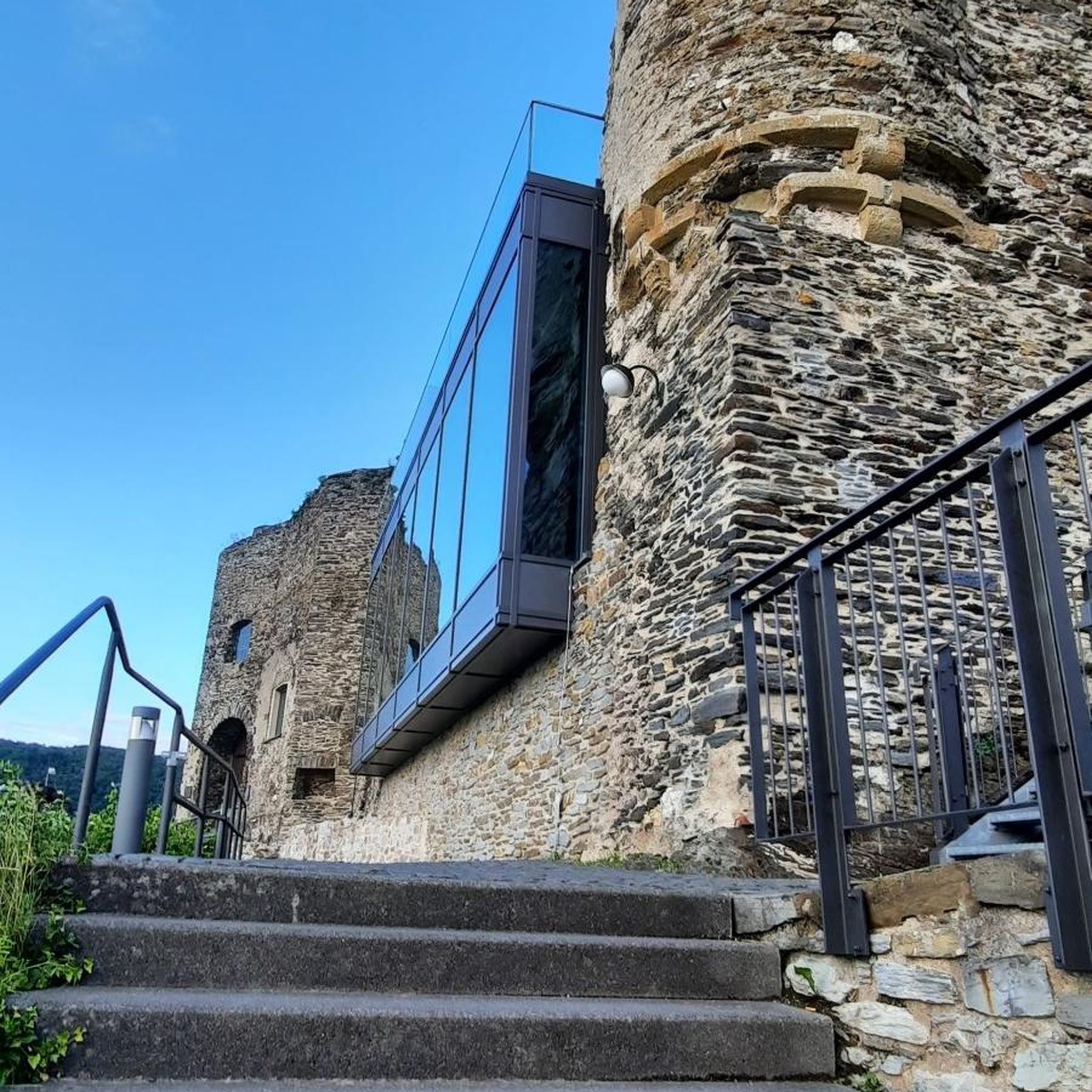
The Château de Meux is located in the Charente-Maritime in the municipality of Meux . It is adjacent to the Romanesque church.
2
0
The Castle of Meux (French: Château de Meux) is a castle in the French commune of Meux.
2
0

5 km north of Barbezieux, we find this beautiful 13th century church in the small hamlet of Saint-Médard. From here, you can take the greenway to Clérac.
1
0

Of the first, very well placed at the top of a high mound, there are hardly any more than vague sections of walls and of the second some carved stones incorporated, with the base and the shaft of an old cross, in the masonry of the current building. This one is almost entirely modern. The side chapels are from the last century and the Romanesque bell tower dates from 1890. It rises on two floors with semicircular bays, crowned with a stone spire, in front of the nave, its base forming a porch. The basket-handle capped nave and the chevet have no decoration. The stoup is from the 17th century. The church of Soubran houses a very beautiful painted canvas (1.90 x 1.30), from the 18th century representing a crucifixion, listed in the Mobilier Historique. The bell dated 1629 is also listed in the Mobilier Historique. From 1970, restoration work on the church of Soubran was undertaken in order to repair the numerous degradations due to time, on the one hand, but also to man. Many valuables had been stolen including ....... the altar, yes the altar!!! The mayor, Bernard Louis-Joseph, then went in search of an altar which he ended up finding in the town of Coulgens in Charente. But during the installation in the church of Soubran, minor cleaning work revealed a small box containing relics They were accompanied by a short text in Latin that Father Genet, Father Cooperator of the parishes of Mirambeau, Jonzac and Saint-Genis-de-Saintonge, former Latin teacher, was happy to translate. "The year of the Lord 1884 on the 24th of November, I, Alexandre, Léopold Sebaux, bishop of Angoulême, consecrated in honor of Saint John the Baptist* an altar in this place of our diocese commonly called Coulgens and I have inserted therein the relics of Saints Amant, Bonosius and Serena, martyrs». These relics have now returned to their original place in the altar.
0
0

Since its construction in the 12th century, this small castle has changed hands many times. It is now the home of Monique Guilbaud, who saved it from ruin and created a farm there.
3
1
The small church of Soubran probably replaced the old chapel of a very close castle. Castle and chapel disappeared, destroyed, one and the other, at the time of the wars of Religion.
0
0
In 1073, the castle already exists; the first known lord was Guillaume de la Rochandry at the beginning of the 12th century. The 1449 inscription on the castle attests to its reconstruction following the destruction caused by the Hundred Years War. In 1505, Jean de Sainte-Maure, lord of Jonzac, founded the Carmelite monastery on the remains of an old chapel dedicated to Saint Nicolas. The cloister was built in 1657. The young Louis XIV, the Queen Mother and Mazarin stayed at the castle in 1659. The castle remained at Sainte-Maure until the end of the 17th century, then passed through marriage to Espardes de Lussan, which transformed the fortress in beautiful stately home with neat ornamentation and guard until the Revolution. Currently the north wing of the castle houses the buildings of the Town Hall (restored in the 19th century), and the south wing, those of the sub-prefecture. The cloister was restored between 1976 and 1978, and now houses a cultural center, with exhibition halls and an archaeological museum. The towers, postern and fountain in the basement date from the 12th century. Of the old feudal castle, only the postern and an isolated tower remain, connected to the main body by a large hall. The moat in front of the drawbridge was filled was filled in the 19th century. It was reopened at the beginning of the 21st century. The imposing gatehouse is marked 1549 and therefore dates from the 16th century, a period of work including the north-west tower, while the south-west tower, of a smaller diameter, is from the 17th century. The towers flanking the postern have retained their defenses. At each, the loopholes have been retained or enlarged. Stone stairs serve each floor and access the walkway. This passage seems to have been discovered, as evidenced by the gargoyles. The crenellation includes machicolations with archers in the middle of the merlons. The slate roofs are high pepperboxes on the towers, and a curious set with two sides connecting two pepperboxes for the gatehouse The fountain located in the basement of the sub-prefecture, has a niche and a niche frame decorated with sculptures imitating stalactites. Carved mask. The fountain was probably built by Léon de Sainte-Maure, Count of Jonzac, who enlarged and embellished the castle in the middle of the 12th century. In a former courtyard of the castle, a theater was built in the 19th century. It is a round building with approximately 300 seats.
0
0
Frequently Asked Questions
How many no traffic road cycling routes are available around Tugéras-Saint-Maurice?
There are 20 dedicated no traffic road cycling routes around Tugéras-Saint-Maurice listed in this guide. These routes offer a mix of easy and moderate options, ensuring there's something for every skill level.
What kind of landscapes can I expect on these car-free cycling routes?
The routes around Tugéras-Saint-Maurice traverse the tranquil, rolling countryside of Haute-Saintonge. You'll experience a blend of picturesque vineyards, wooded areas, and open fields. Some routes, like the 'Radiant Routes of Haute-Saintonge,' offer a bucolic and rolling landscape with small roads and gentle elevation changes, while others might follow old railway lines, providing shaded and flat sections.
Are there any easy no traffic road cycling routes for beginners or families?
Yes, there are 7 easy routes suitable for beginners or families looking for a relaxed ride. One excellent option is the Roadbike loop from Jonzac, which covers about 40 km and offers a pleasant, less challenging experience through the local scenery.
What historical or cultural sights can I see along the no traffic routes?
Many routes pass by charming villages and historical elements. For instance, the area around Jonzac is rich in heritage. You might encounter sites like Jonzac Castle or the Old Town Gate of Jonzac. Other routes may lead you past ancient washhouses, mills, chapels, and churches, offering glimpses into the region's past.
Are there any circular no traffic road cycling routes?
Yes, many of the routes are designed as loops, allowing you to start and end in the same location. For example, the Jonzac Castle loop from Jonzac is a moderate 47 km circular route that takes you through the local area, offering a convenient cycling experience.
What is the best season for no traffic road cycling in Tugéras-Saint-Maurice?
The Charente-Maritime region generally enjoys a mild climate, making spring and autumn ideal for cycling. During these seasons, the weather is typically pleasant, and the natural scenery is at its most vibrant. Summer can also be enjoyable, especially on shaded routes like those found on old railway lines, but it's advisable to cycle in the mornings or late afternoons to avoid the midday heat.
Can I access any long-distance cycling paths from Tugéras-Saint-Maurice?
Yes, the Haute-Saintonge region is part of larger cycling networks. Portions of the EuroVélo 3, also known as "The Scandibérique," pass through the area. This route often utilizes safe, dedicated paths like old railway lines, providing excellent opportunities for longer, car-free cycling adventures. You can find more information about this route on France Vélo Tourisme.
What do other road cyclists enjoy most about the no traffic routes in Tugéras-Saint-Maurice?
The area is highly rated by the komoot community, with an average score of 4.5 out of 5 stars. Reviewers often praise the tranquility of the routes, the beautiful rolling countryside, and the opportunity to explore charming villages and historical sites without the disturbance of heavy traffic. The varied scenery and well-maintained paths are frequently highlighted as key attractions.
Are there any longer, more challenging no traffic road cycling routes?
For those seeking a longer ride, the Jonzac and Barbezieux in a loop offers a moderate challenge, spanning over 106 km with significant elevation gain. This route provides an extended experience through the diverse landscapes of the region, perfect for more experienced cyclists.
Are there any specific routes that pass by lakes or rivers?
While specific routes aren't detailed to pass directly by major lakes, the region is known for its proximity to recreational lakes like Lac Baron Desqueyroux de Montendre and Lac de Guizengeard. The Seugne river also forms part of the scenic landscape. Routes like the Château de Montendre – Église Notre-Dame de Donnezac loop from Montendre will bring you close to the natural beauty of the area, including potential views of these water features.
What types of attractions are near the no traffic cycling routes?
Beyond the cycling, you'll find various attractions. Jonzac, a nearby hub, features the "Les Antilles" aquatic center and thermal baths. Montendre offers castle ruins and market halls. The region is also dotted with numerous churches, such as Saint-Séverin Church, and other historical sites, providing plenty to explore off the bike.
Most popular routes around Tugéras-Saint-Maurice
Most popular attractions around Tugéras-Saint-Maurice

Get inspired with the komoot mobile app


Explore more
Browse the best Road cycling routes in other regions.
