The best traffic-free bike rides around Esches
4.5
(83)
1,285
riders
37
rides
No traffic road cycling routes around Esches are situated within the Parc Naturel Régional Oise-Pays de France, offering a varied landscape for cyclists. The region features extensive wooded areas, including the forests of Ermenonville, Halatte, and Chantilly, alongside rolling agricultural plains and serene river valleys. This diverse terrain provides a mix of gentle gradients and moderate climbs, suitable for road cycling. The area is characterized by its natural beauty and historical sites, providing a compelling backdrop for rides.
Best no…
Last updated: July 3, 2026
11
riders
Moderate road ride. Good fitness required. Some segments of this route may be unpaved and difficult to ride.
5
riders
40.2km
01:50
380m
380m
Moderate road ride. Good fitness required. Mostly well-paved surfaces and easy to ride.

Sign up for free
4
riders
60.4km
02:38
480m
480m
Moderate road ride. Good fitness required. Mostly well-paved surfaces and easy to ride.
5.0
(1)
5
riders
Moderate road ride. Good fitness required. Some segments of this route may be unpaved and difficult to ride.
5
riders
24.3km
01:09
190m
190m
Easy road ride. Great for any fitness level. Mostly well-paved surfaces and easy to ride.
Get access to more routes and recommendations from other explorers.
Sign up for free
Already have an account?
Our route recommendations are based on thousands of hikes, rides, and runs completed by other people on komoot.
Start today with a free account
Your next adventure awaits.
Login or Signup
Popular around Esches
Tips from the Community

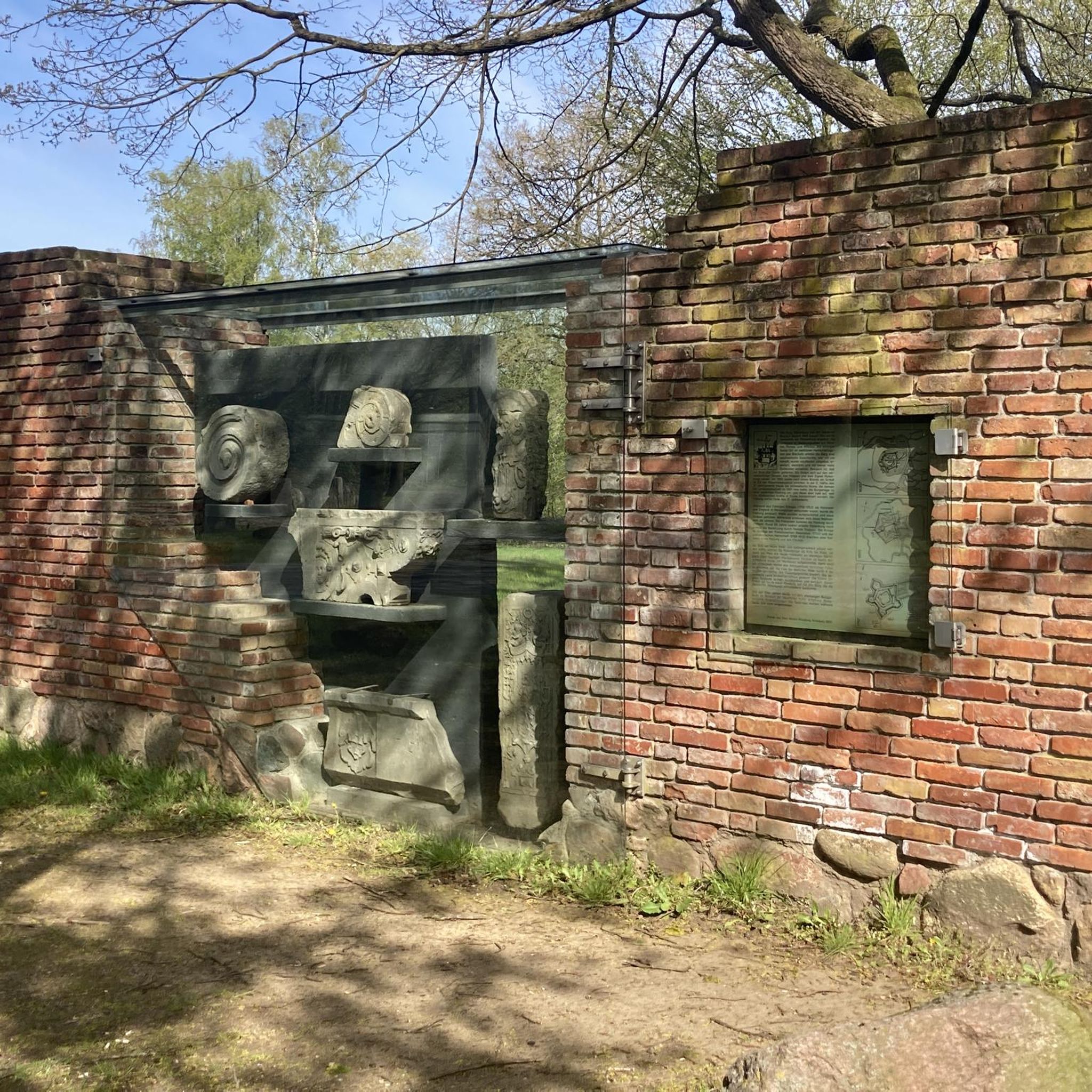
A wall now traces its original layout onto the ground, offering visitors a glimpse into its religious and architectural past.
1
0
The Cathedral of Beauvais is one of the most important Gothic churches in France 🇫🇷!
2
0

Behind the cathedral you can still find a piece of the city fortifications dating from the 4th century, originally 1370 meters long and with 18 towers. The wall is decorated with cubic stones in the Pastoreaux pattern, which can be found similarly on the remains of the historic Roman city wall around Cologne. In the Middle Ages, the wall served to demarcate the episcopal district.
1
0
It is always nice to meet old friends again, especially when it happens unexpectedly. When you enter the wonderful but only half-finished cathedral of Beauvais, you are greeted by the famous image of St. Peter from St. Peter's Basilica. This fits with the building's claim: the highest Gothic vault, the highest church tower, the largest church in France. However, it is a Gothic Babel: the vault and tower collapsed, and that was the end of money and Gothic architecture. The cathedral is a huge torso, the nave of which is a comparatively tiny Romanesque building that stands lost in front of the huge, centuries-old temporary dividing wall that the nave was supposed to replace.
1
0
The collegiate church of Saint Barthelemy, founded in 1037, was secularized during the French Revolution and converted into a residential building. After war damage and demolition, the preserved choir today reminds us of the former building.
2
0
The cathedral beckons. Curious, you want to rush into the interior, but the entrance is worth slowing down. The huge portal rises high into the sky. There are no religious figurines here: one wonders whether this is a financial consequence of the failed construction of the tower of Beauvais or whether the iconoclastic French Revolution has struck. Instead, the tendrils hide many mythical creatures and monsters worth seeing, waiting to be discovered. A somewhat threatening fairy-tale world. Behind them are the enormous carved doors, which are unparalleled with their sculptural Gothic scenes. And finally, Peter himself welcomes you into the church. You know him: an image of the famous statue in St. Peter's Basilica, which illustrates the claim of the cathedral's builders: Amiens was supposed to have the largest church in France, but unfortunately the over-high vaults and the world's highest over-high tower collapsed and inside, massive wooden struts hold up the fragile statics. A Gothic Babel. But the cathedral also holds the record as a torso: the highest vaults are 48.5 metres high.
1
0
Beauvais Cathedral was the most ambitious cathedral building project in France. Construction began in 1247 and the aim was to build nothing less than the largest church with the highest vault. Unfortunately, construction technology was not yet advanced enough. The towering choir was finished in 1275 and partially collapsed in 1284. The vaults, which were then built with no less ambition, reached 48.5 metres and are the highest Gothic cathedral vaults ever. Instead of a nave, the highest tower in the world was built over the crossing, 153 metres high. It was completed in 1569 and was the highest building in the world for four years, then the tower collapsed too. After that, money and Gothic architecture ran out and the church remained a gigantic torso. A slated wall closes off the church behind the crossing to the planned nave; the comparatively tiny Romanesque nave still stands here. This is probably how Cologne Cathedral looked before further construction in the 19th century. You enter the church through the wonderful south façade with its magnificent carved doors, past a statue of Peter, which is a replica of Peter in St. Peter's Basilica in Rome, and are overwhelmed by the feeling of space. The vault rises infinitely high, huge, bright windows bathe the room in bright light. The blue of the windows in the chapel ring of the apse glows mysteriously. Between the enormous pillars of the transept, powerful wooden auxiliary structures support the sensitive statics (which have now held for 700 years). Interestingly, the crossing pillars are different: one pillar, which may have survived the tower's collapse, has the familiar, diversely sharply contoured Gothic appearance, three pillars have distinctly round profiles. We are lucky enough to experience a baptism service and see the church "in operation". But it is a space of peace and contemplation: only a few visitors find their way to this building, which makes it all the more impressive. And there is another marvel that amazes visitors: a tower-sized astronomical clock from the 19th century, which displays an almost incalculable variety of astronomical data on numerous, beautifully designed dials.
1
0

Founded in 1037, the Saint-Barthélemy collegiate church was built along the ancient surrounding wall, near the Porte du Chastel which marked the entrance to the episcopal city. Only the crypt, still preserved, today attests to this era. At the end of the 13th – beginning of the 14th century, the church underwent significant alterations. Sold as a national asset during the Revolution, the building was converted into homes and businesses. Already altered on several occasions, the collegiate church was damaged by the bombings of 1940. Today, only the Gothic choir is preserved.
0
0
Frequently Asked Questions
How many no traffic road cycling routes are available around Esches?
There are over 30 dedicated no traffic road cycling routes around Esches, offering a variety of experiences. Many of these routes are designed to keep you away from busy roads, allowing for a more peaceful ride through the scenic Oise-Pays de France Regional Natural Park.
What is the typical terrain and difficulty for no traffic road cycling routes near Esches?
The terrain around Esches, particularly within the Parc Naturel Régional Oise-Pays de France, features a mix of vast forests, rolling plains, and serene river valleys. This provides varied inclines and descents. You'll find a good balance of routes: 12 are considered easy, and 19 are moderate, making the area suitable for different fitness levels. For example, the The Collegiate Church of Saint-Barthélemy – Beauvais Cathedral loop from Sainte-Geneviève offers a moderate challenge with over 550 meters of elevation gain.
Are there any easy, car-free road cycling routes suitable for beginners around Esches?
Yes, there are 12 easy, car-free road cycling routes around Esches, perfect for beginners or those looking for a more relaxed ride. These routes typically feature gentler gradients and shorter distances, allowing you to enjoy the beautiful landscapes of the Oise department without significant physical exertion.
What is the best time of year to enjoy car-free road cycling in Esches?
The best time for car-free road cycling in Esches is generally from spring through autumn. During these seasons, the weather is most pleasant, and the natural beauty of the Parc Naturel Régional Oise-Pays de France, with its forests and plains, is at its peak. Summer offers shaded routes through the extensive woodlands like Ermenonville and Halatte.
What landmarks or points of interest can I see along no traffic road cycling routes near Esches?
Many routes pass by or near significant historical and natural landmarks. You can explore prestigious sites like the Château de Chantilly or the splendid Royaumont Abbey. Some routes, such as the Château de Montherlant loop from Méru, offer views of historical châteaux. You might also encounter charming villages with ancient architecture, or natural highlights like the Pierre de Lait Polishing Stone or a peaceful spot near the Sausseron River.
Are there any specific natural features to look out for on these routes?
Absolutely. The region is rich in natural beauty, being part of the Parc Naturel Régional Oise-Pays de France. Cyclists can expect to traverse vast forests, including Ermenonville, Halatte, Chantilly, and Carnelle, which provide shaded routes. You'll also encounter rolling agricultural plains, serene river valleys, and unique ecosystems like calcareous grasslands and wetlands, offering diverse scenery throughout your ride.
What do other road cyclists appreciate most about the no traffic routes in Esches?
The no traffic road cycling routes around Esches are highly rated by the komoot community, with an average score of 4.46 stars. Reviewers often praise the tranquility of the routes, the beautiful and varied landscapes of the Oise-Pays de France Regional Natural Park, and the opportunity to discover historical sites and picturesque villages away from busy roads.
Where can I find parking for these no traffic road cycling routes?
Parking is generally available in and around the villages that serve as starting points for many routes. For instance, routes starting from Méru, such as the Château de Montherlant – Marcheroux Abbey loop from Méru, will have parking options within the town. It's advisable to check specific route details for recommended parking areas near the trailhead.
Can I reach the starting points of these routes by public transport?
Yes, some starting points are accessible by public transport. The region is served by train lines, and a circular bike ride through history is mentioned as starting from Viarmes station, which is within the broader park area. For specific routes, checking the komoot tour details will often provide information on public transport accessibility to the starting point.
Are the no traffic road cycling routes around Esches suitable for families?
Many of the easy and moderate no traffic road cycling routes around Esches are suitable for families. The Parc Naturel Régional Oise-Pays de France features numerous marked itineraries for all levels, including those seeking a leisurely ride. These routes often incorporate historical sites and natural beauty, providing an engaging experience for all ages.
Are there any cafes or places to stop for refreshments along these car-free routes?
Yes, as many routes pass through or near charming villages, you'll often find opportunities for refreshments. These villages typically host local cafes, bakeries, or small restaurants where you can take a break. For example, the Bakery and pastry highlight indicates a place to stop for a treat.
Are there any loop options for no traffic road cycling in Esches?
Many of the no traffic road cycling routes around Esches are designed as loops, allowing you to start and end at the same point without retracing your steps. Examples include the Côte de Ronquerolles – Chateau d'Hénonville loop from Bornel - Belle-Église and the Château de Montherlant – View of the Church of Frocourt loop from Méru, providing convenient circular journeys.
Most popular attractions around Esches

Get inspired with the komoot mobile app


Explore more
Browse the best Road cycling routes in other regions.
