The best traffic-free bike rides around Cozes
4.7
(15)
110
riders
9
rides
No traffic gravel bike trails around Cozes traverse a varied landscape of rolling countryside, vineyards, and hills. The region features valleys, plains, and wooded areas, including the Forêt de Suzac and Forêt de la Lande. Proximity to the Gironde estuary provides unique coastal scenery and marshes, while expansive sunflower and cereal fields offer diverse backdrops. This environment combines both paved and unpaved sections, ideal for gravel biking.
Best no traffic gravel bike trails around Cozes
- The most popular no traffic…
Last updated: July 3, 2026
5.0
(3)
12
riders
16.0km
00:56
70m
70m
Easy gravel ride. Great for any fitness level. Mostly paved surfaces. Suitable for all skill levels.
4
riders
Hard gravel ride. Very good fitness required. Mostly paved surfaces. Suitable for all skill levels.

Sign up for free
4.0
(2)
2
riders
Moderate gravel ride. Good fitness required. Mostly paved surfaces. Suitable for all skill levels.
4.0
(1)
2
riders
24.8km
01:34
200m
200m
Moderate gravel ride. Good fitness required. Mostly paved surfaces. Suitable for all skill levels.
4.0
(1)
4
riders
Moderate gravel ride. Good fitness required. Mostly paved surfaces. Suitable for all skill levels.
Get access to more routes and recommendations from other explorers.
Sign up for free
Already have an account?
Our route recommendations are based on thousands of hikes, rides, and runs completed by other people on komoot.
Start today with a free account
Your next adventure awaits.
Login or Signup
Popular around Cozes

Tips from the Community

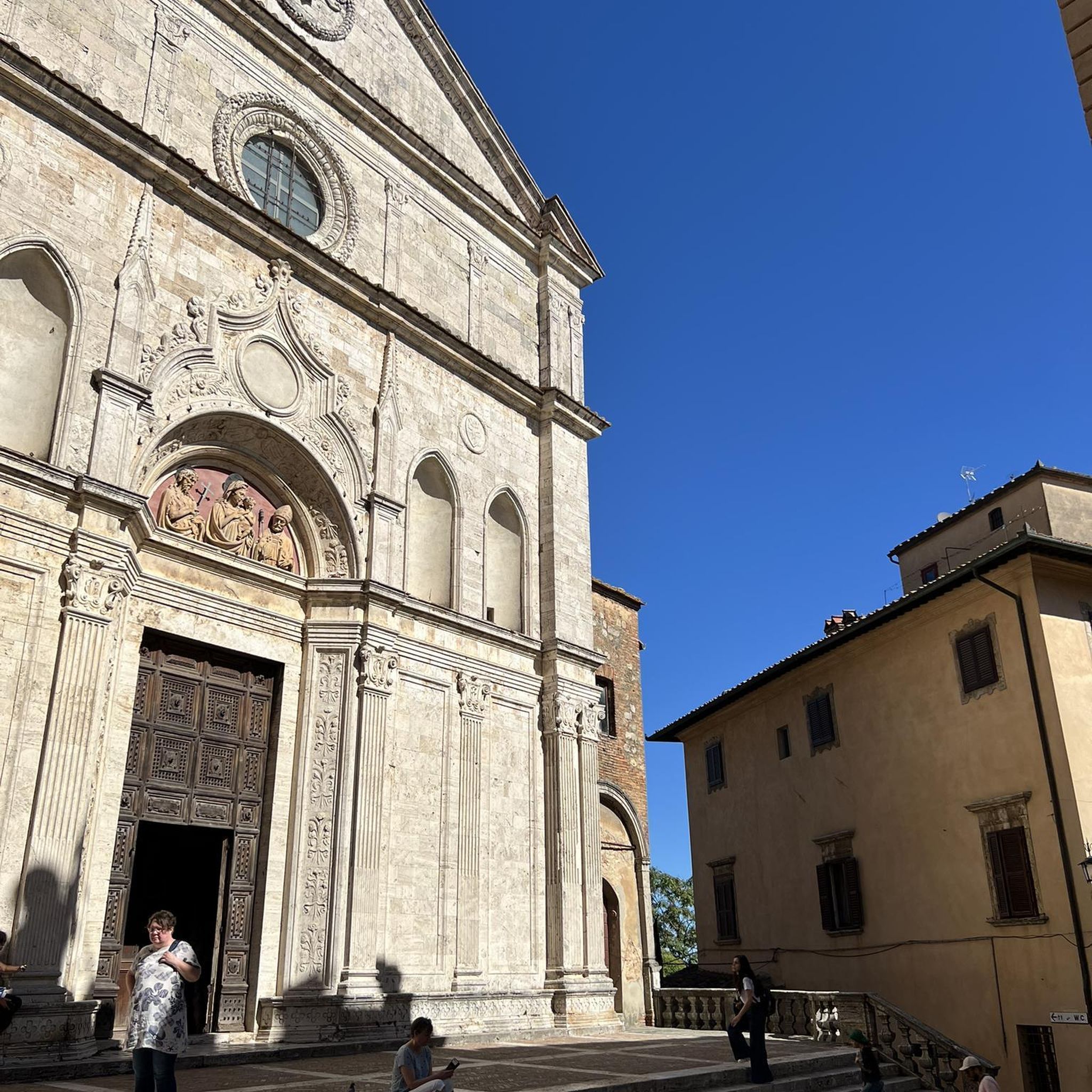
For this nature and its church
0
0
Very nice walk or bike ride
0
0

The Marquis de Sénectère at Semussac In the 18th century, the Didonne / La Touche estate in Semussac passed to Marie de Béchillon, then to her son, the Marquis de Sénectère. It was he who is said to have had the château rebuilt or largely transformed around 1730, giving rise to the residence we know today. He made Semussac an important country residence and developed his possessions in the Royan and Saintonge region. A prestigious family The Marquis de Sénectère, linked to the château of Semussac, belongs to an old French noble family: the house of Sénecterre (or Sénectère), originally from Forez and known since the Middle Ages. The Sénectère family included several renowned figures: - Henri de Senneterre (16th century), Marshal of France - François de Senneterre, a man of war under Louis XIII - Several marquises and dukes close to the royal court The name is sometimes written Senneterre, Sénectère, or Sénecterre depending on the era. End of family presence During the French Revolution, many noble properties were sold or seized, and the château of Semussac subsequently left this family. Legacy in Semussac The memory of the Marquis de Sénectère remains attached to: - the reconstruction of the château - the organization of the agricultural estate - local seigneurial prestige before 1789
0
0
Architectural features - Large residence in the classic Saintongeais style - Significant agricultural outbuildings - Preserved old cylindrical dovecote - 19th-century tree-lined park History of Semussac Castle (Château de Didonne) - Medieval origins The estate already existed in the 15th century under the name of La Touche, belonging to the lordship of Didonne. It then belonged to various local noble families before passing through alliances and sales into several hands. - Reconstruction in the 18th century The current castle was essentially built in the first half of the 18th century, around 1730, probably by Marie de Bechillon or her son, the Marquis de Sénectère. The latter made it his main country residence. He considerably enlarged his lands throughout the Royan and Saintonge region. - 19th century: transformation of the estate After the French Revolution, the property was sold as national property. It then passed to Count Alfred de La Grendière, mayor of Semussac and then mayor of Royan, who modified the castle and gave it its current appearance, with an English-style landscaped park. - 20th century: agricultural and tourist vocation In 1979, the estate was bought by the agricultural cooperative Cozes-Saujon to promote local productions, particularly wine. In 1981, a museum of agricultural equipment opened in the outbuildings and remained active until 2006. Subsequently, the site was converted into a charming hotel-restaurant. Completely renovated in 2019, the Château de Didonne opens its doors to welcome you between the charm of the old and the comfort of the modern. It has 10 air-conditioned rooms, 7 of which offer a breathtaking view of the park, allowing you to immerse yourself in a soothing natural setting from the moment you wake up. Local importance The castle bears witness to the agricultural and noble role of Semussac in old Saintonge, between Royan and the Gironde estuary.
0
0

This small road ends on a white gravel track, ideal for Gravel biking
0
0

From the height of the coastal plateau the view reaches to the Gironde estuary, and the white cliffs of Pilou, with the tradition fishing huts on stilts (carelets).
1
0
Cute little coastal village at the mouth of a small canal, with a recreational port and a few restaurants as well as picnic spots for a break.
0
0
The current church replaces a Romanesque church that occupied the same site. Poorly maintained and dilapidated over the centuries, it was in danger of falling into ruin when the Count of Sénectère, Lord of Didonne and Semussac, proposed to the parish community that a new building be built. The issue was clearly not a priority for the inhabitants, who, meeting in assembly in February 1771, were barely more than ten people deliberating, and agreed that a simple repair of the old sanctuary would be just as suitable. A chapter assembly, held on Sunday, April 2 of the same year, resolved the situation, and it was ultimately decided to rebuild the parish church, on the condition that as many materials as possible be reused to limit costs. Work began quickly, and just three years later, on November 22, 1774, the church was blessed and opened for worship during a solemn ceremony attended by Mr. Étienne de la Sale, Prior of Semussac, Mr. Vanson, Archpriest-Parish Priest of Arvert, and the Count of Sénectère, Lord of Didonne. However, signs of weakness quickly appeared in the bell tower, which the parish trustee, Jacques Guillot, proposed be demolished in 1788 and replaced with a simple pinnacle. The growth of the Catholic population during the 19th century necessitated an expansion of the church, and a campaign of renovations began in 1877 under the direction of the architect Eustase Rullier, also the master builder of the Church of Our Lady of the Angels in Pontaillac, in Royan. The nave was extended and the current bell tower-porch was built, giving the church the appearance it retains today. The interior, very simple, consists of a single nave flanked by two small transepts and a choir covered with lowered barrel vaults. The rear of the façade houses a neo-Gothic gallery. The former presbytery, built in 1729 and which became the town hall in 1980, retains a carved stone on its façade from the old Romanesque church, which appears to date from the 11th century.
0
0
Frequently Asked Questions
How many no-traffic gravel bike trails can I find directly around Cozes?
While this guide specifically highlights a couple of dedicated no-traffic gravel routes, the broader Cozes region, with its extensive network of quiet paths through vineyards, forests, and fields, offers many more opportunities for peaceful gravel biking away from cars. The area is known for its varied terrain, making it ideal for exploring without vehicle interference.
Are there challenging no-traffic gravel routes for experienced riders near Cozes?
Yes, for those seeking a challenge, the region offers more demanding no-traffic gravel routes. For example, the View of the La Roche cliff – Boulevard du Marais loop from Église Réformée is classified as difficult, covering nearly 97 km with significant elevation gain, providing a robust workout on quiet paths.
Are there easy no-traffic gravel bike trails suitable for beginners in Cozes?
Absolutely. Beginners can enjoy moderate no-traffic gravel routes that offer a great introduction to the region's beauty. The View of the La Roche cliff – Boulevard du Marais loop from Saint-Georges-de-Didonne is a moderate option, providing a scenic ride of over 42 km through varied landscapes without heavy traffic.
What kind of scenery can I expect on no-traffic gravel bike trails around Cozes?
The no-traffic gravel trails around Cozes offer a rich tapestry of landscapes. You'll cycle through rolling countryside, expansive sunflower and cereal fields, and serene forests like the Forêt de Suzac. Many routes also provide glimpses of the Gironde Estuary, with its unique coastal flora and traditional 'carrelets' (fishing huts on stilts).
Are there any family-friendly no-traffic gravel biking options in Cozes?
Yes, many of the quieter paths and designated cycling routes through the fields and forests are suitable for families. The varied terrain, often away from main roads, provides a safe and enjoyable environment for all ages to explore the Saintongeais countryside. Consider routes with moderate difficulty for a comfortable family outing.
What historical or natural attractions can I see along no-traffic gravel routes?
The region is rich in attractions. Along your rides, you might encounter ancient churches, such as the 12th-century Saint-Pierre church in Cozes. You can also visit natural wonders like the Suzac Forest or the Caillaud cliff at Talmont sur Gironde. The Bunkers at Pointe de Suzac offer historical interest with panoramic estuary views.
Are there any circular no-traffic gravel bike routes available?
Yes, many of the no-traffic gravel routes around Cozes are designed as loops, allowing you to start and finish at the same point. For instance, the Across the Fields – Wall 20% !! loop from Arces is a moderate circular route that takes you through the picturesque countryside.
What is the best season for gravel biking on no-traffic trails in Cozes?
Spring and autumn are particularly pleasant for gravel biking in Cozes. In spring, the fields burst with color, especially the rapeseed. Autumn offers mild temperatures and beautiful foliage. Summer can be warm, but the forest sections provide welcome shade. Winter rides are also possible, though some paths might be muddier.
Are there opportunities to explore vineyards on no-traffic gravel routes?
Absolutely. The Cozes region is known for its vineyards, and many gravel routes weave through these agricultural landscapes. This offers a unique opportunity to experience the local terroir, and some vineyards even provide commented walks and wine tasting experiences, adding a cultural and gastronomic dimension to your ride.
What do other gravel bikers enjoy most about no-traffic trails in Cozes?
The komoot community highly rates the gravel biking experience in Cozes, with an average score of 4.8 stars. Reviewers often praise the tranquility of the routes, the diverse and beautiful scenery ranging from sunflower fields to estuary views, and the feeling of being immersed in nature away from traffic.
Can I access no-traffic gravel trails near Cozes using public transport?
While Cozes itself has limited public transport options directly to trailheads, the region's main towns are generally better connected. Planning your route to start from a more accessible village or considering a combination of public transport and a short ride to a trailhead might be necessary. Always check local bus schedules in advance.
Are there any hidden gem no-traffic gravel bike trails in the Cozes area?
The charm of Cozes lies in its extensive network of lesser-known agricultural roads and forest paths. Exploring the areas between the larger villages often reveals quiet, unpaved tracks that feel like hidden gems, offering serene rides through untouched countryside and unexpected viewpoints of the Gironde Estuary or local marshes.
Most popular attractions around Cozes

Get inspired with the komoot mobile app


Explore more
Browse the best Gravel rides in other regions.
