The best traffic-free bike rides around Saint-Émilion
4.6
(43)
1,033
riders
42
rides
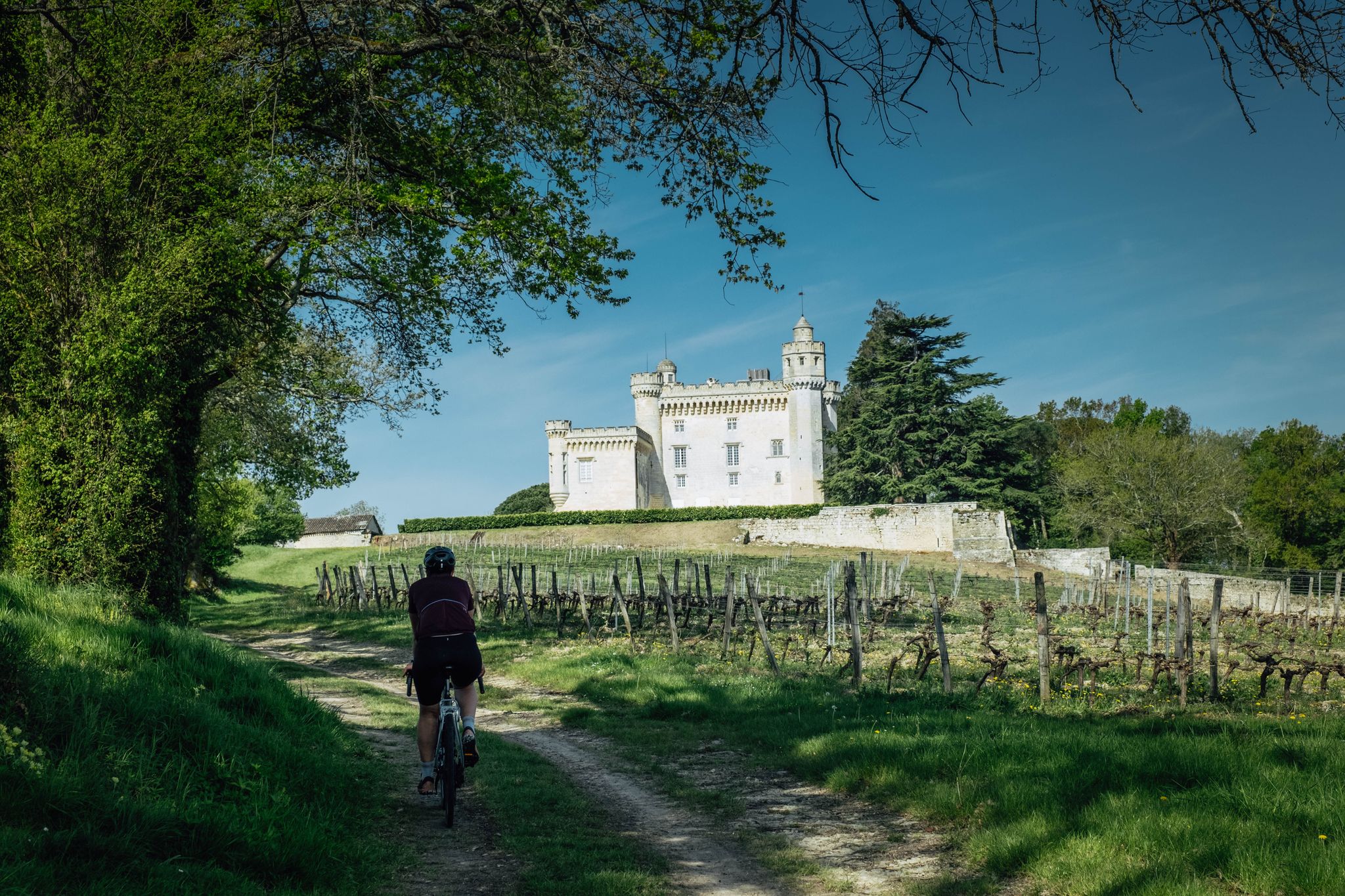
Road cycling around Saint-Émilion offers a diverse landscape characterized by expansive vineyards, rolling hills, and sections along the Dordogne River. The region, a UNESCO World Heritage site, features a mix of paved roads and dedicated greenways, providing varied terrain for cyclists. The historic village of Saint-Émilion itself is situated on a rocky promontory, contributing to noticeable climbs in the immediate vicinity. This area provides numerous no traffic road cycling routes suitable for different fitness levels.
Best no traffic road cycling…
Last updated: May 22, 2026
4.4
(23)
536
riders
82.7km
03:22
470m
470m
Moderate road ride. Good fitness required. Mostly well-paved surfaces and easy to ride.
4.7
(7)
36
riders
32.2km
01:29
170m
170m
Easy road ride. Great for any fitness level. Mostly well-paved surfaces and easy to ride.

Sign up for free
5.0
(1)
9
riders
79.6km
03:31
680m
680m
Moderate road ride. Good fitness required. Mostly well-paved surfaces and easy to ride.
5.0
(1)
25
riders
15.8km
00:38
80m
80m
Easy road ride. Great for any fitness level. Mostly well-paved surfaces and easy to ride.
15
riders
155km
06:56
1,410m
1,410m
Hard road ride. Very good fitness required. Some segments of this route may be unpaved and difficult to ride.
Get access to more routes and recommendations from other explorers.
Sign up for free
Already have an account?
Our route recommendations are based on thousands of hikes, rides, and runs completed by other people on komoot.
Start today with a free account
Your next adventure awaits.
Login or Signup




Tips from the Community

Well-lit tunnel on the cycle path
0
0
Superb 50 km cycle path through the forest and vineyards
0
0

In 1079, the Benedictine abbot Gérard de Corbie and about ten monks and knights founded Notre-Dame de La Sauve-Majeure in the large forest (in Latin Silva Major) of the Entre-deux-Mers. The support of the dukes of Aquitaine and the pilgrimage to Santiago de Compostela favored a rapid boom. At its peak in the 12th and 13th centuries, the abbey had about a hundred monks. The Hundred Years' War precipitated its decline.
0
0

Beautiful passage with a train relic recalling the history of the place, formerly a railway.
0
0

At the Creon station, several information panels about the history of the railway line are offered, and wagons and engines that operated on this line can be seen.
0
0
Good place for a coffee, crepes.. or lunch.
0
0

The Saint-Étienne church of Branne is a true haven of peace in the heart of the village, offering a setting conducive to recollection and prayer. The architecture, both sober and majestic, bears witness to the deep faith that has inhabited these places through the centuries. The beauty of the sanctuary naturally invites the elevation of the soul and contemplation of the divine mysteries. One feels an atmosphere of serenity that helps each faithful to find themselves before the Lord in silence and dignity. It is a living place of worship where the presence of Christ is felt, recalling the importance of our Christian roots in the Gironde landscape. A spiritual stopover highly recommended for all those who seek to nourish their faith within a beautifully maintained church.
0
0

Frequently Asked Questions
How many no-traffic road cycling routes are available in Saint-Émilion?
There are over 30 dedicated no-traffic road cycling routes around Saint-Émilion, catering to various skill levels. You'll find a good mix, with 7 easy routes, 24 moderate routes, and 2 more challenging options.
What kind of terrain can I expect on the no-traffic road cycling routes around Saint-Émilion?
The terrain primarily features picturesque rolling hills and gentle inclines through expansive vineyards. While some sections, particularly along the Dordogne River, are flatter, the area around Saint-Émilion itself includes noticeable climbs. Many routes utilize dedicated greenways, often repurposed from old railway lines, offering car-free and sometimes shaded paths.
Are there any easy, traffic-free road cycling routes suitable for beginners or families in Saint-Émilion?
Yes, Saint-Émilion offers several easy, traffic-free road cycling routes perfect for beginners or families. An excellent option is the Saint-Émilion – Château Angélus loop from Domaine du Ruste, which is just over 15 km with minimal elevation gain, winding through vineyards and past notable châteaux.
What is the best time of year to enjoy traffic-free road cycling in Saint-Émilion?
The spring (April-June) and early autumn (September-October) are generally considered the best times for road cycling in Saint-Émilion. During these periods, the weather is pleasant, and the vineyards are either bursting with new growth or vibrant with harvest colors. Summer can be hot, while winter can be cooler and wetter, though routes remain accessible.
Are there any long-distance, traffic-free road cycling options near Saint-Émilion?
Yes, for those seeking longer rides, routes like the Sauve Majeure tunnel – Roger Lapébie Cycle Path loop from Saint-Émilion offer over 80 km of cycling. This route incorporates sections of the Roger Lapébie Cycle Path, a former railway line, providing a relatively flat and safe experience for extended distances.
What do other cyclists say about the no-traffic road cycling routes in Saint-Émilion?
The no-traffic road cycling routes in Saint-Émilion are highly rated by the komoot community, with an average score of 4.39 stars. Reviewers often praise the stunning vineyard scenery, the charm of the historic villages, and the well-maintained, quiet roads that allow for an immersive cycling experience.
What scenic views or natural features can I expect on these no-traffic road cycling routes?
You'll be treated to expansive views of verdant vineyards, often stretching as far as the eye can see. Many routes follow the serene banks of the Dordogne River, and the historic village of Saint-Émilion itself, perched on a rocky promontory, offers dramatic scenery and elevated viewpoints. The region also features lush forests and dedicated greenways.
Are there any historical landmarks or attractions along the no-traffic road cycling routes in Saint-Émilion?
Absolutely. The routes are rich with history. You'll cycle past the medieval Saint-Émilion Village itself, with its cobbled streets and monolithic church. Other notable sights include the Saint-Christophe Church, the historic Château de Monbadon, and the ancient Cordeliers' Cloister, offering glimpses into the region's rich past.
Can I visit wineries or châteaux on the no-traffic road cycling routes?
Yes, the routes are designed to immerse you in the heart of the Saint-Émilion wine region. You'll constantly be surrounded by world-renowned vineyards and pass by numerous prestigious châteaux, many of which offer tours and tastings. The Saint-Émilion – Château Angélus loop, for example, takes you directly past famous estates.
Are there any circular no-traffic road cycling routes available?
Many of the no-traffic road cycling routes in Saint-Émilion are circular, allowing you to start and end your ride in the same location. For instance, the Saint-Émilion Climb – Saint-Émilion loop offers a substantial 59 km circular ride, exploring the region's varied landscapes.
Where can I park my car when starting a no-traffic road cycling route in Saint-Émilion?
Parking is generally available in and around the main village of Saint-Émilion, as well as in smaller surrounding towns that serve as common starting points for routes. Look for designated parking areas, especially near tourist information centers or larger châteaux, which often accommodate visitors.
Is it possible to access these routes using public transport?
Yes, the town of Libourne, a short distance from Saint-Émilion, is well-connected by train, making it a convenient access point. From Libourne, you can cycle to Saint-Émilion and connect to many of the local routes. For more detailed information on public transport options and cycling access, you might find resources like the Saint-Émilion Tourism website helpful: saint-emilion-tourisme.com.
Most popular routes around Saint-Émilion
Most popular attractions around Saint-Émilion

Get inspired with the komoot mobile app


Explore more
Browse the best Road cycling routes in other regions.
