The best traffic-free bike rides around Rincón De La Victoria
4.4
(293)
2,447
riders
28
rides
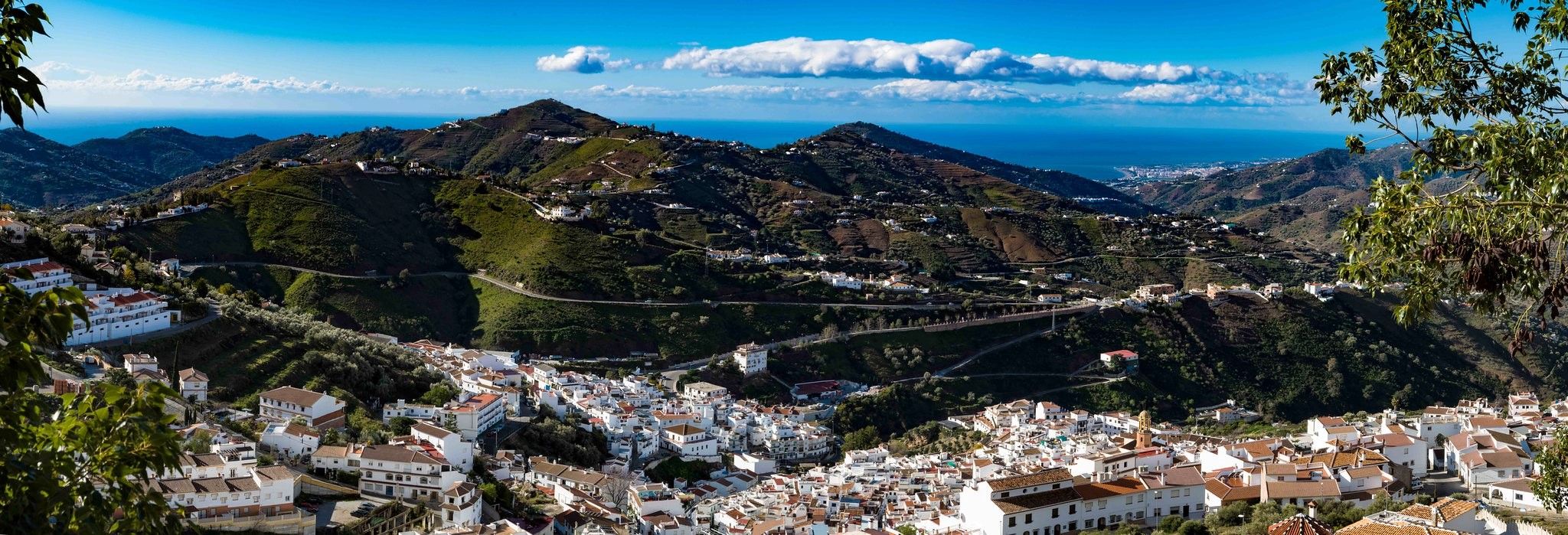
No traffic touring cycling routes around Rincón De La Victoria traverse a diverse landscape, blending coastal paths with inland ascents. The region features well-maintained coastal routes offering Mediterranean views and unique passages through old railway tunnels. Inland, the terrain transitions to rolling hills and mountainous areas of the Axarquía, providing significant elevation gains. This varied topography includes cliffs and coves along the coastline, where the sea meets the mountains.
Best no traffic touring cycling routes around Rincón De La Victoria
- The most popular no traffic touring cycling route is Benagalbón Watchtower – Marvelous view into Axarquia loop from Rincón de la Victoria, a 19.7 miles (31.7 km) trail that takes 2 hours 32 minutes to complete. This difficult route offers expansive views into the Axarquía region.
- Another top favourite among local touring cyclists is Torre del Cantal – Rincón de la Victoria Beach loop from La Cala del Moral, a difficult 18.1 miles (29.1 km) path. This route combines coastal sections with views of the Torre del Cantal and the Rincón de la Victoria beach.
- Local touring cyclists also love the Virgen del Carmen Promenade – Benagalbón Village Center loop from La Cala del Moral, a 18.6 miles (30.0 km) trail leading through coastal promenades and village centers, often completed in about 2 hours 9 minutes.
- Touring cycling around Rincón De La Victoria is defined by coastal paths, rolling hills, and Mediterranean vistas. The network offers options for different ability levels, from relaxed coastal rides to challenging inland climbs.
- The routes in Rincón De La Victoria are highly rated by the komoot community with an average score of 4.4 stars from over 270 reviews. More than 2400 touring cyclists have used komoot to explore Rincón De La Victoria's varied terrain.
Last updated: August 26, 2026
4.2
(5)
69
riders
Hard bike ride. Very good fitness required. Mostly paved surfaces. Suitable for all skill levels.
4.6
(12)
75
riders
Easy bike ride. Great for any fitness level. Mostly paved surfaces. Suitable for all skill levels.

Sign up for free
5.0
(18)
34
riders
Hard bike ride. Very good fitness required. You may need to push your bike for some segments of this route.
13
riders
20.2km
02:09
670m
670m
Hard bike ride. Very good fitness required. Mostly paved surfaces. Suitable for all skill levels.
23
riders
Moderate bike ride. Good fitness required. Mostly paved surfaces. Suitable for all skill levels.
Get access to more routes and recommendations from other explorers.
Sign up for free
Already have an account?
Our route recommendations are based on thousands of hikes, rides, and runs completed by other people on komoot.
Start today with a free account
Your next adventure awaits.
Login or Signup

Other adventures around Rincón De La Victoria

Tips from the Community

The Casa Fuerte de Bezmiliana is one of the most emblematic buildings in Rincón de la Victoria and was built in 1766, during the reign of Charles III. Its function was to reinforce the defense of the coast against pirate attacks and invasions, complementing the area's watchtower system. With its square floor plan, robust walls, corner towers, and old moat, it is a good example of 18th-century coastal military architecture. Today it functions as a cultural space and hosts exhibitions and activities throughout the year.
1
0
The Cantal tower is an old watchtower located on a rocky promontory, about 30 meters above the sea. Of Nasrid or Moorish origin, it was part of the coastal defense system and was used to warn of possible pirate attacks by means of smoke or fire signals. Today it is protected as a Site of Cultural Interest and is one of the best spots to enjoy the coastal views.
1
0
The Rincón de la Victoria tunnels were excavated in the rock for the old train that connected Málaga with Vélez-Málaga. That train, popularly known as La Cochinita, transported passengers and goods until it stopped running in 1960. Today, crossing these tunnels is a curious way to glimpse the railway history of the Málaga coast, with sea views between one section and another.
1
0

The path is one of the most beautiful sections of the Rincón de la Victoria beach promenade. At the end of this section of the promenade, there is a small chapel integrated into the rocks.
4
0
The Bezmiliana Fortress was built in 1766 in present-day Rincón de la Victoria, in the province of Málaga, and is a typical example of 18th-century military coastal architecture. Its construction took place under the reign of King Charles III, in order to better protect the Andalusian Mediterranean coast against pirate raids and enemy fleets, as the older watchtowers were no longer able to cope with these threats. The fortress has a square floor plan with massive walls, corner towers, and a moat, and was designed to serve both defensive purposes and to house soldiers and horses. Over time, the fortress lost its military importance and partially fell into disrepair. It was only towards the end of the 20th century that it was extensively restored and put to a new use. Since 1992, the Bezmiliana Fortress has served as a cultural center, hosting exhibitions, concerts, and other events. Thus, it has evolved from a military defense structure into an important historical and cultural site in the region.
0
0
The mural honoring "Verdiales and Paco Maroto" by Lalone in Benagalbón is a large-scale graffiti piece on the facade of the local folklore center. The mural pays tribute to the Verdiales, a traditional music and dance form from Málaga, and honors the important musician Paco Maroto. Lalone, a well-known street artist from Málaga, combined a realistic portrait with colorful floral elements that highlight the vibrant character of the local folklore. The work, measuring over one hundred square meters, was created using more than one hundred spray cans and was commissioned by the Rincón de la Victoria town hall. The mural aims to strengthen the cultural identity of the region and was completed in time for the traditional Verdiales competition in Benagalbón.
2
0
The Torre Vigía de El Cantal is a 14th-century Moorish coastal watchtower that was part of a defense system against pirates. It stands on a rocky outcrop about thirty meters above the sea. The tower is approximately eight to ten meters high, built of stone and limestone, and was used for signaling with smoke and fire. After the Reconquista, it lost its military significance but remained as a landmark. Today, it is protected as a cultural monument ("Bien de Interés Cultural") and offers a breathtaking view of the coast.
4
0
The Paseo Virgen del Carmen in Rincón de la Victoria is a particularly picturesque stretch of the seafront promenade, extending along the rocky coast to the cliffs of El Cantal. The path offers magnificent views of the Mediterranean Sea, and at its end, a small chapel is nestled into the rocks. This section of the Paseo Virgen del Carmen thus impressively combines nature, faith, and art – ideal for a peaceful moment by the sea, especially at sunset when the rocks and the sea are bathed in golden light.
2
1
Frequently Asked Questions
How many no traffic touring cycling routes are available in Rincón de la Victoria?
There are over 25 dedicated no traffic touring cycling routes around Rincón de la Victoria. These routes are designed to offer a peaceful cycling experience away from vehicular traffic, allowing you to fully immerse yourself in the region's natural beauty.
What is the overall difficulty level of no traffic touring cycling routes in Rincón de la Victoria?
The no traffic touring cycling routes in Rincón de la Victoria cater to various skill levels. While there is 1 easy route, the majority are moderate (8 routes) or difficult (16 routes), often featuring rolling hills and significant elevation gains as they venture inland into the Axarquía region. However, coastal paths offer flatter sections for a more relaxed ride.
What kind of landscapes can I expect on these car-free cycling routes?
You can expect a diverse range of landscapes. Coastal paths offer stunning Mediterranean views, sea breezes, and unique experiences like tunnels carved from rock. Inland routes ascend into the Axarquía region, characterized by rolling hills, challenging climbs, and panoramic vistas of traditional white villages and mountainous terrain. The coastline also features beautiful cliffs and hidden coves.
Are there any historical landmarks or natural wonders to see along the no traffic cycling routes?
Yes, several historical and natural attractions are accessible. You might encounter the 18th-century Bezmiliana Fortress, a notable historical site. The region is also home to the unique Bezmiliana Fortress. For natural wonders, the Cueva del Tesoro (Treasure Cave) is Europe's only marine cave that can be visited, offering a truly unique experience. You can also explore the Natural Monuments around Rincón De La Victoria, including the Montes de Málaga Natural Park.
Are there any family-friendly no traffic cycling routes suitable for beginners?
While many routes are moderate to difficult, there is 1 easy no traffic touring cycling route available, which is generally more suitable for families and beginners. These routes often stick to the flatter coastal paths, providing a safe and enjoyable experience for all ages. For a moderate option that combines coastal and inland sections, consider the "Casa Fuerte Bezmiliana loop" mentioned in region research, though it's not explicitly listed in the provided routes.
Are there circular no traffic touring bike routes available?
Yes, many of the no traffic touring cycling routes in Rincón de la Victoria are circular, allowing you to start and end at the same point. Examples include the challenging Benagalbón Watchtower – Marvelous view into Axarquia loop from Rincón de la Victoria or the coastal Torre del Cantal – Rincón de la Victoria Beach loop from La Cala del Moral.
What is the best time of year to enjoy no traffic touring cycling in Rincón de la Victoria?
Rincón de la Victoria benefits from a mild climate year-round, making it suitable for cycling in most seasons. However, the spring and autumn months (March-May and September-November) are particularly pleasant, offering comfortable temperatures and less intense sun, ideal for longer rides. Even winter can be enjoyable due to the mild conditions.
Is parking available near the starting points of these traffic-free routes?
Yes, parking is generally available in Rincón de la Victoria and surrounding towns. Many coastal areas and village centers offer public parking facilities that can serve as convenient starting points for your traffic-free cycling adventures. It's advisable to check local parking regulations upon arrival.
Can I reach the no traffic cycling routes using public transport?
Rincón de la Victoria is well-connected by public transport, particularly buses, which can transport you and your bike to various starting points. The dedicated coastal bike path connecting Málaga to Rincón de la Victoria is also easily accessible from Málaga city center via public transport, offering a great car-free option to begin your ride.
Are there any cafes or places to stop for refreshments along the car-free cycling paths?
Along the coastal paths, you'll find numerous cafes, restaurants, and chiringuitos (beach bars) in towns like Rincón de la Victoria, La Cala del Moral, and further west in Pedregalejo and El Palo. When venturing inland, charming white villages often have local bars and cafes where you can refuel and experience local cuisine.
What do other touring cyclists enjoy the most about touring cycling in Rincón de la Victoria?
The area is highly rated by the komoot community, with an average score of 4.4 stars. Reviewers often praise the stunning coastal views, the challenge and reward of the inland climbs, and the opportunity to explore traditional white villages away from heavy traffic. The unique natural features like the Cueva del Tesoro and the mild climate are also frequently highlighted.
Most popular routes around Rincón De La Victoria
Most popular attractions around Rincón De La Victoria

Get inspired with the komoot mobile app


Explore more
Browse the best Cycling routes in other regions.
