The best traffic-free bike rides around Los Yébenes
54
riders
23
rides
No traffic touring cycling routes around Los Yébenes traverse the varied landscapes of the Montes de Toledo mountain range, characterized by well-preserved Mediterranean forests of holm oaks and cork oaks. The terrain features a succession of mountain alignments, including the Sierra de Los Yébenes, alongside extensive "rañas" or flat plains. Cyclists will encounter rocky outcrops of quartzite and slate, with routes often passing by or crossing the Algodor River. The region offers a mix of flat river paths, agricultural plains, and rolling hills with significant elevation changes.
Best no traffic touring cycling routes around Los Yébenes
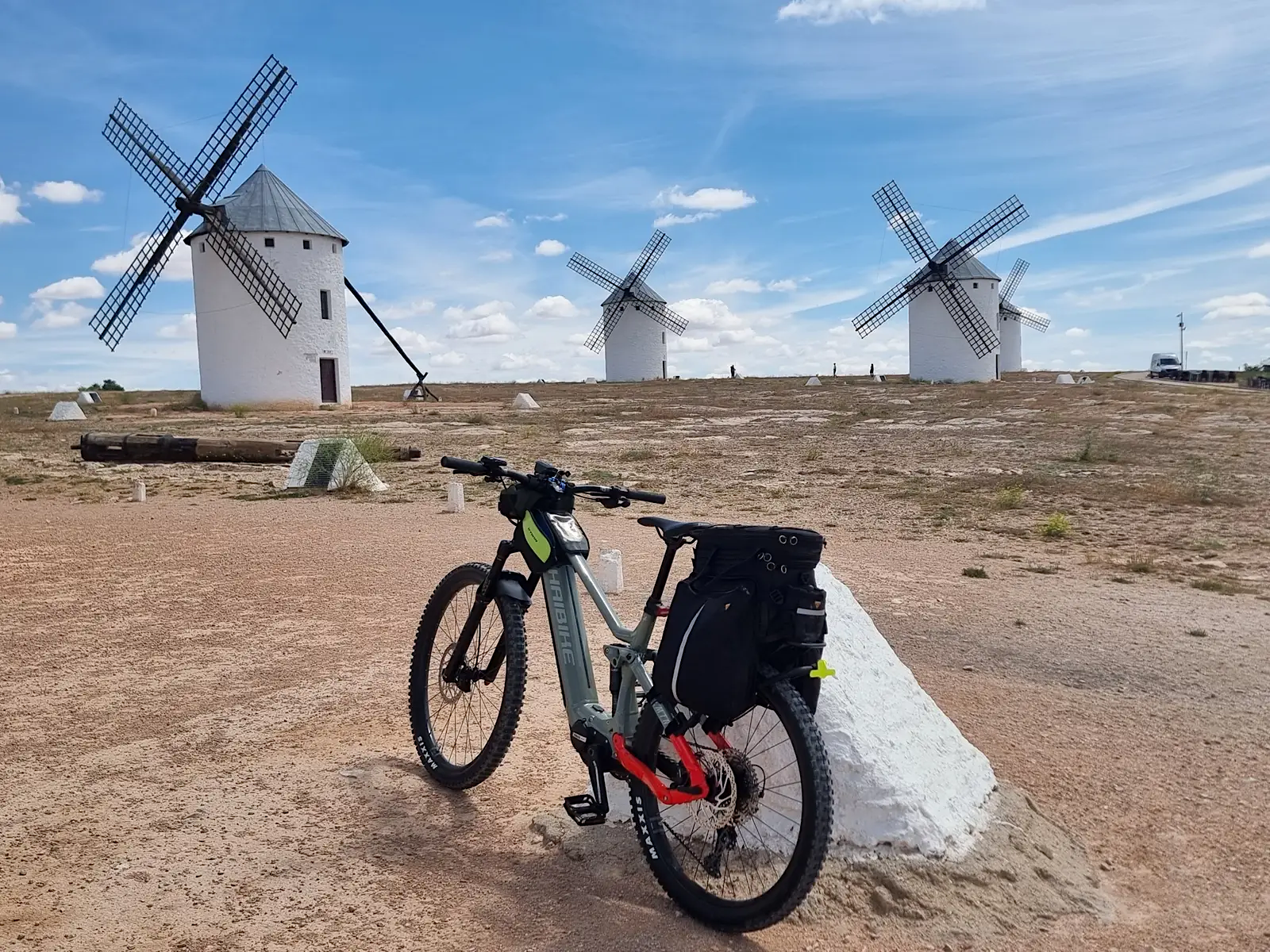
- The most popular no traffic touring cycling route is Los Yébenes – Los Yébenes Windmills loop from Los Yébenes, a 16.5 miles (26.6 km) trail that takes 2 hours 16 minutes to complete. This moderate route offers panoramic views from the Molinera Ridge, passing historical windmills.
- Another top favourite among local touring cyclists is Villarrubia de los Ojos – Fuente de Fresno loop from Fuente el Fresno, a difficult 32.8 miles (52.8 km) path. This route explores the diverse terrain of the Montes de Toledo, featuring Mediterranean forests and varied surfaces.
- Local touring cyclists also love the Manzaneque Castle – Orgaz loop from Mora, a 29.6 miles (47.7 km) trail leading through agricultural plains and past historic architecture, often completed in about 3 hours 55 minutes.
- Touring cycling around Los Yébenes is defined by Mediterranean forests, rolling hills, and river paths. The network offers options for different ability levels, from easy loops to more challenging rides with significant elevation.
- The guide includes highly-rated routes that showcase the best of the region's landscape. More than 50 touring cyclists have used komoot to explore Los Yébenes's varied terrain.
Last updated: May 21, 2026
4
riders
26.6km
02:16
250m
250m
Moderate bike ride. Good fitness required. Mostly paved surfaces. Suitable for all skill levels.
6
riders
52.8km
04:23
590m
590m
Hard bike ride. Very good fitness required. Mostly paved surfaces. Suitable for all skill levels.

Sign up for free
5
riders
47.7km
03:55
210m
210m
Moderate bike ride. Good fitness required. Mostly paved surfaces. Suitable for all skill levels.
7
riders
64.9km
06:06
1,070m
1,070m
Hard bike ride. Very good fitness required. You may need to push your bike for some segments of this route.
3
riders
19.8km
01:44
220m
220m
Moderate bike ride. Good fitness required. Mostly paved surfaces. Suitable for all skill levels.
Get access to more routes and recommendations from other explorers.
Sign up for free
Already have an account?
Our route recommendations are based on thousands of hikes, rides, and runs completed by other people on komoot.
Start today with a free account
Your next adventure awaits.
Login or Signup


Tips from the Community

Located in the town center of Manzaneque, opposite the Town Hall, in the province of Toledo, its construction is primarily attributed to Don Íñigo de Ávalos (15th century), although the heraldic shields of earlier lineages (Figueroa and Orozco) suggest a possible earlier foundation. In the 14th century, it was owned by Doña María de Orozco and her husband, Lorenzo Suárez de Figueroa. It later passed to Ávalos, and in 1487 was acquired by Álvarez de Toledo, secretary to the Catholic Monarchs. Abandoned and in ruins after the 16th and 17th centuries, it was restored in the early 20th century and remodeled in the 1970s, becoming a Site of Cultural Interest in 1985.
4
0
Located in the Plaza de la Constitución, in the historic Town Hall in the Neo-Mudéjar style, designed by Ezequiel Martín Martín and built between 1927–1928, with a striking brick facade, masonry panels, horseshoe arches and ceramic decorations, culminating in a circular tower topped with a bulbous dome (tiled, from 1930).
3
0
Mascaraque Castle is one of the town's main attractions. Origin: It was built in the 14th century on the site of an earlier Muslim fortification. Historical Owners: It was renovated by the Padilla family, who were associated with the Comuneros in the 15th century. Architecture: The keep is a prominent feature, which, according to tradition, was "demolish" (lowered) by order of the Catholic Monarchs after the Revolt of the Comuneros. Interesting Details: Pentacles or Seals of Solomon can be seen on its walls, symbols that fuel legends of protection and mystery. Current Status: It is privately owned, so the interior is not open to the public, but the exterior is impressive and well worth seeing.
1
0
Mascaraque stands out for its authentic and tranquil atmosphere, ideal for those seeking a historical getaway without the crowds. Its historical heritage—centered on the castle, the church, and several hermitages—offers a rich cultural experience alongside a friendly local life. The rural surroundings reinforce this feeling of disconnection: olive groves, vineyards, and nature trails complete the appeal. In short, a destination with its own unique identity, highly valuable for lovers of heritage and charming villages.
2
0
The Hermitage of the Immaculate Conception in Orgaz (Toledo, Spain) is a small church of historical origin and great heritage value. It is a religious building linked to popular devotion, usually erected between the 16th and 17th centuries, although some parts may be earlier.
7
0
It is located next to the Tourist Information office.
7
0
It is located next to the Tourist Information office, where they provide information about guided tours.
4
0
La Umbría del Madroñal is a recreational and natural area located in the municipality of Orgaz (Toledo), within the Montes de Toledo mountain range. It is an ideal place for hiking and enjoying nature, with several marked trails and a protected environment.
4
0
Frequently Asked Questions
How many no-traffic touring cycling routes are available around Los Yébenes?
There are 23 dedicated no-traffic touring cycling routes around Los Yébenes. These routes are designed to offer a peaceful cycling experience away from vehicle traffic, traversing the diverse landscapes of the Montes de Toledo.
What kind of terrain can I expect on these no-traffic touring routes?
The terrain varies significantly, offering a mix of experiences. You'll find routes with flat river paths and agricultural plains, as well as rolling hills and more challenging sections with notable elevation changes. The region features Mediterranean forests, rocky outcrops of quartzite and slate, and extensive 'rañas' (flat plains).
Are there routes suitable for different fitness levels?
Yes, the routes cater to various fitness levels. While most of the 23 routes are classified as moderate (14 routes), there are also 8 difficult routes for experienced cyclists and 1 easy route, such as the Los Yébenes – Cristo de la Veracruz loop from Los Yébenes, which is a good option for a less strenuous ride.
When is the best time of year to go touring cycling in Los Yébenes?
The Mediterranean climate makes spring and autumn the most pleasant seasons for touring cycling in Los Yébenes. These periods avoid the intense heat of summer and the cooler temperatures of winter, offering ideal conditions for enjoying the trails and scenery.
What natural features or landmarks can I see along these routes?
Many routes offer spectacular views of the Montes de Toledo. You can encounter the Algodor River, which several routes pass by, and enjoy panoramic vistas from the 'crestería' (crest) of the Sierra de Los Yébenes. Notable landmarks include historical windmills like those on the Los Yébenes – Los Yébenes Windmills loop from Los Yébenes, and the 14th-century Castle of the Counts of Orgaz.
Are there any family-friendly no-traffic touring routes?
Yes, there is at least one easy route, the Los Yébenes – Cristo de la Veracruz loop from Los Yébenes, which is 19.8 km long with 221 m of elevation gain, making it suitable for families or those seeking a relaxed ride. The region's focus on minimizing vehicle traffic also enhances safety for family outings.
Can I bring my dog on these touring cycling routes?
While many natural areas in Spain are dog-friendly, specific regulations for bringing dogs on cycling routes can vary. It's generally advisable to keep dogs on a leash, especially in protected natural areas or near livestock. Always check local signage or specific route guidelines for any restrictions before heading out with your pet.
Are there many circular no-traffic touring routes available?
Yes, many of the no-traffic touring routes around Los Yébenes are designed as circular loops, allowing you to start and end your ride in the same location. Examples include the Los Yébenes – Los Yébenes Windmills loop from Los Yébenes and the Los Yébenes – Cristo de la Veracruz loop from Los Yébenes.
Where can I find parking near the starting points of these routes?
Los Yébenes itself serves as a common starting point for many routes, and you can typically find parking within the town. For routes starting outside the main settlement, such as those near Umbría del Madroñal or other villages like Mora, designated parking areas are usually available. It's recommended to check the specific route details on komoot for suggested starting points and parking information.
Are there places to eat or stay along or near the no-traffic routes?
Los Yébenes and nearby towns like Orgaz offer various amenities including cafes, restaurants, and accommodation options. While the routes themselves focus on natural landscapes, you'll find places to refuel and rest in the villages and towns that serve as starting or ending points, or that you might pass through. It's a good idea to plan your stops in advance, especially on longer routes.
What are some of the more challenging no-traffic touring routes?
For experienced cyclists seeking a challenge, there are 8 difficult routes available. An example is the Umbría del Madroñal – Los Yébenes loop from Mora, which covers 64.1 km with over 1000 meters of elevation gain, offering a demanding yet rewarding experience through the Montes de Toledo.
Most popular routes around Los Yébenes
Most popular attractions around Los Yébenes

Get inspired with the komoot mobile app


Explore more
Browse the best Cycling routes in other regions.
