The best traffic-free bike rides around Alcaudete
4.8
(4)
1,191
riders
11
rides
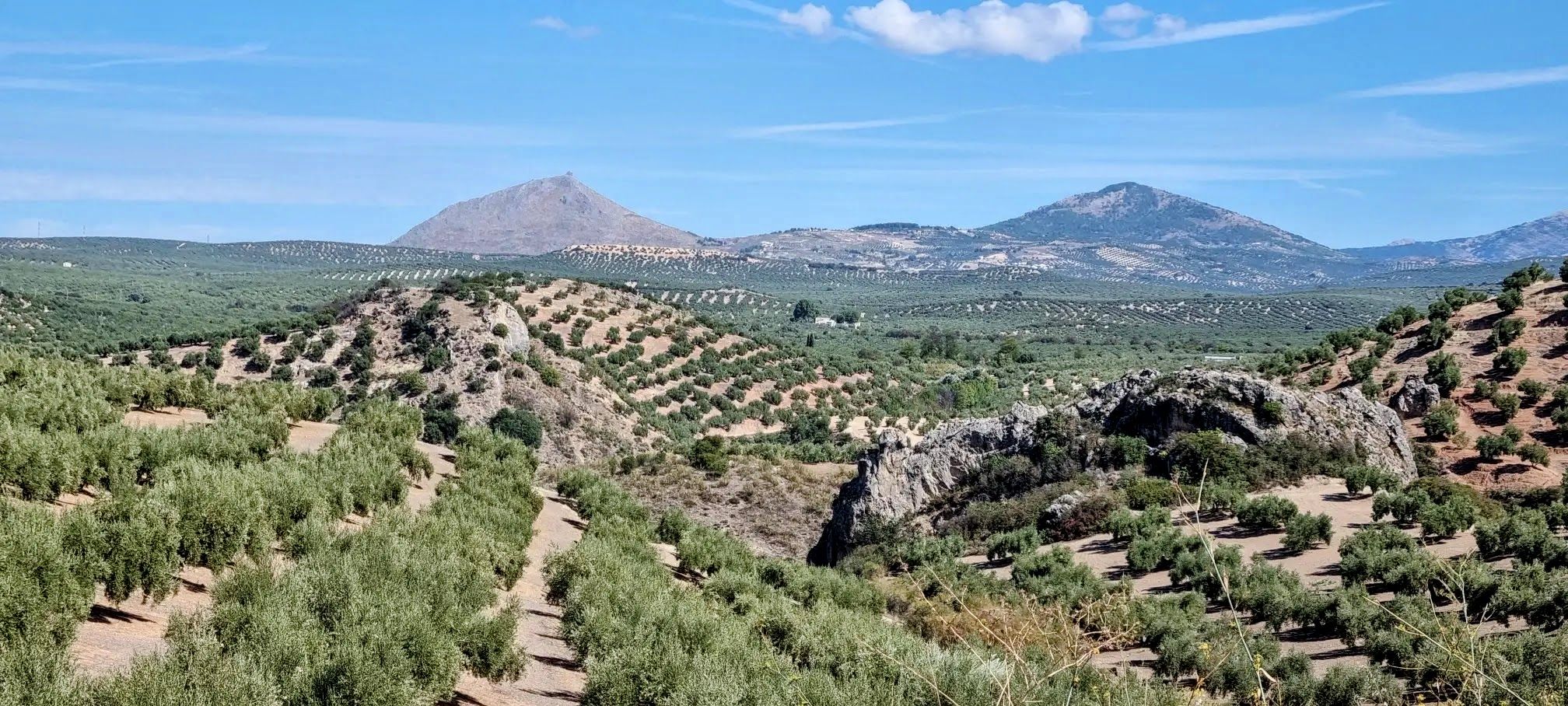
Road cycling around Alcaudete offers a diverse landscape characterized by extensive olive groves, rolling hills, and the gentle gradients of the Vía Verde del Aceite. The region transitions between the Guadalquivir countryside and the Sub-Baetic mountains, providing varied terrain for cyclists. Historic railway infrastructure, including tunnels and impressive iron viaducts, are notable features along many routes. This area is situated in the Sierra Sur region of Jaén province, Andalusia, offering a mix of natural beauty and historical points of interest.
…Last updated: November 2, 2026
7
riders
42.5km
02:33
910m
910m
5.0
(1)
58
riders
101km
05:42
1,080m
1,080m
Hard road ride. Very good fitness required. Some segments of this route may be unpaved and difficult to ride.

26
riders
70.7km
03:36
610m
610m
Moderate road ride. Good fitness required. Mostly well-paved surfaces and easy to ride.
25
riders
72.5km
03:52
1,370m
1,370m
Hard road ride. Very good fitness required. Mostly well-paved surfaces and easy to ride.
23
riders
58.8km
03:19
670m
670m
Moderate road ride. Good fitness required. Mostly well-paved surfaces and easy to ride.
Get access to more routes and recommendations from other explorers.
Already have an account?
Our route recommendations are based on thousands of hikes, rides, and runs completed by other people on komoot.
Start today with a free account
Your next adventure awaits.




Tips from the Community

Great and unusual old train station.
1
0

The Estación de Vado-Jaén is a historic stop along the Vía Verde del Aceite, located at kilometer 37 of the route between Martos and Alcaudete. Originally part of the Linares–Puente Genil railway line, it was converted into a rest and information station for cyclists and hikers after the line was closed in the 1980s. Today, it serves as an access point to the Vía Verde and offers parking and a rest area for visitors.
0
0
The station was opened in 1893 by the Compañía de los Ferrocarriles Andaluces on the Linares–Puente Genil line. It had a simple station building, a goods shed, several sidings, water depots, and a cast-iron “aguada” for steam locomotives. After the line was closed in 1984, the facilities fell into disrepair until they were restored and integrated into the network as part of the conversion to the Vía Verde. Next to the station is the Jardín de Variedades del Olivo, a botanical garden with 31 varieties of olives from 5 Mediterranean countries (including Carrasqueño de Alcaudete, Arbequina, Kalamon). There are picnic facilities here, but no restaurant.
1
0

Beware of vertigo.
1
1
Meeting point!!! Meeting point!!!
7
2

The difficult route of the Vía Verde del Aceite required the construction of tunnels and viaducts to overcome the terrain's orography. Thus, when we set off from Jaén in the direction of Córdoba, we encountered this first metal viaduct that stands out for its design and the material it is made of. It is 124 meters long and a maximum of 25 meters high, based on the modernist construction art typical of the late 19th and early 20th centuries, as the technique is similar to that used in the famous Eiffel Tower in Paris, but built and designed by disciples of the prodigious builder named Dayd´e and Pillé around 1890. The pieces and structure were built in the French city of Creil. This technique consists of joining the parts using rivets that avoid welding the metal.
16
0
It is not a locomotive, but a mid-19th century train car that presides over the beginning of the Via Verde del Aceite. It is a shame that vandalism has left it like this, as a witness to the present that reflects the reality of our society.
19
1

The Zuheros Viaduct crosses the embedded bed of the Bailón River. It has a length of 104 meters resolved into two lateral sections of 31.5 meters and a central section of 41.0 meters. Its structure is metallic and is very similar to that of the Guadajoz River Viaduct. It seems that both projects were drawn up by the same engineers, Alessandri and Delaperrière.
9
0
Frequently Asked Questions
How many no-traffic road cycling routes are available around Alcaudete?
Komoot offers a selection of 19 no-traffic road cycling routes around Alcaudete. These routes vary in difficulty, with 2 easy, 8 moderate, and 9 difficult options, ensuring there's something for every cyclist looking to explore the region without vehicle interference.
What makes the Vía Verde del Aceite ideal for no-traffic road cycling in Alcaudete?
The Vía Verde del Aceite is a converted railway line, offering a unique, traffic-free cycling experience. Its gentle gradients (maximum 2-3%) make it accessible for all skill levels, winding through endless olive groves and historic towns. Alcaudete is a key stop on this scenic route, which is renowned as one of Spain's most beautiful greenways.
What kind of terrain can I expect on the Vía Verde del Aceite?
The Vía Verde del Aceite features a mix of paved roads and compacted gravel paths. You'll cycle through a 'sea of olive trees', encounter impressive old railway infrastructure like tunnels and magnificent iron viaducts, and pass by repurposed railway stations that now serve as cafes or visitor centers.
Are there any circular no-traffic road cycling routes near Alcaudete?
Yes, there are several circular routes that incorporate traffic-free sections. For example, the Castillo de Alcaudete – Greenway Tunnel loop from Alcaudete is a challenging 99.8 km ride, while the Castillo de Alcaudete – Víboras River Viaduct loop from Alcaudete offers a moderate 56.1 km option.
Can families with children enjoy no-traffic road cycling in Alcaudete?
Absolutely. The Vía Verde del Aceite's gentle gradients and traffic-free nature make it highly suitable for families. Its smooth surfaces and the absence of cars provide a safe and enjoyable environment for cyclists of all ages. Many old railway stations along the route have been converted into cafes, offering convenient rest stops.
What notable landmarks or attractions can I see along the no-traffic cycling routes?
Along the routes, especially the Vía Verde del Aceite, you can discover several points of interest. Highlights include the impressive Víboras River Viaduct, the Beautiful section of the Vía Verde del Aceite itself, and the historic Calatravo Castle dominating Alcaudete's skyline. You might also pass by natural reserves like La Laguna Honda and La Laguna de Chinche, known for their birdlife.
Where can I find parking or public transport access for these routes?
Alcaudete is a crucial stop on the Vía Verde del Aceite, making it a convenient starting point. Parking is generally available in and around the town. While specific public transport details for direct access to the Vía Verde vary, Alcaudete's strategic location within Jaén province means it's accessible from major cities like Jaén, Granada, and Córdoba, from which you can plan your onward journey to the route.
What is the best time of year to go no-traffic road cycling in Alcaudete?
The region generally enjoys a pleasant climate for cycling. Spring (March to May) and Autumn (September to November) are often considered ideal, offering comfortable temperatures and beautiful scenery as the olive groves are either blooming or being harvested. Summers can be hot, so early mornings or late afternoons are recommended if cycling during this season.
Are there places to eat or rest along the no-traffic cycling routes?
Yes, many old railway stations along the Vía Verde del Aceite have been repurposed into cafes or visitor centers, providing excellent opportunities for rest, refreshments, and local cuisine. For example, the Restaurant and Olive Oil Interpretation Center in the Old Luque Station is a notable stop. Alcaudete itself also offers a charming town center with various dining options.
What do other cyclists say about the no-traffic road cycling experience in Alcaudete?
The no-traffic road cycling routes around Alcaudete are highly rated by the komoot community, with an average score of 5.0 stars. Reviewers often praise the serene beauty of the olive groves, the historical charm of the Vía Verde del Aceite's infrastructure, and the peaceful, car-free environment that allows for a truly immersive cycling experience.
Are there any routes that offer views of the Víboras Reservoir?
Yes, several routes provide stunning views of the Víboras Reservoir. The Sierra Ahillos and Víboras Reservoir Loop is a challenging 42.5 km route that takes you past it. You can also find specific viewpoints like the View of Víboras Reservoir and View of Embalse del Víboras, which are popular stops for cyclists.
Can I bring my dog on the Vía Verde del Aceite?
The Vía Verde del Aceite is generally dog-friendly, allowing well-behaved dogs on a leash. It's a great way to enjoy the scenic route with your canine companion. However, always ensure you carry water for your pet and clean up after them to maintain the pristine condition of the greenway.
Most popular attractions around Alcaudete

Get inspired with the komoot mobile app


Explore more
Browse the best Road cycling routes in other regions.
