The best traffic-free bike rides around Colehill
4.7
(36)
414
riders
17
rides
No traffic touring cycling routes around Colehill are characterized by diverse natural landscapes, including extensive woodlands, hedges, grasslands, and wetlands. The area features open fields and lowland heath, with the River Stour providing scenic routes along its banks. Parts of Colehill are within the South West Hampshire/South East Dorset Green Belt, preserving its natural surroundings.
Best no traffic touring cycling routes around Colehill
- The most popular no traffic touring cycling route is Castlemain Trailway – The Forest Inn loop from…
Last updated: July 1, 2026
22
riders
10.9km
00:59
90m
90m
Easy bike ride. Great for any fitness level. Mostly paved surfaces. Suitable for all skill levels.
13
riders
23.1km
02:00
150m
150m
Moderate bike ride. Good fitness required. Mostly paved surfaces. Suitable for all skill levels.

Sign up for free
9
riders
37.8km
02:28
340m
340m
Moderate bike ride. Good fitness required. Mostly paved surfaces. Suitable for all skill levels.
9
riders
69.2km
04:17
620m
620m
Hard bike ride. Very good fitness required. Mostly paved surfaces. Suitable for all skill levels.
5.0
(2)
4
riders
29.3km
01:53
240m
240m
Moderate bike ride. Good fitness required. Mostly paved surfaces. Suitable for all skill levels.
Get access to more routes and recommendations from other explorers.
Sign up for free
Already have an account?
Our route recommendations are based on thousands of hikes, rides, and runs completed by other people on komoot.
Start today with a free account
Your next adventure awaits.
Login or Signup
Popular around Colehill
Tips from the Community

St. Giles Church is known for its numerous monuments, particularly those dedicated to the Earls of Shaftesbury. Sir Anthony Ashley's Tomb: A historic highlight is the spectacular gilded tomb of Sir Anthony Ashley, dating to 1628. The tomb features intricate classical columns and symbolism. A curious detail is a sphere at his feet, which has been the subject of various theories, including that it represents a globe, a jewel, or even a cabbage. Ashley-Cooper Family Memorials: The church houses several other memorials to the Ashley-Cooper family, including tombs for the 1st, 3rd, 4th, 7th, and 9th Earls. The 1st Earl's memorial includes a bust by Rysbrack, and the 3rd Earl's is a grand wall monument by Scheemakers. Crusader Effigy: There is a much-restored 14th-century effigy of a crusading knight, believed to be Sir John de Plecy. Comper's Work: The interior is almost entirely a result of Sir Ninian Comper's restoration. This includes the highly decorated screen separating the nave and chancel, new stained glass windows, and the gilded tester over the altar.
1
0
19th-Century Gothic Revival: In the 19th century, the church was remodeled twice. The most significant work was in 1887, a Gothic Revival-style memorial to the 8th Earl of Shaftesbury. The 1908 Fire and Comper's Restoration: A catastrophic fire in 1908 destroyed most of the church's interior, leaving only the walls standing. The 9th Earl of Shaftesbury commissioned the renowned Gothic Revival architect Sir Ninian Comper to restore and rebuild the church. Comper's work, completed between 1908 and 1910, is considered one of his masterpieces. He kept the 18th-century external walls but completely redesigned the interior, adding a new north aisle and a lady chapel. His intricate work, including stained glass, a wooden screen, and numerous sculptures, makes the church a "treasure-house of Comper work," as described by Sir John Betjeman.
1
0
St. Giles Church is the parish church for the village of Wimborne St Giles in Dorset. It has a rich and complex history, marked by several rebuilds, a major fire, and the patronage of the Ashley-Cooper family, the Earls of Shaftesbury. The church's origins date back to at least the 13th century, with the first recorded rector in 1207. The current building is a fascinating mix of architectural styles due to its turbulent history. 18th-Century Georgian: The church was almost entirely rebuilt in 1732 by the Dorset architects John and William Bastard, who were also responsible for much of the reconstruction of the town of Blandford Forum after a fire. The exterior of the church, with its greensand and flint walls, still largely reflects this Early Georgian design.
1
0

lovely country park, cafe, gallery, woodland walks gardens etc
0
0


Lady Wimborne Bridge is a notable historical structure built in 1853 as part of the railway expansion into the area. This Grade II-listed bridge showcases an ornate design that reflects the influence of landowners during the mid-19th century. Although it hasn't hosted trains since 1979 it remains an important landmark, now serving as a walking path that connects to the scenic surroundings
1
0

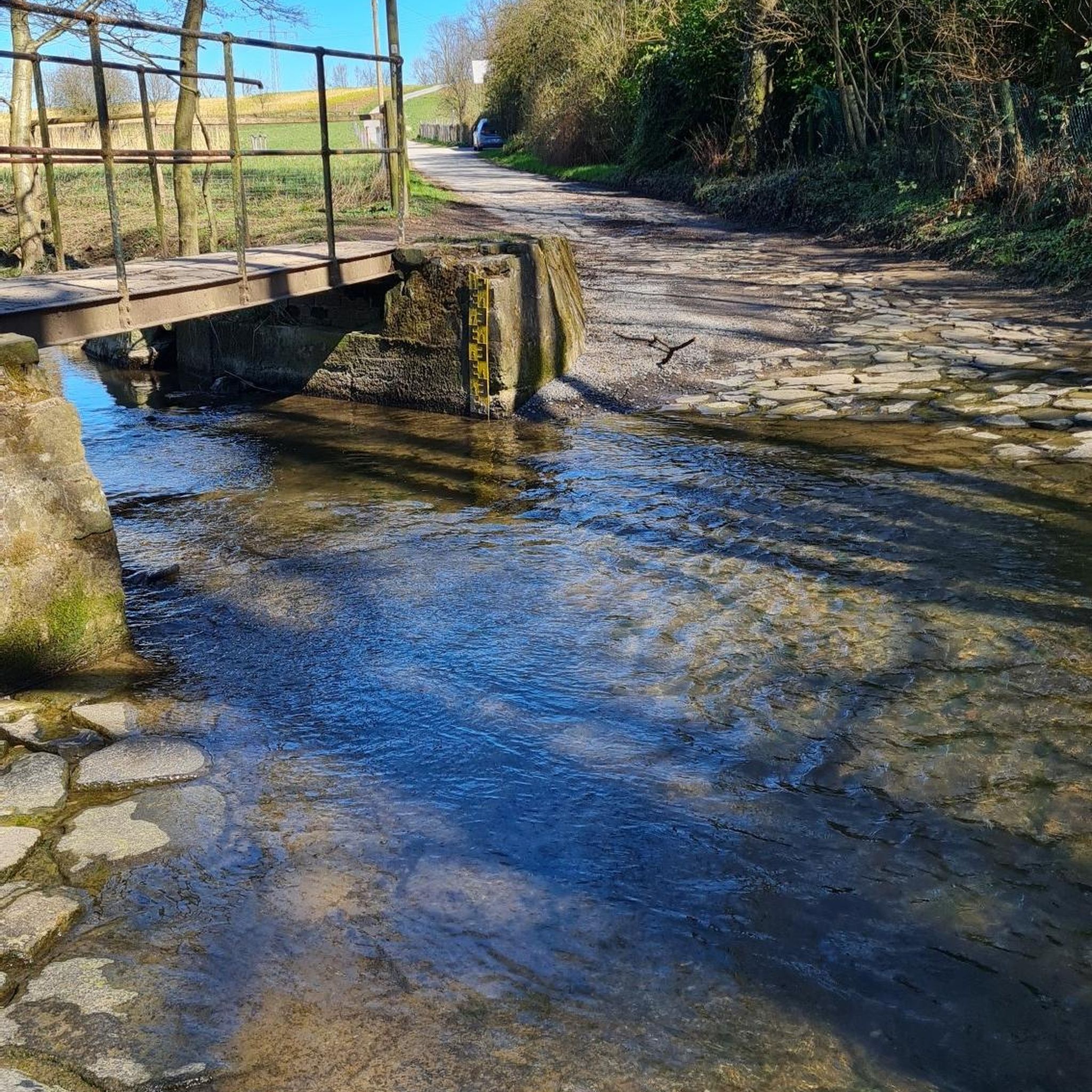
As best as I can tell there is no signage where the road forks The footbridge is supposed to be closed due to a broken floorboard ... somebody has however pulled the council fences away from the bridge allowing access ... Use at your own risk
0
0
Easiest and safest way to get across the river stour. The main road is narrow over the bridge, and heavily congested at times.
0
0
Frequently Asked Questions
How many no traffic touring cycling routes are available around Colehill?
There are 18 dedicated no traffic touring cycling routes around Colehill, catering to various skill levels. You'll find 5 easy routes, 8 moderate routes, and 5 more challenging options.
What kind of landscapes can I expect on no traffic touring cycling routes in Colehill?
Colehill's no traffic routes wind through a rich variety of landscapes. You can expect extensive woodlands, open fields, lowland heath, and sections along the River Stour. The area is well-wooded, with notable spots like the Forestry England plantation at Cannon Hill, offering a picturesque and tranquil cycling experience.
Are there any easy, family-friendly no traffic touring cycling routes in Colehill?
Yes, there are several easy, family-friendly options. A great choice is the Castlemain Trailway – The Forest Inn loop from Colehill, which is just under 11 km and offers a gentle ride. Another easy option is the Forest Trail – Castlemain Trailway loop from Colehill, providing a slightly longer, yet still accessible, experience.
What are the best times of year for no traffic touring cycling in Colehill?
The spring and autumn months generally offer the most pleasant conditions for no traffic touring cycling in Colehill, with milder temperatures and beautiful scenery. Summer is also popular, but routes can be busier. Winter cycling is possible, but be prepared for potentially wet or muddy sections, especially on unpaved paths.
Are there any circular no traffic touring cycling routes available?
Many of the no traffic touring cycling routes around Colehill are circular, allowing you to start and end in the same location. For example, the Canford Bridge – Lady Wimborne Bridge loop from Colehill offers a moderate, scenic circular ride, while the Pamphill Dairy – Kingston Lacy Kitchen Garden loop from Colehill is another excellent moderate circular option.
What interesting landmarks or attractions can I see along these routes?
You can discover several interesting landmarks and natural features. The Castleman Trailway itself is a highlight, offering a gravel route. Nearby, you might encounter historic sites like White Mill Bridge or the impressive Badbury Rings Iron Age hillfort. The area also features the historic Wimborne Minster.
Are there any longer, more challenging no traffic touring cycling routes from Colehill?
For those seeking a longer and more challenging ride, the Cranborne Garden Centre – Horton Tower loop from Colehill is a difficult route spanning over 70 km, offering significant elevation changes and a rewarding experience through the wider Dorset countryside.
What do other touring cyclists enjoy most about the no traffic routes in Colehill?
The no traffic touring cycling routes in Colehill are highly rated by the komoot community, with an average score of 4.7 out of 5 stars from 28 ratings. Reviewers often praise the tranquility of the routes, the diverse natural scenery, and the opportunity to explore the region away from busy roads.
Is public transport accessible near the no traffic touring cycling routes in Colehill?
While Colehill itself is a town, many of the no traffic routes are accessible from various points. For specific public transport options to trailheads, it's advisable to check local bus services connecting Colehill to nearby towns like Wimborne Minster or Ferndown, which may offer better connections to the wider network.
Where can I find parking for these no traffic touring cycling routes?
Parking availability varies depending on the specific starting point of your chosen route. Many routes that utilize sections of the Castleman Trailway or pass through local nature reserves often have designated parking areas nearby. It's recommended to check the individual route details on komoot for specific parking recommendations.
Can I expect to see wildlife on the no traffic touring cycling routes?
Yes, Colehill's diverse habitats, including woodlands, grasslands, and wetlands, make it a good area for wildlife spotting. Leigh Common, a Local Nature Reserve, and the banks of the River Stour are particularly rich in biodiversity. Keep an eye out for various bird species, small mammals, and insects, especially during quieter times of day.
Most popular routes around Colehill
Most popular attractions around Colehill

Get inspired with the komoot mobile app


Explore more
Browse the best Cycling routes in other regions.
