Attractions and Places To See around Dłubniański Park Krajobrazowy - Top 16
Best attractions and places to see around Dłubniański Park Krajobrazowy include a diverse landscape of natural beauty and historical sites. Located near Krakow, the park is characterized by the meandering Dłubnia River, limestone rock formations, and numerous cold springs. Visitors can explore historic churches, Baroque monasteries, and traditional manor houses nestled within agricultural lands and mosaic forests. The area offers opportunities for hiking, cycling, and discovering cultural heritage.
Best attractions and places to see around Dłubniański Park Krajobrazowy
- The most…
Last updated: July 7, 2026
St. Margaret's Church in Raciborowice
Highlight • Religious Site
Translated by Google •
Tip by

St. Nicholas Church in Wysocice
Highlight • Religious Site
Translated by Google •
Tip by

Sign up now to discover places like this
Get recommendations on the best single tracks, peaks, & plenty of other exciting outdoor places.
Sign up for free
Monastery in Imbramowice
Highlight • Religious Site
Translated by Google •
Tip by

Colorful Springs in Dłubniański Landscape Park
Highlight • Natural Monument
Translated by Google •
Tip by

Waterfalls on the Dłubnia 😉
Highlight • Waterfall
Translated by Google •
Tip by
Sign up for free to discover even more attractions around Dłubniański Park Krajobrazowy.
Sign up for free
Already have an account?
Start today with a free account
Your next adventure awaits.
Login or Signup
Popular around Dłubniański Park Krajobrazowy

Tips from the Community

It's private property, but the information board looks like it's in a national park. The owner hung a piggy bank on it. The spring and its surroundings are very pretty, but we only saw it from a distance because it was at the other end of the yard.
0
0

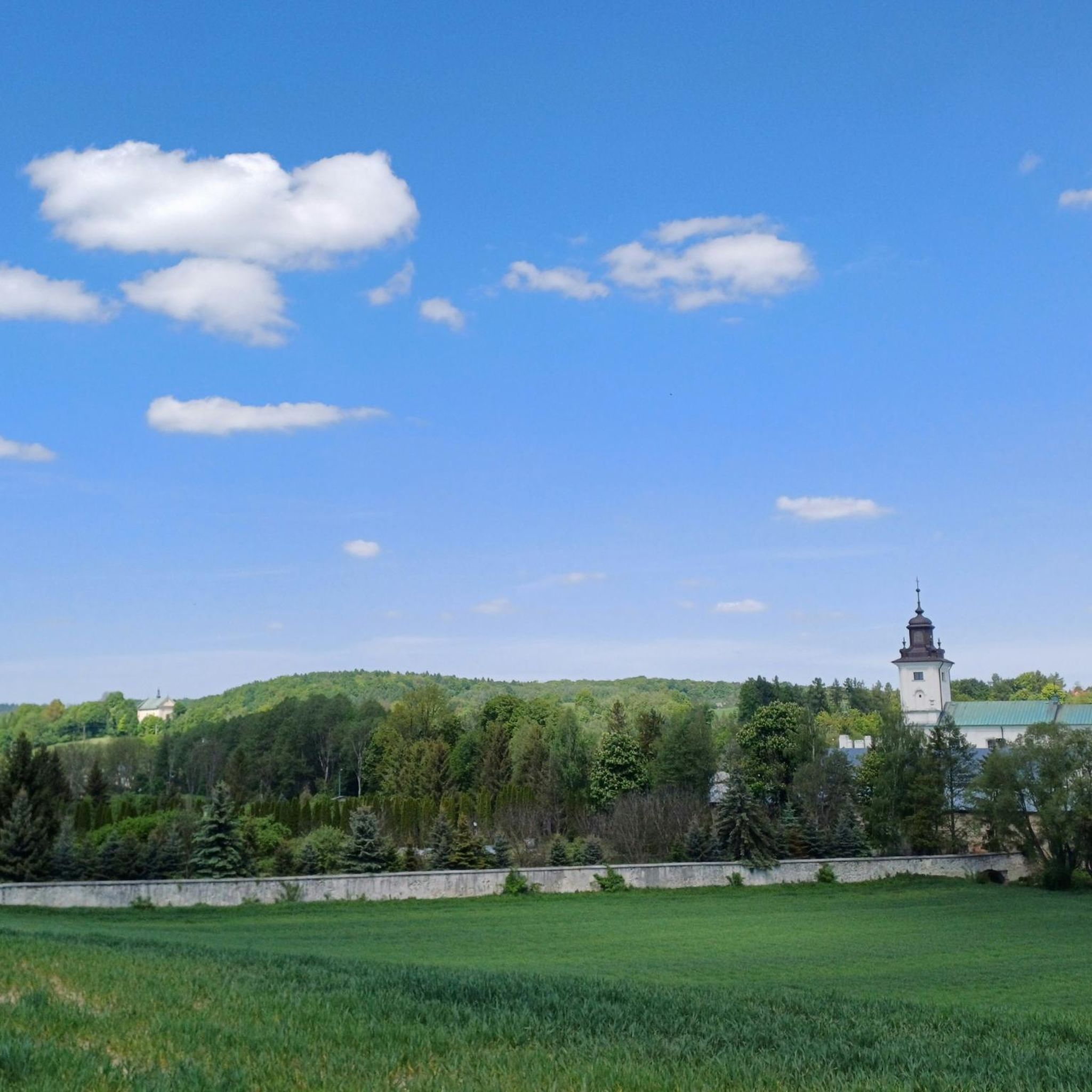
The Norbertine monastery in Imbramowice was founded around 1226 by Bishop Iwon Odrowąż and rebuilt many times, including after Tatar destruction and fires. The current Baroque appearance of the complex comes from the reconstruction in the years 1711–1740, which was led by famous Krakow artists. The church houses valuable works of art, including paintings by William the Italian, historic altars and a Rococo belfry. The monastery also contains unique works, such as a 13th-century antiphonary, works by Brueghel and a historic clock and monstrance.
1
0


The church was built in the years 1460–1476 by Jan Długosz in the so-called "long-tail style". The interior features the Main Altar in the Baroque style and a crucifix from 1440. Jan Długosz - the founder of the church and the first parish priest of Raciborowice, and Karol Wojtyła, who spent several months here as a cleric, were associated with the local temple.
0
0

A mini "beach" on the banks of the river. Nearby, the waterfalls roar beautifully. Birds singing. You can rest before continuing your journey.
0
0

Church of St. Nicholas is recognized as a classic example of Romanesque architecture. Issued at the turn of the 12th/13th century, or at most until the end of the 1st quarter of the 13th century, probably by Bishop Leo Odrowaz, the castelled peasant practically did not change much. In the 18th-19th century, only the porch and sacristy were added, the tower was crowned with a baroque helmet and a turret for a turret was added. Noteworthy is the preserved Romanesque architectural detail, e.g. at the top of the presbytery, there is a monumental sculpture of the Enthroned Madonna and Child, in the tower there are arcade window openings divided by small columns, and a portal with a tympanum decorating the entrance to the church from the porch. Inside, in the main altar made of stucco in the 17th century, there is a painting of the Mother of God, called Wysocicka (sanctuary), which is a replica from ca. XVII in the image of the Jasna Góra Madonna. The image has long been venerated by the faithful, and the early beginnings of a special Marian cult in Wysocice may be related, as it is supposed, to the sculpture of the Enthroned Madonna.
2
0


The second place in Dłubnia, where you can watch colorful springs. The access is quite strange again, because it looks as if you have to go through a private property, but there is an information plate and everything.
2
0
Frequently Asked Questions
What natural attractions can I explore in Dłubniański Park Krajobrazowy?
The park is renowned for its picturesque natural features. You can discover the meandering Dłubnia River, numerous cold, crystal-clear springs, and distinctive limestone rock formations. A notable natural monument is the Waterfalls on the Dłubnia 😉, offering a tranquil spot with the sound of flowing water. The park also features unique pulsating springs like the Jordan Spring in Ściborzyce and the Hydrografów Spring in Imbramowice, known for their vibrant blue and turquoise hues. You can also find the Colorful Springs in Dłubniański Landscape Park.
What historical and cultural sites are there to visit in the region?
Dłubniański Park Krajobrazowy is rich in cultural heritage. You can explore historic churches, Baroque monasteries, and traditional manor houses. Key sites include the Monastery in Imbramowice, a Norbertine monastery with a rich Baroque interior, and the Gothic St. Margaret's Church in Raciborowice. Another significant site is the well-preserved Romanesque St. Nicholas Church in Wysocice, dating back to the early 13th century. The Wooden Church of the Holy Trinity in Iwanowice, part of the Wooden Architecture Route, is also a notable attraction.
Are there family-friendly attractions around Dłubniański Park Krajobrazowy?
Yes, several attractions are suitable for families. Natural spots like the Waterfalls on the Dłubnia 😉 offer a pleasant environment for relaxation. Many of the historic churches and monasteries, such as the Monastery in Imbramowice and St. Margaret's Church in Raciborowice, are also categorized as family-friendly, allowing for educational and engaging visits for all ages.
What outdoor activities can I do near these attractions?
The area around Dłubniański Park Krajobrazowy offers various outdoor activities. You can enjoy hiking and walking on numerous trails amidst beautiful natural scenery. Cycling is popular, with the Dłubnia Valley Cycle Trail providing a great way to explore. Kayaking on the Dłubnia River is also an option. For specific routes, you can find options for hiking and MTB trails in the region.
Are there easy hiking trails suitable for beginners or families?
Yes, there are easy hiking options available. For instance, you can find an easy hiking loop from Michałowice, which is about 2.5 km long. Other easy trails include loops from Mistrzejowice and Raciborowice, offering pleasant walks for those seeking less challenging routes.
What is the best time to visit Dłubniański Park Krajobrazowy?
While specific seasonal recommendations are not provided, the park's natural beauty, including its forests and river, suggests that spring and autumn would be ideal for hiking and enjoying the scenery. Spring brings fresh greenery and blooming flora, while autumn offers vibrant foliage. Summer is also suitable for outdoor activities, though it might be warmer.
Are there any unique natural springs to see in the park?
Yes, the park is famous for its numerous cold, crystal-clear springs, particularly in its upper and middle sections. The Jordan Spring (Źródło Jordan) in Ściborzyce is considered one of the most beautiful, with crystal-clear, turquoise water. The Hydrografów Spring (Źródło Hydrografów) in Imbramowice is another significant pulsating spring, known for its beautiful blue and turquoise hues and rare diatom species. You can also visit the Colorful Springs in Dłubniański Landscape Park.
Can I find any Romanesque architecture in the area?
Absolutely. The St. Nicholas Church in Wysocice is a prime example of Romanesque architecture. Dating back to the early 13th century, this well-preserved defensive church offers a unique glimpse into the past with its original structure and Romanesque architectural details, including arcade window openings and a portal with a tympanum.
What do visitors enjoy most about Dłubniański Park Krajobrazowy?
Visitors particularly appreciate the park's blend of natural beauty and historical significance. The tranquil atmosphere of spots like the Waterfalls on the Dłubnia 😉, the architectural grandeur of the Monastery in Imbramowice, and the historical depth of churches like St. Margaret's Church in Raciborowice are frequently highlighted. The opportunity for peaceful walks through forests and along the Dłubnia River is also a major draw.
Are there any unique rock formations in the park?
Yes, the park features picturesque landscapes with numerous limestone rock formations, often compared to those found in Ojców National Park. Notable formations include Durszlak, Mały Chiński Murek, and Sokół, which add to the scenic beauty of the area.
Are there any cycling routes available in the park?
Yes, the Dłubnia Valley Cycle Trail offers a dedicated path for exploring the park on two wheels. Additionally, there are various MTB trails in the wider region, catering to different skill levels, such as the moderate Wawel Dragon Statue loop or more difficult routes like the Będkowska Valley loop.
Can I find any historic manor houses or parks in the area?
Yes, the park is home to several historic manor houses and their associated parks. The Popielów Manor near Jordan Spring in Ściborzyce, designed by Teodor Talowski, is a notable example. You can also find 18th and 19th-century manor complexes in villages along the Dłubnia River, including Młodziejowice, Tarnawa, Dziekanowice, Glanów, and Minoga. The former manor in Maszków is particularly interesting for its natural monuments: a tulip tree and a small-leaved lime.
Most popular routes around Dłubniański Park Krajobrazowy

Get inspired with the komoot mobile app


Explore more
Still not found the Highlight you’re looking for? See guides of the top attractions in other regions:
