The best hikes from bus stations around Braunston
4.5
(423)
3,816
hikers
17
hikes
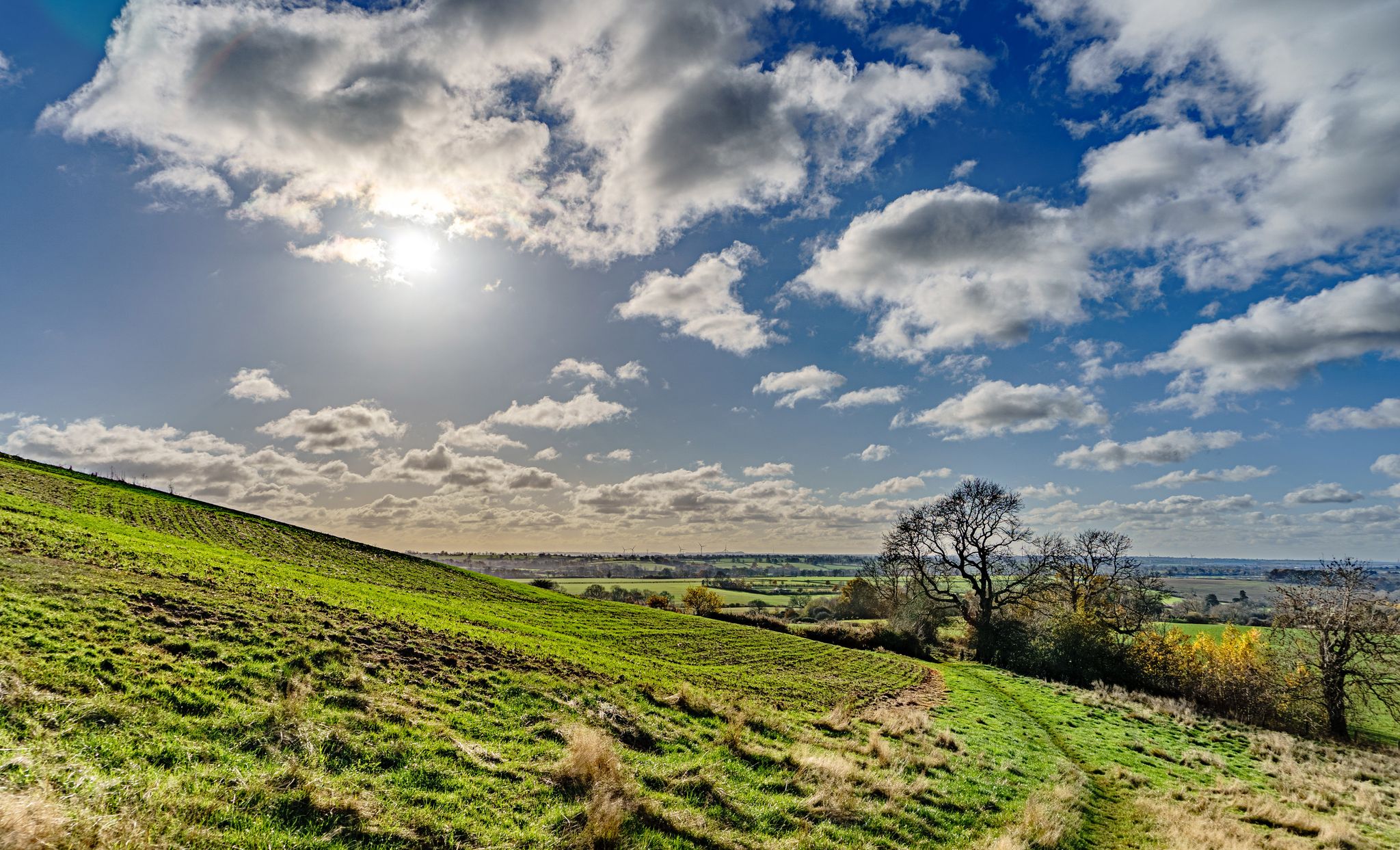
Hiking around Braunston offers diverse landscapes for outdoor enthusiasts, characterized by gently rolling countryside and extensive canal networks. The terrain features open fields, quiet country lanes, and tranquil riverbanks along the River Gwash and River Chater. Varied scenery includes mixtures of farmland and small woodlands, providing a range of paths with gentle elevation changes.
Best bus station hiking trails around Braunston
- The most popular bus station hiking route is Braunston Tower Mill – Braunston Tunnel loop from Braunston, an…
Last updated: May 3, 2026
4.8
(8)
41
hikers
13.3km
03:31
130m
130m
Moderate hike. Good fitness required. Easily-accessible paths. Suitable for all skill levels.
4.6
(5)
17
hikers
Moderate hike. Good fitness required. Easily-accessible paths. Suitable for all skill levels.

Sign up for free
5.0
(1)
22
hikers
Moderate hike. Good fitness required. Easily-accessible paths. Suitable for all skill levels.
5.0
(2)
18
hikers
Moderate hike. Good fitness required. Easily-accessible paths. Suitable for all skill levels.
5.0
(2)
10
hikers
11.4km
03:01
100m
100m
Moderate hike. Good fitness required. Easily-accessible paths. Suitable for all skill levels.
Get access to more routes and recommendations from other explorers.
Sign up for free
Already have an account?
Our route recommendations are based on thousands of hikes, rides, and runs completed by other people on komoot.
Start today with a free account
Your next adventure awaits.
Login or Signup
Popular around Braunston
Other adventures around Braunston

Tips from the Community

St Peters church is a beautiful reminder that there this was once a village here, camping available in the church a lovely overnight stop for bike Packers
0
0

Good to see so many canal boats together
1
0

Between 1375 and 1611, Ashby Manor House was home to the Catesby family. It was here that Robert Catesby and his fellow rebels, including Guy Fawkes, conspired to blow up the Houses of Parliament in an act of treason that became known as the Gunpowder Plot. Today, the impressive manor is home to beautiful gardens and grounds and is available for private hire.
0
0
The Braunston Tunnel is 2,042 yards in length on the Grand Union Canal about 830 yds east of Braunston, Northamptonshire, If you take a small ride up the service road and look out for some nice tech trails back down to the towpath, great fun 👍
0
0

This plaque is dedicated to the Whitlocks one of the three Braunston boatmen families who worked the canals to their end. In 1940 Rose and an all female crew of mother, sister, and niece Laura aged eleven, set the record for Samuel Barlow Coal Co. by loading coal twice in one week at Coventry, after unloading the first in London. When the trade ceased in 1970 the Whitlocks tied up here and lived the next six years on Butty Lucy afloat in the old way, until Rose's arthritis forced them to move onto the bank. Rose Whitlock (born Ward) 1917 1999 Bill Whitlock 1915 2001 Laura Carter 1929 20
1
0
THIS PLAQUE IS DEDICATED TO THE MEMORY OF THE BRAYS ONE OF THE THREE BRAUNSTON BOAT MEN FAMILIES WHO WORKED THE CANALS TO THE END. FINALLY THEY CARRIED COAL ON THE JAM OLE RUN FROM THE MIDLANDS TO LONDON UNTIL THE TRADE CEASED IN OCTOBER 1970 AND WITH IT THE BOAT MEN'S WAY OF LIFE. HERE THE BRAYS THEN TIED UP AND LIVED THE REMAINDER OF THEIR LIVES AFLOAT IN THE OLD WAY. ARTHUR BRAY (CAPTAIN) 1905 1998 ROSE BRAY/ KENDALL /(BORN WARD) 1898 1971 ERNIE KENDALL 1927 1996
0
0
This is a tower mill. It was built in c1800 for cereal milling (grinding). It stopped working in c1895. It was converted to a house in c1920. This is when the top floor was demolished.
0
0
The church of ALL SAINTS consists of chancel 23 ft. by 17 ft. 6 in., with vestry on the north side, clearstoried nave 41 ft. 8 in. by 17 ft. 6 in., north aisle 9 ft. 6 in. wide, south aisle about 8 ft. wide, south porch, and west tower 11 ft. square, all these measurements being internal. The tower is surmounted by a short leadcovered spire. The width across nave and aisles is 40 ft. All the roofs are leaded and of low pitch, with overhanging eaves. The building is generally of roughly coursed rubble, but has been much restored. The vestry was added about 1860, and the restoration of the chancel took place in 1887–8, when its south wall was rebuilt. The nave was restored in 1890, the old high closed pews and a west gallery erected in 1791 being then removed. The present seating dates from 1928. The tower is said to have been taken down to its foundations and rebuilt in 1728–9, but the old materials appear to have been used again. The earliest work in the building dates from c. 1150, to which period the half-round responds of the chancel arch belong: they have moulded bases and scalloped capitals with square chamfered abaci or imposts continued along the wall on the nave side. The extent of the nave of the 12th century church was probably the same as at present, but in the first half of the 13th century a south aisle was added and the chancel rebuilt as now existing. The south arcade and chancel arch are of this period (c. 1225–30), and the south doorway is also probably contemporary, though in appearance rather earlier in style. At the beginning of the 14th century a north aisle was added to the nave, and about a century later the tower appears to have been erected, followed shortly after by the addition of the clearstory. New windows were inserted in the chancel and south aisle, the east end of the aisle refaced or rebuilt, and the porch added. All this later work apparently extended over a considerable period towards the end of the 14th and the beginning of the 15th century. All the walls are plastered internally. The chancel has a chamfered plinth, but is without buttresses. At the east end of the north wall is the only remaining 13th-century window, a single lancet, (fn. 107) the hood of which has notch-stops. The fourcentred east window and one in the rebuilt south wall are of three cinquefoiled lights, and there is a square-headed window of two trefoiled lights west of the modern priest's doorway. A round-headed north doorway, now opening into the vestry, may belong to the 12th-century church. The unmoulded trefoiled piscina recess has a slot for a wooden shelf, but the bowl is new; below the south-east window is a rectangular aumbry. The chancel arch is of two chamfered orders without hood-mould. The roof is modern, with flat-boarded ceiling. The nave arcades are of three bays, with pointed arches of two chamfered orders, those of the 13thcentury south arcade springing from cylindrical piers with circular moulded capitals and bases, and from similar half-round responds. The arches have plain hood-moulds on each side. The piers and responds of the later north arcade are octagonal, with deeper moulded capitals and the hood-moulds of the arches have head-stops. The south doorway is a good example of early 13th-century work, with semicircular arch of two orders, and hood-mould enriched on the underside with a continuous line of dog-tooth. The inner order has a keel-shaped moulding springing from plain chamfered imposts on nook-shafts with moulded bases, and simple water-leaf (west) and foliated capitals. There are traces of colour on the wall on either side the opening inside the porch, and a scratch dial at the top of the west jamb. The south aisle is lighted by two windows in the south wall, one on each side of the porch, that to the east being of three lights similar to those in the chancel, and the other a square-headed window of two trefoiled lights. There is also a single-light trefoiled window of c. 1350 in the west wall, but the east wall is blank. In the north aisle are two 14thcentury square-headed windows respectively of three and two cinquefoiled lights, and west of the blocked doorway a modern window of two lights. The end walls are blank. There are three pointed clearstory windows on each side, all of two cinquefoiled lights, with tracery and hood-moulds, and above them a hollow-moulded string. The low-pitched east gable has a modern apex cross, and stands high above the chancel roof. The tower is faced with ashlar, and is of three stages, with moulded plinth and diagonal buttresses the height of the lower stage. The pointed bellchamber windows are of two trefoiled lights with quatrefoil in the head, and the tower terminates with a plain moulded parapet behind which the tiny spire is scarcely seen. There is no vice. The two lower stages are blank on the north and south, but on the west there is a square-topped doorway with plain lintel, and above it a second lintelled opening with wooden door; over this again is a glazed pointed opening with central mullion, the whole arrangement apparently dating from the 18th-century rebuilding. There is no arch to the nave, the west wall of which is pierced by a square-headed doorway. The font is of 12th-century date, and consists of a large rectangular bowl with plain sides and shafted angles with cushion capitals and moulded bases; the capitals have a line of pellets at the angle. The modern Gothic oak pulpit was formerly in Wisbech parish church. In the floor at the east end of the south aisle are the brass effigies of Kenelme Cheseldyn of Uppingham (d. 1596) and his wife Winefred, daughter of Francis Say of Wilby, Northants, and an armorial brass plate to Edward Cheseldyn of Braunston (d. 1642). A large blue floor-slab in front of the chancel arch has the indents of a single figure and an inscription. There are considerable traces of mediæval paintings on the east and south walls of the south aisle. In the middle of the east wall is an image bracket about 6 ft. 6 in. above the floor, which probably supported a figure of our Lady of Sorrows, of which the painting formed the background. An angel with outstretched wings is depicted on either side and on a medallion at the north end are a cross and the instruments of the Passion. On the south wall are portions of a text and fragments of a painting in red and black of the Mass of St. Gregory. It depicts an altar with chalice and paten, and about the altar four candlesticks and a patriarchal cross. There is a stone coffin in the south aisle, and in the churchyard is preserved a grotesque stone figure (fn. 116) of the type known in Ireland as 'Sheela-na-gigs,' which was found in use, face downward, as a doorstep into the church. There are four bells in the tower: the treble is by Thomas Newcombe (II) of Leicester (c. 1562–80), inscribed 'S. Thoma,' the second dated 1710, the third by Hugh Watts of Leicester (c. 1593–1615), inscribed 'Praise the Lord,' and the tenor by Thomas Norris of Stamford, 1660. The plate consists of a cup of 1570–71; a paten of 1640–41; an undated paten with makers' marks 'R-S' only, and a pewter flagon.
0
0
Frequently Asked Questions
How many bus station hiking trails are available around Braunston?
There are 16 bus station accessible hiking trails around Braunston, offering a variety of experiences for outdoor enthusiasts. These include 4 easy routes and 12 moderate routes, ensuring options for different fitness levels.
Are there any easy, family-friendly walks accessible from Braunston's bus stations?
Yes, Braunston offers 4 easy routes perfect for families or those seeking a leisurely stroll. Many of these routes follow the canal towpaths, which are generally flat and accessible. While specific family-friendly routes are not detailed here, the easy routes are a great starting point. The Brays Family Memorial Plaque – The Stop House, Braunston loop from Braunston is a moderate option at 7.67 km that could be suitable for active families.
What kind of landscapes can I expect to see on bus-accessible hikes in Braunston?
Hikes around Braunston showcase a diverse English countryside. You'll encounter gently rolling fields, tranquil riverbanks along the River Gwash and River Chater, and charming woodlands. A significant feature is the extensive canal network, including the Grand Union Canal and Oxford Canal, offering pleasant towpath walks with historic iron bridges and locks.
Are there any circular walks starting from a bus station in Braunston?
Yes, many of the routes are designed as circular loops, allowing you to start and end at the same point, which is convenient when relying on public transport. For example, the Braunston Tower Mill – Braunston Tunnel loop from Braunston is a moderate 13.26 km circular hike that offers varied scenery.
What interesting landmarks or attractions can I see along the bus station hiking trails?
The trails around Braunston offer glimpses of several interesting features. You can explore the historic canal infrastructure, including the famous Braunston Locks and Braunston Turn where the canals meet. The Braunston Canal and Marina – Braunston Tower Mill loop from Braunston will take you past the Braunston Tower Mill, a Grade II-listed landmark. While not directly on every route, nearby attractions include Draycote Water and viewpoints like Borough Hill Iron Age Hill Fort.
Are there any routes that offer scenic viewpoints or expansive views?
Yes, the rolling countryside around Braunston naturally provides many opportunities for scenic views. Routes that traverse higher ground or open fields will offer expansive vistas of the landscape. For example, the The Stop House, Braunston – The Boathouse, Braunston loop from Braunston, at 9.2 km, includes sections with good views. Additionally, nearby viewpoints like Cracks Hill Viewpoint are accessible in the wider region.
What do other hikers enjoy most about hiking in Braunston?
The area is highly rated by the komoot community, with an average score of 4.59 stars from 421 ratings. Reviewers often praise the peaceful canal towpaths, the charming village atmosphere, and the diverse mix of open fields and woodlands that make for varied and enjoyable walks.
Are there any longer, more challenging hikes accessible by bus?
While there are no 'difficult' graded routes, several moderate hikes offer a good challenge for those looking for longer distances. The The Boathouse, Braunston – The Stop House, Braunston loop from Braunston is a substantial 12.95 km route, and the Braunston Tower Mill – Braunston Tunnel loop from Braunston is 13.26 km, both providing a rewarding day out.
Can I find routes that pass by water features like lakes or reservoirs?
While Braunston is famous for its canals, the wider area also features lakes and reservoirs. Draycote Water is a popular spot for outdoor activities, including hiking, and is known for its birdlife. Another option is Daventry Country Park Reservoir, both offering pleasant waterside walks.
What is the best time of year to go hiking from Braunston's bus stations?
Braunston offers enjoyable hiking year-round. Spring brings blooming wildflowers and lush greenery, while autumn showcases beautiful fall colors. Summer is ideal for longer days and warmer weather. Winter walks can be picturesque, especially along the canals, though some routes through fields might be muddy. Always check local weather conditions before heading out.
Are there any routes that include historical sites or points of interest?
Absolutely. Braunston itself is rich in history, particularly its canal heritage. Many routes will take you past historic canal locks, bridges, and the iconic Braunston Tower Mill. The village church, often referred to as the 'cathedral of the canals,' is also a notable landmark. The region's history is woven into its landscape, offering a blend of natural beauty and cultural interest.
Most popular attractions around Braunston

Get inspired with the komoot mobile app


Explore more
Browse the best Hikes in other regions.
