The best dog-friendly hikes and walks around Tongeren
4.5
(21759)
108,551
hikers
114
hikes
Dog friendly hiking trails around Tongeren offer a varied landscape of rolling hills, forests, and pastures, characteristic of the Haspengouw region. The terrain often includes sunken lanes and forest paths, providing diverse natural beauty. Hikers can explore picturesque valleys, such as the Veurs Valley, and areas known for their orchards. The region's geology contributes to its varied elevations and natural features, making it suitable for different hiking preferences.
Best dog friendly hiking trails around Tongeren
- The most popular dog friendly hiking route is Bench by the Gulp – Enormously high walls. loop from Teuven, a 5.0 miles (8.0 km) trail that takes 2 hours 17 minutes to complete. This moderate route features notable elevation changes and scenic views.
- Another top favourite among local hikers is Bench with a view – View of the Lake loop from Eisden Damhertstraat, a moderate 5.1 miles (8.3 km) path. This trail offers views of a lake and is completed in about 2 hours 8 minutes.
- Local hikers also love the Saint Amor Chapel – Boardwalk Munsterbos loop from Munsterbilzen, a 7.0 miles (11.2 km) trail leading through the Munsterbos, often completed in about 2 hours 52 minutes.
- Hiking around Tongeren is defined by rolling landscapes, diverse forests, and open pastures, often incorporating historical elements. The network offers options for different ability levels, from easy walks to more challenging routes.
- The routes in Tongeren are highly rated by the komoot community with an average score of 4.5 stars from over 20,000 reviews. More than 108,000 hikers have used komoot to explore Tongeren's varied terrain.
Last updated: June 30, 2026
4.6
(114)
426
hikers
8.00km
02:17
180m
180m
Moderate hike. Good fitness required. Easily-accessible paths. Suitable for all skill levels.
4.5
(92)
573
hikers
11.2km
02:52
40m
40m
Moderate hike. Good fitness required. Easily-accessible paths. Suitable for all skill levels.

Sign up for free
4.7
(55)
276
hikers
28.6km
07:23
150m
150m
Hard hike. Very good fitness required. Easily-accessible paths. Suitable for all skill levels.
4.6
(56)
271
hikers
5.76km
01:37
120m
120m
Easy hike. Great for any fitness level. Easily-accessible paths. Suitable for all skill levels.
4.5
(49)
336
hikers
8.07km
02:03
20m
20m
Moderate hike. Good fitness required. Easily-accessible paths. Suitable for all skill levels.
Get access to more routes and recommendations from other explorers.
Sign up for free
Already have an account?
Our route recommendations are based on thousands of hikes, rides, and runs completed by other people on komoot.
Start today with a free account
Your next adventure awaits.
Login or Signup
Popular around Tongeren

Dog-friendly hikes in Veursbos-Roodbos-Vossenaerde Bosreservaat
Dog-friendly hikes in Mechels Bos

Dog-friendly hikes in Gulpvallei Met Omgeving
Dog-friendly hikes in Vlaams Natuurreservaat Vallei Van De Ziepbeek

Dog-friendly hikes in Jongenbos
Dog-friendly hikes in Vlaams Natuurreservaat Mechelse Heide
Dog-friendly hikes in Pietersembos
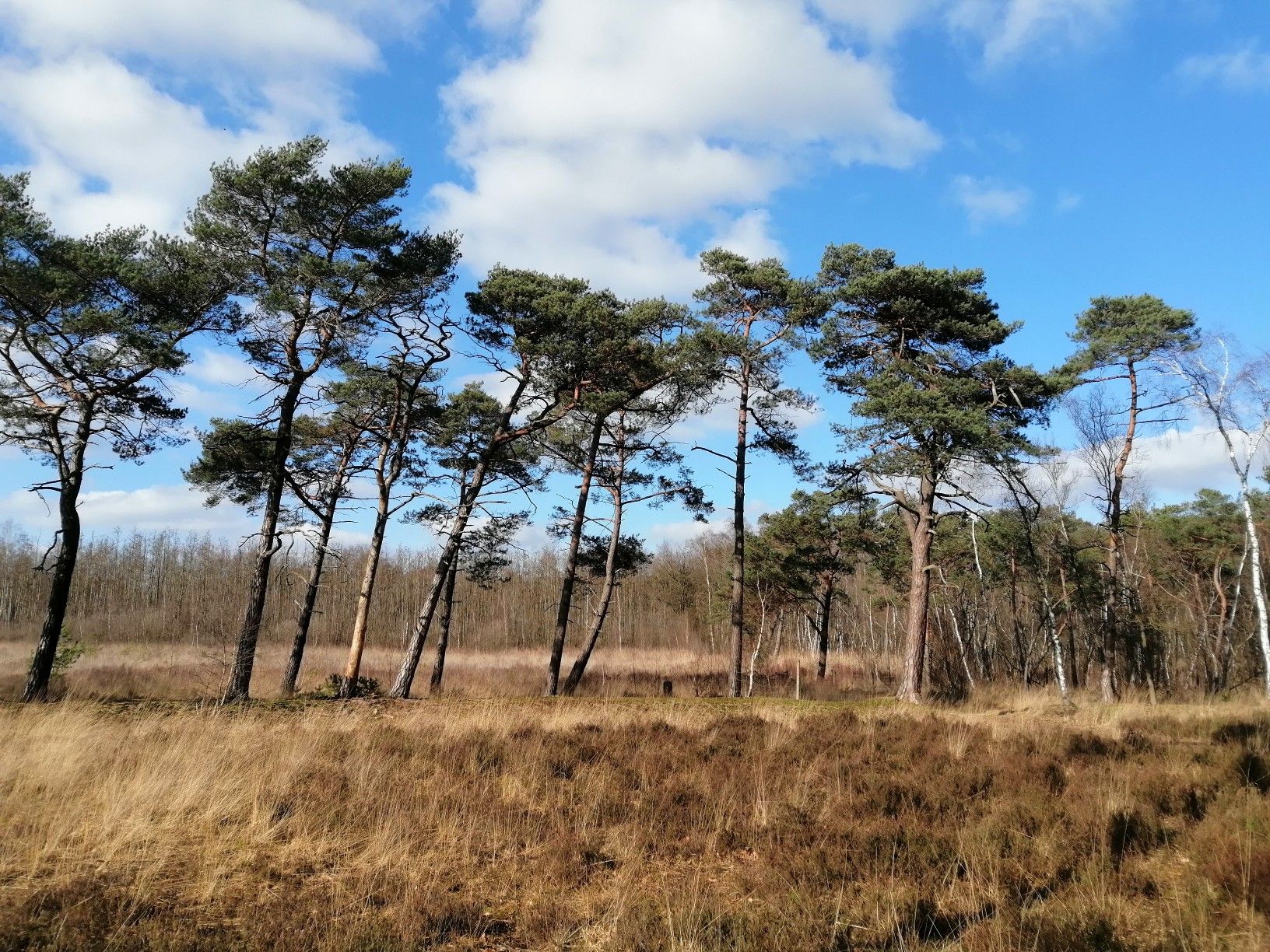
From Flanders to the Ardennes — GR 5 in Belgium
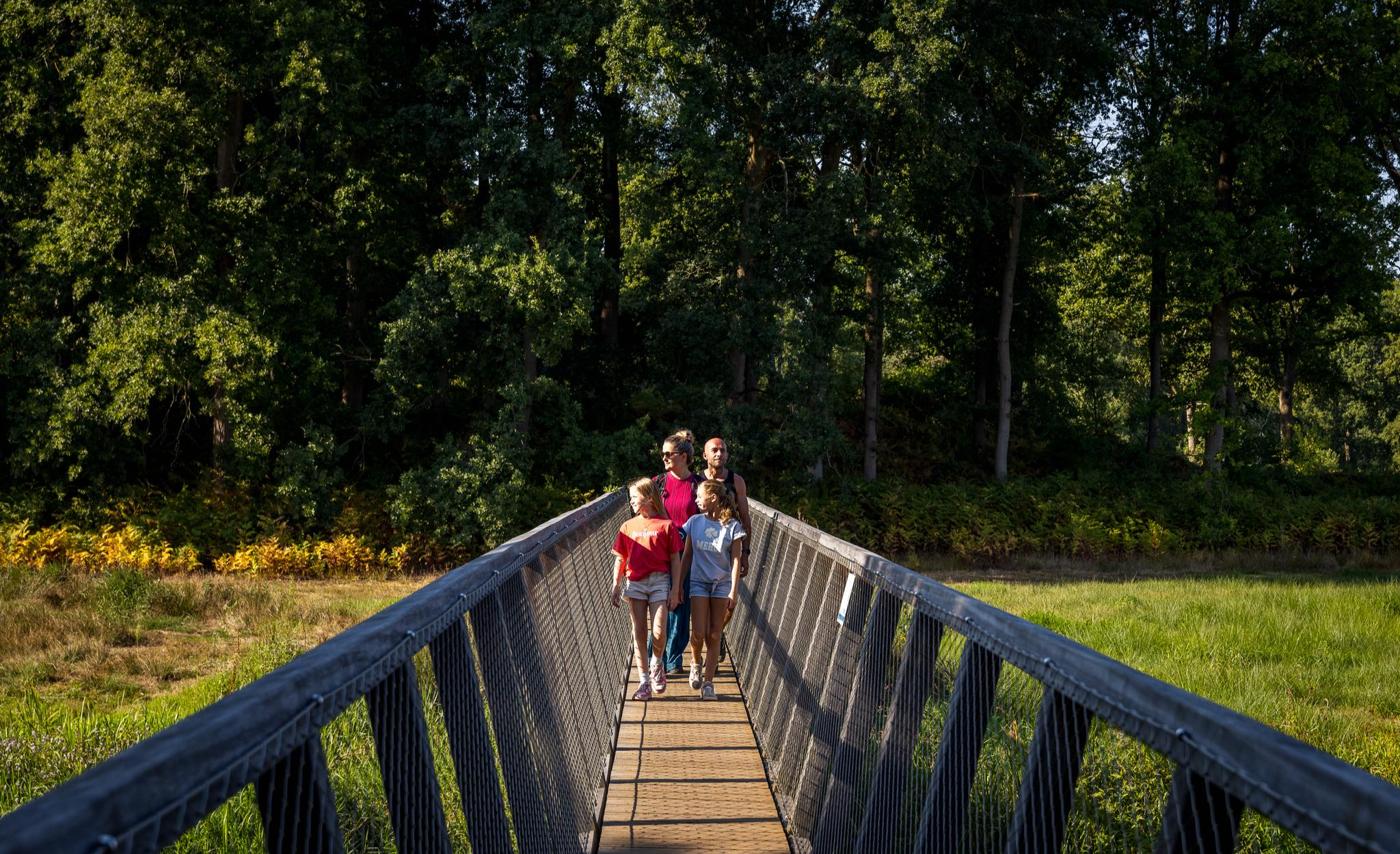
Flanders’ Finest Hiking Routes
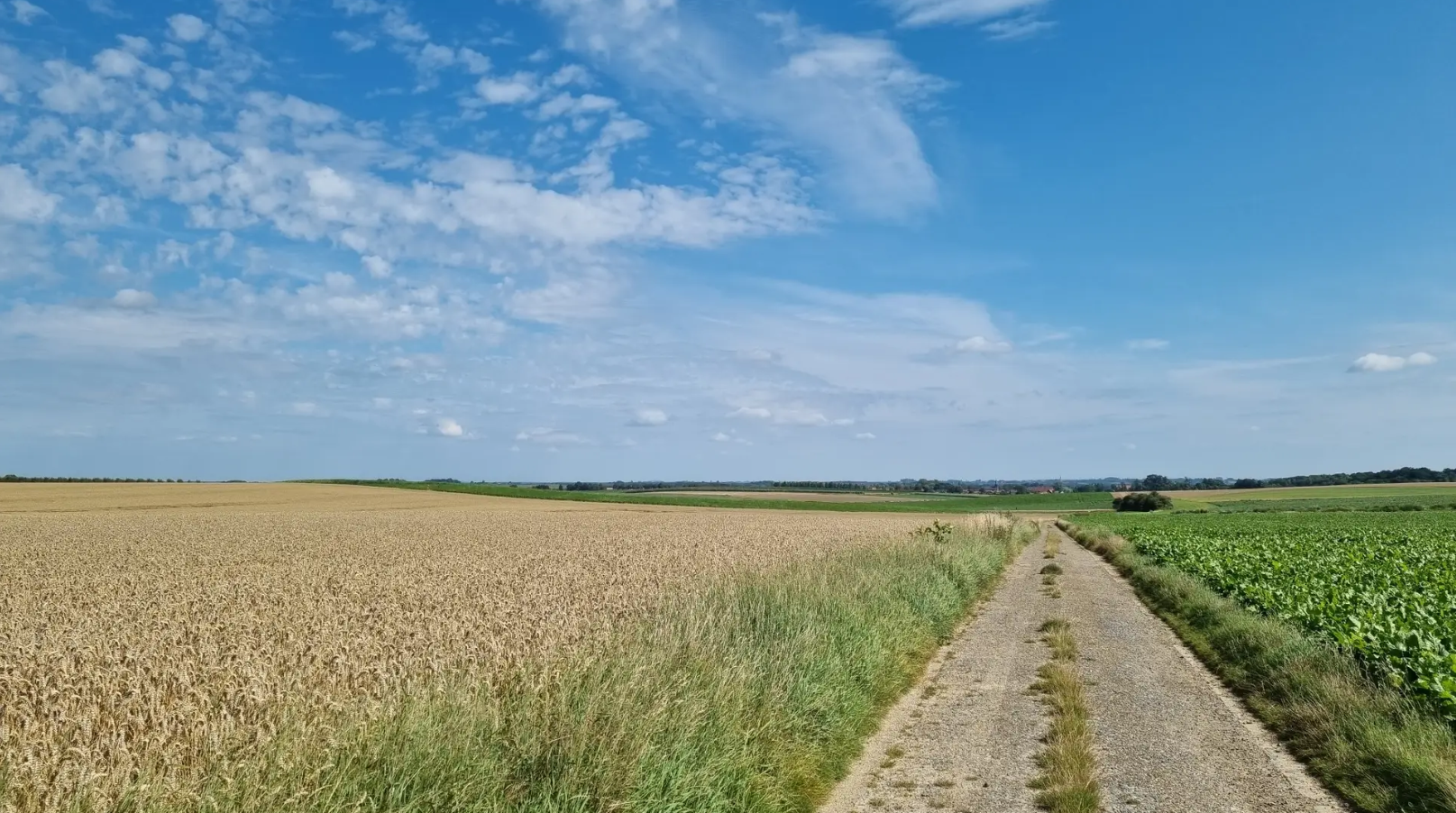
Bloesems, Forests and hidden Heritage – Streek-GR Haspengouw
Other adventures around Tongeren


Tips from the Community

An enormously long climb OR just as long descent if you hike it from the other side
0
0

On the border of the poor Kempen and the fertile Haspengouw lies the Munsterbos. Northeast of the village center of Munsterbilzen, 450 hectares of forests, ponds, marshes, and grasslands stretch out. Here and there, even a patch of purple heather peeks through. The area is so special due to its location on the transition from the sandy Kempen Plateau to the loess region of Haspengouw.
3
0
The chapel of the Secret Army in the Munsterbos forest commemorates the former hiding place and execution site of members of the resistance movement. This location along the Weerstandspad (Resistance Path) was the shelter of approximately 800 resistance fighters from the Bilzen - Genk – Kortessem region. Three of these resistance fighters from Bilzen were executed here in the vicinity on September 5 and 7, 1944, just a few days before the liberation. The annual commemoration takes place every second Sunday of September.
3
0
The Bilzermolen is a grist watermill with an undershot wheel on the Demer, at Kattebroekstraat 11, on the eastern side of Haffmans Park or Demer Park, owned by the city of Bilzen. This watermill already existed in the 13th century (first mention: 1301) and was rebuilt several times. It was one of the four Bilzen compulsory or ban mills from the Ancien Régime. It was operated by private individuals who paid an annual rent to the Princely Episcopal Audit Office. It was also mentioned in 1569 as Bouchoutmolen. After 1600, the following miller families worked here: Castermans, Maurissen, Martens and Withofs. The building was considerably damaged in 1893, but was soon repaired. The watermill remained in professional operation until around the Second World War. Above the water wheel, the facade still has a wooden cladding. The mill is equipped with a metal undershot wheel and is still capable of grinding. The mill house has been restored. The last professional miller was Gaston Goffin (°Rijkhoven 1921 - +Hasselt 2010), married to Maria Jans. In the end, he only let the mill run for visitors. After the floods of 1998, the embankments on the mill side were heavily damaged. In 2001, a bypass with a fish ladder was built around the mill. This bypass primarily serves to prevent flooding in case of blockages of the mill sluice. In this bypass, about eight pool steps between 10 and 15 cm high were built.
3
0

Nature as far as the eye can see
2
0

Groenendaal Castle is a historic country house and heritage site in Waltwilder (municipality of Bilzen-Hoeselt), Limburg, Belgium. It is part of a protected cultural-historical landscape and a striking example of classical residential heritage in the Flemish landscape. The castle has a long history and was built on a site originally known as Croenendael or Croonendael, a name later incorrectly spelled Groenendaal. The estate's origins date back to the 17th century, and in the Middle Ages it was part of a large fief of the Lords of Jonckholt. The current building is U-shaped and partially moated, with the oldest core dating from the mid-17th century. Later, in 1761, the classical main building was renovated and given its current classical form, with features of the Meuse style (typical of Limburg castles) visible in the facade ornaments, wall anchors, and brickwork details. In addition to the castle, the estate also includes a castle farm from the same period, originally a farmhouse and service building that was later adapted and expanded. Both the castle and the farm are situated in a landscaped setting with ponds and parks that together contribute to the estate's heritage value. The estate now called Groenendaal was originally known as Croenendael and belonged to noble family lines that governed the region for centuries. Around 1757, the property became the property of the de Grady family, who extensively modified the old 17th-century castle to its classicist form. Later owners, such as Baron Emile de Rosen de Borgharen in the 19th century, contributed to the maintenance and management of the estate. Although the interior is generally privately owned and not open to the public, the building's exterior remains well-preserved and recognizable as a representative example of 18th-century country house architecture in Limburg. Groenendaal Castle is situated in a peaceful rural setting of meadows and water features, between cycling junctions, making it an attractive stop for cyclists and hikers in the region. Its location between cycling junctions 67 and 504 makes it an ideal spot for a picnic or a short break, and there are hiking trails and cycling routes leading to the castle from the surrounding area. Although the castle's interior isn't normally accessible, the exterior offers a beautiful example of Limburg's classical heritage and makes an interesting stop on a tour through the countryside and countryside around Bilzen and Hoeselt.
0
0
Groenendaal Castle is a beautiful historic estate in Bilzen (Limburg, Belgium), situated in a green setting that is part of the region's rich heritage. Surrounded by expansive gardens, park areas, and water features, the castle is not only an architectural highlight but also an oasis of peace and nature. The original castle dates back to the 17th century, although the site was likely inhabited even earlier. Over the centuries, it underwent various renovations and expansions, resulting in a castle that today displays a blend of classical architecture and rural features. The façades, turrets, and surrounding outbuildings provide a good impression of how a Limburg country house historically developed within the countryside. The grounds of Groenendaal Castle include expansive gardens and park areas with avenues of mature trees and walking paths that form part of the region's public hiking trails. Visitors can not only admire the castle but also stroll through the park, experience nature, and enjoy the tranquil landscape. Some paths lead past ponds and historic hedgerows, creating an idyllic and romantic atmosphere. Groenendaal Castle is often included in educational and cultural walks because it illustrates both the architectural and landscape history of Bilzen. The castle and its surrounding park are an excellent example of how historic estates functioned as residential, working, and social centers for their owners and the surrounding village. Today, Groenendaal Castle is a landmark that combines tranquility, culture, and nature. The castle is surrounded by hiking and cycling trails, making it a popular day trip destination for families and nature lovers.
0
0
"Door de Boerderij" is a hiking highlight and part of several walking routes in and around Bilzen (Limburg, Belgium). As part of the hiking and nature network, it literally forms a stretch of path that takes you through agricultural land or past old farmsteads and farmhouses, a place where the agricultural character of the region becomes tangible during your walk. In the region around Bilzen and Hoeselt, routes meander through a landscape where agriculture and nature go hand in hand. The Haspengouw landscape, with its fertile fields, orchards, meadows, and murmuring stream valleys, has been historically shaped by farmers and agriculturalists who have cultivated these lands for centuries. During walks, you will regularly encounter paths that literally run through the farm or past farmyards, often on country roads or between fields and stables. The "Door de Boerderij" hiking highlight is used on platforms like Komoot to mark where you literally walk through a farmland landscape during a route. Sometimes the path runs between agricultural plots and farms, other times through a farmyard or between a stable and a field, allowing you to experience and understand daily farming practices within the context of the walk. These passages give hikers direct contact with the agricultural life of the region: you see how the land and farm are part of the landscape you explore. You can smell the scents of freshly mown grass or soil, and sometimes hear the sounds of animals or machinery in the yard. This makes the "Through the Farm" section a special element: it literally and figuratively transports you into the farming landscape that defines so much of the local history, culture, and economy. On hiking trails around Bilzen, the "Through the Farm" often connects with other attractions such as parks, stream valleys, historic buildings, and windmills, making the path not only a practical connecting route but also an experience within the walk. In short: the "Through the Farm" is not an attribute in itself but an enjoyable stage in the national hiking network around Bilzen. It shows how hiking trails through agricultural areas are interwoven with nature and culture, and a slice of rural life that you can literally experience along the way.
0
1
Frequently Asked Questions
How many dog-friendly hiking trails are available around Tongeren?
There are over 110 dog-friendly hiking trails around Tongeren, offering a wide variety of options for you and your canine companion. You'll find routes ranging from easy strolls to more challenging treks, ensuring there's something for every fitness level.
What kind of terrain can I expect on dog-friendly hikes in Tongeren?
The Tongeren region, nestled in the Haspengouw area, features diverse terrain perfect for dogs. You can expect rolling landscapes, picturesque valleys like the Veurs Valley, and paths through forests, pastures, and sunken lanes. Many trails are well-maintained, but some may include natural surfaces, so appropriate footwear for both you and your dog is recommended.
Are there any easy dog-friendly trails suitable for beginners or older dogs?
Yes, Tongeren offers many easy dog-friendly trails. For a pleasant and accessible walk, consider routes like the View of Teuven – Enormously high walls. loop from Teuven, which is an easy 5.8 km loop. These trails are generally less strenuous and ideal for a relaxed outing with your dog.
Can I find circular dog-friendly routes around Tongeren?
Absolutely! Many of the dog-friendly routes in the Tongeren area are circular, allowing you to start and end at the same point without retracing your steps. Examples include the Bench by the Gulp – Enormously high walls. loop from Teuven or the Bench with a view – View of the Lake loop from Eisden Damhertstraat, both offering scenic loops for you and your dog.
What are some notable natural features or landmarks I can see on dog-friendly hikes?
The region boasts several interesting natural features and landmarks. You might encounter beautiful lakes and sand dunes, such as those at Mechelse Heide — Lakes and Sand Dunes, or enjoy panoramic views like the View of the Quarry and Lake at Mechelse Heide. Some routes also pass by historical sites like the Commandery of Sint-Pieters-Voeren.
Are there any dog-friendly trails that offer views of castles or historical sites?
Yes, some trails integrate historical elements. For instance, the challenging View of Groenendaal Castle – Boardwalk Munsterbos loop from Bilzen offers glimpses of historical architecture. Additionally, the Saint Amor Chapel – Boardwalk Munsterbos loop from Munsterbilzen takes you past a charming chapel, blending nature with heritage.
What do other hikers say about dog-friendly trails in Tongeren?
The dog-friendly trails around Tongeren are highly regarded by the komoot community, with an average rating of 4.5 out of 5 stars from over 20,000 reviews. Hikers often praise the well-maintained paths, the diverse and beautiful scenery, and the peaceful atmosphere that makes for an enjoyable outing with their dogs.
When is the best time of year to go hiking with my dog in Tongeren?
The Haspengouw region, where Tongeren is located, is particularly stunning during the spring blossoming season (typically March-April) when the orchards are in full bloom. Autumn also offers beautiful colors. However, the varied landscapes make it a great destination year-round, with well-maintained paths suitable for most seasons. Always check local weather conditions before heading out.
Are there any specific regulations for dogs on trails in Tongeren?
While many trails are dog-friendly, it's always best practice to keep your dog on a leash, especially in nature reserves, agricultural areas, or where wildlife might be present. Always carry waste bags and clean up after your dog to help keep the trails enjoyable for everyone.
Are there longer, more challenging dog-friendly hikes for experienced hikers?
For experienced hikers and their dogs, there are more challenging options. The View of Groenendaal Castle – Boardwalk Munsterbos loop from Bilzen is a difficult 28.7 km route that provides a substantial challenge with varied terrain and elevation changes, perfect for a full day's adventure.
Can I find dog-friendly trails with access to water for my dog to cool off?
While specific river access points are not always highlighted, many trails in the region pass by natural water features, including lakes and streams. For example, routes near the Mechelse Heide — Lakes and Sand Dunes or the View of the Grote Plas from Terhills may offer opportunities for your dog to enjoy the water, but always check local signage for regulations.
Most popular routes around Tongeren
Most popular attractions around Tongeren

Get inspired with the komoot mobile app


Didn’t find what you were looking for?
Check out more Hikes throughout Tongeren below and find the perfect route in your destination.
