The best traffic-free bike rides around Bilzen
4.4
(377)
4,975
riders
204
rides
No traffic touring cycling routes around Bilzen offer a diverse landscape at the junction of the rolling hills of Haspengouw and the flatter, forested Kempen region. This area provides varied terrain for cyclists, including extensive forests, heathland, and fruit orchards. Bilzen serves as a gateway to the Hoge Kempen National Park, featuring car-free cycling paths and unique experiences like "Cycling through the Heathland." The region is characterized by its well-maintained and clearly marked cycling network, often utilizing a junction system.
…Last updated: June 30, 2026
4.7
(14)
128
riders
55.4km
03:21
350m
350m
Moderate bike ride. Good fitness required. Mostly paved surfaces. Suitable for all skill levels.
4.8
(20)
160
riders
60.1km
03:39
410m
410m
Moderate bike ride. Good fitness required. Mostly paved surfaces. Suitable for all skill levels.

Sign up for free
4.8
(26)
165
riders
43.7km
02:38
310m
310m
Moderate bike ride. Good fitness required. Mostly paved surfaces. Suitable for all skill levels.
4.0
(6)
471
riders
50.0km
03:43
280m
280m
Hard bike ride. Good fitness required. You may need to push your bike for some segments of this route.
4.5
(22)
145
riders
35.3km
02:11
290m
290m
Moderate bike ride. Good fitness required. Mostly paved surfaces. Suitable for all skill levels.
Get access to more routes and recommendations from other explorers.
Sign up for free
Already have an account?
Our route recommendations are based on thousands of hikes, rides, and runs completed by other people on komoot.
Start today with a free account
Your next adventure awaits.
Login or Signup



Tips from the Community

The cycle path between Wintershoven and Vliermaal lies on the route of the former tram line 496, which ran between Tongeren and Kortessem. The tram line departed from the station in Tongeren and ran via Henis, Riksingen, Sint-Huibrechts-Hern, Schalkhoven, Vliermaal and Wintershoven to the tram station in Kortessem. In Kortessem, line 496 connected to the larger line 495 (Hasselt - Oreye). This allowed travellers and agricultural products (such as sugar beets for the sugar refineries) to easily transfer towards Hasselt or Liège.
4
0

Tongeren is the oldest city in Belgium. The city originates from a camp founded by Sabinus and Cotta, lieutenants of Julius Caesar, whose legions were massacred in 54 BC near Ambiorix, the leader of the Eburones. Sights include the basilica, the beguinage, the statue of Ambiorix, and the antique market that takes place every Sunday.
0
0
On the border of the poor Kempen and fertile Haspengouw lies the Munsterbos. Northeast of the village center of Munsterbilzen, 450 hectares of forests, ponds, marshes, and grasslands stretch out. Here and there, even a patch of purple heather peeks through. The area is so special due to its location on the transition from the sandy Kempen Plateau to the Haspengouw clay region.
4
0
Watch here a beautiful film about the history of Alden Biesen and the Teutonic Order: https://youtu.be/YXJjgloHpH8?si=-T5CilBr4_Vu4Ov4
6
1

Let yourself be touched by the inspiring sculpture, the understated poetry, and the subtle symbolism, which blend beautifully with the tranquility of nature. A place to pause, feel, and come to yourself. You are most welcome.
5
0
Around the Sint-Martinus church lies a spacious, walled churchyard that immediately exudes a calm and charming atmosphere. A few striking lime trees provide shade and character, while old grave crosses whisper silent stories from the past. Through the main entrance, beautifully marked by two sturdy limestone pillars, you step into this special piece of heritage. The church itself is a fascinating mix of styles and periods: a 14th or 15th-century Gothic tower, an 18th-century nave, and a transept with a choir from the early 20th century, designed by Mathieu Christiaens. Together, they form a harmonious whole that has effortlessly stood the test of time.
6
0
Hollow roads are not only important for nature, they also play a valuable role in agriculture and in our free time. Together with other slow roads, they form the perfect routes for hikers, riders, and cyclists to fully enjoy the landscape.
6
0
The story of Alden Biesen does not begin in Limburg, but at the scorching gates of besieged Acre. In 1190, German merchants built a field hospital there with the sails of their ships, intended for sick pilgrims and wounded crusaders. What began as an act of care and solidarity grew into the establishment of the Teutonic Order; a spiritual order of knights that was soon recognized by the Pope and the Emperor. In our region too, the Teutonic Order left its mark. In the thirteenth century, an impressive commandery was established in Rijkhoven near Bilzen: Alden Biesen, the headquarters of the bailiwick of Biesen, which managed dozens of properties in the region. For centuries, this domain was a center of power, wealth, and religious influence. But at the end of the eighteenth century, disaster struck. During the French Revolution, the property of the Teutonic Order was confiscated. In 1797, Guillaume Claes, the mayor of Hasselt, bought the domain and saved it from demolition. Nevertheless, it fell into disrepair, and in 1971, a severe fire destroyed almost the entire castle. Only the walls remained standing. Fortunately, the Flemish government intervened, and a thorough restoration followed. Today, Alden Biesen is once again a vibrant heritage site where you can relive the past in the castle, the garden, and the museum. Want to know more? Click through to https://www.alden-biesen.be/geschiedenis
11
0
Frequently Asked Questions
How many no-traffic touring cycling routes can I find around Bilzen?
Bilzen offers an extensive network of car-free touring cycling routes. You can explore over 200 routes in the area, catering to various skill levels and preferences.
What makes Bilzen an ideal location for no-traffic touring cycling?
Bilzen is uniquely positioned at the intersection of the rolling hills of Haspengouw and the flatter, forested Kempen region, providing diverse landscapes for cyclists. It's also a gateway to the Hoge Kempen National Park, which features extensive car-free paths like the iconic 'Cycling through the Heathland' route. The region boasts Limburg's renowned cycling junction network, ensuring well-maintained and clearly marked routes away from vehicle traffic.
Are there easy no-traffic cycling routes suitable for beginners or families?
Yes, Bilzen offers a good selection of easier, traffic-free routes. Out of the over 200 available, 57 are rated as easy, making them perfect for beginners or families looking for a relaxed ride. These routes often utilize the flat, well-maintained paths of the Limburg cycling network.
What kind of landscapes will I encounter on these car-free routes?
You'll experience a rich variety of landscapes. Routes often traverse the picturesque fruit orchards and rolling hills of Haspengouw, especially beautiful during blossom season. You can also cycle through the extensive forests and heathlands of the Hoge Kempen National Park, or explore the serene water and marsh areas of Munsterbos. The region's unique geography ensures a constantly changing backdrop.
Can I find circular no-traffic cycling routes around Bilzen?
Yes, many of the touring cycling routes around Bilzen are designed as circular loops, allowing you to start and end at the same point without retracing your steps. An example is the Alden Biesen Gatehouse – View of Groenendaal Castle loop from Bilzen, which offers a scenic circular journey.
What are some notable attractions or landmarks I can see along the routes?
Many routes pass by significant cultural and natural landmarks. The historic Alden Biesen Commandery is a prominent feature on several tours. Within the Hoge Kempen National Park, you might encounter highlights like Mechelse Heide — Lakes and Sand Dunes, offering unique natural beauty. The region is also known for its innovative cycling experiences, such as the 'Cycling through the Heathland' bridge.
Is it possible to access these no-traffic routes using public transport?
While specific public transport connections to every trailhead can vary, Bilzen itself is accessible by train and bus. From the town center, you can often connect to the extensive Limburg cycling network, which provides car-free access to many routes. It's advisable to check local public transport schedules and bike carriage policies for your specific starting point.
Where can I park my car when starting a no-traffic cycling tour in Bilzen?
Bilzen and its surrounding areas, especially near popular cycling hubs and national park entrances, typically offer designated parking facilities for cyclists. Many routes, particularly those starting from or passing through towns, will have accessible parking. For routes entering the Hoge Kempen National Park, specific visitor centers often provide parking. Always check the route details for recommended starting points and parking options.
What is the best time of year to enjoy no-traffic touring cycling in Bilzen?
The spring and autumn months are particularly popular for touring cycling in Bilzen. Spring (April-May) offers the stunning sight of fruit orchards in blossom, especially in Haspengouw. Autumn (September-October) provides comfortable temperatures and beautiful fall foliage. Summer is also pleasant, though it can be warmer. Even in winter, many paths remain accessible, offering a peaceful, crisp cycling experience, though some amenities might have reduced hours.
Are there any routes that offer unique cycling experiences, like cycling over water or through heathland?
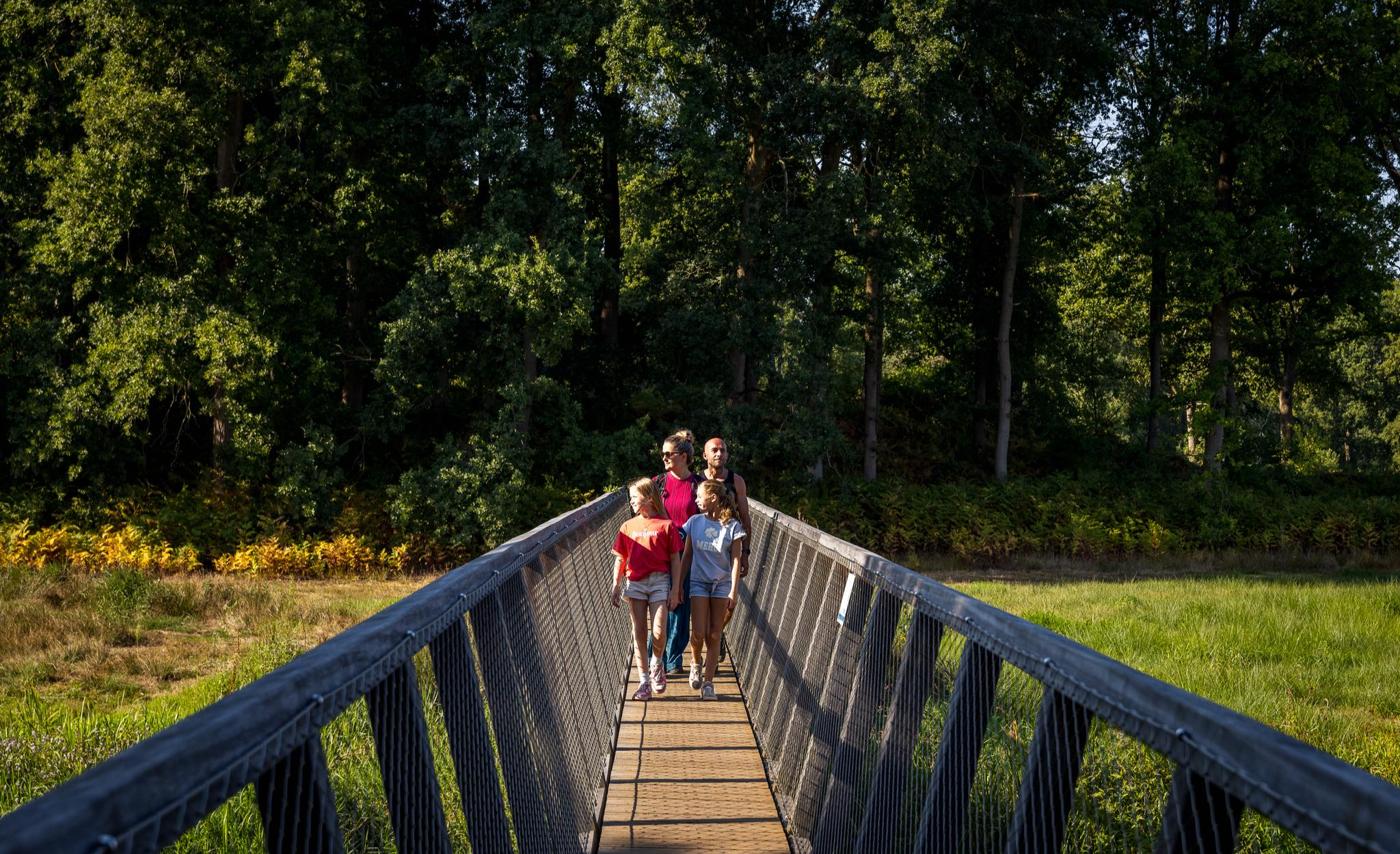
Absolutely! Bilzen's proximity to the Hoge Kempen National Park means you can access unique cycling infrastructure. The 'Cycling through the Heathland' route features an iconic wooden bridge that gradually rises, offering panoramic views over the Mechelse Heide. Another innovative experience nearby is 'Cycling Between the Mining Terrils' in Terhills, where you cycle on a floating pontoon bridge over water. These are truly memorable car-free experiences.
What do other touring cyclists say about the no-traffic routes in Bilzen?
The komoot community highly rates the touring cycling experience in Bilzen, with an average score of 4.36 stars. Reviewers often praise the well-maintained, car-free paths, the diverse and beautiful landscapes, and the excellent signage provided by the Limburg cycling junction network. Many appreciate the tranquility and the opportunity to explore nature and historical sites without vehicle interference.
Most popular attractions around Bilzen

Get inspired with the komoot mobile app


Explore more
Browse the best Cycling routes in other regions.
