The best traffic-free bike rides around Havelange
4.7
(82)
654
riders
70
rides
No traffic touring cycling routes around Havelange traverse the Belgian Condroz region, characterized by rolling hills, lush forests, and picturesque valleys. The terrain offers varied cycling experiences, from gentle slopes to more challenging ascents, often providing scenic views. The region features natural water elements like the Hoyoux Valley, which offers routes alongside rivers. The presence of the RAVeL network, particularly Line 126, provides well-maintained paths on former railway lines, suitable for relaxed touring.
Best no traffic touring cycling routes around…
Last updated: June 30, 2026
4.7
(9)
101
riders
38.2km
02:17
280m
280m
Moderate bike ride. Good fitness required. Mostly paved surfaces. Suitable for all skill levels.
4.4
(5)
33
riders
49.0km
03:14
580m
580m
Hard bike ride. Very good fitness required. Mostly paved surfaces. Suitable for all skill levels.

Sign up for free
4.5
(4)
23
riders
42.6km
02:36
380m
380m
Moderate bike ride. Good fitness required. Mostly paved surfaces. Suitable for all skill levels.
4.7
(7)
26
riders
37.0km
02:17
340m
340m
Moderate bike ride. Good fitness required. Mostly paved surfaces. Suitable for all skill levels.
5.0
(2)
31
riders
39.6km
02:38
510m
510m
Hard bike ride. Very good fitness required. Mostly paved surfaces. Suitable for all skill levels.
Get access to more routes and recommendations from other explorers.
Sign up for free
Already have an account?
Our route recommendations are based on thousands of hikes, rides, and runs completed by other people on komoot.
Start today with a free account
Your next adventure awaits.
Login or Signup


Other adventures around Havelange

Tips from the Community

Today, the castle is part of the Radhadesh estate, which also includes a more recent residential center and several even more recent agricultural buildings. Openbaar Kunstbezit Vlaanderen (Flanders Public Art Agency) calls it a spiritual community, where the new residents have thoroughly restored the castle and transformed it into a true spiritual oasis where you can explore the colorful culture of Indian traditions. Specifically, the International Society for Krishna Consciousness (formerly the Hare Krishna movement) has a base and residential community there. There's also a vegan restaurant, a shop, a museum of sacred art (MOSA), and you can take a paid tour. The temple is accessible without payment. There's also a 2.8-kilometer "spiritual" walking trail. More at https://www.okv.be/museum/radhadesh-kasteel-van-petite-somme I'm not mentioning the domain's website because of a virus alert on my computer.
7
0
Built in 1888 and now in its neo-Gothic style, the castle served as a field hospital during the First World War, where the Jourda family cared for wounded and also sheltered local residents whose homes had been destroyed. During the Second World War, it housed American soldiers during the Rundstedt Offensive. From 1946 onwards, it became a holiday center, a school for people with intellectual disabilities, a youth hostel, a campsite, and a hotel-restaurant, all under the initiative of mayors Jean Andrieu of Herstal and Denis Deghaye of Oupeye. After the initiative's bankruptcy, a Brussels real estate agent, Serge Frankovich, bought the property in 1975, leaving it vacant for five years and plundering it. The Hare Krishna movement then purchased it and turned it into the Radhadesh estate. Sources: - https://www.castles.nl/petite-somme-castle - https://www.burchten-kastelen.be/provincies/luxemburg/002%20Kasteel%20van%20Petite%20Somme/Kasteel%20van%20Petite%20Somme.html - https://nl.wikipedia.org/wiki/Petite-Somme
7
0
Since 1980, the castle of Petite-Somme has housed a temple of the Hare Krishna movement, which today operates as the International Society for Krishna Consciousness. The dilapidated castle, of course, has a longer history. The current castle is also not the original and dates from 1888. The first mention of a castle on this site dates back to the eleventh century, when a certain Gozélonde Montaigu owned it. He was also the first Count of Montaigu. The County of Montaigu was quite influential for a time. It included the County of Duras in the Sint-Truiden region, the County of Clermont-sous-Huy, the Lordship of Jodoigne, and the village of Marcourt. The Counts of Montaigu were also vice-patrons of the Abbey of Sint-Truiden. Ecclesiastically, it belonged to the diocese of Liège. The castle was reportedly donated to the Abbey of Saint Hubert by the wife of Gozélon de Montaigu as penance for his husband's alleged plundering of the abbey's property. In the fourteenth century, a certain Jean de Bohême was said to have owned it, adding a tower to the castle, which became part of Luxembourg's defensive line. In 1461, the castle became the property of the de Hamal family, a Dutch-Belgian noble family that also appears in the histories of several Limburg villages and lordships (including 's Herenelderen, Grevenbroek, and the land of Vogelsanck). The de Hamal family held the lordship and castle of Petite Somme until 1774. Several noble families then succeeded one another. First came Albert Joseph de Favereau, born in 1750. De Favereau demolished the house that had served as the Hamal family's residence and built a brick manor house on its foundations. The new castle remained in the family's possession until 1877. Other sources claim that the demolition was carried out by the Count de Vaux, Aimable-Alexis de Jourda. What is certain is that the de Favereau family building was also demolished by a certain Louise Marie Eulalie, a relative of Baron Victor Albert de Favereau. And whatever the exact details are: it is certain that the current neo-Gothic castle stood there in 1888. Sources: - https://www.castles.nl/petite-somme-castle - https://www.burchten-kastelen.be/provincies/luxemburg/002%20Kasteel%20van%20Petite%20Somme/Kasteel%20van%20Petite%20Somme.html - https://nl.wikipedia.org/wiki/Petite-Somme
7
0

Beautiful place, it feels like you've stumbled upon an English estate. Yet, you're driving right through it on the public road.
0
0
A beautiful chapel on a lovely estate. Currently undergoing extensive restoration. Unfortunately, it is not open to the public. Legend has it that the chapel was built with perfectly cut stones, without mortar or grout. The crypt is supposedly so rigidly constructed that, despite being below the waterline, it remains bone dry after all this time.
0
0

Be careful if it has rained a lot... otherwise great
1
0

Beautiful castle and surroundings. Here is the hara krishna located.
0
0
a beautiful, well-trimmed entrance
1
0
Frequently Asked Questions
How many no traffic touring cycling routes are available in Havelange?
There are over 50 dedicated no traffic touring cycling routes around Havelange, offering a wide range of experiences. These include 14 easy routes, 24 moderate routes, and 18 more challenging options, ensuring there's something for every skill level.
What kind of terrain can I expect on no traffic touring cycling routes in Havelange?
Havelange, situated in the Condroz region, is characterized by its rolling hills and lush forests. You'll encounter varied terrain, from gentle slopes perfect for leisurely rides to more challenging ascents that reward you with panoramic views. Many routes also utilize the RAVeL network, which offers generally flat and well-maintained paths on old railway lines, ideal for relaxed touring.
Are there any family-friendly no traffic cycling routes in Havelange?
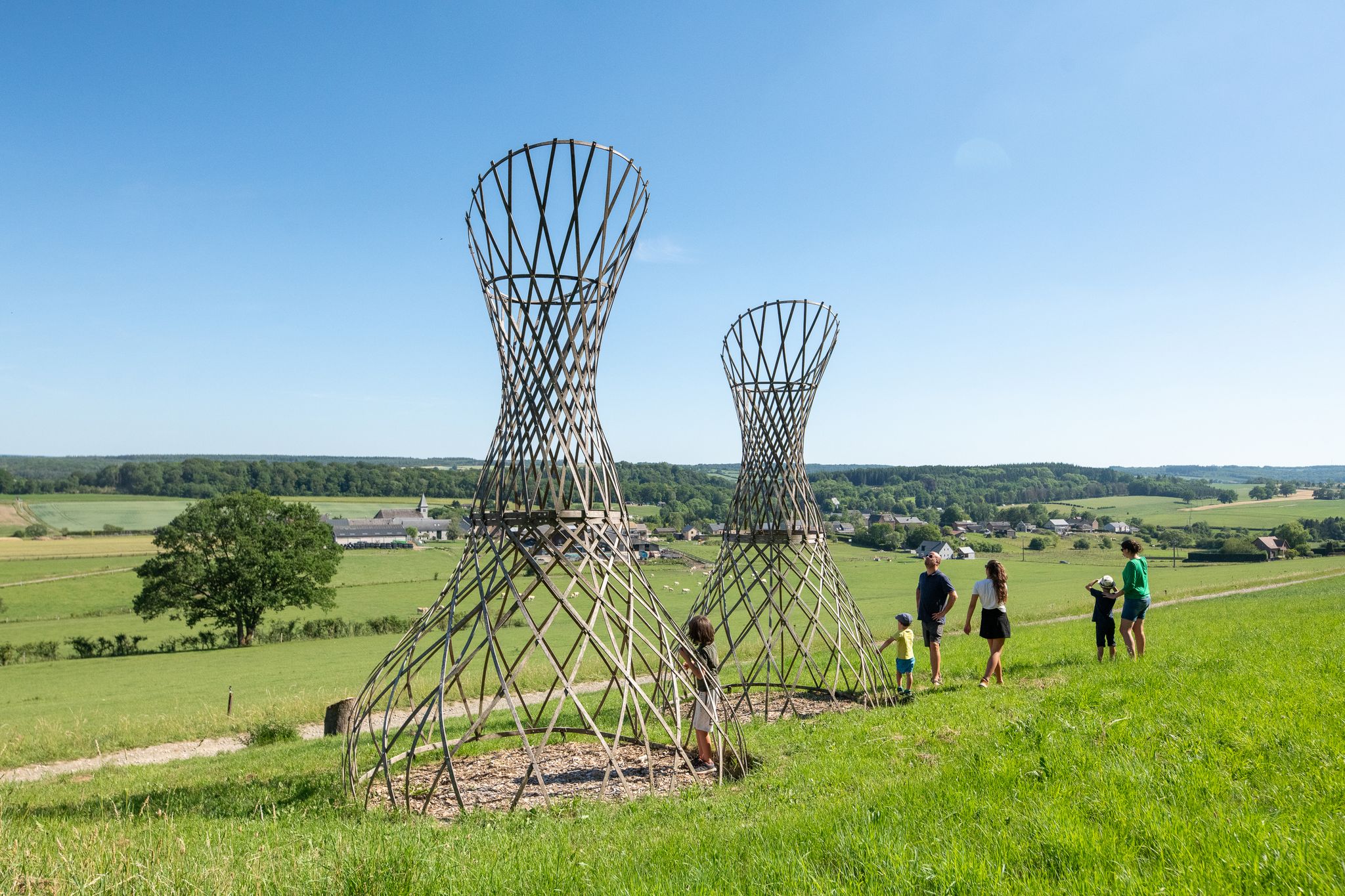
Yes, Havelange offers several easy, no traffic routes suitable for families. For instance, the Cloud Tree Sculpture – Former Hamois Train Station loop from Havelange is an easy 17 km route with minimal elevation, perfect for a relaxed family outing. The RAVeL network also provides safe and accessible paths for all ages.
What are the best times of year for no traffic touring cycling in Havelange?
The spring and autumn months generally offer the most pleasant conditions for touring cycling in Havelange, with mild temperatures and beautiful scenery. Summer can also be enjoyable, especially on shaded forest routes, but be prepared for potentially warmer weather. Winters can be cold and wet, making cycling less comfortable.
What interesting landmarks or attractions can I see along the no traffic touring cycling routes?
Havelange's routes often pass by charming Condroz villages with traditional stone architecture. You can explore historical sites like Modave Castle or the châteaux of Barvaux-Condroz. The region is also close to Durbuy, known as "The Smallest Town in the World," where you can visit the Old Town and Castle or marvel at The Anticline (Omalius Rock).
Are there any circular no traffic touring cycling routes in Havelange?
Yes, many of the no traffic touring cycling routes in Havelange are designed as loops. For example, the challenging Ramezée bower – Hoyoux Castle loop from Havelange covers nearly 49 km, offering a comprehensive tour of the local landscape and historical sites.
Where can I find parking for no traffic touring cycling routes in Havelange?
Parking is generally available in Havelange town center and in many of the surrounding villages, often near public spaces or starting points of popular routes. Specific parking information for individual routes can usually be found on their respective komoot tour pages.
What do other touring cyclists enjoy most about cycling in Havelange?
The komoot community highly rates the touring cycling experience in Havelange, with an average score of 4.8 stars from 50 ratings. Reviewers often praise the region's quiet, picturesque landscapes, the well-maintained RAVeL paths, and the charming villages and historical sites encountered along the way.
Are there any natural features or wildlife to look out for on the routes?
Absolutely. The region's lush forests and the Hoyoux Valley provide opportunities for wildlife spotting. The Sawhis Nature Site in Havelange, with its ponds, orchards, and woodlands, is a prime example of the area's natural beauty, offering a diverse ecosystem to observe.
Can I find cafes or pubs along the no traffic touring cycling routes in Havelange?
Many of the routes pass through or near charming villages where you can find local cafes, bakeries, or pubs to refuel. Havelange itself hosts a market every Tuesday, offering local produce and a chance to experience regional specialties. Checking the specific route details on komoot can often provide information on points of interest, including eateries.
What is the RAVeL network and how does it relate to cycling in Havelange?
The RAVeL (Réseau Autonome des Voies Lentes) is a network of greenways in Wallonia, often built on disused railway lines, designed for non-motorized traffic. Line 126 of the RAVeL, which runs through the Condroz region, offers a 35.5 km scenic route connecting Ciney to Régissa (Huy). These paths are generally flat, well-maintained, and traffic-free, making them ideal for touring cyclists seeking a relaxed and safe experience.
Most popular attractions around Havelange

Get inspired with the komoot mobile app


Explore more
Browse the best Cycling routes in other regions.
