The best traffic-free bike rides around Noventa Padovana
4.3
(499)
12,792
riders
22
rides
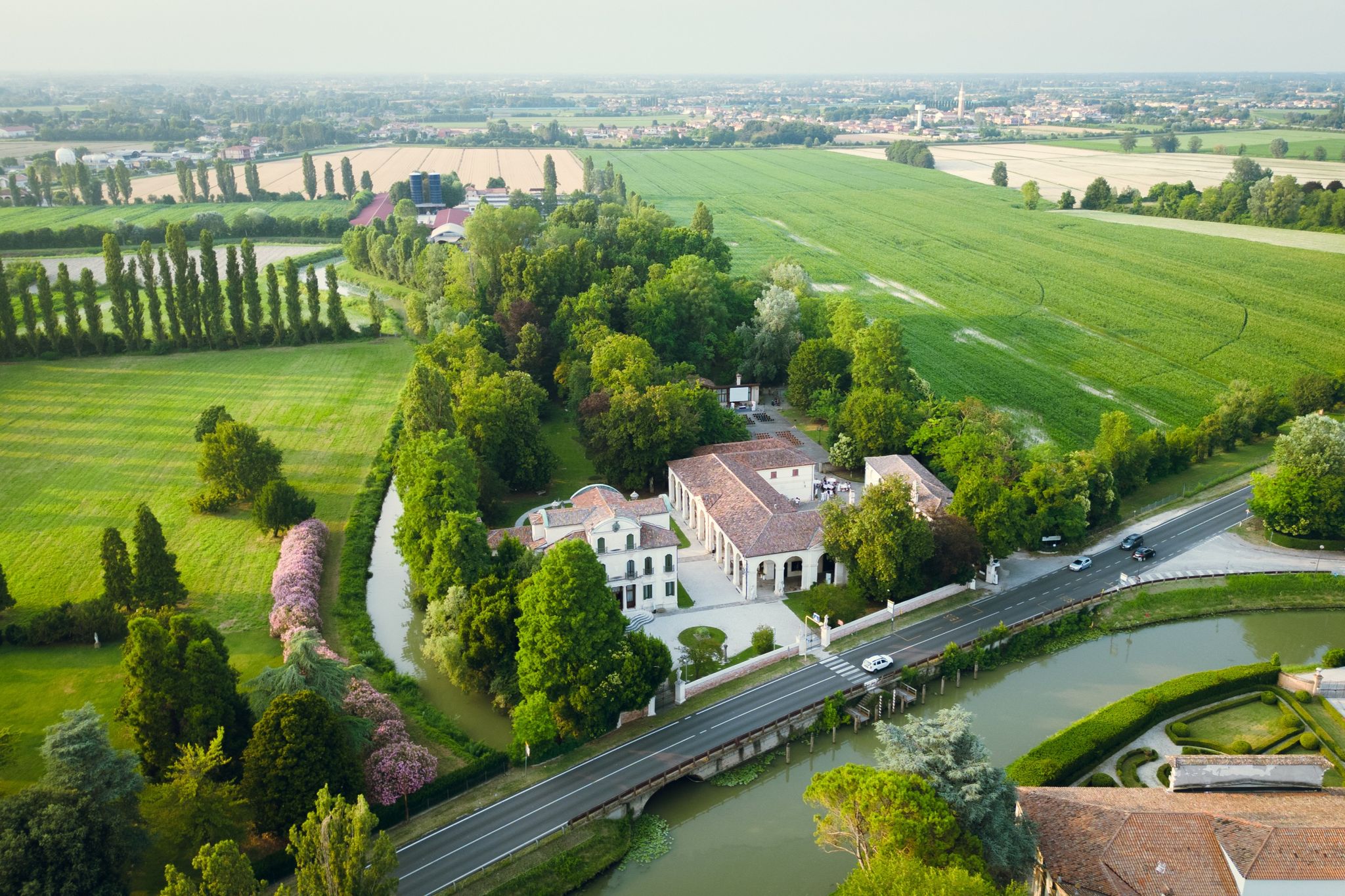
No traffic road cycling routes around Noventa Padovana are characterized by the expansive, flat plains of the Italian Veneto region, making it an ideal setting for road cycling. The area features well-maintained, asphalted paths, often following river embankments like the Brenta River, which provide smooth riding experiences away from heavy traffic. This landscape offers extensive opportunities for cycling through rural areas and past historic Venetian Villas. The region's terrain is predominantly flat, with minimal elevation changes, ensuring accessible routes for…
Last updated: November 14, 2026
4.0
(2)
163
riders
44.0km
01:51
80m
80m
Moderate road ride. Some segments of this route may be unpaved and difficult to ride.
3.9
(16)
105
riders
Moderate road ride. Some segments of this route may be unpaved and difficult to ride.

99
riders
Moderate road ride. Some segments of this route may be unpaved and difficult to ride.
3.0
(1)
34
riders
26.8km
01:01
30m
30m
Easy road ride. Mostly well-paved surfaces and easy to ride.
12
riders
11.8km
00:28
20m
20m
Easy road ride. Mostly well-paved surfaces and easy to ride.
Get access to more routes and recommendations from other explorers.
Already have an account?
Our route recommendations are based on thousands of hikes, rides, and runs completed by other people on komoot.
Start today with a free account
Your next adventure awaits.


Other adventures around Noventa Padovana

Tips from the Community

The Benito Daga Bridge is a cycle-pedestrian bridge located in Padua, in a strategic river area near the headquarters of Canottieri Padova (south-west area of the city). The structure is named after Benito Daga (who passed away in 1991), a respected figure in Paduan and national sports, known for being an instructor and coach for the Italian national swimming team at the Paralympics. From a logistical point of view, the bridge represents a fundamental hub for the city's sustainable mobility: it connects the riverbanks of Brusegana and Bassanello, serving as a mandatory passage for runners, walkers, and cycle tourists. It is a key point for those who travel the famous river loops of Padua or join the cycle paths leading towards the Euganean Hills and along the Brentella Canal.
0
0

Caffè Pedrocchi, Italy's most famous coffee house (historically, architecturally, and socially of greatest importance. Used to be open day and night, hence "caffè senza porte = without doors"). See description on my Padua visit (Komoot March 25, 2026).
0
0

Ferrara Piazza del Mercato (Pizza delle erbe)
0
0

The Brenta is the main route that connects Bassano to the sea, offering countless variants, among the main ones the intersection with the Ostiglia, the nearby connection with the Ezzelini
1
0

It is part of the cycle network that runs alongside the Brenta and other rivers in the direction of Venice or towards the mouth of the Brenta
2
0

Palazzo della Ragione, Padua The Salòn, or Palazzo della Ragione, the former seat of Padua's municipal courts, is one of the largest column-free halls in Europe. Considered one of the most famous civic monuments in Europe from the time of the Communes, the building was begun in 1218. Between 1306 and 1308, Fra Giovanni degli Eremitani transformed the three large rooms into a single hall and designed a roof in the shape of an inverted ship's hull. Giotto and his workshop were commissioned to paint the walls with frescoes; however, the cycle was destroyed by fire in 1420. The frescoes were restored by the Paduan Nicolo’ Miretto in collaboration with Stefano da Ferrara and other painters, based on the studies of Pietro d’Abano, a wealthy scholar of his time. The fresco cycle is one of the very few medieval astrological cycles to have survived to this day. The connection between the paintings and the function of the place explains the presence of animal figures representing the insignia of the courts, whose function is also linked to the allegories of Justice, Law, the Community in Rule, and the frescoes depicting the Judgment of Solomon and the court scene. In the great hall is the "Pietra del Vituperio," or Stone of Shame, upon which insolvent debtors, clad only in a shirt, had to sit three times (the custom is the origin of the expression "to stay in one's shirt"), while repeating the Latin phrase "cedo bonis" (roughly translated as "I will pay the bill"). Also located there is the large wooden horse, crafted by Annibale Capodilista for a tournament and donated to the city by the family. Today, the great hall serves as a venue for exhibitions and cultural events. Not to mention that "Sotto il salone" is the oldest cooperative in the world, dating back 700 years. Text / Source: Turismo Padova https://www.turismopadova.it/en/the-palazzo-della-ragione/
14
0
Basilica of Saint Anthony of Padua / Basilica of Saint Anthony, Padua The Basilica of Saint Anthony, known as "the Saint," is the city's most important religious center and attracts thousands of pilgrims every year, especially on June 13, the saint's feast day. The basilica was built in 1232 to protect the tomb of the Franciscan friar Anthony, who died in Padua in 1231. The large building presents a complex structure with a fusion of styles: Romanesque elements in the façade, Gothic elements in the ambulatory, Byzantine elements in the eight domes covered with lead, and Moorish elements in two tiers. The Church of Saint Anthony holds numerous reminders of the Carrara Signoria. In 1350, Cardinal Guido de Boulogne came to the cathedral to acknowledge the saint's miracle and was greeted by Jacopo II da Carrara and Bishop Hildebrand. Members of the Carraresi family, such as the Lupi di Soragna and the Conti, chose the basilica as the site for their own mausoleums. The Chapel of the Black Madonna now stands on the site of the earlier church, dedicated to Santa Maria, Mother of the Lord. The polychrome Madonna is by Rinaldino di Francia and dates from 1396. Rinaldino is also likely the artist of the shield bearing the portrait of Stefano da Carrara, now in the city museums. A funerary monument to Raffaele Fulgioso, a renowned jurist from the University of Padua, is located to the left of the chapel. The Chapel of Blessed Luca reveals even closer ties to the Carraresi family: it was built between 1380 and 1382 by Naimerio and Manfredino Conti, executing the will of Fina Buzzaccarini. They commissioned Giusto de'Menabuoi, a painter from the Carraresi court, to create the frescoes. The stories of Saints Philip and James, arranged on the chapel walls, reveal a surprising new sense of spaciousness. In the center, within the lunette, are portraits of the patrons: Saint Anthony, Blessed Luke, Saint Francis, and Saint Louis of Toulouse, as they are presented to the Virgin. Text / Source: Turismo Padova https://www.padua.info/de/padua/was-zu-sehen-ist/details/basilica-di-santantonio
16
0
Frequently Asked Questions
How many no-traffic road cycling routes are available around Noventa Padovana?
There are over 20 dedicated no-traffic road cycling routes around Noventa Padovana. These routes are designed to offer a peaceful and safe cycling experience, primarily along river embankments and well-maintained cycle paths, away from vehicular traffic.
Are there easy no-traffic road cycling routes suitable for beginners or families?
Yes, Noventa Padovana offers several easy no-traffic road cycling routes perfect for beginners or families. The flat terrain of the Venetian plain makes for comfortable rides. An excellent option is the Ponte San Nicolò Underpass – Roncaglia-Bovolenta Embankment loop from Tombelle, which provides a gentle introduction to the area's scenic paths.
What kind of landscapes can I expect on these no-traffic road cycling routes?
You can expect diverse and picturesque landscapes. Routes often follow the serene Brenta River and its embankments, offering naturalistic oases and charming bends. The vast Venetian plain provides extensive opportunities to cycle through rural settings, and some paths connect to larger networks like the Via Romea Strata, showcasing the region's agricultural beauty.
Are there any circular no-traffic road cycling routes?
Yes, many of the no-traffic road cycling routes around Noventa Padovana are circular, allowing you to start and end at the same point. For example, you can enjoy the Prato della Valle – View of the Bassanello Bridge loop from Padova, which offers a convenient loop experience.
What attractions or points of interest can I see along these routes?
The routes often pass by significant cultural and historical sites. You can discover numerous patrician Venetian Villas, such as Villa Pisani, Stra, and Villa Giovannelli Colonna. Many paths also follow the scenic Brentella Canal, leading towards cultural hubs like Padua, where you can visit Piazza dei Signori.
What do other road cyclists enjoy most about cycling in Noventa Padovana?
The komoot community highly rates the road cycling experience in Noventa Padovana, with an average score of 4.3 stars from over 400 reviews. Cyclists often praise the region's flat, well-maintained paths along river embankments, the absence of traffic, and the opportunity to combine scenic rides with visits to historic Venetian Villas and charming towns.
Can I find routes that connect Noventa Padovana to larger cities like Padua or Venice?
Absolutely. Noventa Padovana's strategic location and extensive cycling network allow for connections to major cultural centers. You can easily find routes that lead directly to Padua, just 7 kilometers away, or extend your journey towards Venice, which is about 30 kilometers west, often utilizing dedicated cycle paths along the Brenta River.
Are there any moderate no-traffic road cycling routes for more experienced riders?
Yes, for those looking for a slightly longer or more challenging ride while still avoiding traffic, there are several moderate options. Consider the Roncaglia-Bovolenta Embankment – Il Telaio Bike Café loop from Padova, which offers a good distance and varied scenery without significant elevation.
What is the best time of year for car-free road biking in Noventa Padovana?
The spring and autumn months generally offer the most pleasant conditions for car-free road biking in Noventa Padovana. The weather is typically mild, and the landscapes are vibrant. Summer can also be enjoyable, especially in the mornings or late afternoons, though it can get quite warm.
Are there any routes that feature the Brenta River prominently?
Many of the no-traffic routes in the area utilize the Brenta River's embankments, providing beautiful views and a peaceful cycling environment. The Horse Trail (Brenta River Trail) is a highlight that showcases the river's natural beauty and is often incorporated into cycling tours.
Are there any routes that pass by notable villas, like Villa Pisani?
Yes, you can cycle past magnificent Venetian Villas on several routes. For instance, the Villa Pisani – Mira loop from Dolo specifically features the grand Villa Pisani, Stra, allowing you to admire its architecture while enjoying a traffic-free ride.
Most popular routes around Noventa Padovana
Most popular attractions around Noventa Padovana

Get inspired with the komoot mobile app


Explore more
Browse the best Road cycling routes in other regions.
