The best traffic-free bike rides around Arre
4.4
(60)
1,726
riders
5
rides
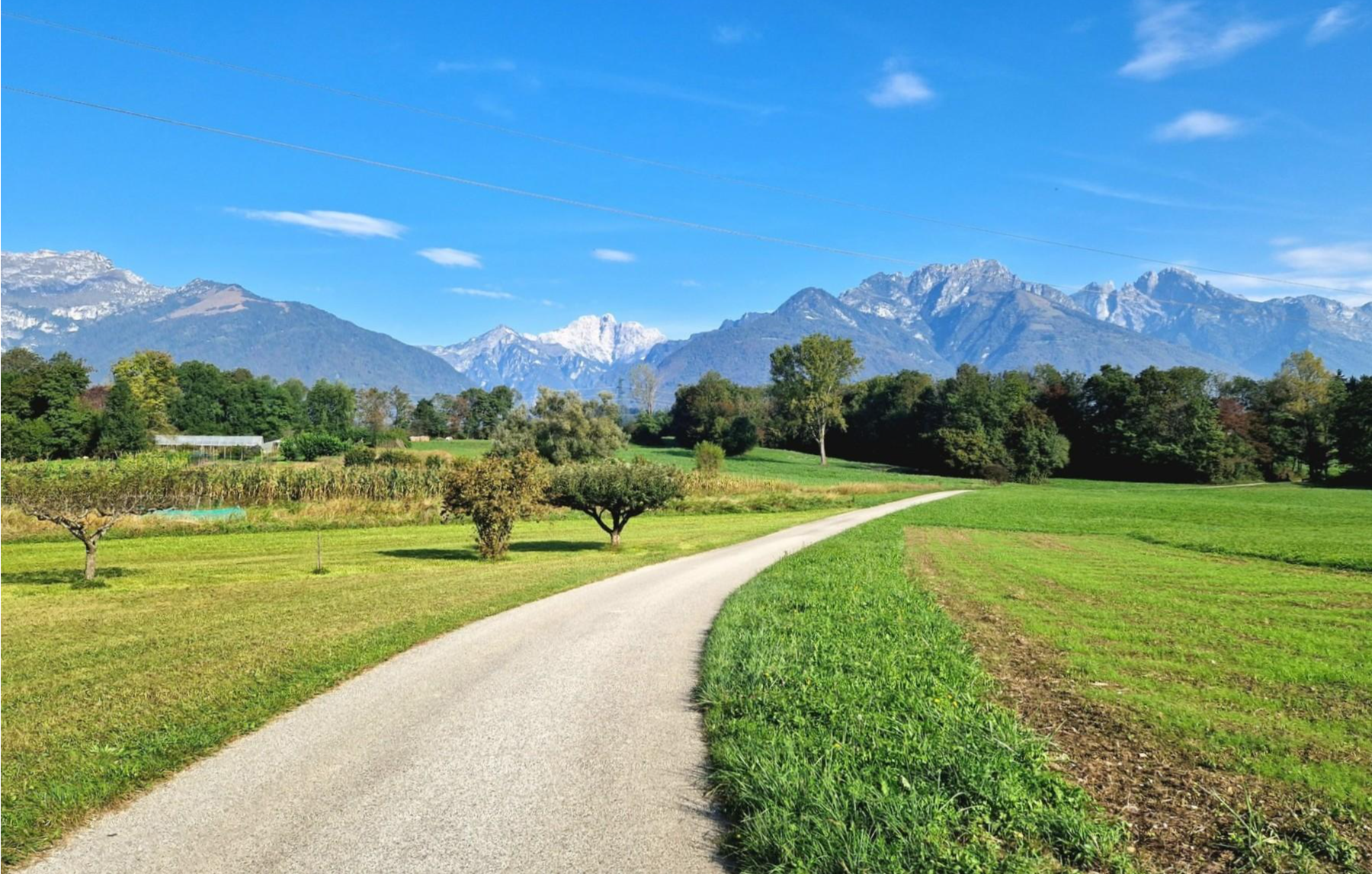
No traffic road cycling routes around Arre are characterized by a flat to gently undulating landscape, typical of a river delta or coastal plain. The terrain features minimal elevation gain, making it suitable for long-distance cycling without significant climbs. The area is defined by its network of canals, agricultural fields, and quiet country roads, offering a serene environment for road cyclists.
Best no traffic road cycling routes around Arre
- The most popular no traffic road cycling route is Bridge over…
Last updated: June 30, 2026
5.0
(1)
15
riders
50.0km
02:26
80m
80m
Moderate road ride. Good fitness required. Some segments of this route may be unpaved and difficult to ride.
16
riders
Moderate road ride. Good fitness required. Some segments of this route may be unpaved and difficult to ride.

Sign up for free
5
riders
19.2km
00:45
20m
20m
Easy road ride. Great for any fitness level. Mostly well-paved surfaces and easy to ride.
5.0
(1)
5
riders
Moderate road ride. Great for any fitness level. Some segments of this route may be unpaved and difficult to ride.
4
riders
38.2km
01:34
60m
60m
Easy road ride. Great for any fitness level. Mostly well-paved surfaces and easy to ride.
Our route recommendations are based on thousands of hikes, rides, and runs completed by other people on komoot.
Start today with a free account
Your next adventure awaits.
Login or Signup
Other adventures around Arre

Tips from the Community

The Porta di Santa Maria Assunta is also popularly known as Porta Garibaldi. The historic city gate was originally built around 1520 and was part of the city fortifications. It is located at the southern end of the main street, the Corso del Popolo, and today serves as a freestanding gate around which road traffic flows. On the side facing the mainland, there is a marble relief of the Lion of Saint Mark, the symbol of Venice's former rule over the city.
0
0

The Porta di Santa Maria is the ancient monumental gateway that marks the entrance to the historic center of Chioggia for those coming from the mainland. Located at the southern end of the Corso del Popolo, the gate was built in 1530 to a design attributed to Michele Sanmicheli, replacing a previous medieval structure for the city's defense. The elegant and austere architecture served as a customs and military barrier in an era when Chioggia was a strategic stronghold of the Serenissima. Today, the gate represents the starting point of the main city promenade, welcoming visitors with its Istrian stone structure that introduces the Venetian atmosphere of the village, amidst canals and historic palaces.
0
0
The Canal Vena is the most picturesque and vital waterway of Chioggia, often described as the city's "Grand Canal". What makes it unique are its nine bridges, each with its own history and physiognomy, connecting the side foundations and allowing passage between the alleys. The most majestic is undoubtedly the Ponte di Vigo, located at the northern end of the canal, towards the lagoon. Built of marble in 1685, it represents the monumental gateway to the city: with its imposing staircase and elegant decorations, it offers a spectacular view stretching from the canal to the nearby island of Pellestrina. The other eight bridges, such as the Ponte di San Giacomo or the Ponte Caneva, follow one another along the route, offering postcard-perfect glimpses between moored boats and historic markets. These crossings are not just architectural structures, but the beating heart of Chioggia life, where the Venetian atmosphere blends with the authenticity of the fishing village.
0
0

Chioggia, an island that was once under Venetian rule, is beautiful despite the potential – in my humble opinion – for its appearance to be improved.
0
0

Basilica of Saint Anthony of Padua / Basilica of Saint Anthony, Padua The Basilica of Saint Anthony, known as "the Saint," is the city's most important religious center and attracts thousands of pilgrims every year, especially on June 13, the saint's feast day. The basilica was built in 1232 to protect the tomb of the Franciscan friar Anthony, who died in Padua in 1231. The large building presents a complex structure with a fusion of styles: Romanesque elements in the façade, Gothic elements in the ambulatory, Byzantine elements in the eight domes covered with lead, and Moorish elements in two tiers. The Church of Saint Anthony holds numerous reminders of the Carrara Signoria. In 1350, Cardinal Guido de Boulogne came to the cathedral to acknowledge the saint's miracle and was greeted by Jacopo II da Carrara and Bishop Hildebrand. Members of the Carraresi family, such as the Lupi di Soragna and the Conti, chose the basilica as the site for their own mausoleums. The Chapel of the Black Madonna now stands on the site of the earlier church, dedicated to Santa Maria, Mother of the Lord. The polychrome Madonna is by Rinaldino di Francia and dates from 1396. Rinaldino is also likely the artist of the shield bearing the portrait of Stefano da Carrara, now in the city museums. A funerary monument to Raffaele Fulgioso, a renowned jurist from the University of Padua, is located to the left of the chapel. The Chapel of Blessed Luca reveals even closer ties to the Carraresi family: it was built between 1380 and 1382 by Naimerio and Manfredino Conti, executing the will of Fina Buzzaccarini. They commissioned Giusto de'Menabuoi, a painter from the Carraresi court, to create the frescoes. The stories of Saints Philip and James, arranged on the chapel walls, reveal a surprising new sense of spaciousness. In the center, within the lunette, are portraits of the patrons: Saint Anthony, Blessed Luke, Saint Francis, and Saint Louis of Toulouse, as they are presented to the Virgin. Text / Source: Turismo Padova https://www.padua.info/de/padua/was-zu-sehen-ist/details/basilica-di-santantonio
15
0
Church of San Martino Vescovo, Chioggia Church of San Martino The Church of San Martino (1393) is one of the city's most distinctive and valuable buildings, though its interior can only be visited when exhibitions are on display. It was built by the inhabitants of Sottomarina, who sought refuge in Chioggia after the destruction of their village by the Genoese in 1379. Text / Source: Municipality of Chioggia https://www.visitchioggia.com/de/entdecken/sehenswerte-orte/standortdetails/#/infrastrukturen/TRN/e6803c92-0133-4a2c-a9f8-16ffadc28003
14
0
Porta Santa Maria, Chioggia / Porta Garibaldi or Porta S. Maria This is a city wall that closed off access to the two canals and marked the southern entrance to the city. The Porta di Santa Maria Assunta (also called Porta Garibaldi) is a former city gate of the Italian city of Chioggia. It is located in the immediate vicinity of the Cathedral of Santa Maria Assunta. The now freestanding gate was built in 1520, was part of Chioggia's old city fortifications, and has been structurally altered several times throughout its history. On the landward side, a marble relief depicts the Lion of Saint Mark, the heraldic animal of Venice, symbolizing Venetian rule over the city. Until recently, the gate was red, but it is now yellow. Traffic now flows around the gate; inside the gate is a Latin inscription commemorating a visit by Pope Pius VI to Chioggia, as well as a decorative plaque bearing a coat of arms. Text/Source: wikipedia.org https://de.wikipedia.org/wiki/Porta_di_Santa_Maria_Assunta
16
0
One of the major projects completed during the Fascist era is the Sottomarina Dam, which, together with the Ca' Roman Dam built a few years earlier, completes the mouth of the Port of Chioggia. Construction began in the years following the First World War. Like the Murazzi (sea walls), the dam was constructed of brick and boulders of local Istrian stone and, in addition to finally completing the entrance to the Port of Chioggia, also allowed for a further expansion of the beach. The inauguration, as mentioned, took place in the midst of the Fascist regime on April 28, 1935, in the presence of the Duke of Aosta. The dam was immediately embraced by the local population, especially the residents of Sottomarina, a popular destination for their walks, so much so that many refer to it as "Sailors' Square." Text / Source: Lidi di Chioggia https://www.lididichioggia.it/la-diga-murazzi/
15
0
Frequently Asked Questions
How many no traffic road cycling routes are available in the Åre region?
There are several dedicated no traffic road cycling routes around Åre. Our guide features 5 routes specifically designed for a car-free experience, ranging from easy to moderate difficulty.
What kind of terrain can I expect on no traffic road cycling routes in Åre?
The Åre region offers diverse terrain, even on no traffic routes. You can expect well-maintained asphalt roads, but some routes might include mixed gravel and asphalt sections, especially those venturing further into the scenic landscapes. The region is known for its impressive mountains and valleys, so some routes will feature significant ascents and descents, providing both challenge and stunning views.
Are there any circular no traffic road bike routes in Åre?
Yes, many of the no traffic road cycling routes in Åre are designed as loops, allowing you to start and end at the same point. For example, the Bridge over the Vena Canal – Porta di Santa Maria loop offers a substantial circular ride, and the Pontelongo loop is a shorter, easier option.
What are some scenic viewpoints along the no traffic road cycling routes?
While specific viewpoints are not always marked, the entire Åre region is renowned for its natural beauty. Routes often pass by majestic mountains like Mount Åreskutan, beautiful lakes such as Åresjön and Kallsjön, and through serene mountain birch forests. You'll find ample opportunities for breathtaking views throughout your ride.
What natural features can I see along these car-free cycling paths?
The Åre region is rich in natural features. You might encounter powerful waterfalls like Tännforsen, Sweden's largest, or Ristafallet, known from 'Ronja, the Robber's Daughter.' The routes also offer views of the impressive Jämtland mountains, pristine lakes, and dense forests, providing a truly immersive outdoor experience.
What is the best time of year for no traffic road cycling in Åre?
The road biking season in Åre extends well before the summer, allowing cyclists to enjoy the roads as soon as the winter snow and slush clear. Late spring, summer, and early autumn generally offer the most favorable conditions with pleasant temperatures and vibrant landscapes.
Are there any easy, beginner-friendly no traffic road cycling routes?
Yes, there are options suitable for beginners looking for a car-free experience. The Pontelongo loop from Pontelongo is rated as easy, covering a distance of just over 19 km with minimal elevation gain, making it a great choice for those new to road cycling or seeking a relaxed ride.
What do other road cyclists enjoy most about no traffic road cycling in Åre?
The no traffic road cycling routes in Åre are highly rated by the komoot community, with an average score of 4.4 stars. Reviewers often praise the stunning natural landscapes, the tranquility of car-free roads, and the opportunity to immerse oneself in the beautiful Swedish mountain environment.
Are there any historical or cultural landmarks near the no traffic cycling routes?
Yes, the region offers some interesting points of interest. For example, you can find the Pontemanco Water Mill, a historical site, or the Corte Benedettina di Correzzola, a religious building. The settlement of Pontelongo itself is also a notable highlight.
Can I find longer no traffic road cycling routes for extended rides?
Absolutely. For those seeking a longer, more challenging car-free experience, routes like the Bridge over the Vena Canal – Porta di Santa Maria loop cover nearly 97 km, offering a full day of cycling through varied landscapes without vehicle traffic.
Are there any routes that offer a mix of asphalt and gravel for a varied experience?
While many routes are primarily asphalt, the Åre region is known for its diverse terrain. Some longer routes, particularly those exploring the wider area like the 'Around Lake Kallsjön' (mentioned in regional research), combine asphalt and dirt roads, which can be ideal for gravel bikes or road bikes with wider tires, providing a varied and engaging ride.
Most popular attractions around Arre

Get inspired with the komoot mobile app


Explore more
Browse the best Road cycling routes in other regions.
