The best traffic-free bike rides around Oggebbio
4.4
(2174)
18,542
riders
46
rides
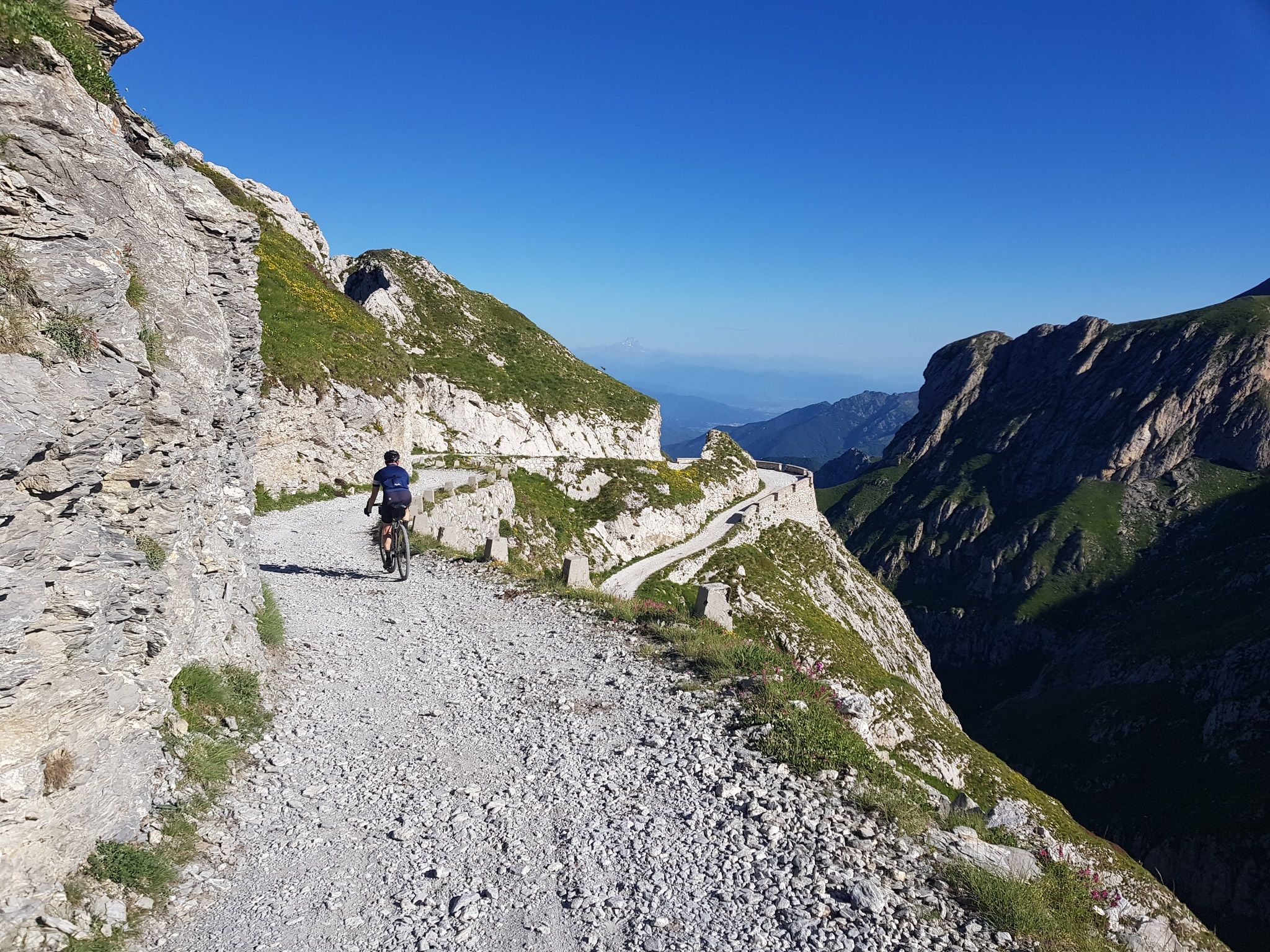
No traffic touring cycling routes around Oggebbio are characterized by hillsides that ascend into pre-Alpine mountains, offering panoramic views of Lake Maggiore and surrounding wooded areas. The terrain includes terraced slopes and deep gorges, providing diverse cycling environments. A significant feature is the historic Linea Cadorna, a network of former military routes now adapted for cycling, which includes unpaved forest tracks and single trails.
Best no traffic touring cycling routes around Oggebbio
- The most popular no traffic touring cycling route is Cuvignone Pass – View of Lake Maggiore loop from Brezzo di Bedero, a 16.4 miles (26.4 km) trail that takes 2 hours 12 minutes to complete. This difficult route offers panoramic views of Lake Maggiore from elevated positions.
- Another top favourite among local touring cyclists is Cuvignone Pass – View of Lake Maggiore loop from Porto Valtravaglia, a difficult 16.6 miles (26.7 km) path. It ascends through varied pre-Alpine terrain, providing continuous lake vistas.
- Local touring cyclists also love the Cuvignone Pass (1,050 m) – View of Lake Maggiore loop from Castelveccana, a 11.2 miles (18.1 km) trail leading through mountainous landscapes with significant elevation gain, often completed in about 1 hour 41 minutes.
- Touring cycling around Oggebbio is defined by hillsides, pre-Alpine mountains, and the historic Linea Cadorna, with routes offering options for various ability levels from moderate to difficult.
- The routes in Oggebbio are highly rated by the komoot community with an average score of 4.4 stars from over 2000 reviews. More than 18000 touring cyclists have used komoot to explore Oggebbio's varied terrain.
Last updated: June 30, 2026
4.7
(11)
105
riders
Hard bike ride. Very good fitness required. Mostly paved surfaces. Suitable for all skill levels.
5.0
(1)
34
riders
16.8km
01:37
750m
750m
Hard bike ride. Very good fitness required. Mostly paved surfaces. Suitable for all skill levels.

Sign up for free
4.8
(4)
25
riders
14.9km
01:06
320m
320m
Moderate bike ride. Good fitness required. Mostly paved surfaces. Suitable for all skill levels.
4.7
(3)
32
riders
32.8km
02:23
680m
680m
Hard bike ride. Very good fitness required. Mostly paved surfaces. Suitable for all skill levels.
4.0
(2)
22
riders
16.2km
01:06
260m
260m
Moderate bike ride. Good fitness required. Mostly paved surfaces. Suitable for all skill levels.
Get access to more routes and recommendations from other explorers.
Sign up for free
Already have an account?
Our route recommendations are based on thousands of hikes, rides, and runs completed by other people on komoot.
Start today with a free account
Your next adventure awaits.
Login or Signup

Other adventures around Oggebbio

Tips from the Community

Before running water arrived in homes, villages had public washhouses where women, often young maids, washed their laundry. They were places of work but also places of socialization: here, people met every day, exchanged news, and spread the typical village gossip. The first washerwomen were forced to wash in rivers, on their knees, and in the open, in all weathers.
0
0

a classic from the Varese area. It's worth it.
1
0

Impressive building right on the promenade. With seating nearby and a great view over the lake.
1
0

Structure maintained in excellent condition.
10
1

Campanile di San Martino di Saltirana, Nasca Bell tower of St. Martin, Nasca, (Castelveccana) In the cemetery of Nasca stands a lonely bell tower made of rough gray stone: this is the remains of the ancient church of San Martino di Saltirana. It must have been a rather small and rustic church, in the Romanesque style like San Giorgio di Sarigo and therefore probably built around the 22nd century. In it the landowners of Saltirana and the inhabitants of a vanished village that then extended into the plain between Saltirana and Canova gathered for their religious functions. This village was destroyed by Nordic soldiers in 1277. The inhabitants, plundered and decimated by the invaders and the ensuing plague, abandoned everything and moved to a nearby hill where they founded Nasca. The church of San Martino fell into disuse. In 1574, during a pastoral visit to the parish church of Travaglia, Saint Charles had his secretary Bascapè record the state of semi-abandonment of San Martino as follows: "The church has rough walls and worked stones; it is without a door..." In August 1581, during one of the repeated visits to the parish, Carlo Borromeo felt the first symptoms of his long and relentless illness: seventeen attacks of tertian fever that imprisoned him in Domo for about a month. As a convalescent, he went on foot to the woods of Sarigo, where he quenched his thirst in a spring that is still called "Fonte di San Carlo". In 1786, by order of the parish priest of Domo, Giovanni Battista, Isabella had the church demolished, keeping only the bell tower. (from the book "Municipality of Castelveccana - a village along the way"). Text / Source: Municipality of Castelveccana https://www.comune.castelveccana.va.it/c012045/zf/index.php/servizi-aggiuntivi/index/index/idtesto/20024
10
0
Washhouse, Nasca from 1896, (Castelveccana) Before the introduction of running water in houses, there were public washhouses in the villages where women (mostly maids) of the families washed their laundry. They were also places where people went to socialize and chat. An important part of the women's social life took place there. A daily meeting place, so to speak, where you could find out about the latest news and current village gossip. The first laundresses were forced to wash their laundry in the river, on their knees and outdoors in all weathers.
10
0
Chiesetta S.Michele al Monte (Porto Valtravaglia) Church of San Michele al Monte The millennial church of San Michele al Monte is located in the area of the current municipality of Porto Valtravaglia, at about 820 meters. The church of San Michele al Mt. was built to ensure that people who lived in the mountains during spring and summer could attend religious services. The small church of San Michele al Monte has a very simple structure: about 30 square meters, with a semicircular apse facing east according to ancient tradition. The apse, the oldest part of the small church, dating from the second half of the 11th century, features well-aligned rows of stones and pebbles with clear fish-hook bands. The sacristy and bell tower are believed to have been added in the 19th century. In 1965 the roof of the sacristy collapsed. In 2000 the roof was completely rebuilt and walls and foundations were restored. Discoveries followed: in 2001, important frescoes from the 11th to 14th centuries were discovered and restored. Already described in the 15th century, they were later hidden under new paving, and the church was even used to house tools and animals. Text: Porto Valtravaglia Parish
10
4
San Michele al Monte restaurant (Porto Valtravaglia) Via San Michele 1, Loc. San Michele - 21010 Porto Valtravaglia Tel. +39 339 235 3496
10
0
Frequently Asked Questions
How many no-traffic touring cycling routes are available around Oggebbio?
There are nearly 50 dedicated no-traffic touring cycling routes around Oggebbio. These routes cater to various skill levels, with a good selection of moderate and challenging options, ensuring a diverse experience for all cyclists.
What is the best time of year for no-traffic touring cycling in Oggebbio?
The mild climate around Lake Maggiore makes spring and autumn ideal for touring cycling. During these seasons, you'll experience pleasant temperatures, lush landscapes, and fewer crowds, perfect for enjoying the panoramic views and historical sites without heavy traffic.
Are there any family-friendly no-traffic cycling routes in the Oggebbio area?
While many routes offer a challenge, some sections of the historic Linea Cadorna trails can be adapted for families, particularly those with older children. These routes often feature unpaved forest tracks with historical points of interest. For easier, flatter sections, consider exploring paths closer to the lakefront in nearby towns like Cannobio or Cannero Riviera, which often have promenades suitable for leisurely rides.
Can I find circular no-traffic touring cycling routes near Oggebbio?
Yes, many of the no-traffic touring routes around Oggebbio are designed as loops, allowing you to start and end your ride in the same location. An example is the Dutch Village – Roggiano Waterfall loop from Brezzo di Bedero, which offers a moderate challenge and scenic views.
Are there any waterfalls or natural pools accessible by no-traffic cycling routes?
Absolutely! The region boasts several beautiful natural water features. You can cycle to areas near the Cascata della Froda or the Pevereggia Waterfalls. The Dutch Village – Roggiano Waterfall loop specifically includes a waterfall, making it a great option for those seeking these natural attractions.
What historical landmarks can I see along the no-traffic cycling routes?
The historic Linea Cadorna, a defensive system from World War I, forms a significant network of trails. Along these routes, you can explore former military fortifications and enjoy impressive lake views. Other notable landmarks include the bell tower of the Parish Church of S. Pietro in Gonte and the ancient Port of Spasolo. You can also find the Church of Sant'Anna and Medieval Bridge in the Sant'Anna Gorge.
Where can I find panoramic viewpoints on these routes?
Many routes ascend into the pre-Alpine mountains, offering breathtaking panoramic views of Lake Maggiore, the surrounding wooded areas, and even the distant Swiss Alps. The View of Lake Maggiore and Cannobio from Sant'Agata is a particularly stunning viewpoint accessible from nearby routes.
Is it possible to bring my dog on the no-traffic cycling routes?
Many of the natural trails, especially those along the Linea Cadorna, are dog-friendly, provided your dog is well-behaved and kept on a leash where necessary. Always ensure you carry water for your pet and respect local regulations regarding animals in public spaces and natural parks.
Are there cafes, pubs, or accommodation options near the no-traffic bike trails?
Yes, the charming small Italian villages dotted around Oggebbio and along Lake Maggiore offer various amenities. Towns like Cannobio and Cannero Riviera have delightful promenades with cafes, restaurants, and accommodation options, providing perfect stops for refreshments or overnight stays during your cycling tour.
What do other touring cyclists enjoy most about cycling in Oggebbio?
The area is highly rated by the komoot community, with an average score of 4.35 stars. Reviewers often praise the stunning panoramic views of Lake Maggiore, the historical richness of the Linea Cadorna trails, and the peaceful, car-free nature of the routes that allow for an immersive experience in the diverse landscapes.
Are there options for public transport that accommodate bikes in the Oggebbio area?
Public transport options around Lake Maggiore, such as ferries and some local buses, often have provisions for bicycles, though it's always advisable to check schedules and specific policies in advance, especially during peak season. This can be a great way to extend your cycling range or return to your starting point.
Where can I park my car when accessing these no-traffic cycling routes?
Parking is generally available in the main villages and towns around Oggebbio, such as Cannobio, Cannero Riviera, and Oggebbio itself. Look for designated parking areas, often near the lakefront or town centers, which provide convenient access to the start points of many routes. Some trailheads for the Linea Cadorna may also have small parking areas.
Most popular attractions around Oggebbio

Get inspired with the komoot mobile app


Explore more
Browse the best Cycling routes in other regions.
