The best traffic-free bike rides around U Pàize/Carloforte
4.3
(169)
1,197
riders
24
rides
No traffic touring cycling routes around U Pàize/Carloforte are found on San Pietro Island, off Sardinia's southwestern coast. The island's volcanic origins have shaped diverse landscapes, including rugged coastlines, fine sandy beaches, and significant salt pans. Cyclists can explore both paved roads and unpaved segments, enjoying panoramic Mediterranean Sea views and varied terrain. The area offers routes suitable for various fitness levels, from easy paths to challenging coastal explorations.
Best no traffic touring cycling routes around U Pàize/Carloforte
- The most…
Last updated: May 18, 2026
4.4
(14)
109
riders
42.2km
02:58
610m
610m
Hard bike ride. Very good fitness required. Mostly paved surfaces. Suitable for all skill levels.
5.0
(5)
81
riders
35.2km
02:24
540m
540m
Hard bike ride. Very good fitness required. Mostly paved surfaces. Suitable for all skill levels.

Sign up for free
5.0
(1)
36
riders
25.5km
01:36
250m
250m
Moderate bike ride. Good fitness required. Mostly paved surfaces. Suitable for all skill levels.
5.0
(3)
38
riders
21.7km
01:29
350m
350m
Moderate bike ride. Good fitness required. Mostly paved surfaces. Suitable for all skill levels.
5.0
(2)
30
riders
Hard bike ride. Very good fitness required. You may need to push your bike for some segments of this route.
Get access to more routes and recommendations from other explorers.
Sign up for free
Already have an account?
Our route recommendations are based on thousands of hikes, rides, and runs completed by other people on komoot.
Start today with a free account
Your next adventure awaits.
Login or Signup


Tips from the Community

Carloforte, still closely linked to Pegli and Genoa, is the island's only center, with 6,000 inhabitants. It enchants with its many narrow streets rising up a gentle slope, its colorful corners and sea views, its small harbor, and its former defenses, of which watchtowers and sections of walls with forts can still be seen, including La Porta del Leone. Among the architectural highlights of this town, which is included in the Club of the Most Beautiful Towns in Italy, are U Palassiu, dating from the early 20th century and now the Giuseppe Cavallera Cinema, and the Church of the Madonna del Naufrago, which houses the wooden statue venerated by the Tabarkin people, a symbol of the faith and solidarity of the community.
5
0
Near the old salt pans you can sometimes see some flamingos.
5
0

The Carloforte Tonnara is one of the last active tuna fisheries in the Mediterranean, testifying to a fishing tradition rooted in the island's history. Every spring, the "mattanza" (tuna slaughter) takes place, the traditional method of catching tuna, passed down for centuries and still practiced today using historic techniques. The tonnara, with its buildings overlooking the sea and ancient work tools, tells an important chapter in the island's economic and cultural history.
0
0

The language of the Tabarchians essentially corresponds to the Ligurian language of the 15th century. Through personal and trade connections - both from Tunisia and from the island of San Pietro - it has developed just as much as the actual Ligurian and Genoese languages. Due to its geographical location, the port of Carloforte was of considerable importance in shipping and as a transshipment point for medium tonnage until the beginning of the 19th century. Carlofortine Ligurian preserves some nouns and rare grammatical forms that only occur in the outdated Genoese. It does not contain any Gallicisms that Genoese has adopted in recent centuries; for example, the accent (còccina) is typical of Pegli and not of pure Genoese. Only a few nouns from Sardinian, Arabic and Tuscan can be identified as external influences. More than 80 percent of the population still speak this dialect in everyday life today. The architecture, culture, customs and traditions of Carloforte still correspond to those of Liguria. Due to its historical, economic and cultural ties with the Ligurian capital, especially with Pegli, Carloforte was recognized as an honorary municipality of the province of Genoa on November 10, 2004. In 2006, the neighboring municipality of Calasetta received the same honor. Carloforte celebrates twin festivities with Pegli every year.
2
0
In 1542, the inhabitants of Pegli and the neighbouring communities left their home on the Ligurian coast in the wake of the Lomellini, a powerful trading family from Pegli and Genoa, and settled on the island of Tabarca off the coast of Tunisia, where they dived for coral until 1735. When coral mining and thus the tribute to the Lomellini continued to decline and was no longer profitable for all sides, and the conflicts with the Muslims intensified, King Charles Emmanuel III of Savoy, on the initiative of the Piedmontese architect Augusto de la Vallée, made the offer to settle the still uninhabited island of San Pietro. A part of the Tabarchini under the leadership of Agostino Tagliafico accepted the offer and settled on the island off Sardinia in 1738. In honour of the king, they named the new place Carloforte ("Charles the Strong"). Over time, other emigrant families arrived directly from Liguria and helped to strengthen the small, thriving community. In 1798, Carloforte was attacked by pirates and around 900 inhabitants were captured and held as slaves in Tunis; one of them became the mother of Bey Ahmad I al-Husain. After five years, they were finally ransomed. The parts of the old city walls and the fortress that still remain today are evidence of this barbarian invasion. The population, also known as the Tabarchines because of their origins, united the towns of Carloforte on the island of San Pietro and the neighboring community of Calasetta on the nearby island of Sant'Antioco. A smaller part of the emigrants from Tabarca headed towards the Spanish coast to Alicante and founded the town of Nueva Tabarca there. Although this colony retained some of the original surnames, it was absorbed by the Spanish-speaking community in terms of language and customs. The Tabarchini are scattered all over the world, mainly in Genoa, on the Ligurian coast, in Gibraltar, in Boca near Buenos Aires and in other port cities. They are estimated to number 18,000 people in total.
2
0
Carloforte (Ligurian: U Pàize) is an Italian municipality in the province of Sulcis Iglesiente in the Autonomous Region of Sardinia. It essentially comprises the island of San Pietro about 10 km off the southwest coast of Sardinia and some other insignificant islets of the Sulcis archipelago. The small town with 5983 inhabitants (as of December 31, 2022) is the only settlement on the island of San Pietro.
2
0

The tower of San Vittorio is a truly unique building that is worth visiting. It was built in the 17th century as a defensive tower, in more recent times it was converted into an astronomical station. Today it is home to a multimedia museum that tells the geological history of the island and more.
1
0
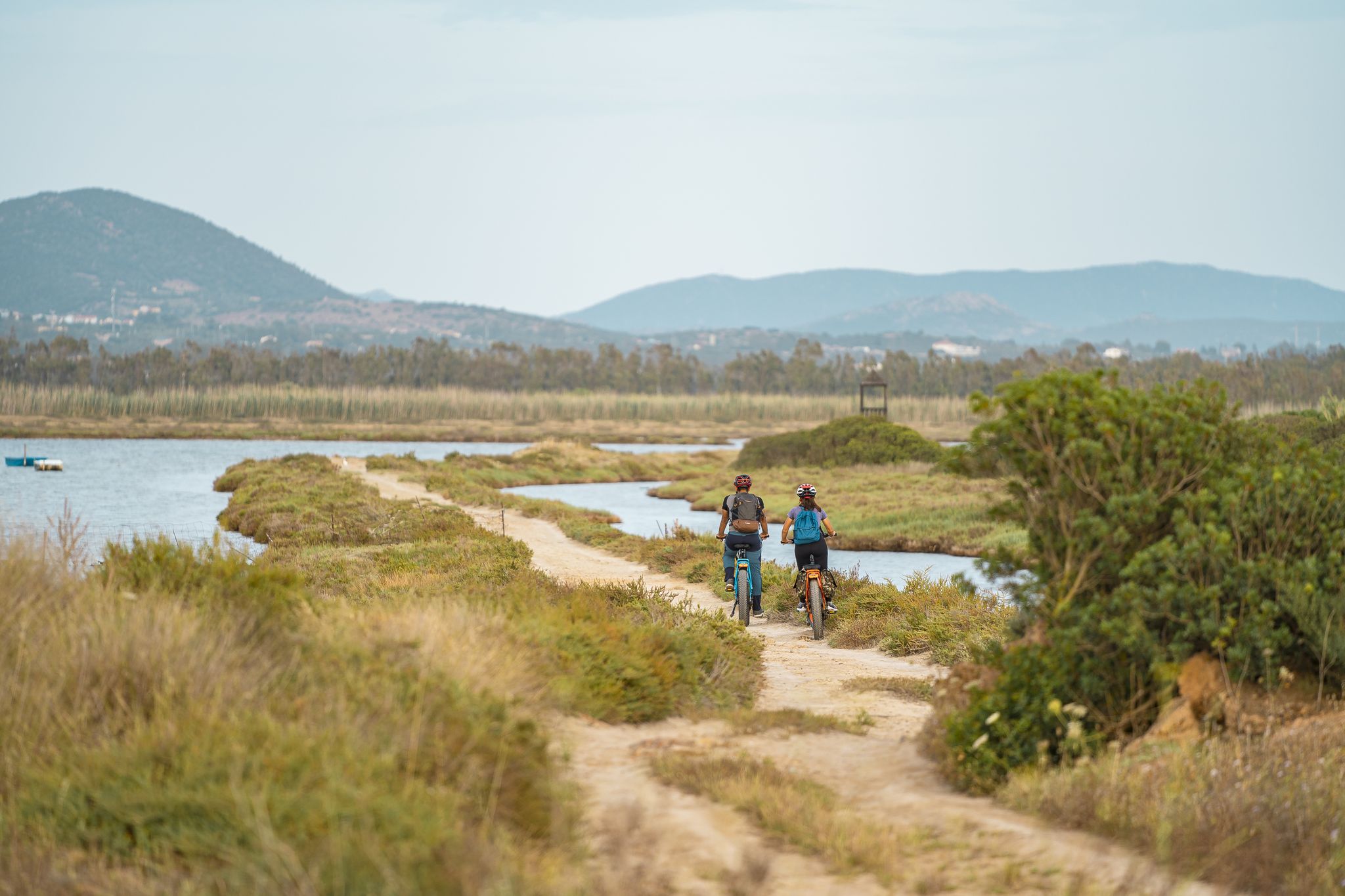
The Carloforte salt pans are a wetland of international interest. An easy cycle/pedestrian path (the Via del Sale) allows you to admire this ancient salt harvesting system and observe the splendid flamingos that now populate the area.
1
0
Frequently Asked Questions
How many no traffic touring cycling routes are available in U Pàize/Carloforte?
There are over 25 dedicated no traffic touring cycling routes around U Pàize/Carloforte. These routes cater to various skill levels, with 8 easy, 9 moderate, and 8 difficult options, ensuring a suitable ride for every cyclist.
What kind of terrain can I expect on no traffic touring cycling routes in U Pàize/Carloforte?
The routes in U Pàize/Carloforte offer a diverse mix of terrain, from paved roads to unpaved segments. You'll encounter volcanic coastal paths, gentle inclines, and flat sections, all providing panoramic Mediterranean Sea views. The island's volcanic origins contribute to its varied and scenic landscapes.
Are there any easy no traffic touring cycling routes suitable for beginners or families?
Yes, there are several easy no traffic touring cycling routes. A great option is the Carloforte Old Town – Carloforte Salt Pans loop from Pàize/Carloforte. This 20.5 km trail is suitable for most fitness levels and leads through the charming historic old town and past the significant salt pans, offering a relaxed and scenic ride.
What are the best natural features or landmarks to see along the no traffic cycling routes?
U Pàize/Carloforte's routes are rich with natural beauty and landmarks. You can cycle past dramatic cliffs and pristine beaches like Cala Fico. The Capo Sandalo Lighthouse, at Italy's westernmost point, offers breathtaking sunset views. Don't miss the Cliffs on Strada Mercureddu and the unique Sea Stack at Falesia.
Can I find circular no traffic touring cycling routes in U Pàize/Carloforte?
Yes, many of the no traffic touring cycling routes in U Pàize/Carloforte are circular, allowing you to start and end in the same location. A challenging but rewarding option is the Tour of San Pietro Island and Carloforte - loop tour, which covers 42.2 km and explores the island's diverse landscapes.
What is the best time of year for no traffic touring cycling in U Pàize/Carloforte?
The best time for no traffic touring cycling in U Pàize/Carloforte is typically spring (April-May) and autumn (September-October). During these seasons, the weather is pleasantly mild, and the island is less crowded than in the peak summer months, offering ideal conditions for exploring the routes.
Are there any specific attractions or points of interest in Carloforte itself that cyclists can visit?
Absolutely! The charming Carloforte Old Town, known as U Pàize, is a highlight. You can explore its colorful houses, narrow streets, and historic sites like the Mura di Cinta. The Church of St. Charles Borromeo and the Monument to Charles Emmanuel III are also notable points of interest within the town.
What do other touring cyclists enjoy most about no traffic cycling in U Pàize/Carloforte?
The no traffic touring cycling routes in U Pàize/Carloforte are highly rated by the komoot community, with an average score of 4.5 stars from 159 ratings. Reviewers often praise the stunning coastal views, the tranquility of the car-free paths, and the unique blend of natural beauty and cultural heritage found on the island.
Are there opportunities for wild swimming or natural pools along the cycling routes?
Yes, the island offers unique spots for swimming and relaxation. The Piscine Naturali di Nasca are natural rock pools carved into volcanic rock, providing a refreshing stop. Additionally, many pristine sandy beaches and hidden coves along the rugged coastline, such as Spiaggia La Caletta and Spiaggia della Conca, are accessible from various routes.
Where can I rent a bike, including electric bikes, in U Pàize/Carloforte?
Bike rental services, including electric bikes, are readily available in U Pàize/Carloforte. These services make it convenient for visitors to explore the island's scenic no traffic touring cycling trails without bringing their own equipment.
Are there any routes that pass by the famous Carloforte Salt Pans?
Yes, the Carloforte Salt Pans (Saline di Carloforte) are a significant natural and historical site, and several routes pass by them. The Carloforte Salt Pans – Capo Sandalo Lighthouse loop from Cala Lunga is one such route, allowing you to observe the rich birdlife, including flamingos, that now inhabit this area.
Most popular attractions around U Pàize/Carloforte

Get inspired with the komoot mobile app


Explore more
Browse the best Cycling routes in other regions.
