The best traffic-free bike rides around Paulle/Paulilatino
4.3
(22)
270
riders
14
rides
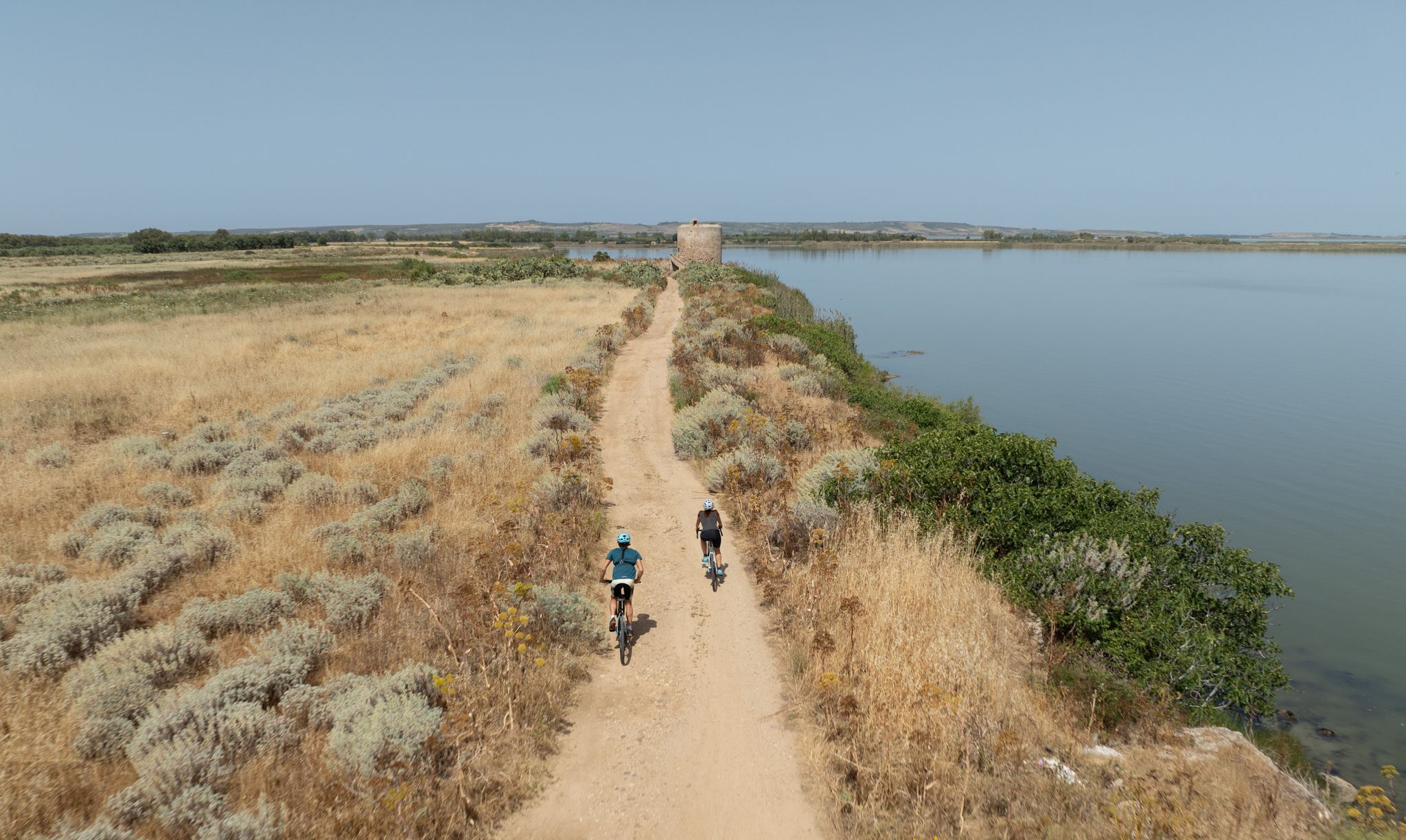
No traffic touring cycling routes around Paulle/Paulilatino traverse a distinctive basaltic plateau, characterized by volcanic terrain and surrounded by diverse Mediterranean flora. The region features cork oak forests, olive groves, and vineyards, offering varied and scenic routes. Cyclists can explore an uncontaminated landscape rich in prehistoric heritage, including numerous Nuragic sites and ancient structures. This area provides a unique blend of geological features and historical landmarks, making it suitable for touring cyclists seeking cultural immersion and natural beauty.
Best no…
Last updated: May 18, 2026
3.8
(4)
13
riders
14.8km
01:26
290m
290m
Moderate bike ride. Good fitness required. Mostly paved surfaces. Suitable for all skill levels.
5
riders
29.2km
03:03
890m
890m
Hard bike ride. Very good fitness required. Mostly paved surfaces. Suitable for all skill levels.

Sign up for free
5.0
(1)
5
riders
27.4km
01:47
150m
140m
Hard bike ride. Great for any fitness level. You may need to push your bike for some segments of this route.
5.0
(1)
5
riders
23.8km
01:43
180m
180m
Moderate bike ride. Good fitness required. Mostly paved surfaces. Suitable for all skill levels.
4
riders
38.8km
04:06
1,180m
1,180m
Hard bike ride. Very good fitness required. You may need to push your bike for some segments of this route.
Get access to more routes and recommendations from other explorers.
Sign up for free
Already have an account?
Our route recommendations are based on thousands of hikes, rides, and runs completed by other people on komoot.
Start today with a free account
Your next adventure awaits.
Login or Signup
Popular around Paulle/Paulilatino
Other adventures around Paulle/Paulilatino

Tips from the Community

one of the most beautiful complex nuraghe in Sardinia (you pay for the visit, there is the possibility of having a guide)
0
0

The Tirso is the longest river in Sardinia. It rises as Riu de su Campo north of Bitti, in the province of Nuoro on the east side of the island, flows through the Lago Omodeo reservoir and flows into Oristano on the west side of the island. In the middle reaches it is spanned by the Ponte Ezzu, an old Roman bridge, near Illorai. It is 150 km long and is only navigable in the last few kilometers. The fertile plain north of Oristano through which it flows is called the Tirso plain.
1
0
The Nuraghe Losa cult site is located on the Italian island of Sardinia near the municipality of Abbasanta on the SS 131 (“Carlo Felice”). It can be reached via a separate exit at kilometer 123.
1
0
The staff is exceptionally friendly and helpful.
1
0

Located at the foot of Montiferru, it is the entry point for countless trails and mountain paths that can be visited by bike!
0
0

Well preserved Nuraghe on private land.
0
0

The thermal baths are managed by the Cooperative Forum Traiani. Current opening times can be found here: https://www.forumtraiani.it/what-to-see/?lang=en
0
0
It was once the Forum Traiani, the most important Roman city in the island's hinterland, founded in the late Republic and becoming a marketplace between the inland communities and the Romanized population of the Gulf of Oristano under Emperor Trajan. Today Fordongianus is a small town of less than a thousand inhabitants in the Barigadu area, a renowned wellness center thanks to a thermal facility that uses saline and thermoactive water springs that flow at 56 degrees all year round and have beneficial effects on the body. A feature known to the Romans: the city is situated on the left bank of the fertile and lush valley of the Tirso, home to the warm and healing Aquae Ypsitanae, Roman baths from the 1st century AD, now an archaeological site. Two facilities can be visited, one retains a rectangular porticoed swimming pool, originally with a barrel vault, the other includes the changing room. The floor was in mosaic (you will see traces of it) and the ceiling in blue glass paste. The supply was ensured by a network of canals and a system of wells and cisterns. The importance of the thermal baths is confirmed by two statues of the god Bes, deity of health cults, and by a sacred space dedicated to the nymphs. Source: https://www.sardegnaturismo.it/en/discover/fordongianus
0
0
Frequently Asked Questions
How many no-traffic touring cycling routes are available around Paulle/Paulilatino?
There are 10 dedicated no-traffic touring cycling routes around Paulle/Paulilatino, offering a variety of experiences for cyclists looking for peaceful rides away from heavy vehicle traffic.
What is the general difficulty level of no-traffic touring cycling routes in this region?
The no-traffic touring cycling routes around Paulle/Paulilatino are generally suited for experienced cyclists. Most routes are rated as 'difficult' (7 out of 10), with a few 'moderate' options (3 out of 10). There are no 'easy' routes listed, indicating that riders should be prepared for varied terrain and elevation changes, typical of the region's basaltic plateau and volcanic landscape.
Are there any circular no-traffic touring cycling routes available?
Yes, many of the no-traffic touring cycling routes around Paulle/Paulilatino are designed as loops, allowing you to start and finish in the same location. For example, the Aragonese House of Fordongianus – Fordongianus Roman Baths loop from Fordongianus is a moderate circular route, and the Nuraghe Losa loop from Mandra Edera offers a challenging circular experience.
What kind of natural landscapes can I expect to see on these routes?
The routes traverse a diverse and uncontaminated scenery. You'll cycle through cork oak forests, Mediterranean shrubs, olive groves, and vineyards, often on a distinctive basaltic plateau with volcanic terrain. The region is also irrigated by springs, contributing to lush areas, especially during warmer months.
What historical or cultural landmarks can I visit along the no-traffic cycling routes?
Paulilatino is rich in prehistoric heritage, with over 110 Nuragic sites. You can explore significant archaeological complexes like the Nuragic Sanctuary of Santa Cristina, known for its well-preserved architecture and ancient olive trees. The Fordongianus Roman Baths are another notable historical site, offering a glimpse into ancient thermal facilities. The Aragonese House of Fordongianus – Fordongianus Roman Baths loop from Fordongianus specifically passes by these baths.
Are there any natural attractions like waterfalls or lakes accessible from these routes?
Yes, the region offers beautiful natural attractions. You can find the Sos Molinos Waterfall, a picturesque spot. Additionally, the area features several lakes, including those formed by the Tirso River, such as near the Santa Chiara Dam on the Tirso, which can be explored via routes like the Santa Chiara Dam and Lake Omodeo Road.
What is the best time of year to go touring cycling in Paulle/Paulilatino?
Given the Mediterranean climate, spring (April-May) and autumn (September-October) are generally the best times for touring cycling. The weather is milder, and the landscapes are vibrant. Summers can be hot, but the spring-fed areas and cork oak forests may offer some respite. Winters are generally mild but can be wetter.
What do other touring cyclists say about the no-traffic routes in Paulle/Paulilatino?
The no-traffic touring cycling routes in Paulle/Paulilatino are highly rated by the komoot community, with an average score of 4.36 out of 5 stars. Reviewers often praise the peaceful, uncontaminated scenery, the rich historical sites like the Nuraghe, and the immersive experience of cycling through varied landscapes away from traffic.
Are there any family-friendly no-traffic cycling routes?
While there are no routes specifically rated as 'easy' in this guide, some of the 'moderate' routes, such as the Aragonese House of Fordongianus – Fordongianus Roman Baths loop from Fordongianus (14.5 km), might be suitable for families with older children who are comfortable with some elevation gain and longer distances. Always check the route details for specific difficulty and terrain before heading out with family.
Can I bring my dog on these no-traffic touring cycling routes?
Most outdoor routes in the Paulle/Paulilatino region, especially those on public land or quiet country roads, are generally dog-friendly, provided your dog is well-behaved and kept under control. However, specific restrictions might apply to archaeological sites or protected natural areas. It's always best to check local regulations for any specific site you plan to visit with your dog.
Are there places to eat or find accommodation along the no-traffic routes?
While the routes focus on uncontaminated scenery, Paulilatino and nearby villages offer local amenities. You'll find opportunities to experience local traditions and culinary delights in these towns. It's advisable to plan your route to pass through or near villages for cafes, restaurants, and accommodation, especially on longer tours, as services might be sparse on the quieter sections of the routes.
Where can I park my car to access these no-traffic cycling routes?
Access points for these routes are typically found near the starting points in towns or villages. For example, the Nuraghe Perdu Cossu loop from Ilartzi/Ghilarza starts near Ilartzi/Ghilarza, where you can usually find public parking. Similarly, routes starting from Fordongianus or Sèneghe/Seneghe will have parking options within those localities. Always check local signage for parking regulations.
Most popular attractions around Paulle/Paulilatino

Get inspired with the komoot mobile app


Explore more
Browse the best Cycling routes in other regions.
