The best traffic-free bike rides around Altamura
4.1
(7)
80
riders
17
rides
Gravel biking around Altamura offers diverse terrain within Italy's Puglia region, primarily centered around the Alta Murgia National Park. The area is characterized by its distinctive karst topography, featuring sinkholes, rugged rocky trails, and sweeping vistas across the Murge plateau. Cyclists can navigate extensive pseudo-steppe areas, undulating hills, and limestone plateaus, interspersed with Mediterranean steppe and verdant zones like the Mercadante Forest. This varied landscape provides a range of gradients and surfaces suitable for no traffic gravel bike trails.
Best…
Last updated: October 30, 2026
5.0
(1)
11
riders
45.5km
03:05
700m
700m
Hard gravel ride. Very good fitness required. Mostly paved surfaces.
5.0
(1)
3
riders
30.6km
02:11
410m
410m
Moderate gravel ride. Good fitness required. Mostly paved surfaces.

9
riders
85.8km
05:36
1,120m
1,120m
Hard gravel ride. Very good fitness required. You may need to push your bike for some segments of this route.
3
riders
Hard gravel ride. Very good fitness required. You may need to push your bike for some segments of this route.
1
riders
38.8km
02:16
260m
260m
Moderate gravel ride. Good fitness required. Mostly paved surfaces.
Get access to more routes and recommendations from other explorers.
Already have an account?
Our route recommendations are based on thousands of hikes, rides, and runs completed by other people on komoot.
Start today with a free account
Your next adventure awaits.




Tips from the Community

Right next to the medieval walls, the center of city life and trade since the 14th century, the square was transformed in the 16th century to house the governor's seat, the "Palazzo del Sedile", or the old town hall. Remodeled in the 18th century, it is now home to the Music Conservatory. The statues on the facade refer to the principles of good governance (temperance, justice, strength, and prudence).
1
0
The largest square in the historic center of Matera; built in the mid-18th century by covering and filling in a series of caves, which were only rediscovered in 1991. Beneath the paving of the square, abandoned for centuries but now accessible, are: the rock church of Santo Spirito (with frescoes from the 13th-14th century) and the Palombaro Lungo, a large public cistern that remained in use until 1927.
0
0
In the early 2000s, sculptor and artist Antonio Paradiso conceived a project to recover and redevelop a disused calcarenite quarry: through Land Art and contemporary sculpture works, he transformed the space into an open-air museum. The large stone and steel works are immersed in the wide square and dialogue with the surrounding material and landscape. The rock walls, marked by geometric cuts and more or less deep incisions, bear witness to decades of extractive activity with different processing techniques. Clear and discontinuous traces thus tell the story of the quarrymen's work and the transformation of matter: “When I bought it, it was a dump, full of waste materials and debris of all kinds, but I immediately saw that the quarry itself was already a sculpture, representing human effort.”
0
0

This city is truly special and incomparable. When you consider that until the end of the 50s, people here still lived miserably in cave dwellings.
3
0

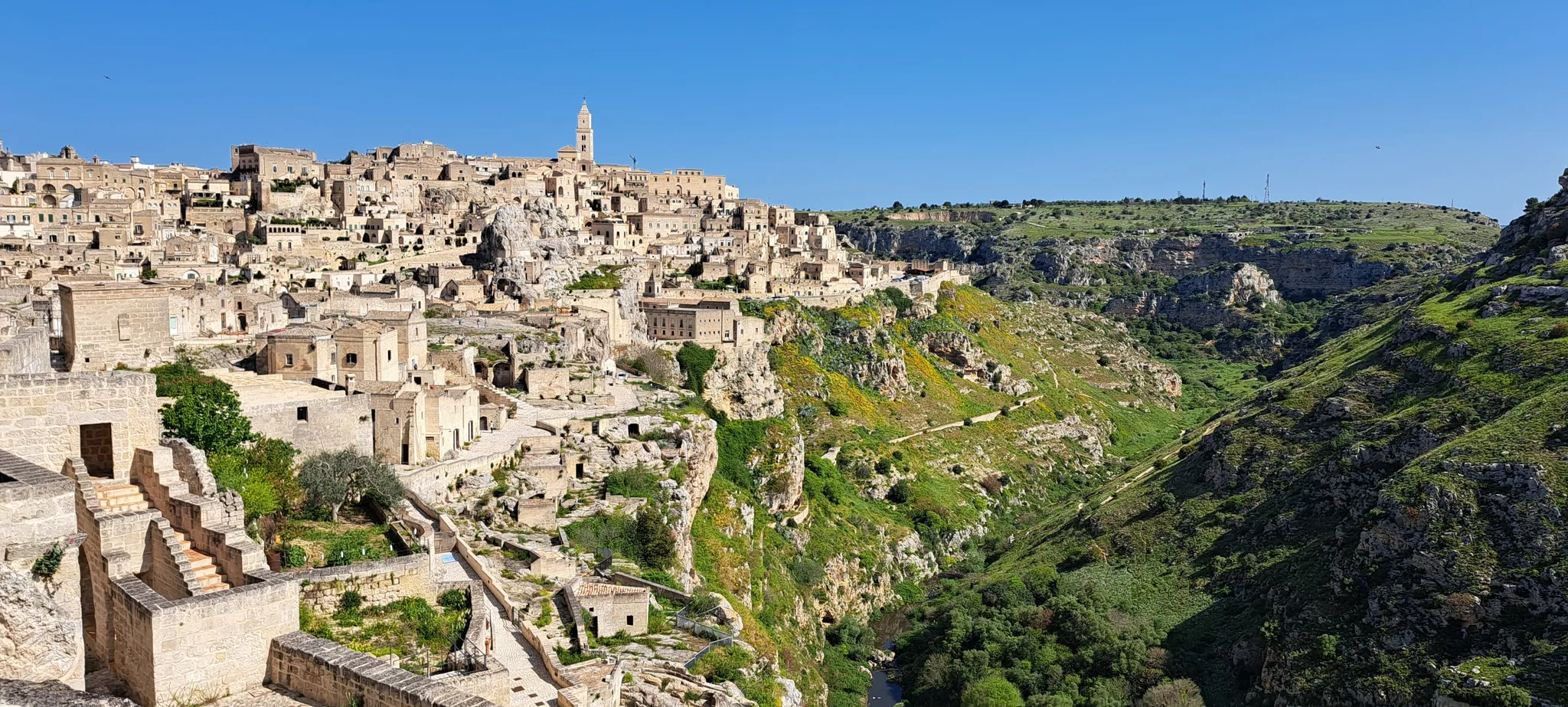
beautiful view of the Sassi
1
0

Unique place in the world!
1
0

Matera is an Italian city in the Basilicata region, the capital of the province of the same name. It lies on the edge of the Murgia plateau. Its surroundings are home to the most important caveman settlements in the Mediterranean region. Since 1993, the "Sassi di Matera" (Stones of Matera), the oldest part of the city, have been a UNESCO World Heritage Site.
2
0
Matera is an Italian city in the Basilicata region, the capital of the province of the same name. It lies on the edge of the Murgia plateau. Its surroundings are home to the most important caveman settlements in the Mediterranean region. Since 1993, the "Sassi di Matera" (Stones of Matera), the oldest part of the city, have been a UNESCO World Heritage Site.
3
0
Frequently Asked Questions
How many no-traffic gravel bike trails are available around Altamura?
There are 8 dedicated no-traffic gravel bike routes around Altamura featured in this guide. These routes offer a variety of experiences within the stunning Alta Murgia National Park, ensuring a peaceful ride away from vehicular traffic.
What kind of terrain can I expect on Altamura's no-traffic gravel bike trails?
The terrain around Altamura, particularly within the Alta Murgia National Park, is characterized by its unique karst topography. You'll encounter rugged rocky trails, vast pseudo-steppe areas, undulating hills, and limestone plateaus. This diverse landscape provides an engaging and varied experience for gravel bikers, from challenging sections to more forgiving stretches.
Are there any challenging no-traffic gravel bike routes for experienced riders?
Yes, Altamura offers several challenging no-traffic gravel routes. For instance, the Historic Center of Matera – Sassi of Matera loop from Venusio is a difficult route spanning over 87 km with significant elevation gain. Another demanding option is the Sassi of Matera – View of Matera's Sassi loop from Matera Sud, which covers nearly 44 km with over 660 meters of ascent.
What notable landmarks or natural features can I see along these gravel trails?
The no-traffic gravel trails around Altamura are rich in natural and historical sights. You can explore the dramatic karst landscapes, including impressive sinkholes like the Pulo of Altamura. Many routes also offer views of the ancient city of Matera, with its famous Sassi. The region is also home to significant paleontological sites, such as the Pontrelli quarry with dinosaur footprints, and the Lamalunga Cave, where the Altamura Man was discovered.
Are there any family-friendly or easy no-traffic gravel bike routes in Altamura?
While many routes offer varied terrain, some are more accessible. The Jazzo Corto Gigli – Jazzo of the Devil loop from Quasano is rated as moderate and offers a good introduction to the area's gravel biking, with a distance of just under 39 km and manageable elevation. For families, it's advisable to check the difficulty and length of routes carefully, as even 'easy' gravel can be more demanding than paved paths.
What is the best season for gravel biking in Altamura to avoid traffic?
The best seasons for gravel biking in Altamura are typically spring (April to June) and autumn (September to October). During these times, the weather is generally mild and pleasant, and the natural landscapes are at their most vibrant. Summer can be very hot, making early morning or late afternoon rides preferable. Winter can be cool, but routes remain accessible, often offering a serene, less crowded experience.
Are there any circular no-traffic gravel bike routes around Altamura?
Yes, many of the no-traffic gravel bike routes around Altamura are designed as loops, allowing you to start and end at the same point. Examples include the Jazzo Corto Gigli – Jazzo of the Devil loop from Quasano and the View of Matera's Sassi – Rock Church of Santa Rita loop from Matera Sud. These circular routes are ideal for exploring the Alta Murgia National Park without needing to retrace your steps.
Can I find places to eat or drink near the no-traffic gravel bike trails?
Yes, the Altamura region is known for its traditional rural 'masserie' (fortified farmhouses) and agriturismi, many of which offer local cuisine and hospitality. While directly on the car-free trails, options might be limited, you'll find cafes, pubs, and restaurants in Altamura itself and in nearby towns like Gravina in Puglia and Matera, often just a short ride from the trailheads.
Is public transport available to access the gravel bike trails around Altamura?
Altamura is connected by regional train services, and some local buses operate in the area. However, direct public transport access to specific trailheads within the Alta Murgia National Park can be limited. It's advisable to check local transport schedules and bike carriage policies in advance. Many visitors opt to drive to a starting point and park, or arrange for local transfers.
Are there any specific permits required for cycling in Alta Murgia National Park?
Generally, no specific permits are required for cycling on designated trails within the Alta Murgia National Park. However, it's always good practice to respect park regulations, stay on marked paths, and be mindful of the natural environment. For specific information on protected areas or any potential changes, you can consult the official Alta Murgia National Park website.
What do other gravel bikers enjoy most about the no-traffic routes in Altamura?
The komoot community highly rates the gravel biking experience around Altamura, with an average score of 3.0 stars. Reviewers often praise the tranquility of the car-free routes, the unique karst landscapes, and the opportunity to discover historical and natural wonders like the Pulo of Altamura. The blend of natural beauty and cultural heritage makes for a truly rewarding ride.
Most popular attractions around Altamura

Get inspired with the komoot mobile app


Explore more
Browse the best Gravel rides in other regions.
