The best road cycling routes around Madulain
4.3
(167)
12,342
riders
22
rides
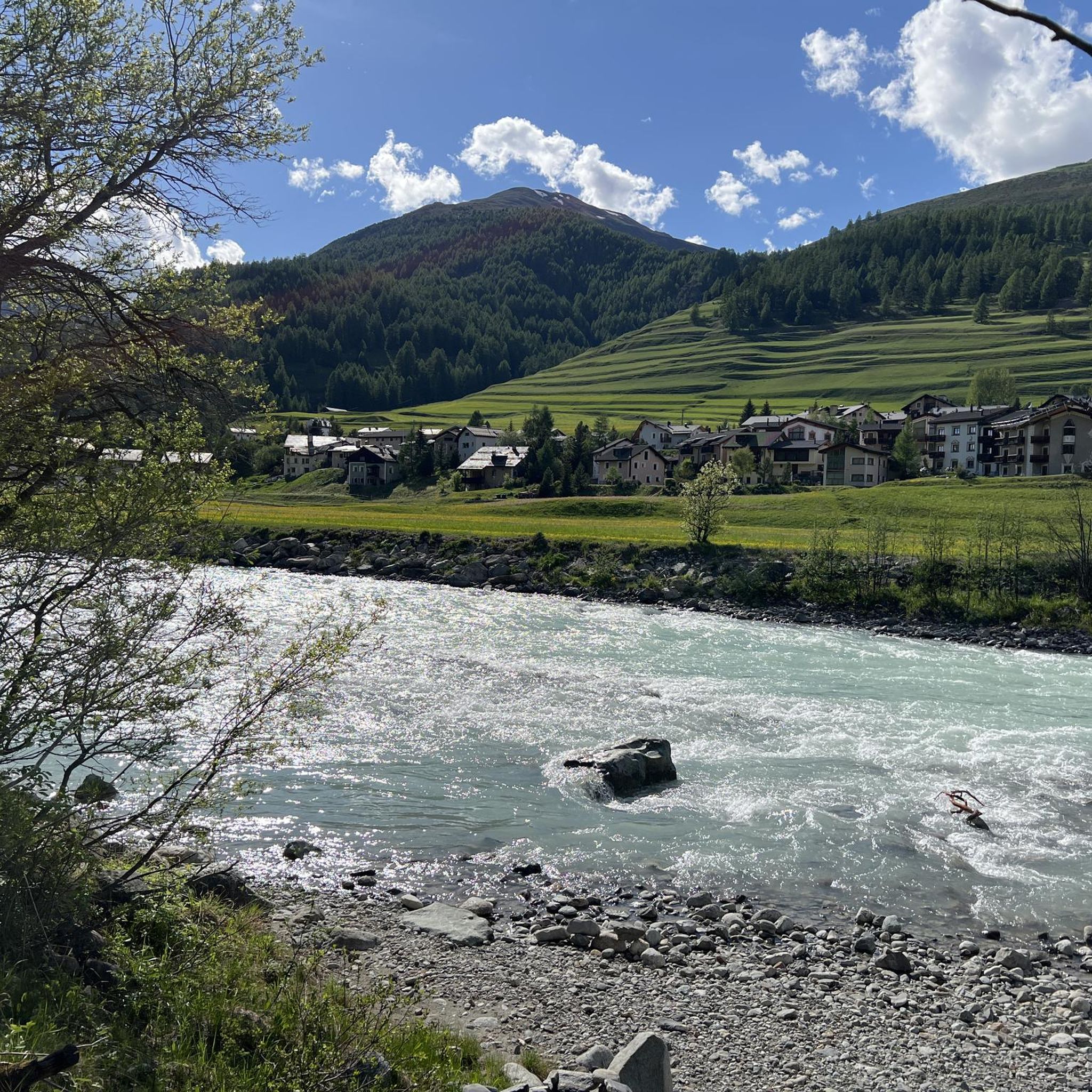
Road cycling around Madulain, situated in Switzerland's Upper Engadin region, offers diverse terrain for cyclists. The area is characterized by alpine valleys, the Inn River, and significant mountain passes. Cyclists can navigate challenging ascents over high mountain passes and enjoy more relaxed rides through picturesque floodplains and green meadows. This region provides a varied landscape for road cycling, from demanding climbs to scenic valley routes.
Best road cycling routes around Madulain
- The most popular road cycling route is Silvaplana Market…
Last updated: September 29, 2026
4.8
(69)
3,490
riders
107km
05:58
2,330m
2,330m
Hard road ride. Very good fitness required. Mostly well-paved surfaces and easy to ride.
4.1
(14)
959
riders
54.7km
02:22
480m
480m
Moderate road ride. Good fitness required. Mostly well-paved surfaces and easy to ride.

5.0
(8)
572
riders
53.3km
02:45
900m
900m
Hard road ride. Very good fitness required. Mostly well-paved surfaces and easy to ride.
4.8
(8)
402
riders
98.2km
04:55
1,510m
1,510m
Hard road ride. Very good fitness required. Some segments of this route may be unpaved and difficult to ride.
4.1
(7)
236
riders
39.5km
01:50
400m
400m
Moderate road ride. Good fitness required. Mostly well-paved surfaces and easy to ride.
Get access to more routes and recommendations from other explorers.
Already have an account?
Our route recommendations are based on thousands of hikes, rides, and runs completed by other people on komoot.
Start today with a free account
Your next adventure awaits.
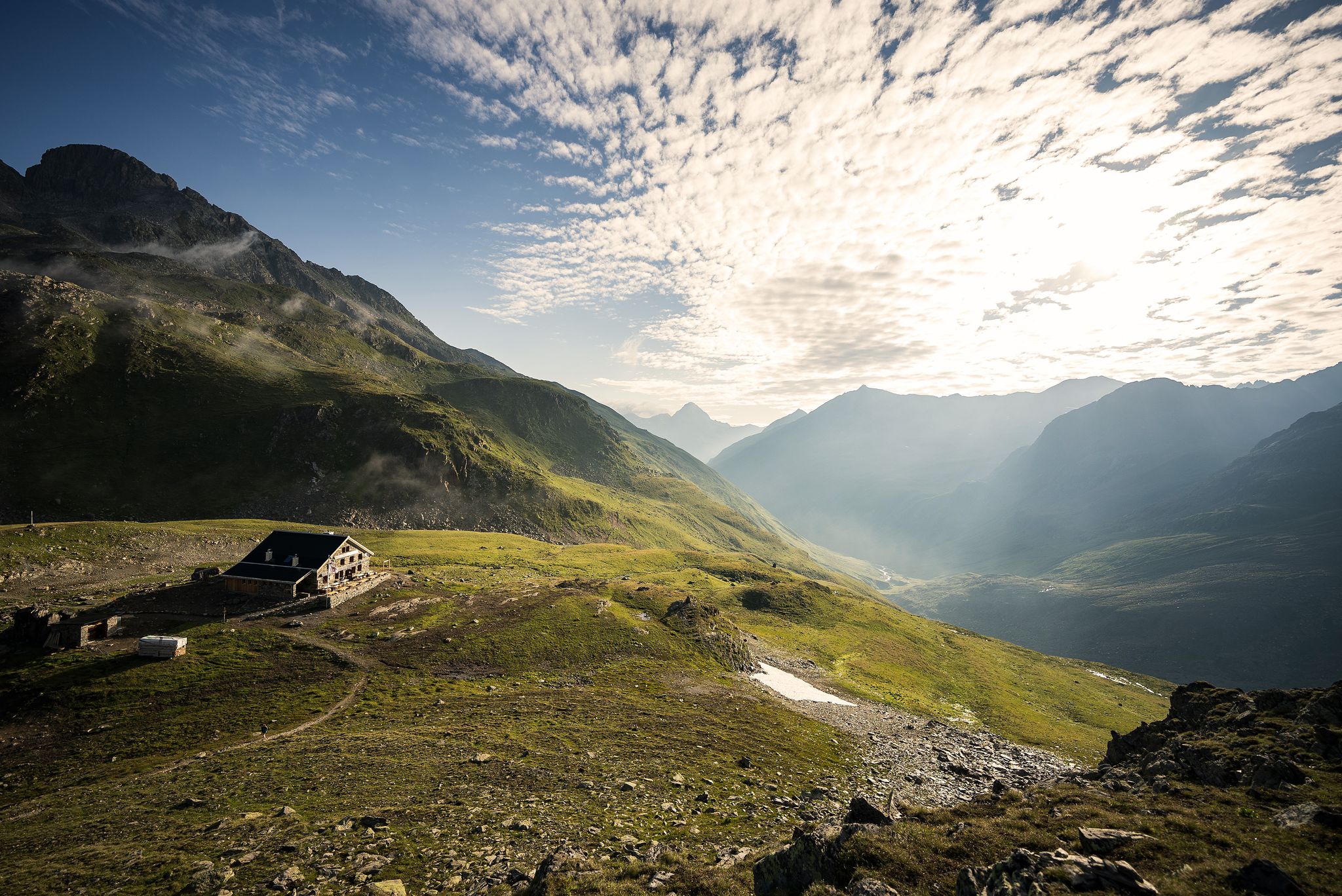
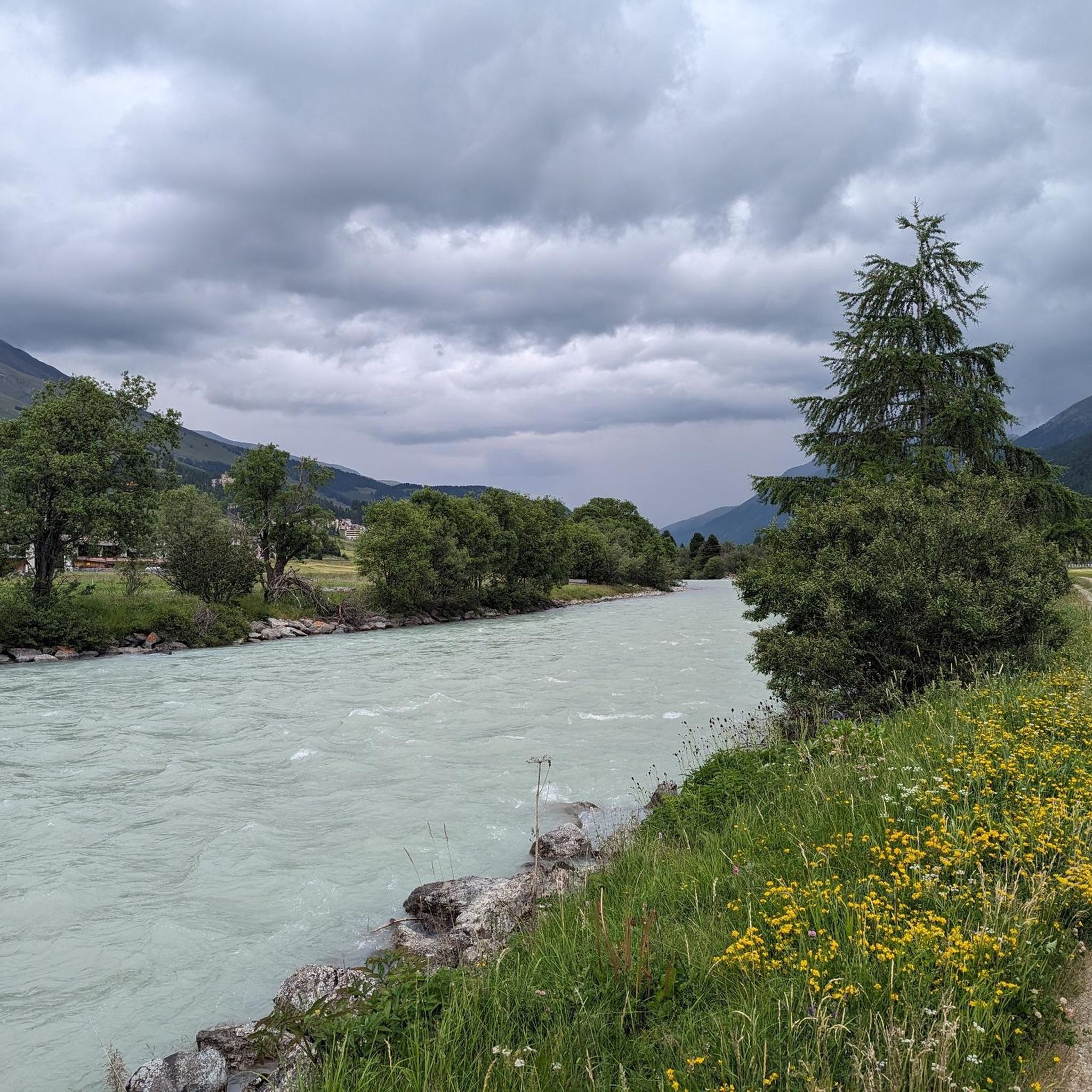
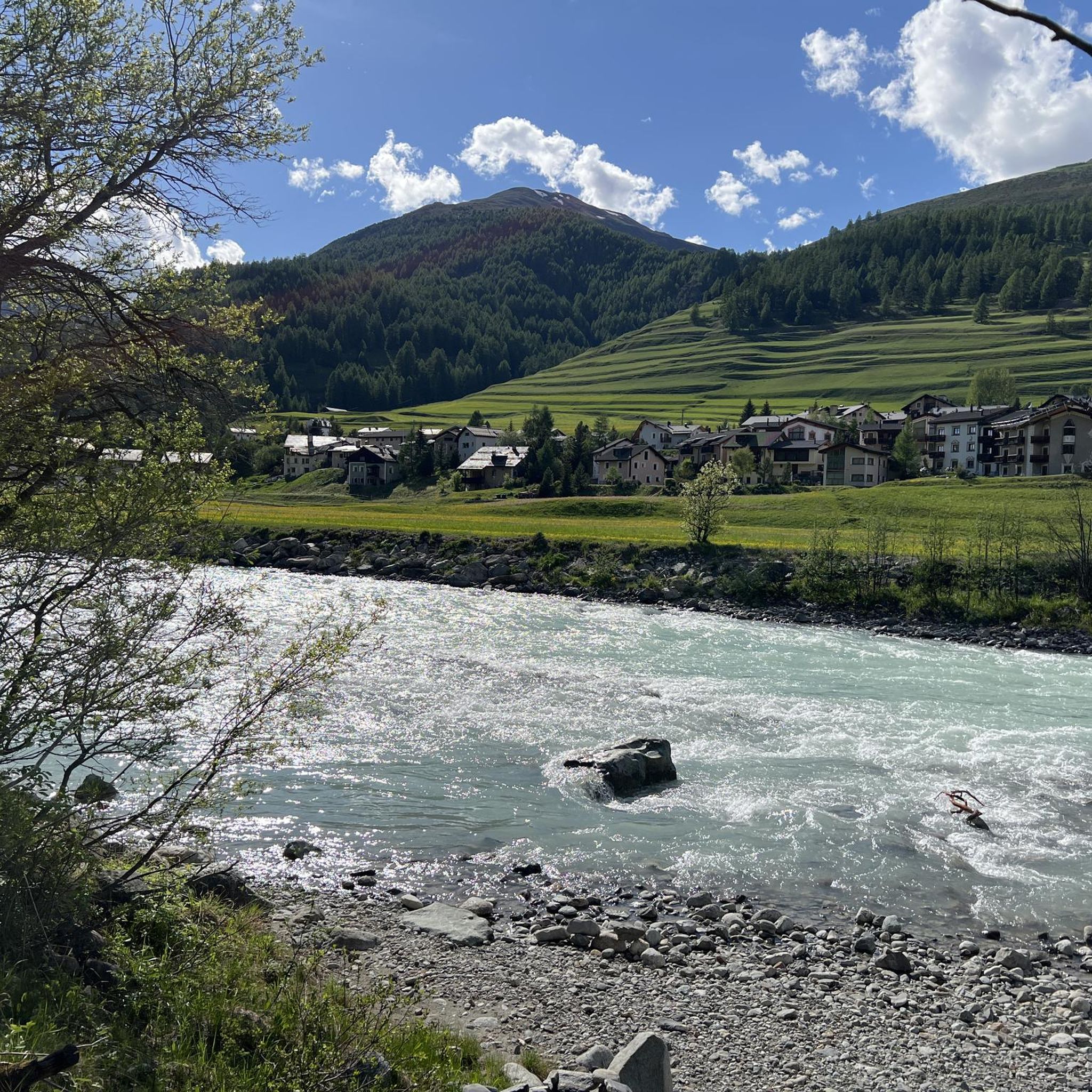
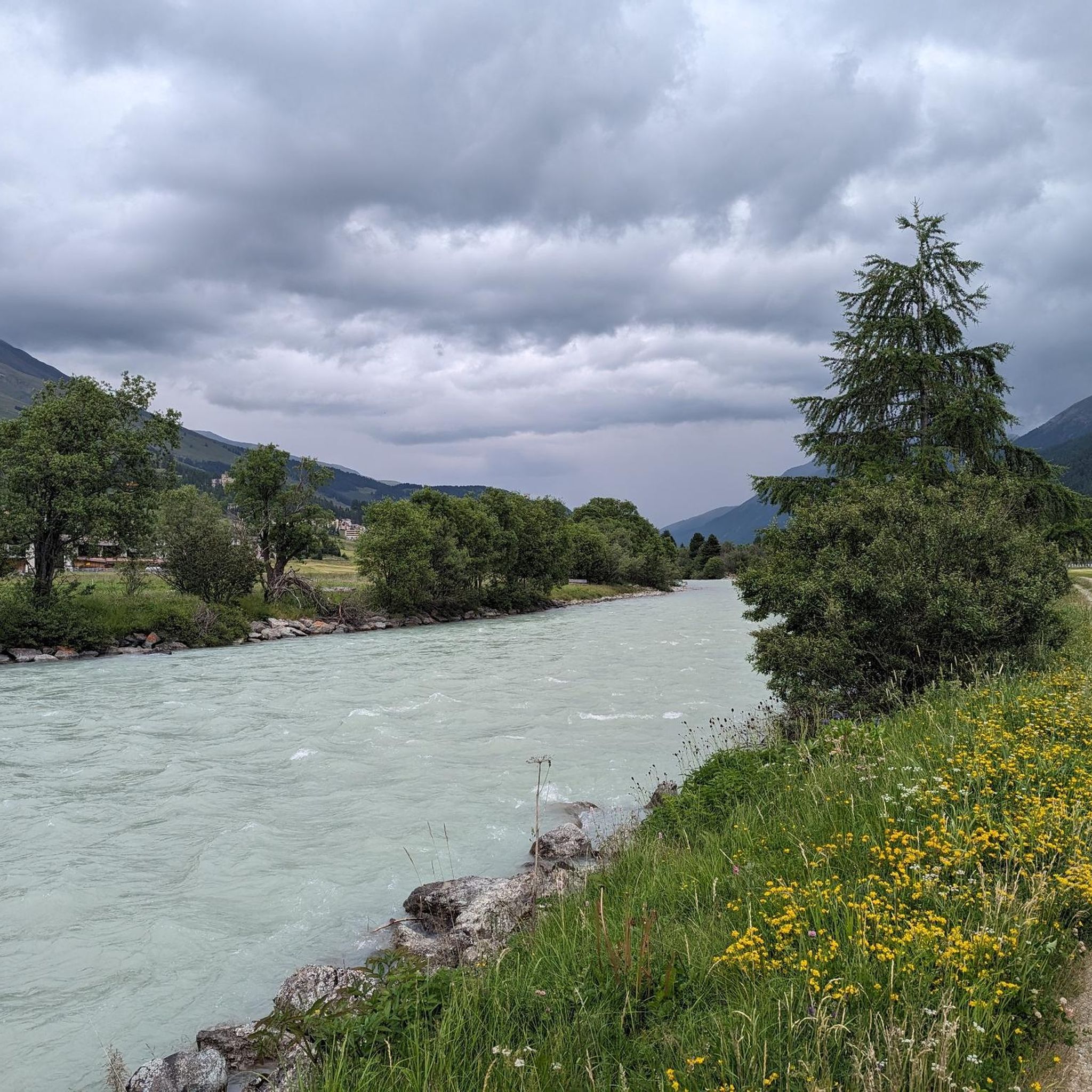
Other adventures around Madulain

Tips from the Community

Julier Pass, History (Pass height 2284 m above sea level) The column remnants exactly at the summit of the Julier Pass and the finds of Roman coins nearby point to a very early use of this Alpine crossing. The Septimer Pass, a few kilometers to the west, which was however steeper and more avalanche-prone, can certainly be considered a competitor. What is certain is that both were used intensively in Roman times. The Julier even with two-wheeled carts. In the age of packhorse trains, the Julier increasingly lost importance because the topography at the Septimer Pass was hardly a factor and, moreover, the detour via the Engadin was not necessary. With the construction of a cart track over the Septimer (1387), the Julier was definitively left behind. The Julier remained important for access to the Upper Engadin and the Bernina Pass. The actual road construction over the Julier took place between 1820 and 1826. In this phase of history, the Julier retained "the upper hand" over the Septimer. On the one hand, topographical reasons were decisive, and on the other hand, the canton could not afford to ignore the Engadin. This was the first road construction project in which the canton acted as the client. In the second half of the 19th century, various route adjustments followed, which became necessary due to the increasing feeder traffic for the Upper Engadin health resorts. The opening of the Albula Line of the Rhaetian Railway in 1903 caused car traffic over the Julier to collapse again. When the Federal Council put pressure on the Graubünden government in 1923 for a car-suitable transit route, the canton opted for the Julier route. Between 1935 and 1940, the pass road was renovated and was the first Alpine crossing to receive an asphalt surface. Today, the Julier is the most important, year-round open, northern access to the Engadin. Text / Source: Interessengemeinschaft Alpenpässe IAP, Postfach 11, Realp https://www.alpen-paesse.ch/de/alpenpaesse/julierpass/
13
0
Already in the Roman Empire around 2,000 years ago Already in the Roman Empire around 2,000 years ago, the Julier Pass was of great importance. At the pass summit, two columns of a Roman sanctuary still stand today. Today, the pass road over the Julier is the most important road connection to the Engadin and is passable all year round. In the vicinity of the Julier, you will find numerous hiking and biking routes on which the landscape can be ideally explored. From the Julierhospitz (pass summit 2284 m above sea level), the exploration tour or hike to the clear mountain lake Leg Grevasalvas begins. Text / Source: Graubünden Ferien, Alexanderstrasse 24, Chur https://www.graubuenden.ch/de/ausflugsziele/julierpass
13
0

Wonderful place of rest, in spring with a partially frozen lake
1
0
Wonderful, quiet floodplain landscape, although close to the road
0
0

A short stop in La Punt is worthwhile. This is mainly due to the striking white house – the Chesa Merleda. This is a prominent example of Engadine architecture.
1
0
CONFISERIE HANSELMANN, A Sweet Paradise in St. Moritz Café Hanselmann is world-renowned for its exquisite cakes, chocolates, and pastries. The beautiful sgraffito facade dates back to 1912, while inside, guests are greeted by an elegant, nostalgic ambiance with artistic details. In addition to classic sweets, Hanselmann also offers select coffee and tea specialties – a must for all lovers of culinary delights. Text / Source: St. Moritz Tourism AG, Via Maistra 12, St. Moritz https://www.stmoritz.com/directory/st-moritz-insider/wenig-zeit-st-moritz-in-zwei-stunden-1
15
0
The story of St. Moritz begins in 1864 The story of St. Moritz, as we know it today, begins in 1864, when hotelier Johannes Badrutt made a bet with his guests from Great Britain. He promised that not only the summer, but also the St. Moritz winter would be so pleasant that on sunny days one could enjoy the sun on the terrace without a jacket. Should his promise prove false, the hotelier would pay for their travel and winter stay. Wrapped head to toe in furs, the group of men crossed the Julier Pass the following December. Upon arriving in St. Moritz, the sky was clear, the sun warm, and Badrutt stood before them to greet them without a jacket and with his shirtsleeves rolled up. Winter tourism was born. More: Pioneer History | St. Moritz, Switzerland (stmoritz.com) Text/Source: ENGADIN ST. MORITZ TOURISMUS AG Via Maistra 1, CH-7500 St. Moritz, www.stmoritz.com https://www.engadintourismus.ch/fileadmin/user_upload/Fakten_ueber_St._Moritz_DE.pdf
16
0
The story of St. Moritz begins in 1864 The story of St. Moritz, as we know it today, begins in 1864, when hotelier Johannes Badrutt made a bet with his guests from Great Britain. He promised that not only the summer, but also the St. Moritz winter would be so pleasant that on sunny days one could enjoy the sun on the terrace without a jacket. Should his promise prove false, the hotelier would pay for their travel and winter stay. Wrapped head to toe in furs, the group of men crossed the Julier Pass the following December. Upon arriving in St. Moritz, the sky was clear, the sun warm, and Badrutt stood before them to greet them without a jacket and with his shirtsleeves rolled up. Winter tourism was born. More: Pioneer History | St. Moritz, Switzerland (stmoritz.com) Text/Source: ENGADIN ST. MORITZ TOURISMUS AG Via Maistra 1, CH-7500 St. Moritz, www.stmoritz.com https://www.engadintourismus.ch/fileadmin/user_upload/Fakten_ueber_St._Moritz_DE.pdf
15
0
Frequently Asked Questions
How many road cycling routes are available around Madulain?
There are over 30 road cycling routes around Madulain, offering a diverse range of options for cyclists. These include 9 easy, 10 moderate, and 11 difficult routes, catering to various skill levels and preferences.
What kind of terrain can I expect on road cycling routes around Madulain?
Road cycling around Madulain features a varied landscape. You can expect challenging ascents over iconic high mountain passes like the Albula, Bernina, Julier, and Maloja Passes, as well as more relaxed rides through picturesque alpine valleys, green meadows, and along the Inn River. The region offers a mix of demanding climbs and scenic valley routes.
Are there road cycling routes suitable for beginners or families in Madulain?
Yes, Madulain offers several routes suitable for beginners and families. The region includes easier, mostly paved paths, such as sections of the Inn Cycle Path, which provide a more relaxed cycling experience through beautiful floodplain landscapes. For a moderate option, consider the Silvaplana Market Square – Bever loop from La Punt Chamues-ch, which leads through the Engadin Valley and past Lake Silvaplana.
Where can I find challenging road cycling climbs near Madulain?
For challenging climbs, the mountain passes surrounding Madulain are ideal. Routes like the Silvaplana Market Square – Maloja Pass loop from La Punt Chamues-ch offer significant elevation gain through an alpine environment. The region is renowned for its iconic passes, including the Albula, Bernina, Julier, and Maloja Passes, which are frequently part of major cycling events and provide demanding ascents.
What natural features and landmarks can I see along road cycling routes near Madulain?
Road cycling routes around Madulain offer stunning natural beauty and historical landmarks. You can encounter crystal-clear lakes such as Lago Bianco and Lake Staz, and even the impressive Morteratsch Glacier. The historic Guardaval Ruins, the largest castle complex in the Upper Engadine, also provide a cultural point of interest. Many routes offer panoramic views, such as the View of the Upper Engadine from Muottas Muragl.
What is the best time of year for road cycling in Madulain?
The Engadin region, including Madulain, is known for its sunny weather, claiming around 300 days of sunshine a year. The best time for road cycling is typically during the warmer months, from late spring to early autumn, when mountain passes are clear of snow and the weather is most favorable for outdoor activities. Events like the 'SlowUp Albula Mountain' in September, which closes the Albula Pass to cars, highlight the appeal of autumn cycling.
Are there circular road cycling routes available from Madulain?
Yes, many road cycling routes around Madulain are designed as scenic loops. Examples include the Bever – Entrance to St. Moritz loop from Zuoz, which offers scenic views within the Engadin Valley, and the Village center of Zuoz – La Punt Chamues-ch loop from Zuoz. These loops allow you to start and finish in the same location, making logistics easier.
What do other road cyclists enjoy most about the routes near Madulain?
The road cycling routes around Madulain are highly rated by the komoot community, with an average score of 4.5 stars from over 130 reviews. Cyclists often praise the spectacular scenery, featuring green meadows, forests, crystal lakes, and majestic mountains, as well as the diverse terrain that caters to all fitness levels. The well-maintained paths and the opportunity to conquer iconic alpine passes are frequently highlighted.
Are there options for public transport access to road cycling routes in Madulain?
Madulain is well-integrated into the public transport network of the Engadin Valley. This allows cyclists to access various starting points for routes or to combine cycling with train or bus travel, especially for point-to-point rides or to shorten longer loops. The Inn Cycle Path, for instance, is easily accessible and connects charming Engadine villages.
Can I find cafes or accommodation suitable for cyclists in Madulain and the surrounding area?
Madulain and the wider Engadin region are well-equipped to welcome cyclists. You'll find various cafes, restaurants, and accommodation options that cater to outdoor enthusiasts. Many establishments are accustomed to hosting cyclists, offering amenities like secure bike storage or early breakfast options. The charming Engadine villages along the routes provide ample opportunities for refreshment stops.
Are there any less crowded road cycling routes around Madulain?
While popular passes can attract many cyclists, the extensive network around Madulain also offers opportunities for quieter rides. Exploring the Inn Cycle Path or some of the less-trafficked valley roads can provide a more serene experience, especially during off-peak hours or outside of major event days. The region's vastness allows for finding peaceful stretches amidst the stunning landscape.
What is the longest road cycling route available from Madulain?
One of the longer and more challenging routes is the Passo del Forno – Bernina Pass loop from S-chanf, which spans over 166 kilometers and includes significant elevation gain. This route is designed for experienced cyclists looking for a full-day adventure through multiple alpine passes.
Most popular attractions around Madulain

Get inspired with the komoot mobile app


Explore more
Browse the best Road cycling routes in other regions.
