The best traffic-free bike rides around Kinzigtalsperre
4.4
(11)
154
riders
44
rides
Gravel biking around Kinzigtalsperre offers diverse landscapes for exploration. The region features varied terrain, including dense forests of the Spessart, picturesque river valleys of the Kinzigtal, and rolling hills from the Vogelsberg volcanic region. Cyclists can navigate extensive networks of forest and dirt roads, alongside mixed paved and unpaved paths, providing options for various skill levels. The Kinzig Reservoir itself is a central feature, with its surrounding area contributing to the varied topography.
Best no traffic gravel bike trails around…
Last updated: June 29, 2026
12
riders
52.1km
03:23
890m
890m
Hard gravel ride. Very good fitness required. Mostly paved surfaces. Suitable for all skill levels.
4.0
(1)
8
riders
53.0km
03:07
680m
680m
Hard gravel ride. Very good fitness required. Mostly paved surfaces. Suitable for all skill levels.

Sign up for free
2
riders
Hard gravel ride. Very good fitness required. You may need to push your bike for some segments of this route.
2
riders
Moderate gravel ride. Good fitness required. Mostly paved surfaces. Suitable for all skill levels.
5.0
(1)
9
riders
50.2km
03:20
860m
860m
Hard gravel ride. Very good fitness required. You may need to push your bike for some segments of this route.
Get access to more routes and recommendations from other explorers.
Sign up for free
Already have an account?
Our route recommendations are based on thousands of hikes, rides, and runs completed by other people on komoot.
Start today with a free account
Your next adventure awaits.
Login or Signup
Popular around Kinzigtalsperre
Tips from the Community


When it's dry, it's no problem to cycle the path.
1
0
There is a good cycle path here. I personally prefer the southern cycle path along the reservoir.
2
0

The Kinzig is a river approximately 86 kilometers long. It rises in Sterbfritz, flows southwest through the Main-Kinzig district of Hesse, and flows into the Main from the right in Hanau. The Kinzig is a second-order river in low mountain ranges. It overcomes an elevation of 301 meters and has a bed gradient of 3.5 per thousand. The Kinzig's catchment area covers 1,058 square kilometers, and the calculated mean discharge (MQ) at the mouth of the Kinzig is 10.97 cubic meters per second. The Kinzig was first documented in 796 as "iuxta fluvium Kincihen." In 815, the name was written as "Chinzicha," around 900 as "Kincicha"/"Kinzicham," in 1364 as "Kinzige," in 1584 as "Kintzig," in 1607 as "Bintz," in 1681 as "Kintz," in 1716 as "Kins," in 1769 as "Kinzing," and in 1802 as "Kinzig." In the river's headwaters, there was the now-defunct village of Kinzig, mentioned in 815 as "Chirizichheimero." The village and river were often confused by monastery scribes at that time with "Chizzicha" (now Bad Kissingen), both of which were described as being located in the Saalegau. The name presumably derives from the ancient Celtic *ku̯anti̯o- meaning "flat hill, valley." The name was therefore derived from the mountainous region from which the Kinzig flows. Source: Wikipedia
1
0

Well, at 2 meters wide, it's not exactly a trail. Rather unexciting.
0
0

Beautiful tree, which has been designated a natural monument 🌳👍🏼
0
0

interesting to see that
0
0

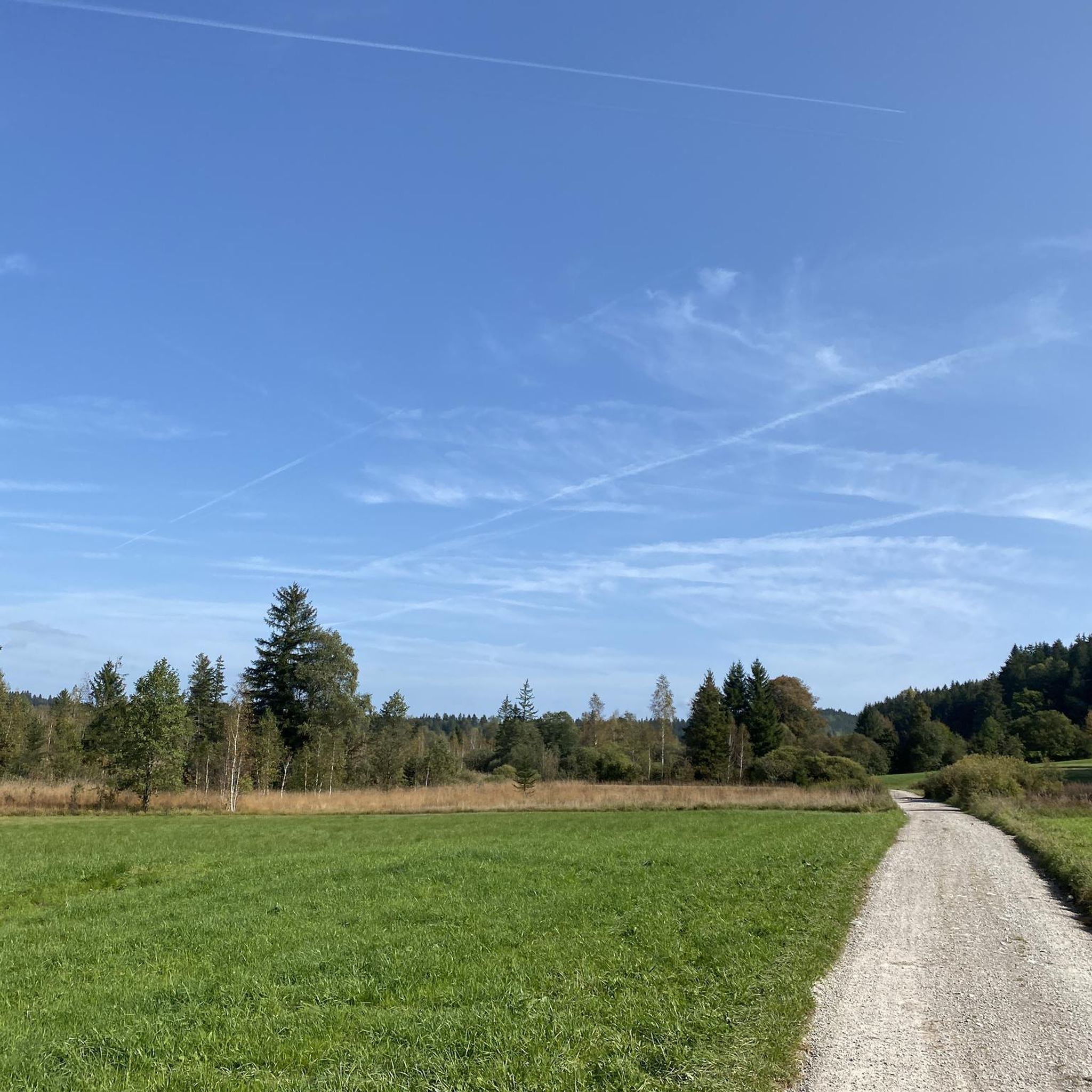
The path around the reservoir is in very good condition.
1
0
Frequently Asked Questions
How many no-traffic gravel bike trails are available around Kinzigtalsperre?
There are over 45 dedicated no-traffic gravel bike trails around Kinzigtalsperre. These routes offer a diverse range of experiences, from moderate to challenging, ensuring a quiet and immersive ride through the region's natural beauty.
What kind of terrain can I expect on the no-traffic gravel bike trails in Kinzigtalsperre?
The terrain around Kinzigtalsperre is quite varied, offering a mix of dense forests, scenic river valleys, and rolling hills. You'll encounter extensive networks of forest and dirt roads, alongside mixed paved and unpaved paths. The region includes parts of the Spessart (dense forests), Kinzigtal (river valleys), and Vogelsberg (volcanic hills), providing diverse surfaces and elevations for gravel biking.
Are there any family-friendly no-traffic gravel bike routes near Kinzigtalsperre?
While many routes in this guide are rated as difficult, the region does offer gentler sections, particularly along the Kinzigtal river valleys. For a more relaxed experience, consider exploring the 6.5 km circular path around the Kinzig Reservoir itself, which is ideal for nature lovers and can be adapted for family outings, though it's not exclusively gravel. Always check individual route details for suitability.
Can I bring my dog on the gravel bike trails around Kinzigtalsperre?
Many of the natural trails and forest roads around Kinzigtalsperre are suitable for cycling with dogs, provided they are well-behaved and kept on a leash where required, especially in nature reserve areas. Always be mindful of local regulations and other trail users. The diverse landscapes of Spessart and Kinzigtal offer plenty of space for you and your canine companion to enjoy.
What natural landmarks or viewpoints can I discover along these car-free gravel routes?
The region is rich in natural beauty. You can enjoy stunning views of the Kinzig Reservoir from various points, such as the View of the Kinzig Reservoir or the Kinzigtalsperre Dam Viewpoint. The reservoir itself is a significant attraction, and you might also spot the Ardeas Seenwelt Birdwatching Platform. The dense forests of Spessart and the rolling hills of Vogelsberg also offer numerous scenic spots.
What is the best time of year for gravel biking around Kinzigtalsperre?
The spring and autumn months generally offer the most pleasant conditions for gravel biking around Kinzigtalsperre, with milder temperatures and beautiful scenery. Summer can also be excellent, especially for rides through the shaded forests of Spessart. While winter riding is possible, be prepared for colder temperatures and potentially muddy or icy conditions on unpaved sections.
Are there any challenging no-traffic gravel bike routes for experienced riders?
Yes, the Kinzigtalsperre region offers several challenging routes with significant elevation gain. For example, the Three Rivers Viewpoint – Jossa Railway Viaduct loop from Schlüchtern covers over 65 km with more than 1000 meters of elevation gain, providing a demanding ride through varied terrain. Many routes in this guide are rated as difficult, catering to riders seeking a good workout.
Where can I find parking for these no-traffic gravel bike trails?
Parking is generally available in the towns and villages surrounding Kinzigtalsperre, such as Steinau (Straße), Bad Soden-Salmünster, and Schlüchtern, which serve as common starting points for many routes. From these locations, you can often access the extensive network of forest and dirt roads that make up the no-traffic trails.
What do other gravel bikers enjoy most about the Kinzigtalsperre region?
The area is highly rated by the komoot community, with an average score of 4.58 stars. Reviewers often praise the diverse and quiet trails, the beautiful natural landscapes including the reservoir, and the challenging yet rewarding climbs through the forests and hills. The extensive network of car-free paths is a particular highlight for those seeking peaceful rides.
Are there any cafes or restaurants along the no-traffic gravel bike routes?
While many of the no-traffic gravel routes venture into more remote forest and valley areas, you will find cafes and restaurants in the towns and villages near the Kinzigtalsperre, such as around the reservoir itself where a kiosk and restaurant are available. It's always a good idea to plan your route and carry sufficient water and snacks, especially on longer rides through less populated areas.
Can I access these gravel bike trails using public transport with my bicycle?
Public transport options to the Kinzigtalsperre region, particularly to towns like Steinau (Straße) or Schlüchtern, are available. Many regional trains and buses allow bicycles, though restrictions may apply during peak hours or for larger groups. It's advisable to check the specific public transport provider's regulations regarding bicycle carriage before planning your trip.
Most popular routes around Kinzigtalsperre
Most popular attractions around Kinzigtalsperre

Get inspired with the komoot mobile app


Explore more
Browse the best Gravel rides in other regions.
