The best city hikes and walks in Unstrut-Hainich-Kreis
4.6
(9195)
32,429
hikers
135
hikes
Urban hiking trails in Unstrut-Hainich-Kreis are situated within a region known for its diverse landscapes, including the Hainich National Park and the Unstrut Valley Nature Reserve. The area features rolling hills and river valleys, with urban centers like Mühlhausen and Bad Langensalza offering paths that combine historic architecture with natural elements. These routes often follow riverbanks, traverse city parks, and explore the immediate surroundings of towns. The terrain typically involves gentle gradients, making it accessible for various fitness levels.
Best…
Last updated: July 11, 2026
4.8
(110)
415
hikers
Easy hike. Great for any fitness level. Easily-accessible paths. Suitable for all skill levels.
4.5
(23)
136
hikers
Easy hike. Great for any fitness level. Easily-accessible paths. Suitable for all skill levels.

Sign up for free
4.9
(14)
87
hikers
Easy hike. Great for any fitness level. Easily-accessible paths. Suitable for all skill levels.
4.3
(21)
72
hikers
Moderate hike. Good fitness required. Easily-accessible paths. Suitable for all skill levels.
4.7
(3)
10
hikers
Easy hike. Great for any fitness level. Easily-accessible paths. Suitable for all skill levels.
Get access to more routes and recommendations from other explorers.
Sign up for free
Already have an account?
Our route recommendations are based on thousands of hikes, rides, and runs completed by other people on komoot.
Start today with a free account
Your next adventure awaits.
Login or Signup
Popular around Unstrut-Hainich-Kreis

City hikes around Mühlhausen/Thüringen

City hikes in Volkenrodaer Forst

City hikes around Bad Langensalza

City hikes around Hainich

City hikes in Naturschutzgebiet "Dörnaer Platz"

City hikes around Dam Lakebach

City hikes in Appental
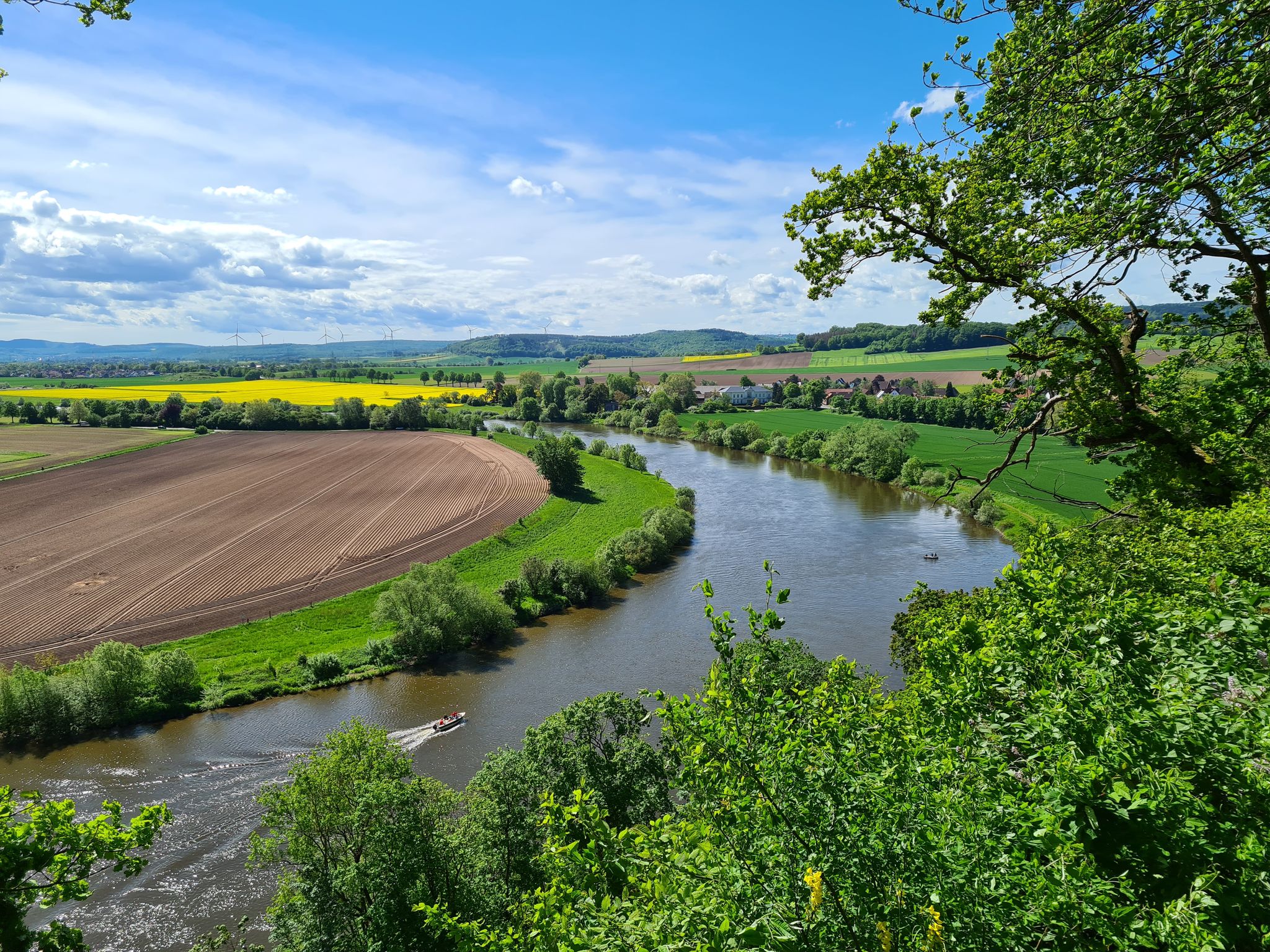
Loccum-Volkenroda pilgrim's way – From monastery to monastery
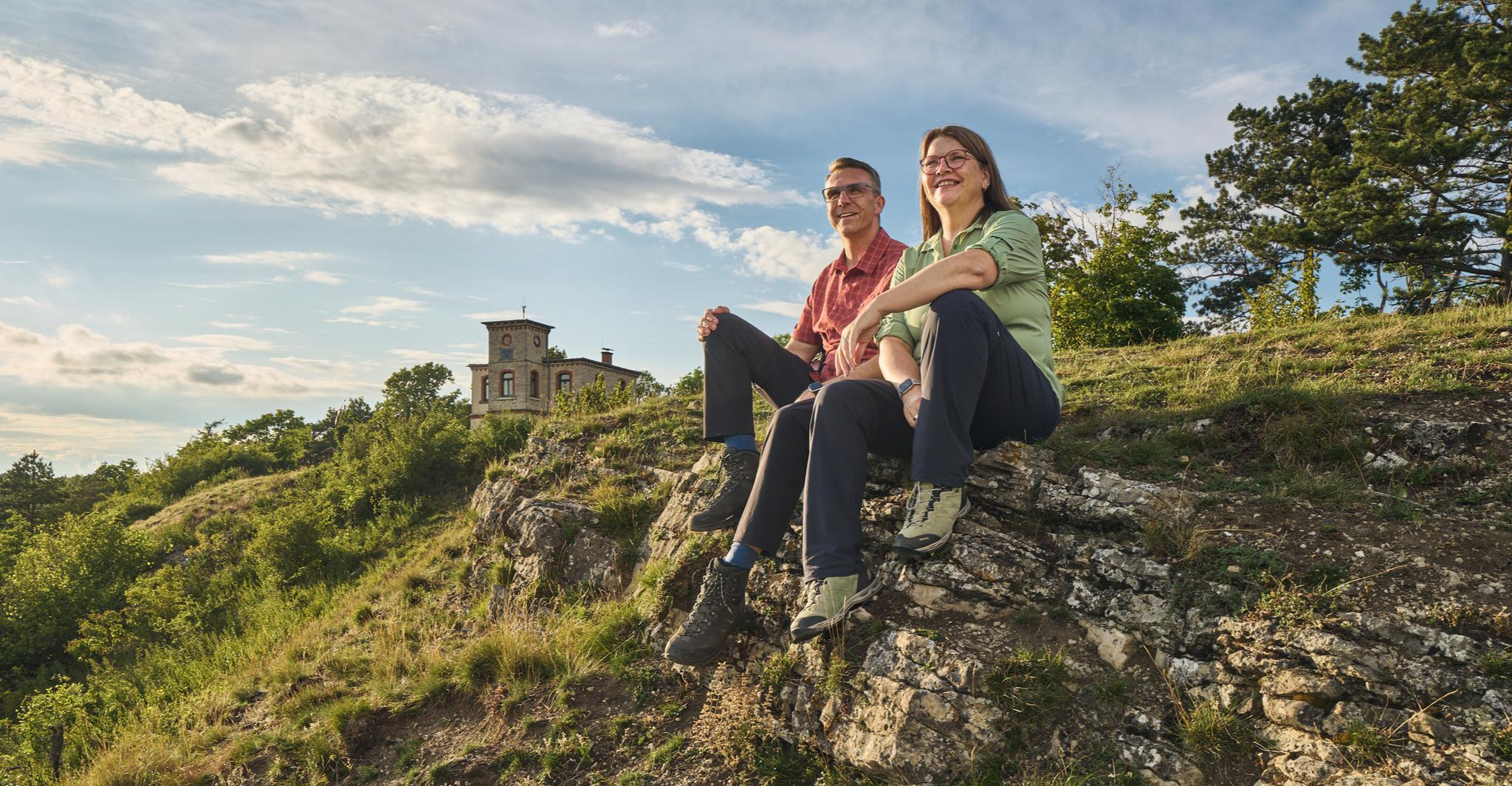
Autumn Hiking with a view – 7 WOW Tours between Wartburg and Hainich
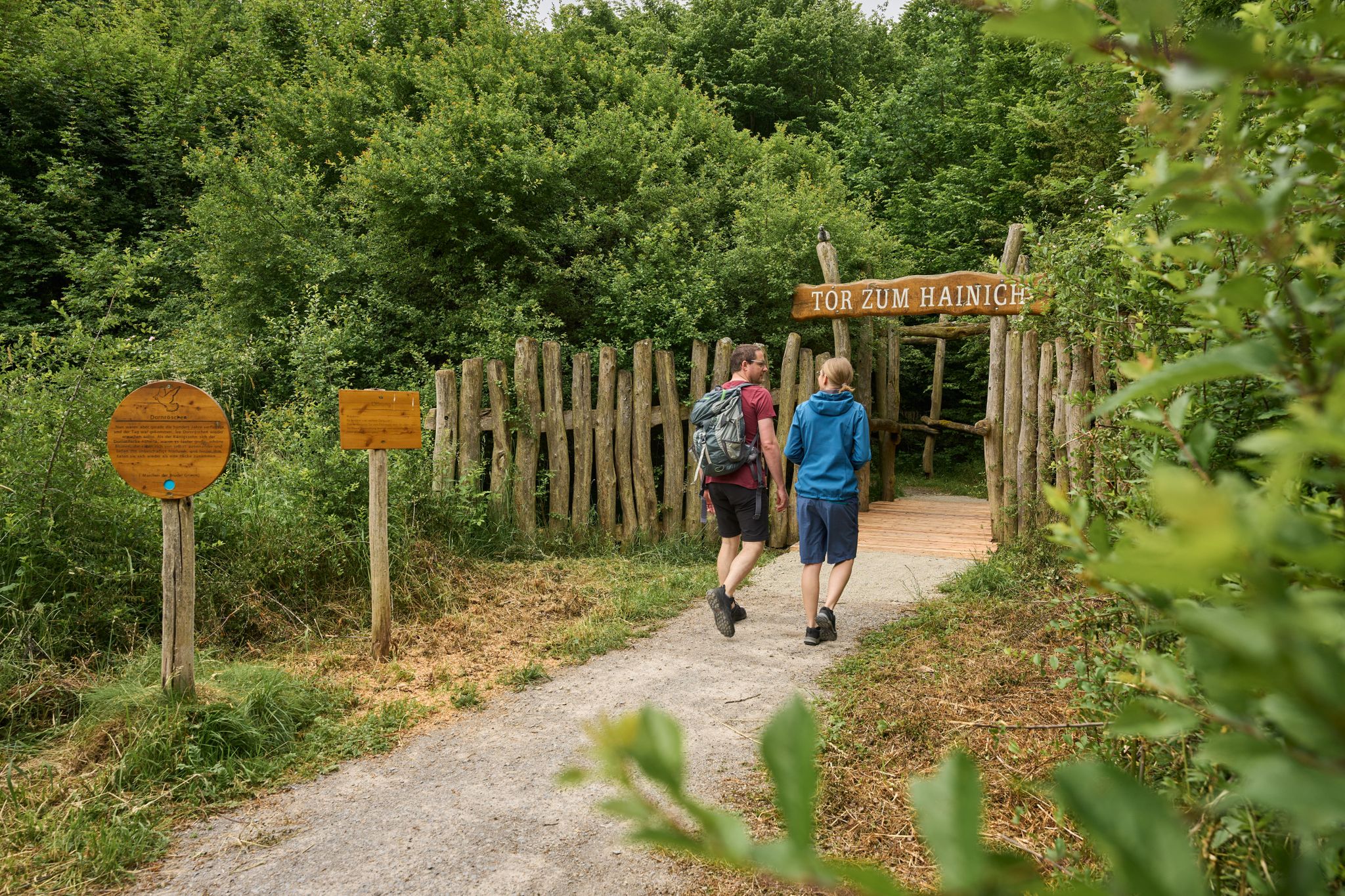
Varied hiking on the Hainichlandweg
Other adventures in Unstrut-Hainich-Kreis


Tips from the Community

A small, underestimated gem on the Unstrut cycle path... definitely plan time for this town with its Japanese Garden, beautiful old town and stylish gastronomy...
0
0

The mill was first documented in 1631. In 1679, it was rebuilt and subsequently used as both a tanning mill and a grinding mill. The mill wheel remained until 1958. The building complex still exists today: in 1994, the main building was renovated and converted into residential units. The southern, historic half-timbered building now houses commercial spaces, and a millstone is displayed in front of the building.
1
0
The inner, oldest city wall of Mühlhausen was almost 2.8 kilometers long (of which 2.2 kilometers are preserved to this day) and enclosed an area of around 50 hectares. This area had the shape of a slightly rounded and not entirely regular rectangle, whose maximum east-west extent is almost twice as long (1000 meters) as its maximum north-south extent (500 meters). Its original structure included the four main gates, namely the Görmartor in the northeast, the Erfurter Tor in the southeast, the Felchtaer Tor in the southwest, and the Frauentor, named after the Marienkirche (=Frauenkirche), in the northwest, as well as probably four posterns: the Eselspforte and the Burgpforte on the north side, and the - unnamed - postern at the exit of Brunnenkreßstraße and another, only inferred, postern to Spielbergstraße on the south side. It is unclear whether the original main access to the castle via Breitenstraße was already closed with the construction of the wall between the castle and the city before 1251 or only after the demolition of the castle from 1256 onwards. As material for the inner (and later also outer) city wall, including the gates and towers, the travertine found in Mühlhausen and quarried here was used, a geologically young freshwater limestone. The inner city wall was constructed as a double-shell masonry. Its thickness up to the height of the rampart varies between approximately 1.5 meters and - reached only exceptionally - a maximum of 2 meters. Source: https://www.muehlhausen.de/tourismus/erkunden/sehenswuerdigkeiten/besondere-baudenkmaeler/stadtmauer/
1
0
The church is the parish church of the Mühlhausen old town and was gifted to the Teutonic Order in 1227. The current building was constructed between 1270 and 1300 as an early Gothic hall church, influenced by French cathedral architecture. It possesses significant art-historical elements such as a rose window, medieval stained glass, a late Gothic carved altar, and tomb slabs of important personalities. After the Reformation, religious expressions changed, and much of the original furnishings were lost. The west towers still date from the predecessor building and house historical bells. The church also developed into an important center for Protestant church music, with a peak in the work of Johann Sebastian Bach in the early 18th century.
1
0
From the Hohen Graben, visitors enjoy a beautiful view of the imposing double-towered St. James' Church. Construction of the present-day St. James' Church began around 1280. An inscription, now lost, attributes the imperial figure in the arch of the north portal to Henry VII. Another inscription names 1363 as the year of completion of the church. The motif of the unequal couple is taken up in the impressive tower group completed in 1418. After the Reformation, the church seems to have been used only sporadically. It lost almost all its furnishings in the last century. St. James' Church was extensively renovated from 1992 to 2004 with financial support from the state of Thuringia, the federal-state program "Urban Monument Protection," and the German Foundation for Monument Protection. Since April 2004, St. James' Church has housed the city library with a children's library and a sound library. Interesting for visitors: so-called "Archaeological Windows" provide insights into the church's construction history. Source: https://www.thueringen.info/kultur/muehlhausen-stadtbibliothek-jakobikirche/
1
0
The old town of Mühlhausen is one of the best-preserved medieval city centers in Germany and is an important cultural and historical testimony. It is characterized primarily by its almost completely preserved city walls, numerous churches, and a dense network of historic streets and half-timbered houses. A striking feature of the old town is the impressive city fortifications with their towers and gates, which extend over several kilometers. To this day, they convey an impression of Mühlhausen's former importance as a free imperial city in the Middle Ages. Within these walls, a vibrant urban center developed, shaped by trade, crafts, and religious life. Particularly noticeable is the large number of churches, which is why Mühlhausen is often referred to as the "City of Churches." Among the most famous buildings are the Marienkirche, an impressive Gothic structure, and the Divi-Blasii-Kirche, which is closely associated with the work of Johann Sebastian Bach. These churches bear witness to the city's religious and cultural significance in past centuries. The old town also played an important role during the Reformation and the German Peasants' War. Particularly noteworthy is the reformer Thomas Müntzer, who worked in Mühlhausen and made the city a center of social and religious upheaval. In addition to the grand buildings, numerous well-preserved half-timbered houses, narrow alleys, and historic squares shape the cityscape. The central market square with the town hall forms the heart of the old town and remains an important meeting place to this day. Many buildings date from different centuries and show the architectural development of the city. Today, the old town of Mühlhausen is a popular destination for tourists and history enthusiasts. Museums, events, and guided tours offer an insight into the city's eventful past. At the same time, it is a living part of modern urban life, where history and the present are connected in a special way.
1
0
The house is a gem with a richly decorated facade on Mühlhäuser Untermarkt. After a comprehensive renovation, it shines again in its new splendor. about the history: The "Tilesius House" at Untermarkt 16 was built in 1729 in the Rococo style. The resident Adolph Gottlieb Tilesius was the last mayor (1794-1802) of the Free Imperial City of Mühlhausen. He was buried in 1802 in the New Cemetery on Eisenacher Straße. Beneath the house are even older vaulted cellars from the predecessor building. During the GDR era, the Department of Public Education of the District Council was located here. Source: https://www.muehlhausen.de/tourismus/sehenswuerdigkeiten/buerger-und-fachwerkhaeuser/
1
0
The associated parking lot is on the 1st floor of the "Trabantenhaus"!
1
0
Frequently Asked Questions
How many urban hiking trails can I find in Unstrut-Hainich-Kreis?
Unstrut-Hainich-Kreis offers a wide selection of urban hiking trails, with over 140 routes available. The vast majority of these, around 135, are classified as easy, making them accessible for most fitness levels.
Are there easy urban walks suitable for beginners or casual strolls?
Yes, the region is particularly well-suited for easy urban walks. Most of the trails are designed for casual strolls, often with minimal elevation gain. For example, the St. Mary's Church, Mühlhausen – Mühlhausen City Walls loop from Mühlhausen (Thür) offers a pleasant, flat experience through the historic town.
What kind of landmarks or points of interest can I discover on urban hikes?
Urban hikes in Unstrut-Hainich-Kreis often lead you through historic towns and past notable sights. In Mühlhausen, you can explore the medieval city walls and various churches. In Bad Langensalza, you might encounter charming architecture and parks. While not strictly urban, the region is also home to the Unstrut Valley Nature Reserve between Nägelstedt and Großvargula, offering natural beauty close to urban areas.
Are there any circular urban hiking routes available?
Yes, many urban hiking routes in Unstrut-Hainich-Kreis are designed as circular paths, allowing you to start and end at the same point. An example is the Klagetor (Clawßentor) – Friederike's Little Palace loop from Bad Langensalza, which provides a convenient and scenic walk through the spa town.
What is the best season for urban hiking in Unstrut-Hainich-Kreis?
Spring and autumn are ideal seasons for urban hiking in Unstrut-Hainich-Kreis. Spring brings vibrant blossoms and fresh greenery, while autumn offers colorful foliage. The moderate temperatures during these seasons make for comfortable walking conditions. However, the historic towns and well-maintained paths are enjoyable year-round.
Can I bring my dog on urban hiking trails in this region?
Generally, dogs are welcome on urban hiking trails in Unstrut-Hainich-Kreis, provided they are kept on a leash, especially in populated areas or nature reserves. Always check local regulations for specific parks or protected areas. Many routes, like the Arboretum Bad Langensalza – Klagetor (Clawßentor) loop from Bad Langensalza, offer open spaces suitable for walks with your canine companion.
Are there family-friendly urban walks suitable for children?
Absolutely. The abundance of easy, relatively flat urban trails makes Unstrut-Hainich-Kreis a great destination for families. Many routes pass through parks or historic centers, offering points of interest for children. The St. Mary's Church, Mühlhausen – St. James' Church, Mühlhausen loop from Mühlhausen/Thüringen is a shorter, engaging option for families exploring the town.
What is the typical duration of urban walks in Unstrut-Hainich-Kreis?
The duration of urban walks varies, but many are designed for shorter excursions, ranging from 1 to 3 hours. For example, the St. Mary's Church, Mühlhausen – Mühlhausen City Walls loop from Mühlhausen (Thür) takes approximately 1.5 hours. Longer routes, such as the St. Mary's Church, Mühlhausen – Mittelmühle Historic Mill loop from Mühlhausen (Thür), can extend to 3 hours or more, offering a more extensive exploration.
Are there urban hikes with good viewpoints?
While urban hikes in Unstrut-Hainich-Kreis are generally not known for dramatic mountain vistas, they offer unique perspectives of historic townscapes, river valleys, and charming architecture. You'll find picturesque views of medieval buildings, town squares, and the gentle landscapes surrounding the urban centers. The region's natural features, like the Unstrut river, also provide scenic outlooks.
What do other hikers enjoy most about urban hiking in Unstrut-Hainich-Kreis?
The komoot community highly rates the urban hiking experience in Unstrut-Hainich-Kreis, with an average score of 4.6 stars. Reviewers often praise the well-maintained paths, the blend of historical sights with natural beauty, and the accessibility of the trails for all ages and fitness levels. The charm of towns like Mühlhausen and Bad Langensalza is frequently highlighted.
Can I find cafes or restaurants along the urban hiking trails?
Yes, urban hiking trails in Unstrut-Hainich-Kreis often pass directly through or near town centers, where you'll find a variety of cafes, restaurants, and bakeries. This makes it easy to stop for a coffee, a meal, or a snack during your walk. Towns like Mühlhausen and Bad Langensalza are particularly well-equipped with dining options.
Is public transport available to access urban hiking trails?
Many urban hiking trails in Unstrut-Hainich-Kreis are accessible via public transport, especially those starting and ending in larger towns like Mühlhausen and Bad Langensalza. Local bus services and regional trains connect various communities, making it convenient to reach trailheads without a car. It's advisable to check local transport schedules in advance.
Most popular routes in Unstrut-Hainich-Kreis
Most popular attractions in Unstrut-Hainich-Kreis

Get inspired with the komoot mobile app


Didn’t find what you were looking for?
Check out more Hikes throughout Unstrut-Hainich-Kreis below and find the perfect route in your destination.
Explore more
Browse the best Hikes in other regions.
