The best traffic-free bike rides around Neutraubling
4.5
(1739)
33,411
riders
164
rides
Road cycling around Neutraubling offers diverse terrain for no traffic routes, situated near the Regen and Danube rivers in the Regensburg district. The region features a mix of open fields, river valleys, and forested sections, providing varied cycling experiences. While many routes offer gentle rides along riverine paths, the wider area also includes options with rolling hills. This landscape composition makes Neutraubling a compelling location for road cyclists seeking routes away from traffic.
Best no traffic road cycling routes around…
Last updated: July 11, 2026
4.8
(5)
147
riders
Hard road ride. Very good fitness required. Some segments of this route may be unpaved and difficult to ride.
4.3
(9)
111
riders
47.2km
02:04
340m
340m
Moderate road ride. Good fitness required. Some segments of this route may be unpaved and difficult to ride.

Sign up for free
4.8
(5)
96
riders
Moderate road ride. Good fitness required. Mostly well-paved surfaces and easy to ride.
4.8
(5)
148
riders
104km
04:55
1,080m
1,080m
Hard road ride. Very good fitness required. Some segments of this route may be unpaved and difficult to ride.
38
riders
80.2km
03:07
160m
160m
Moderate road ride. Good fitness required. Mostly well-paved surfaces and easy to ride.
Get access to more routes and recommendations from other explorers.
Sign up for free
Already have an account?
Our route recommendations are based on thousands of hikes, rides, and runs completed by other people on komoot.
Start today with a free account
Your next adventure awaits.
Login or Signup

Other adventures around Neutraubling

Tips from the Community

St. George's Monastery Church The first St. George's Monastery Church in Weltenburg is believed to have been consecrated by St. Rupert around 700. A new church, built by the Augustinian Canons Regular who lived in Weltenburg from 1123 to 1328, was consecrated in 1191. During a renovation of the monastery complex beginning in 1714, the monks' living quarters were built first under Abbot Maurus Bächl, followed by the monastery church from 1716 onwards. Like the monastery itself, the new church was built on the site of the previous structure under the direction of master mason Michael Wolf. The detached tower, integrated into the east wing of the monastery, was retained. Due to its location between the monastery's convent buildings and the Frauenberg hill, the church's exterior is rather unassuming compared to the riches within. From the monastery courtyard, only the tower and the oval dome of the central building are noticeable. The main facade faces the west side of the church, towards the monastery courtyard. It is a stone facade with a triangular pediment, atop which sits a figure of Saint Benedict. The wooden church portal is flanked by two pairs of columns, above which is a round-arched window. The main nave has an oval floor plan and, at 19.5 meters long and 14.5 meters wide, is quite small for an abbey church. However, the open dome construction, which is covered by a flat cap at a height of 20 meters, gives the interior an imposing presence. The elaborate artistic design, with its gilded stucco and colorful ceiling and wall frescoes, is also exceptional. The centerpiece of the chancel is the magnificent high altar in the late Baroque style. Its architecture consists of two pairs of twisted columns, in front of which stand Saint Martin (left) and Saint Maurus (right); the latter bears the likeness of the church's patron, Maurus Bächl. Behind the tabernacle, the famous Weltenburg altarpiece rises approximately seven meters high: in the center, the church's patron saint, St. George, on horseback, depicted slaying the dragon. To effectively illuminate this scene, the originally flat-ended chancel was extended eastward in 1720/21 with the addition of an apse featuring three large windows. The frame of the dome's opening is adorned with ornaments, cloud formations, and groups of angels carrying a ring of stars. Between this ring and the dome's parapet, a figure by the architect and artist Cosmas Damian Asam looks down upon the church interior; beside him, in the ceiling fresco, his brother Egid Quirin is depicted. Source: Excerpts from www.wikipedia.de
3
0
Weltenburg Abbey Local tradition states that the abbey was founded around 617 by the Irish-Scottish monks Eustasius and Agilus from Luxeuil, following the Rule of Saint Columbanus. This has since been refuted by scholars. In the 8th century, Weltenburg adopted the Rule of Saint Benedict. After the overthrow of the Agilolfing dynasty by Charlemagne in 788, Weltenburg became an imperial abbey. Throughout the 11th century, the abbey's holdings increased through numerous donations. The new church, built in a rectangular shape, was consecrated in 1191. Weltenburg's history during the 14th and 15th centuries was very turbulent, marked by the rule of constantly changing abbots and both ecclesiastical and secular administrators. At the end of the 15th century, the abbey church and the churches of the incorporated parishes were renovated in the Late Gothic style. The convent appears to have survived the Reformation unscathed. During the Schmalkaldic War, the monks were forced to abandon the monastery to escape plundering imperial and Spanish troops. Despite the hardships and pillaging during the Thirty Years' War, Abbot Matthias Abelin left the monastery in sound condition. In 1686, the community joined the newly founded Bavarian Benedictine Congregation. Through extensive construction, the establishment of new businesses, and a school, Abbot Maurus I. Bächl was able to significantly improve the monastery's situation. Under his leadership, the Frauenberg Church, churches in the incorporated parishes, the monastery buildings, and the famous late Baroque abbey church were built. In the course of secularization in Bavaria, Weltenburg Abbey was also dissolved, but on June 1, 1842, it was re-established as a priory of Metten Abbey and on August 25, 1913, it was once again elevated to the status of an abbey. With the help of a substantial endowment, former properties could be repurchased and the monastery buildings renovated. When the Bavarian Benedictine Congregation was revived by Pope Pius IX on February 5, 1858, the first General Chapter was held in Weltenburg. In 1913, Weltenburg was once again elevated to the status of an abbey. Today, the monks of Weltenburg Abbey dedicate themselves to pastoral care and, in their own meeting center, primarily to adult education. The abbey's brewery serves as a significant source of income. Source: Excerpts from www.wikipedia.de / https://hdbg.eu/kloster/index.php/detail/geschichte?id=KS0431
3
0

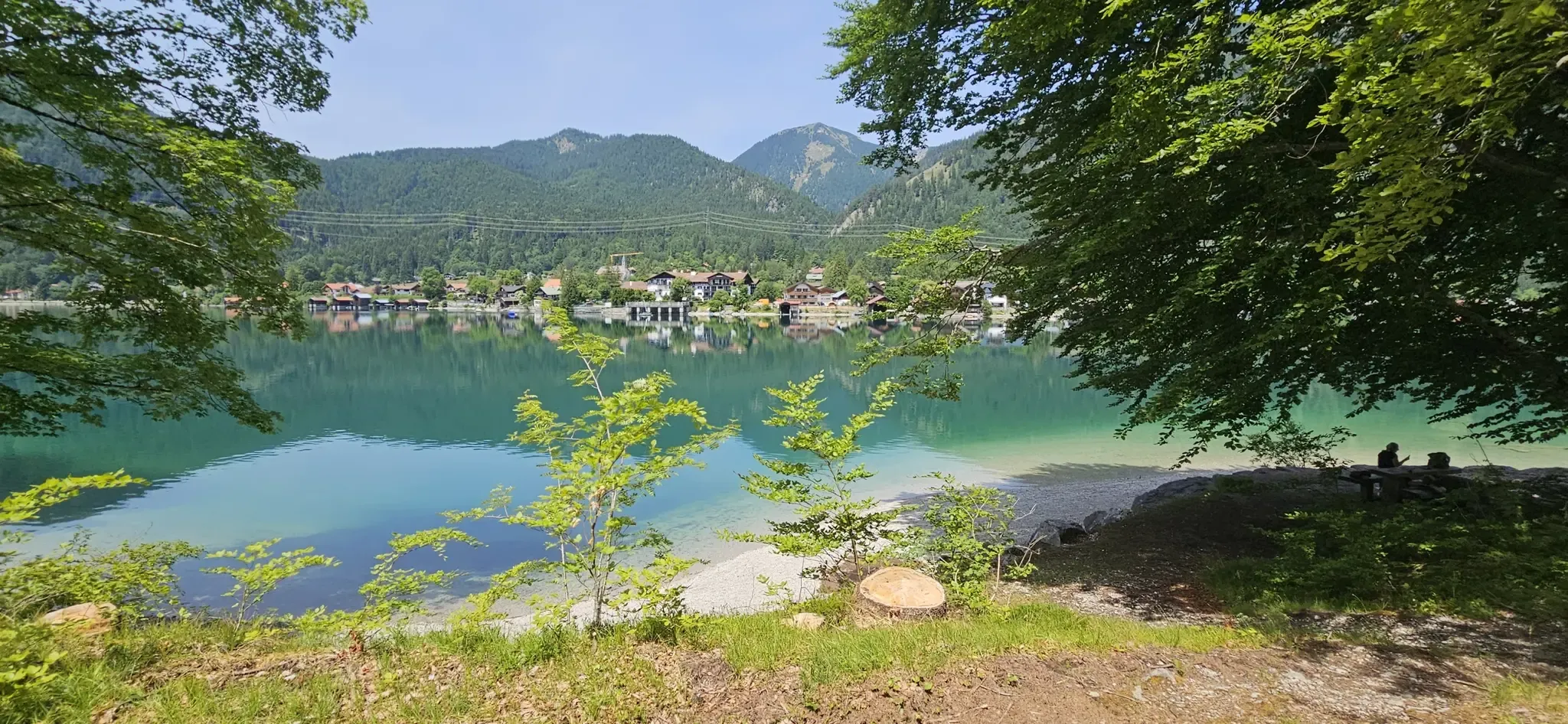
Very beautiful lake, very well maintained, partly with sandy beach
2
0


Great view of the Befreiungshalle. You can also drive up there via the serpentines.
0
0


Commissioned by King Ludwig I, the Liberation Hall commemorates the victorious battles against Napoleon in the Wars of Liberation from 1813 to 1815. The memorial was opened in 1863. Prices Admission prices: Adults €4.50 Reduced €4.00 (groups of 15 or more people, military and alternative service members, severely disabled people, seniors over 65 years of age) Children, young people and schoolchildren receive free admission Combined ticket for the Liberation Hall / Burg Prunn / Walhalla: Adults €12.50 Reduced €10.50 Opening times April to November 1st 9:00 a.m. to 6:00 p.m. November 2nd to March 10:00 a.m. to 4:00 p.m. More information: https://www.kelheim.de/sehenswertes/befreiungshalle_kelheim-1610/
0
0

Quiet road between Obertraubling and Egglfing with good asphalt
0
0
Frequently Asked Questions
How many no-traffic road cycling routes can I find around Neutraubling?
There are over 160 dedicated no-traffic road cycling routes available around Neutraubling, offering a wide variety of distances and difficulty levels for road cyclists.
What is the overall difficulty level of no-traffic road cycling routes near Neutraubling?
The routes around Neutraubling cater to all levels. You'll find a good mix, with over 30 easy routes, more than 100 moderate options, and around 30 challenging rides for experienced cyclists. The region offers everything from flat river paths along the Danube and Regen to routes with rolling hills.
Are there any family-friendly no-traffic road cycling routes in the area?
Yes, the region offers many family-friendly options, especially along the river valleys. The flat, scenic paths of the Danube Cycle Path and routes along the Regen River are ideal for families looking for safe, traffic-free rides through picturesque countryside. Look for routes marked as 'easy' for the most suitable options.
What natural features can I expect to see on these no-traffic road cycling routes?
You'll experience diverse landscapes, including the serene banks of the Regen and Danube rivers, idyllic meadow landscapes, and sections winding through surrounding forests. Many routes also pass by beautiful lakes like Sarchinger Weiher, Guggenberger Lake, and Silberweiher, offering pleasant spots for a break.
Which no-traffic routes offer the best viewpoints or scenic attractions?
Many routes provide stunning views and pass by significant landmarks. For example, the "View of Weltenburg Abbey – Paintener Forst Scenic Road loop from Regensburg-Burgweinting" offers panoramic vistas. You can also find routes that lead to the View of the Walhalla, a magnificent neoclassical building high above the Danube, or towards the historic city of Regensburg.
Can I find loop routes for no-traffic road cycling around Neutraubling?
Absolutely. Many of the no-traffic road cycling routes around Neutraubling are designed as loops, allowing you to start and end at the same point without retracing your steps. An example is the "Charbonnières-les-Bains Bridge – Herrnsaal–Lindach Road loop from Regensburg-Burgweinting" which offers a moderate challenge.
What historical or cultural attractions can I visit while road cycling in the area?
The region is rich in history. You can cycle to the nearby UNESCO World Heritage city of Regensburg, where you can explore the Stone Bridge and the impressive Regensburg Cathedral. The "Kelheim Old Town – Stausacker Danube Ferry loop from Regensburg-Burgweinting" also offers a chance to see historical sites.
What do other road cyclists say about the no-traffic routes around Neutraubling?
The komoot community highly rates the road cycling experience around Neutraubling, with an average score of 4.6 out of 5 stars from over 1500 ratings. Cyclists often praise the well-maintained paths, the beautiful river scenery, and the peaceful, traffic-free environment that makes for a relaxing yet engaging ride.
Are there any longer, more challenging no-traffic road cycling routes available?
Yes, for those seeking a greater challenge, there are several longer and more difficult routes. The "View of the Regen River – Reichenbach Monastery on the Regen loop from Regensburg-Burgweinting" is a difficult route covering over 120 km with significant elevation gain, perfect for experienced riders.
When is the best time of year to enjoy no-traffic road cycling around Neutraubling?
The spring and summer months are particularly beautiful for road cycling in the Regental valley and along the Danube, with pleasant weather and lush landscapes. However, the extensive network of paths means you can enjoy cycling for much of the year, with autumn offering stunning foliage.
Where can I find parking for these no-traffic road cycling routes?
Many routes start from areas with convenient parking, especially near larger towns or popular access points to the Danube and Regen cycle paths. Specific parking information is often available on individual route pages on komoot, or you can look for public parking in Neutraubling or nearby Regensburg-Burgweinting, which serves as a common starting point for many tours.
Most popular routes around Neutraubling
Most popular attractions around Neutraubling

Get inspired with the komoot mobile app


Explore more
Browse the best Road cycling routes in other regions.
