The best hikes from bus stations around Schneeberg
4.6
(15976)
50,498
hikers
148
hikes
Bus station hiking trails around Schneeberg offer access to the highest mountain in Lower Austria, a distinctive limestone massif with diverse alpine terrain. The region features steep slopes, rocky sections, and extensive Hohe Wand cliffs, alongside enchanting alpine forests and meadows. Natural attractions include gorges like Weichtalklamm and waterfalls such as Sebastian-Wasserfall. The area provides a wide range of routes, from leisurely walks to challenging mountaineering paths, many accessible by public transport.
Best bus station hiking trails around Schneeberg
- The…
Last updated: September 30, 2026
4.6
(92)
368
hikers
4.57km
01:12
30m
30m
Easy hike. Great for any fitness level. Easily-accessible paths. Suitable for all skill levels.
4.6
(36)
146
hikers
11.4km
03:12
230m
230m
Moderate hike. Good fitness required. Easily-accessible paths. Suitable for all skill levels.

4.7
(16)
54
hikers
8.36km
02:20
160m
160m
Moderate hike. Good fitness required. Easily-accessible paths. Suitable for all skill levels.
4.7
(15)
45
hikers
13.5km
03:45
240m
240m
Moderate hike. Good fitness required. Easily-accessible paths. Suitable for all skill levels.
4.7
(20)
72
hikers
8.42km
02:18
120m
120m
Moderate hike. Good fitness required. Easily-accessible paths. Suitable for all skill levels.
Get access to more routes and recommendations from other explorers.
Already have an account?
Our route recommendations are based on thousands of hikes, rides, and runs completed by other people on komoot.
Start today with a free account
Your next adventure awaits.
Other adventures around Schneeberg


Tips from the Community

The first town hall was built around 1527 by Fabian Lobwasser. After destruction by fire and subsequent reconstruction, it served as a public building for the citizens from 1723. After burning down again in 1849 and being rebuilt in the Neo-Gothic style, the ground floor was set up as a sales vault and the upper floor as a district court. After the district court moved out, the building underwent a new interior design in the Art Nouveau style in 1911/12, as we still see it today. From 2018 to 2021, the town hall was completely renovated, an elevator was installed, and its fire safety was improved.https://www.bergstadt-schneeberg.de/seite/760323/historische-altstadt.html
0
0
The Bortenreuther House is considered one of the city's most valuable Baroque residential buildings. It was built in 1724/25 on behalf of the merchant Johann Friedrich Bortenreuther and today houses the Museum of Mining Folk Art.https://de.wikipedia.org/wiki/Schneeberg_(Erzgebirge)
0
0

With overview map to the mining educational trail
0
0

Stamp point for the W@nderbarer Silberberg circular hiking trail.
0
0

Artificial canals are water ditches that were used to supply mines with water to drive water wheels. The Hauptkunstgraben was an artificial watercourse to channel water from the Filz pond to the mining area.
0
0
The Fundgrube company belonged to the large and important mining facilities in the Neustädtl mining area. The preserved surface buildings include the headframe building (1830), the mining smithy (1839), the carpentry building, the pump house, and the powder house (1844). The wooden changing room above the turbine shaft was built as a protective building around 1984. The water channel is accessible to tourists up to the turbine shaft.
1
0

A must-see for anyone interested in Erzgebirge folk art.
1
0
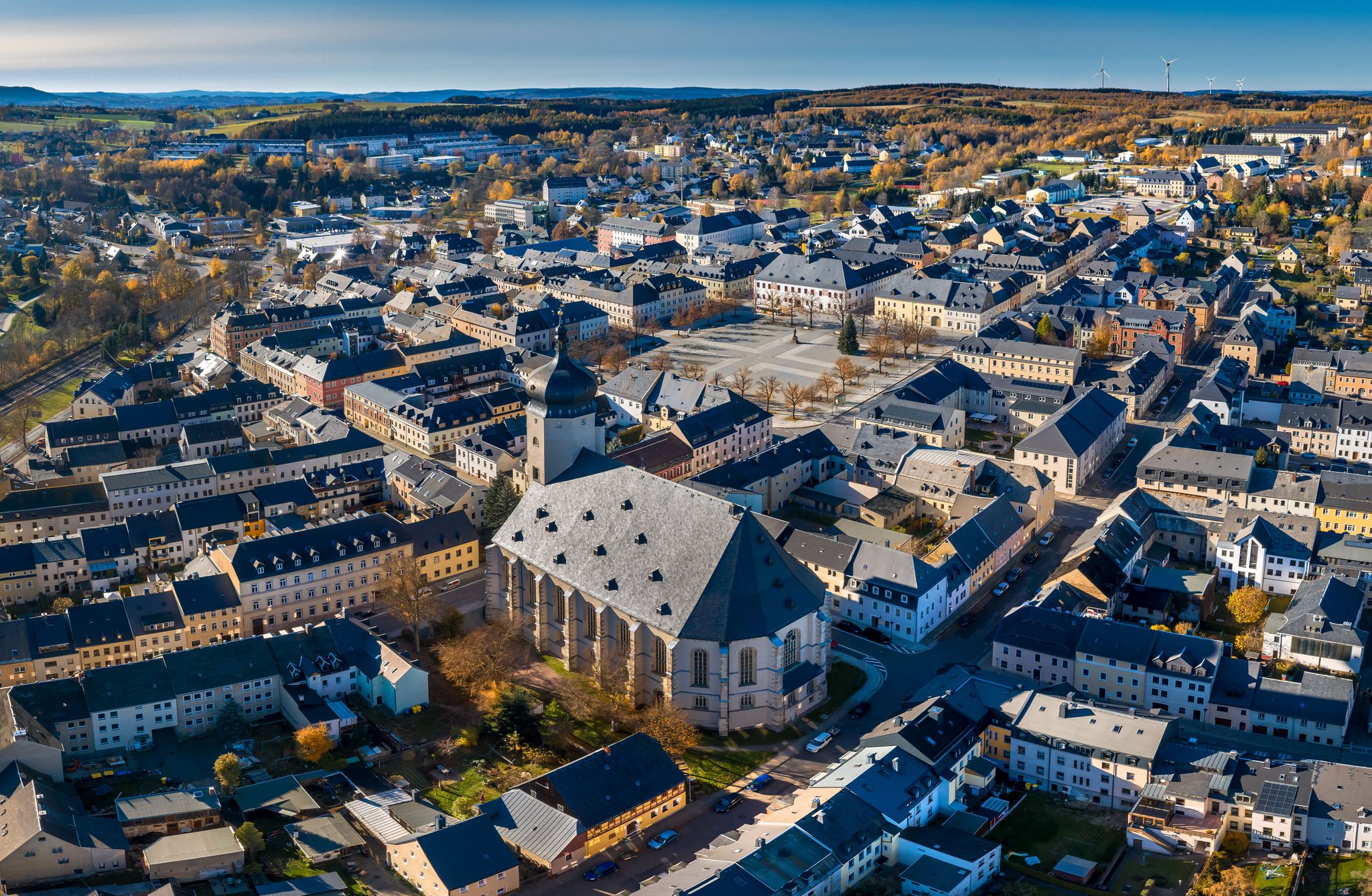
Schneeberg Town Hall was completed in 1852 and has been remodeled several times since. The building houses the city administration and is the third town hall in the city's history. A porcelain carillon has been located in its tower since 2006. The Schneeberg Town Hall was completed in 1852 and has been remodeled several times since.
1
0
Frequently Asked Questions
How many hiking trails are accessible from bus stations around Schneeberg?
There are over 130 hiking trails around Schneeberg that are easily accessible from bus stations, offering a wide range of options for all skill levels. This includes more than 60 easy routes and over 70 moderate trails, ensuring there's something for everyone.
Are there family-friendly hiking routes accessible by bus in Schneeberg?
Yes, Schneeberg offers several family-friendly routes that are convenient to reach by bus. These trails often feature gentle ascents and interesting sights. For an easy and pleasant walk, consider the View of Filzteich – Filzteich loop from Neustädtel, which is just over 4.5 km long and suitable for most families.
Can I bring my dog on the bus-accessible hiking trails in Schneeberg?
Many trails in the Schneeberg region are dog-friendly, but it's always advisable to check local regulations, especially in nature reserve areas. Ensure your dog is on a leash where required and that you carry enough water for both of you. The diverse alpine terrain, from forests to meadows, offers great opportunities for you and your canine companion.
Are there circular hiking routes available from bus stops?
Yes, many of the trails accessible by bus are circular, allowing you to start and end your hike at the same bus stop without needing to retrace your steps. An example is the Fundgrube Company – Hauptkunstgraben loop from Schneeberg, a moderate 11 km route that brings you back to your starting point.
What natural features or landmarks can I see along these bus-accessible routes?
The Schneeberg region is rich in natural beauty and interesting landmarks. You can explore picturesque waterfalls like the Blauenthal Waterfall or the Borbach Cascade. The area is also known for its distinctive limestone massif, alpine meadows, and forests. Some routes might even offer glimpses of the extensive Hohe Wand cliffs.
What is the best time of year to hike from bus stations in Schneeberg?
The primary hiking season in Schneeberg generally runs from May to November, offering pleasant temperatures and clear paths. During this time, you can fully enjoy the panoramic views and diverse alpine terrain. Winter hiking and snowshoeing are also possible for those with alpine experience, but conditions can be challenging.
Are there any challenging routes for experienced hikers accessible by bus?
While many bus-accessible routes are moderate or easy, the Schneeberg region itself offers challenging terrain, particularly around the Hohe Wand cliffs. Some longer, more strenuous routes might be reachable with a bus connection, leading to higher elevations and rocky sections. For a moderate challenge, consider the Stock Pond – Forst Pond loop from Lindenau, which covers over 8 km with notable elevation changes.
Where can I find refreshments or places to rest along the bus-accessible trails?
The Schneeberg area is well-equipped with mountain huts and inns that offer places for rest and refreshments. While specific huts might require a longer hike, many trails pass near or lead to accessible points. Look out for places like the Forester's Lodge "Zur Prinzenhöhle" or the Kühberg Mountain Inn, which can be integrated into your hiking plans.
How accessible is Schneeberg by public transport from Vienna?
Schneeberg is highly accessible by public transport, making it a convenient day trip destination from Vienna. The region, particularly Puchberg am Schneeberg, is well-connected, allowing hikers to reach trailheads easily without a car. This accessibility is a key feature of hiking in this area.
What do other hikers enjoy most about hiking from bus stations in Schneeberg?
The Schneeberg region is highly rated by the komoot community, with an average score of 4.6 stars. Reviewers often praise the convenience of reaching diverse trails via public transport, the stunning panoramic views from higher elevations, and the well-maintained paths that cater to various fitness levels. The ability to explore the unique limestone massif without a car is frequently highlighted.
Are there routes that offer panoramic views and are accessible by bus?
Absolutely. The Schneeberg region is renowned for its magnificent panoramic views. Many trails, even those starting from bus stations, ascend to viewpoints offering expansive vistas of the Rax mountains, the 'land of a thousand hills,' and the Rohrbachgraben valley. The König-Albert-Turm is a notable viewpoint that can be incorporated into longer hikes.
Are there easy routes for beginners that can be reached by bus?
Yes, Schneeberg offers numerous easy routes perfect for beginners, many of which are conveniently located near bus stops. These trails typically have minimal elevation gain and are well-marked. The Daniel Mine – Filzteich loop from Neustädtel is an excellent choice, being an easy 7.2 km route with gentle slopes.
Can I find trails that explore the mining history of the Schneeberg area?
Yes, some routes in the Schneeberg region offer a glimpse into its historical mining past. For example, the Fundgrube Company – Schneeberg Town Hall loop from Schneeberg is a moderate 13.6 km trail that connects historical sites, allowing you to combine hiking with cultural exploration.
Most popular routes around Schneeberg
Most popular attractions around Schneeberg

Get inspired with the komoot mobile app


Explore more
Browse the best Hikes in other regions.
