The best family-friendly hikes and walks around Bad Rothenfelde
4.5
(11659)
45,722
hikers
127
hikes
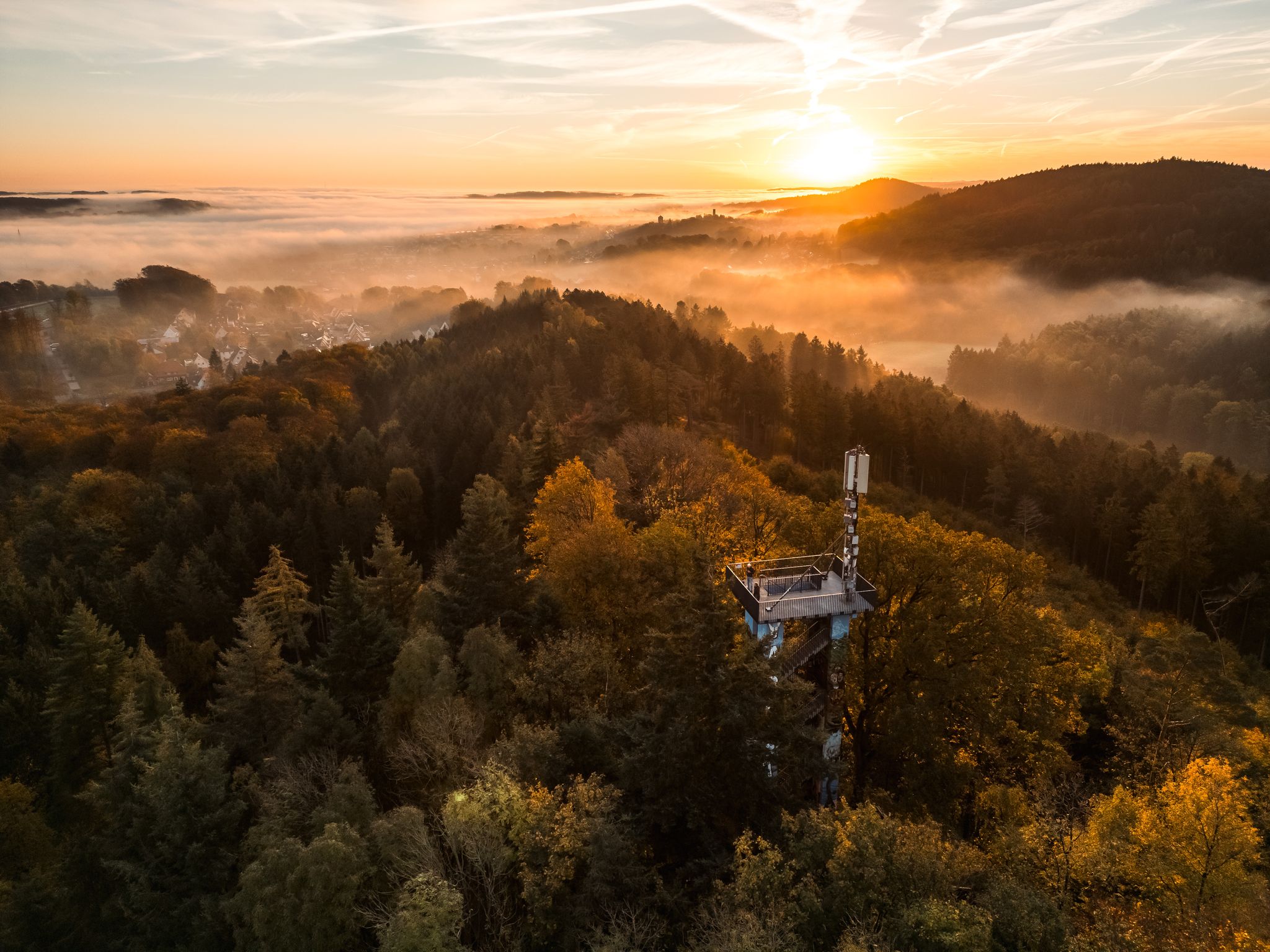
Family friendly hiking trails around Bad Rothenfelde are set within the diverse landscape of the Osnabrück region, bordering the Teutoburg Forest and Wiehengebirge mountains. The area features rolling hills, wooded sections, and the expansive Spa Park, offering varied terrain for outdoor activities. Elevations like the Kleiner Berg provide viewpoints, while well-maintained paths cater to different activity levels. The region's natural features create a compelling backdrop for family-friendly exploration.
Best family friendly hiking trails around Bad Rothenfelde
- The most popular family…
Last updated: May 14, 2026
4.6
(141)
543
hikers
6.00km
01:40
110m
110m
Easy hike. Great for any fitness level. Easily-accessible paths. Suitable for all skill levels.
4.8
(331)
1,042
hikers
Moderate hike. Good fitness required. Easily-accessible paths. Suitable for all skill levels.

Sign up for free
4.6
(89)
313
hikers
Easy hike. Great for any fitness level. Easily-accessible paths. Suitable for all skill levels.
4.5
(30)
251
hikers
Easy hike. Great for any fitness level. Easily-accessible paths. Suitable for all skill levels.
4.4
(42)
131
hikers
15.5km
04:11
210m
210m
Moderate hike. Good fitness required. Easily-accessible paths. Suitable for all skill levels.
Get access to more routes and recommendations from other explorers.
Sign up for free
Already have an account?
Our route recommendations are based on thousands of hikes, rides, and runs completed by other people on komoot.
Start today with a free account
Your next adventure awaits.
Login or Signup
Other adventures around Bad Rothenfelde


Tips from the Community

At the Glockensee, in the middle of the tourist center of the spa town of Bad Laer, the old water mill from the Hof Tewes-Kampelmann from the Müschen district has been rebuilt in the spa park, in the immediate vicinity of the Glockensee. The current building fabric of the mill essentially dates from 1882. Today, the historic building houses a café-restaurant, which was newly opened in spring 2020. Source: https://www.osnabruecker-land.de/erlebnisse/muehle-am-glockensee
2
0
Centrally located, all paths in Bad Laer lead to the spa park. On six hectares, those seeking peace and quiet, athletes, children and adults, flower enthusiasts and brine fans will find enough space to unfold. Anyone who wants to learn something about the history and geology of the more than 1000-year-old town can be guided through the park by 15 information boards and will also learn a lot of interesting facts about the origin of the Bad Laer brine. The spa park itself is the location of several brine springs, one of which emerges openly in the "Kolk" and feeds the Salzbach river and the adjacent Glockensee lake. Source: https://www.bad-laer.de/urlaub/entdecken/erlebnis-kurpark.html
1
0

The Teutoburg Forest is a great landscape, even from a distance
0
0

Was there and didn't find the sign that can be seen in the photos. Just learned from the Bad Laer Tourist Information that they had to close the area and it is no longer publicly accessible.
1
0
This whimsical gatehouse, dating from 1913, was designed by the architect Karl Frey. Compared to his other projects around the turn of the century, it's practically a garden pavilion. As befits a garden, a fence was essential. Today, these iron fences with their many spikes are back in vogue. The entire area of the concert garden, the promenade hall, and the graduation tower were enclosed by it. At the ticket booth, this very gatehouse, everyone paid the visitor's tax to enjoy the music, the fresh air, or simply a stroll through the promenade hall. But the lucrative times for the cashiers were soon over. World War I arrived, and part of the fence was diverted to finance the military apparatus, following the motto "I gave iron for bread, and gold for iron." In 1922, a new and considerably shorter fence was erected around the concert garden. But 44 years later, this enclosure, too, had served its purpose and disappeared completely. Where these elements vanished to is apparently not recorded in any file. Source: https://www.historische-schaufenster.de/index.php/Schaufenster/konzertgarten.html
1
0
Between the laying of the foundation stone in 1868 and its final sale to an investor group in 1997, 25 years tell of changes. It is arguably the building in Bad Rothenfelde with the most varied history. Dining and concert halls (the famous Red Hall), dance floors, wine cellars, terraces, a bar, hotel rooms, staff quarters, kitchens, and cellars—all of this was housed within its walls, and much was subsequently destroyed by fire. Just as the owners changed hands frequently, so too did the names. Built as the "Höckersches Badehotel," it was known as the Kurhaus (spa hotel) from 1881 to 1952, then the Kurklinik Nollmann (Nollmann spa clinic), and subsequently the Kurhaussanatorium with a hotel in the spa park. From 1969 onward, the operation of the hall and hotel was managed directly by the spa administration. Later, after further renovations and fires, and as long as it remained under the spa administration's ownership, the guest complex was called the Residenzhotel (Residence Hotel). The hotel's history finally came to a close in 1985 when the guest rooms were converted into condominiums. The adjacent halls and bars have been managed and leased by an investor group since 1997. The hotel in the spa park and the small concert hall were demolished. The residents of Rothenfelde are quite used to that sort of thing. The senior citizens' residence in the spa park now stands on this site, and its residents have the privilege (or rather, must accept) of having a box seat at all the festivals in the concert garden. But the townspeople still gather in the Kurhaus every year for the Bad Rothenfelde meal, and every Sunday, lively couples dance, replenishing their calorie expenditure with cream cakes. Source: https://www.historische-schaufenster.de/index.php/Schaufenster/ehemaliges-kurhaus.html
1
0
The "Little Mountain" adventure trail in Bad Laer opened in early 2014 to great public acclaim. The idea for this educational project arose in connection with a geothermal energy project. Scientists had stumbled upon fascinating soil profiles in the Blomberg near Bad Laer, which reveal the Earth's climate history up to the present day. Geologist Dr. Jens Steffahn subsequently developed a scientific concept for the creation of a geological educational trail. The 6.4-kilometer trail paints a captivating picture of Earth's history. The eight stations are connected by "reading stones," which provide engaging questions to answer while visitors wait between stations. This ensures that even younger family members won't find the walk too long. The trail holds many surprises, such as the "rocky path to the glacial erratic" and the "view into the depths." The geotourism trail is part of the Teutoburg Forest, Kleiner Berg FFH area within the European Natura 2000 network of protected areas. Source: https://nur-design-text.de/portfolio/erlebnispfad-kleiner-berg/
1
0

Frequently Asked Questions
How many family-friendly hiking trails are there around Bad Rothenfelde?
Bad Rothenfelde offers a wide selection of family-friendly hiking trails, with over 120 routes available. More than 90 of these are rated as easy, making them suitable for various ages and fitness levels.
Are there many circular hiking routes suitable for families in Bad Rothenfelde?
Yes, Bad Rothenfelde is ideal for circular family hikes. Many routes are designed as loops, allowing you to start and end at the same point. For example, the Lüdenstein Observation Tower – Bismarck Hut loop is a popular choice, offering scenic views and a manageable distance for families.
What kind of natural attractions can we expect to see on family hikes in Bad Rothenfelde?
Family hikes in Bad Rothenfelde often lead through the beautiful Teutoburg Forest and offer views of the Wiehengebirge mountains. You can explore the Kleiner Berg area, which features the Lüdenstein and an observation tower. The extensive Spa Park also provides well-signposted paths, themed gardens, and a lake for relaxed strolls.
Are there any easy, short walks suitable for families with toddlers?
Absolutely. For families with toddlers, routes like the Inside the Graduation Tower – Bad Rothenfelde Graduation Towers loop are perfect. This route is just under 3 km long with minimal elevation gain, making it an easy and engaging walk for little legs, allowing you to experience the unique brine works.
What are some interesting landmarks or points of interest along the trails?
Beyond the natural beauty, you can discover several interesting landmarks. The region is home to historic castles like Bad Iburg Castle and Ravensberg Castle. You might also encounter unique geological features such as the Clever Gorge or the Noller Gorge, offering varied scenery for your family adventure.
When is the best time of year to go hiking with family in Bad Rothenfelde?
The spring and autumn months are particularly beautiful for family hikes in Bad Rothenfelde. In spring, the Spa Park and surrounding forests burst with blooming plants, while autumn transforms the landscape with vibrant foliage, offering stunning views and pleasant temperatures for walking.
Are there any trails with scenic viewpoints that are accessible for families?
Yes, many trails lead to scenic viewpoints. The Lüdenstein Observation Tower is a highlight, offering panoramic views of the southern Osnabrück region. The Trail on Kleiner Berg – Adelenblick Shelter loop is an easy option that takes you through this area, providing rewarding vistas.
What do other hikers enjoy most about family hiking in Bad Rothenfelde?
The area is highly rated by the komoot community, with an average score of 4.5 stars. Reviewers often praise the well-maintained paths, the diverse landscapes ranging from wooded hills to the tranquil Spa Park, and the family-friendly atmosphere that makes exploring enjoyable for all ages.
Are there dog-friendly family hiking routes in Bad Rothenfelde?
Most hiking trails in Bad Rothenfelde are dog-friendly, allowing your furry family members to join the adventure. It's always a good idea to keep dogs on a leash, especially in nature reserves or near wildlife, and to carry water for them.
Are there any trails that offer a unique cultural or historical experience for families?
Yes, the Brine Trail, which starts from the Gottesgabe salt works, offers a unique historical experience. It provides insights into the region's traditional salt production, passing various graduation works where you can experience the 'sea air' – a fascinating and educational walk for families.
Are there options for longer family hikes for older children?
For families with older children looking for a bit more challenge, routes like the Adelenblick Shelter – Lüdenstein Observation Tower loop offer a moderate challenge over a longer distance (around 12.7 km) while still providing engaging scenery and points of interest.
Most popular routes around Bad Rothenfelde
Most popular attractions around Bad Rothenfelde

Get inspired with the komoot mobile app


Explore more
Browse the best Hikes in other regions.
