The best traffic-free bike rides in Réserve Naturelle Haard
4.4
(1670)
12,201
riders
89
rides
No traffic touring cycling routes in Réserve Naturelle Haard traverse a landscape shaped by former open-pit iron mining sites, now reclaimed by nature. The region features visible layers of iron ore and limestone, alongside remnants of the mining era such as quarry faces and slag heaps. Diverse habitats include semi-dry grasslands, forested paths, and open meadows, providing varied terrain for cycling. This area is part of the Minett UNESCO Biosphere, offering a blend of natural beauty and industrial heritage.
Best no traffic touring cycling routes in Réserve Naturelle Haard
- The most popular no traffic touring cycling route is Op der Haardt Cliff, Dudelange – View of the Haard Cliffs loop from Rumelange, a 17.5 miles (28.2 km) trail that takes 2 hours 36 minutes to complete, winding through former mining areas and diverse habitats.
- Another top favourite among local touring cyclists is Winding Forest Path loop from Rumelange, a difficult 16.1 miles (26.0 km) path offering views of reclaimed industrial landscapes and varied ecosystems.
- Local touring cyclists also love the Op der Haardt Cliff, Dudelange loop from Dudelange-Usines, a 9.9 miles (15.9 km) trail leading through reclaimed mining sites and forested paths, often completed in about 1 hour 28 minutes.
- Touring cycling in Réserve Naturelle Haard is defined by reclaimed industrial landscapes, semi-dry grasslands, and forested paths. The network offers options for easy, moderate, and difficult routes, catering to various ability levels.
- The routes in Réserve Naturelle Haard are highly rated by the komoot community with an average score of 4.4 stars from more than 1,100 reviews. More than 10,000 touring cyclists have used komoot to explore Réserve Naturenelle Haard's varied terrain.
Last updated: September 28, 2026
4.8
(21)
534
riders
27.6km
02:34
520m
520m
Hard bike ride. Very good fitness required. You may need to push your bike for some segments of this route.
4.9
(44)
540
riders
43.3km
03:41
630m
630m
Hard bike ride. Very good fitness required. You may need to push your bike for some segments of this route.

5.0
(5)
73
riders
15.3km
01:27
300m
300m
Moderate bike ride. Good fitness required. Mostly paved surfaces. Suitable for all skill levels.
4.0
(2)
62
riders
24.7km
02:15
410m
410m
Hard bike ride. Good fitness required. You may need to push your bike for some segments of this route.
9
riders
Hard bike ride. Good fitness required. You may need to push your bike for some segments of this route.
Get access to more routes and recommendations from other explorers.
Already have an account?
Our route recommendations are based on thousands of hikes, rides, and runs completed by other people on komoot.
Start today with a free account
Your next adventure awaits.




Tips from the Community

Very beautiful cycle path through the nature reserve, there are sure to be some orchids there in spring!
0
0

clean to get back on the train. Tip Top!
0
0
Enchantingly located industrial monument in the forest.
0
0

Great little museum with many exhibits from the black gold mining era.
2
0

An exciting relic from the days of ore mining. Spectacular with a fantastic view!
1
0


You are in the middle of the pithead of the former "Walert" mine. For almost a century, from the 1880s to 1963, iron ore was mined here, both in the opencast and in galleries. At the time, the mine mainly supplied the factories of Rodange and Seraing in Belgium, where the ore was transported by rail. The site became a museum in 1973 and the use of the pithead facilities was changed: the first offices were converted into a brewery; the locomotive shed now houses the visitor reception; the playground occupies the former wood stock, while the red rocks of the opencast mine are slowly being reclaimed by vegetation. The most spectacular part of the mine is underground (44.5 ha concession). The guided tour begins in the Museum reception building. The train will then take you underground for a walking tour through the galleries, among the tools and machines of three generations of miners.
1
0

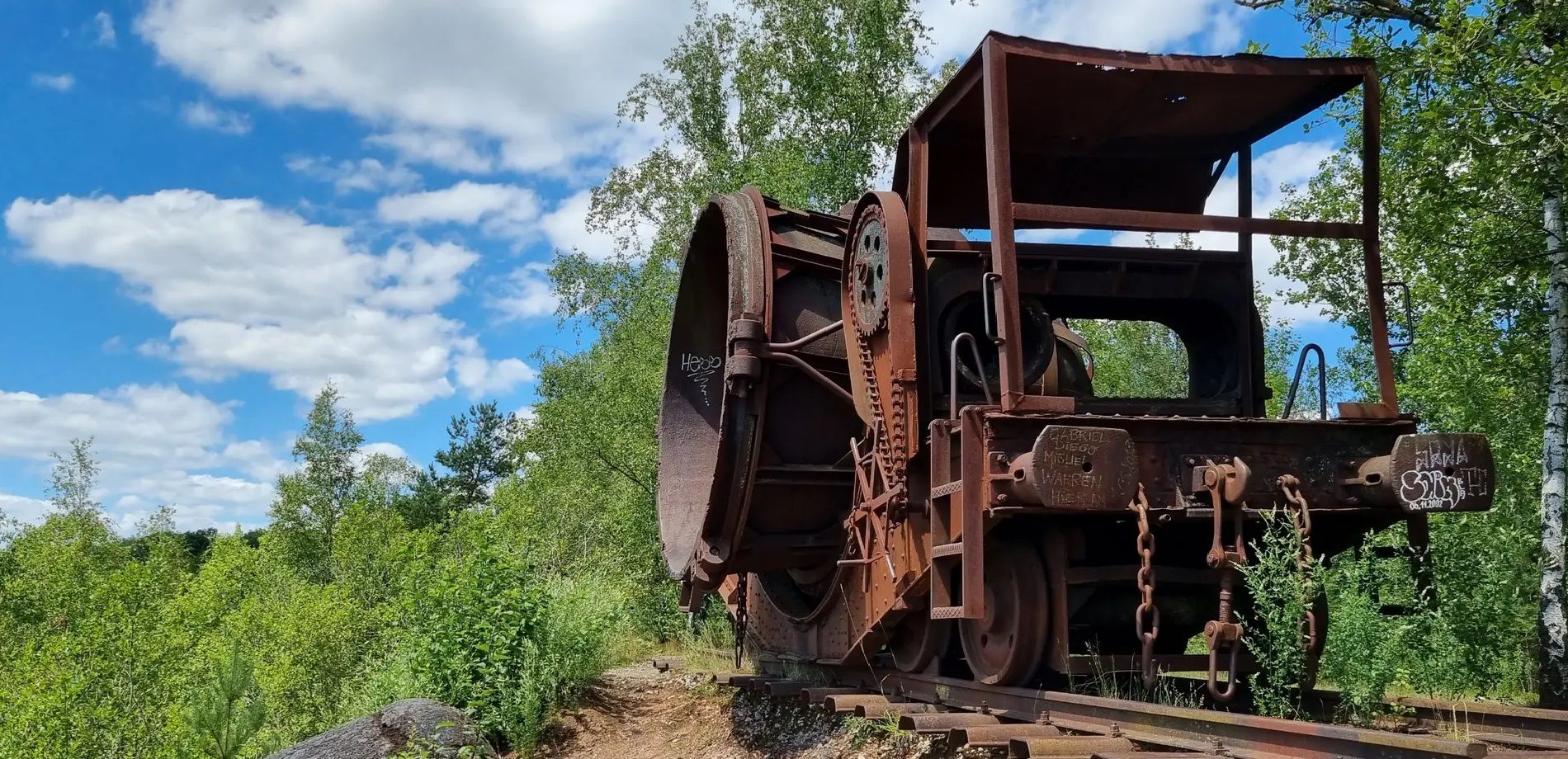
The wagon was probably used to dispose of slag. There is a pile of slag on the slope directly in front of it. If you look closely, you can see a whole lot more of it further down.
1
0
Frequently Asked Questions
How many no-traffic touring cycling routes are available in Réserve Naturelle Haard?
There are over 90 touring cycling routes in Réserve Naturelle Haard that focus on minimizing traffic. These routes range in difficulty, with 29 easy, 34 moderate, and 27 difficult options to explore the unique landscapes of the reserve.
What kind of terrain can I expect on no-traffic touring cycling routes in Réserve Naturelle Haard?
The terrain in Réserve Naturelle Haard is quite varied, reflecting its past as an industrial mining area now reclaimed by nature. You'll find a mix of semi-dry grasslands, forested paths, and open meadows. While many paths are suitable for touring bikes, be prepared for some sections that might have visible layers of iron ore and limestone, offering a unique blend of natural beauty and industrial heritage. Routes like the Op der Haardt Cliff, Dudelange – View of the Haard Cliffs loop from Rumelange showcase some of the more challenging, varied terrain.
Are there any family-friendly no-traffic cycling routes in the reserve?
Yes, Réserve Naturelle Haard offers several easy and moderate routes that are suitable for families looking for a car-free cycling experience. These paths often wind through forests and open areas, providing a safe and enjoyable environment. Look for routes categorized as 'easy' in komoot to find the most suitable options for a family outing.
What are the best times of year to cycle in Réserve Naturelle Haard?
The reserve is beautiful year-round, but spring (April-May) and autumn (September-October) are particularly pleasant for touring cycling. During these seasons, the weather is generally mild, and the natural scenery, from blooming wildflowers to vibrant autumn foliage, is at its most spectacular. Summer can also be great, especially on shaded forest paths, but be mindful of potential heat.
Can I bring my dog on the no-traffic touring cycling routes?
Generally, dogs are welcome on trails in Réserve Naturelle Haard, provided they are kept on a leash to protect the diverse wildlife and flora, especially in this Natura 2000 site. Always ensure your dog is well-behaved and that you clean up after them. It's advisable to check specific route regulations or local signage for any exceptions.
What interesting landmarks or natural features can I see along the routes?
Réserve Naturelle Haard is rich in both natural beauty and industrial heritage. Along your ride, you can encounter fascinating sites such as the Red Cliff of the Former Iron Mine, the striking Red Rocks, and unique Slag Rock Formations. There are also several viewpoints, like the View of the Haard Cliffs, offering panoramic vistas of the reclaimed mining landscapes. You might also spot remnants of the mining era, such as the Old Slag Wagon.
Are there circular no-traffic touring cycling routes available?
Yes, many of the no-traffic touring cycling routes in Réserve Naturelle Haard are designed as circular loops, allowing you to start and end at the same point. Examples include the moderate Op der Haardt Cliff, Dudelange loop from Dudelange-Usines, which covers nearly 16 km, or the longer Winding Forest Path loop from Rumelange. These are ideal for exploring without needing to arrange transport back to your starting point.
How accessible is Réserve Naturelle Haard by public transport for cyclists?
The reserve is well-connected by public transport, making it convenient for cyclists. Tétange train station is just a few minutes from some route starting points, and municipalities like Dudelange, Kayl, and Rumelange, which border the reserve, are also accessible. This allows for easy access to various entry points for your no-traffic cycling adventure.
Where can I find parking for these routes?
Parking is generally available near the main access points to the reserve in the surrounding municipalities such as Dudelange, Kayl, and Rumelange. These towns often have designated parking areas that provide convenient access to the trail network. Always check local signage for specific parking regulations and availability.
What do other touring cyclists enjoy most about cycling in Réserve Naturelle Haard?
The area is highly rated by the komoot community, with an average score of 4.4 stars from over 1100 ratings. Reviewers often praise the unique blend of natural beauty and industrial heritage, the quiet, car-free paths, and the diverse terrain that makes for an engaging ride. The opportunity to explore a UNESCO Biosphere with rich biodiversity is also frequently highlighted.
Are there facilities like bike repair or inflating stations along the routes?
While the reserve focuses on natural preservation, some facilities are available. For instance, you can find a Bike cleaning and inflating station within the reserve, which can be very useful for maintaining your touring bike during your ride. It's always a good idea to carry a basic repair kit for emergencies.
Most popular routes in Réserve Naturelle Haard
Most popular attractions in Réserve Naturelle Haard

Get inspired with the komoot mobile app


Explore more
Browse the best Cycling routes in other regions.
