The best city hikes and walks in Bürgerholz
4.6
(287)
1,106
hikers
18
hikes
Urban hiking trails in Bürgerholz offer a unique way to explore the region's urban landscapes and natural features. The area is characterized by low elevation changes, with routes often following waterways like the Jeetze and Dumme Rivers. These trails provide access to historic town centers and green spaces, showcasing a blend of urban architecture and accessible natural environments. The terrain is generally flat, making it suitable for various fitness levels.
Best urban hiking trails in Bürgerholz
- The most popular urban…
Last updated: October 9, 2026
4.5
(29)
85
hikers
Easy hike. Great for any fitness level. Easily-accessible paths. Suitable for all skill levels.
3.7
(3)
9
hikers
Moderate hike. Good fitness required. Easily-accessible paths. Suitable for all skill levels.

4
hikers
Easy hike. Great for any fitness level. Easily-accessible paths. Suitable for all skill levels.
5.0
(8)
41
hikers
6.53km
01:40
20m
20m
Easy hike. Great for any fitness level. Easily-accessible paths. Suitable for all skill levels.
5.0
(2)
3
hikers
Easy hike. Great for any fitness level. Easily-accessible paths. Suitable for all skill levels.
Get access to more routes and recommendations from other explorers.
Already have an account?
Our route recommendations are based on thousands of hikes, rides, and runs completed by other people on komoot.
Start today with a free account
Your next adventure awaits.

Tips from the Community

The Rathausturmplatz, together with the adjacent Neuperverstraße, forms the vibrant, historic center of the Hanseatic city of Salzwedel. The historically significant square is one of the oldest parts of the city and combines medieval brick Gothic architecture with modern leisure elements. • The Neustädter Rathausturm: The city's 25-meter-high landmark, towering over everything, stands right in the center of the square. The Salzwedel Tourist Information is located on the ground floor, from where you can climb the tower for a free panoramic view. • "Hanse-Welle" water feature: This modern fountain was installed during the redesign of the square. Especially in summer, the splashing water feature is a popular meeting point to linger and a play area for children. • Historic bronze relief: Directly on the square, a detailed bronze model provides information about the historical city view and the former layout of the town hall, which burned down in 1895.
2
0
The castle tower in the Salzwedel castle garden is the oldest preserved building in the city. It is considered the historical heart and architectural landmark of the Hanseatic city. The round brick tower was built at the end of the 12th century (probably around 1160). It served as the central defensive tower (keep) of a once powerful, ring-shaped lowland castle. This castle complex had an overall diameter of about 220 meters and protected the important trade route (Salzstraße) at the crossing of the river Jeetze. The tower today has a striking height of around 24 meters. Originally, it was even higher and culminated in a steep roof spire. To withstand possible sieges, the foundation was built extremely solidly. The wall thickness at the base of the tower is an impressive 3.60 meters. Typical for medieval defensive towers, the original entrance is not at ground level, but is a so-called high entrance at a height of about 12 meters. Inside, in the lower, windowless area, lies the former dungeon. The tower is freely accessible in the park-like castle garden and is surrounded by old trees and the remains of the historic castle wall. While the garden area can be visited free of charge daily from 7:00 AM to 8:00 PM, the interior of the tower is usually only open for special city events or as part of guided tours booked through the Salzwedel Tourist Information.
2
0
The Burggarten in Salzwedel is a quiet city park in the center, located on the grounds of the historic Salzwedel Castle. • Address: Burgstraße 42, 29410 Salzwedel • Opening hours: Daily from morning until evening (approx. 7:00 AM to 8:00 PM) • Admission: The park is freely accessible. • Atmosphere: Very quiet, green, and characterized by historical flair. Visitors appreciate the place for strolling and lingering. • The Keep (Castle Tower): The well-preserved defensive tower dates from the late 12th century. It is about 24 meters high with impressive wall thickness at the base. The high entrance is at a height of around 12 meters. • Memorial Hall (Hall of Honor): In 1923, a hall of honor was erected for the fallen of World War I. • Remains of St. Anne's Chapel: Remains of the old castle chapel's walls can still be seen on the grounds. • Remains of the defensive wall and castle moat: Evidence of the former ring-shaped lowland castle, which was likely built in the 9th century to protect a trade route on the Jeetze river. • Directly from the Burggarten, stairs lead down to the courtyard of the well-known Baumkuchen bakery Café Kruse, where the famous Salzwedel Baumkuchen can be enjoyed. • In summer, the park occasionally serves as a venue for open-air festivals.
2
0
The former water tower, a round tower in the Neo-Gothic style, was built in 1903. It is adorned with decorative niches and a copper spire. Planning and construction management was handled by the Salzwedel master builder and architect Albert Strauchenbruch. The 43.7-meter-high tower houses a 7-meter-high balancing reservoir at a height of 25 meters, which could store up to 35 cubic meters of water. After the completion of the then waterworks, the pipes were laid to the constructed water tower. The first households could be supplied. Initially, the supply of tap water was based on a flat-rate consumption estimate. With the increase in water consumption, however, water meters became necessary, and in 1938 an electric pump drive was added. In 1981, the city discontinued the operation of the water tower, as water storage tanks were built approximately 5 km away on the Schwarzen Berg. They made it possible to let the water flow downhill cost-effectively. https://entdecke-salzwedel.de/wasserturm/
2
0
The St. Lawrence Church is the Catholic parish church of the Hanseatic city of Salzwedel and is considered the city's oldest preserved church building. It is located on the Romanesque Road in Saxony-Anhalt. As the original church tower was dismantled over the centuries, the church today lacks a classic church tower. It is semi-circularly surrounded by picturesque half-timbered houses and blends unobtrusively into the historic cityscape. The building was constructed in the mid-13th century (approx. 1230–1250) as a late Romanesque, three-nave brick basilica. Later, craftsmen incorporated Gothic cross-ribbed vaults into the nave and choir. After the Reformation, the structure lost its function as a place of worship. From 1692, it was used for decades as a salt warehouse (Salzfaktorey) by electoral order. The salt deposits, deeply embedded in the masonry, pose enormous structural challenges for monument preservation to this day, as they attract moisture and damage the bricks. After a devastating city fire in 1705, the side aisles were demolished. It was not until the 19th century that the Catholic community took over the dilapidated building again. The northern side aisle was finally reconstructed in the 1960s on the old, medieval foundations.
2
0

Many thanks for your descriptions, which say a lot about the Jeetze.
2
0
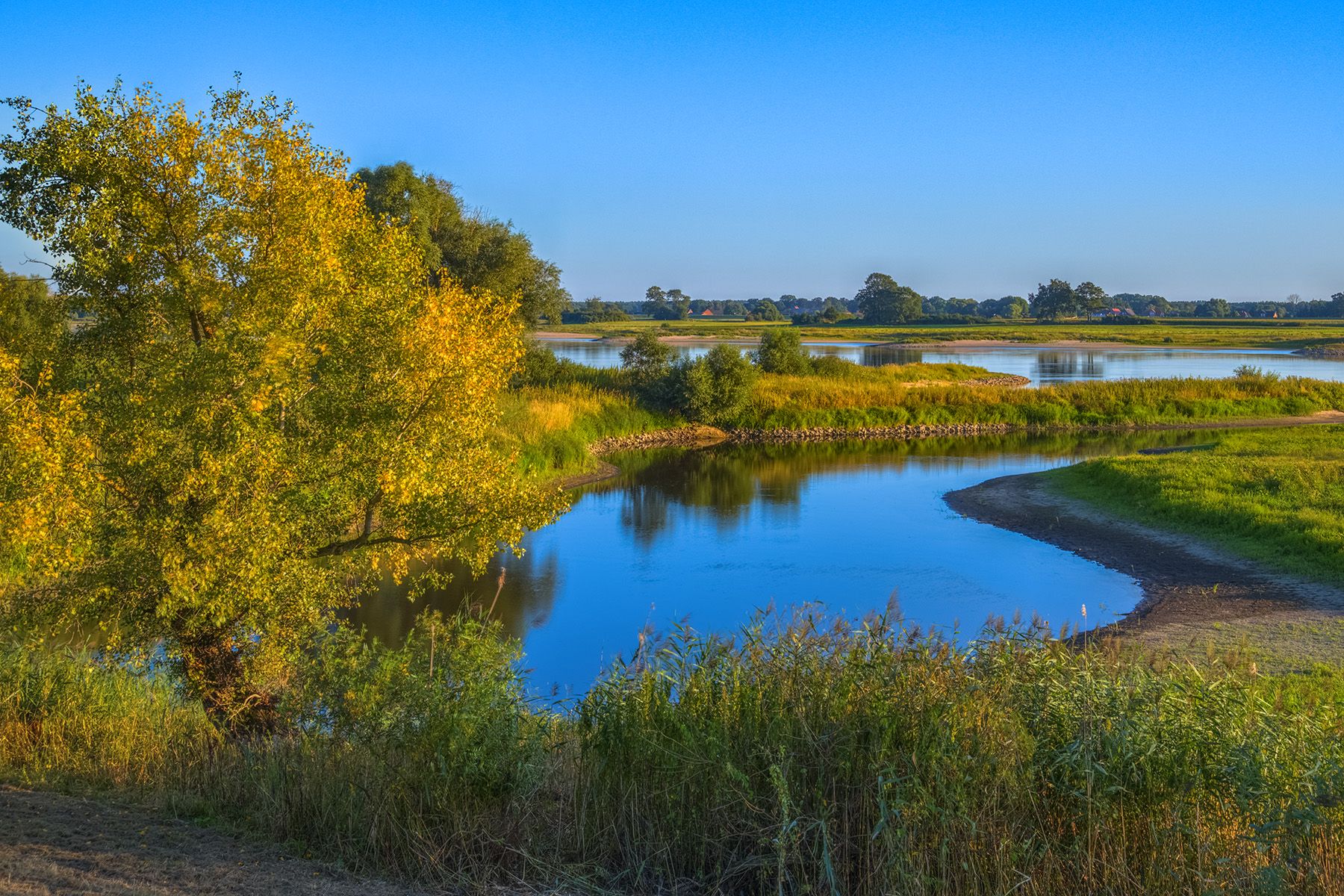
The Jeetze (later called Jeetzel in its Lower Saxony course) is the lifeline of the Hanseatic city of Salzwedel in Saxony-Anhalt. The approximately 73-kilometer-long river originates in the Altmark and flows into the Elbe near Hitzacker. In Salzwedel, it significantly shapes the cityscape and history. Thanks to the Jeetze, Salzwedel received its Hanseatic rights in 1263. From the Middle Ages until the 19th century, the river served as an important trade and transport route, via which goods were transported by ship to the Elbe and further to Hamburg. The city even had its own harbor. Today, the Jeetze winds through the historic old town in numerous branches and small canals.
3
0
In the premises of the former town hall of the Hanseatic city of Salzwedel, the Salzwedel District Court is located today. The northern part, built from 1490 to 1509, is the oldest part of the historic town hall. At the beginning of the 17th century, the town hall was extended by a corner building. The use of the building as a town hall ended in 1714. Afterwards, the structure served, among other things, as a guardhouse, warehouse, and council cellar. In 1820, the judiciary moved into some of the premises of the Renaissance building. Since the middle of the 19th century, the court has been located in the entire building. The adjacent building was erected in 1867 as a prison. https://erlebnisland.de/sachsen-anhalt/hansestadt-salzwedel/sehenswuerdigkeiten/ehemaliges-rathaus-altstadt-amtsgericht-salzwedel
2
0
Frequently Asked Questions
How many urban hiking trails are available in Bürgerholz?
There are over 20 urban hiking trails and walks in the Bürgerholz region, offering a variety of experiences for exploring towns and their surroundings on foot.
What is the general difficulty of urban hikes in Bürgerholz?
Most urban hikes in Bürgerholz are considered easy, with 19 out of 20 routes falling into this category. There is also one moderate route for those seeking a slightly longer or more varied experience. This makes the area suitable for all fitness levels.
Are there any circular urban hiking routes in Bürgerholz?
Yes, many of the urban hikes in Bürgerholz are designed as circular routes, allowing you to start and end at the same point. For example, you can enjoy the Salzwedel station – Puparschbier Fountain loop from Salzwedel, which is an easy 7 km walk.
What are some interesting landmarks or sights to see on urban hikes in Bürgerholz?
Urban hikes in the Bürgerholz region, particularly around towns like Salzwedel, offer glimpses of local history and charm. While specific urban landmarks are integrated into the routes, you can also find nearby attractions such as the Observation Tower or the unique Bohlenweg Boardwalk, which offers a different kind of exploration.
What do other hikers enjoy most about urban hiking in Bürgerholz?
The urban hiking trails in Bürgerholz are highly rated by the komoot community, with an average score of 4.56 stars from over 250 ratings. Hikers often praise the accessibility of the routes and the opportunity to explore local towns and their immediate natural surroundings.
Are the urban hiking trails in Bürgerholz suitable for families?
Absolutely! With a majority of routes being easy, urban hikes in Bürgerholz are very family-friendly. The relatively flat terrain and shorter distances, such as the Salzwedel Water Tower – Neuperver Gate Salzwedel loop from Salzwedel, make them ideal for walks with children.
Can I bring my dog on urban hikes in Bürgerholz?
Yes, dogs are generally welcome on urban hiking trails in Bürgerholz. It's always a good idea to keep your dog on a leash, especially in populated areas or near wildlife, and to carry waste bags. The varied landscapes, from town paths to nearby green spaces, offer pleasant walks for you and your canine companion.
What is the best time of year for urban hiking in Bürgerholz?
Urban hiking in Bürgerholz can be enjoyed year-round. Spring brings blooming flowers and mild temperatures, while autumn offers beautiful foliage. Summer is great for longer daylight hours, and even winter can be pleasant for a crisp walk, especially on well-maintained urban paths. The diverse forest types in the broader Bürgerholz region, including red beech and pine forests, offer different scenic beauty throughout the seasons.
Are there any cafes or places to eat near the urban hiking routes?
Yes, when hiking in urban areas like Salzwedel within the Bürgerholz region, you'll find various cafes and eateries. For example, the Café Kuckuck in Hoyersburg is a nearby option where you can relax and refuel after your walk.
How can I get to the trailheads for urban hikes in Bürgerholz using public transport?
Many urban hiking routes in Bürgerholz are designed to be accessible by public transport. For instance, the St. Mary's Church, Salzwedel – Salzwedel Water Tower loop from Salzwedel starts and ends in the town center, often close to bus or train stations, making it convenient for public transport users.
Are there any beginner-friendly urban hikes in Bürgerholz?
Absolutely. The majority of urban hikes in Bürgerholz are classified as easy, making them perfect for beginners. A good starting point could be the Jeetze River in Salzwedel – St. Mary's Church, Salzwedel loop from Salzwedel, which is a gentle 5.2 km walk through the town.
Most popular routes in Bürgerholz
Most popular attractions in Bürgerholz

Get inspired with the komoot mobile app


Explore more
Browse the best Hikes in other regions.
