The best city hikes and walks around Sežana
4.6
(6195)
34,420
hikers
53
hikes
Urban hiking trails around Sežana are situated within Slovenia's Karst region, characterized by its distinctive limestone topography. The area features rolling hills, lush greenery, and unique karst phenomena such as dolines. These urban paths often traverse the town's surroundings, offering a blend of natural landscapes and accessible routes. The terrain generally includes gentle ascents and varied surfaces suitable for walking.
Best urban hiking trails around Sežana
- The most popular urban hiking route is Canal Grande, Trieste – Unity of Italy Square loop from Trieste, a 5.8 miles (9.4 km) moderate trail that takes 2 hours 31 minutes to complete, exploring urban waterways and historic squares.
- Another top favourite among local hikers is Grand Canal of Trieste – Unity of Italy Square loop from Trieste, an easy 4.0 miles (6.5 km) path that guides hikers through the city's central areas and along its grand canal.
- Local hikers also love the Unity of Italy Square – Fountain of the Four Continents loop from Trieste, a 4.6 miles (7.4 km) trail leading through urban landmarks, often completed in about 1 hour 59 minutes.
- Hiking around Sežana is defined by its rolling hills, green spaces, and accessible urban pathways. The network offers options for various ability levels, from easy strolls to moderate urban explorations.
- The routes in Sežana are highly rated by the komoot community with an average score of 4.6 stars from more than 5,900 reviews. More than 34,000 hikers have used komoot to explore Sežana's varied terrain.
Last updated: May 25, 2026
4.6
(73)
481
hikers
9.31km
02:30
110m
110m
Moderate hike. Good fitness required. Easily-accessible paths. Suitable for all skill levels.
50
hikers
6.55km
01:45
80m
80m
Easy hike. Great for any fitness level. Easily-accessible paths. Suitable for all skill levels.

Sign up for free
20
hikers
7.41km
02:00
100m
100m
Easy hike. Great for any fitness level. Easily-accessible paths. Suitable for all skill levels.
13
hikers
Easy hike. Great for any fitness level. Easily-accessible paths. Suitable for all skill levels.
5.0
(1)
30
hikers
3.70km
01:00
40m
50m
Easy hike. Great for any fitness level. Easily-accessible paths. Suitable for all skill levels.
Get access to more routes and recommendations from other explorers.
Sign up for free
Already have an account?
Our route recommendations are based on thousands of hikes, rides, and runs completed by other people on komoot.
Start today with a free account
Your next adventure awaits.
Login or Signup
Popular around Sežana
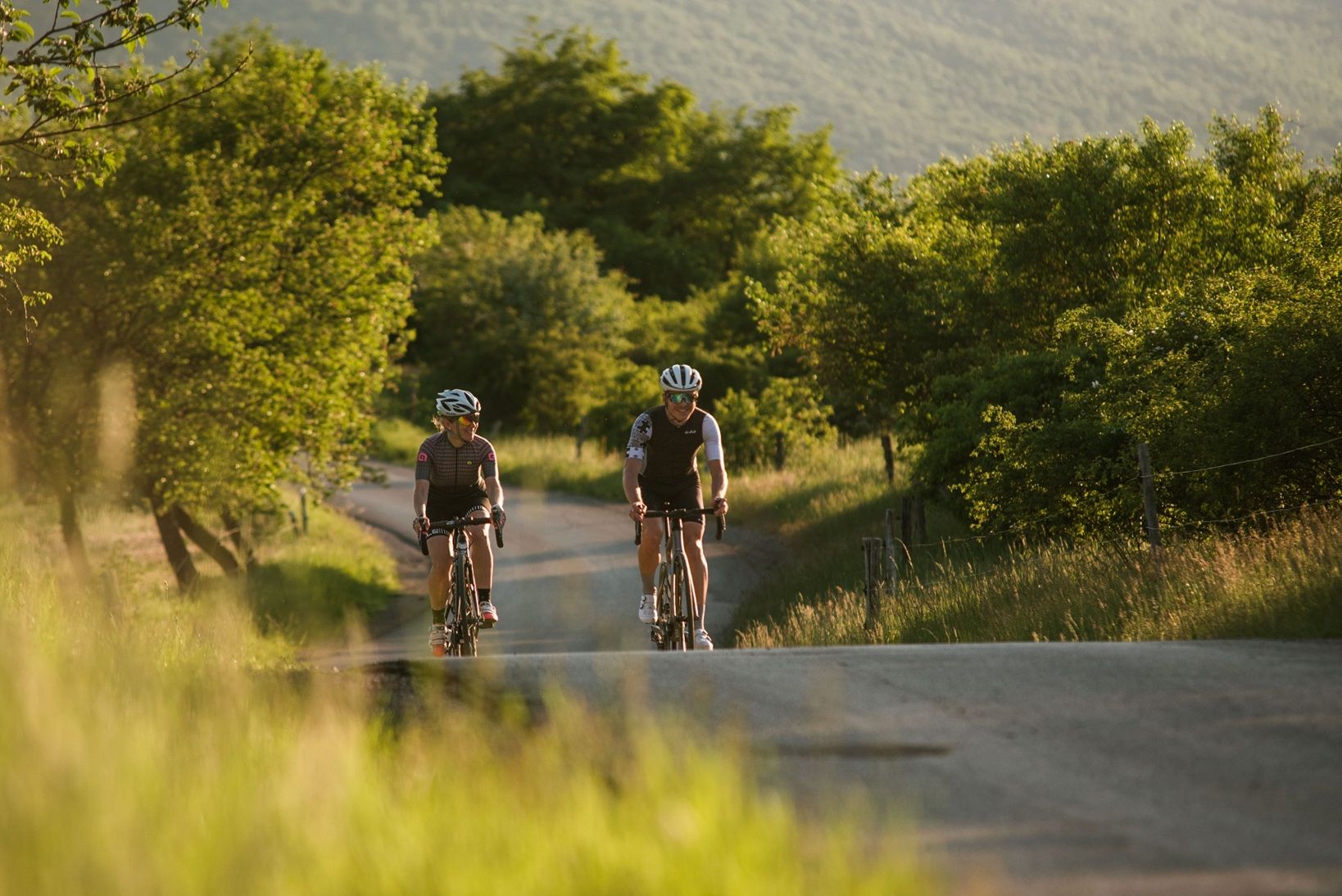
Other adventures around Sežana

Tips from the Community

In the television series "Classics of World Literature," Tilman Spengler presents a diverse range of writers and authors to culturally interested viewers in short segments (available only in German). These authors represent many eras and cultures. One of the figures he honors with an episode is the Irish-born James Joyce (1882–1941). These writers represent many eras and cultures. Anyone wanting to learn more about James Joyce's life and work (e.g., "Dubliners" and "Ulysses") in just a quarter of an hour simply needs to follow this link to the ARD Mediathek: =>> https://www.ardmediathek.de/video/klassiker-der-weltliteratur/james-joyce/ard-alpha/Y3JpZDovL2JyLmRlL3ZpZGVvL2I2Y2Q1MzkyLWQ2Y2YtNDJjZi05MjllLWM2MGQ2MTRiZTlkMQ
0
0

The Fontana dei Quattro Continenti in Trieste's Piazza Unità d'Italia is a Baroque masterpiece and a symbol of the city's cosmopolitan identity in the 18th century. 🗺️ Symbolism & History Origin: Created between 1751 and 1754 by the sculptor Giovanni Battista Mazzoleni to celebrate Trieste's rise to a free-trading city under Maria Theresa. Name: The "Four Continents" – Europe, Asia, Africa, and America – symbolize the global reach of trade that Trieste conducted as a port city. Australia was not yet known as a continent at the time. Location: Originally located in the center of the piazza, the fountain was removed in 1938 to make way for a political stage and was only restored and returned in the 1970s. 🧜♂️ Artistic Details Allegorical Figures: Europe with a horse and symbols of power and knowledge. Asia with a camel and exotic goods. Africa with a lion. America with an alligator and feathered headdress. Trieste as the central figure: A winged female figure enthrones the ensemble, resting on the karst cliffs, surrounded by bales, barrels, and ropes – a symbol of the cosmopolitan, welcoming city. Water Sources: Dolphins and river gods spew water into conch shells – a baroque interplay of movement and symbolism
1
0
Monument to Giuseppe Verdi – Piazza San Giovanni First version (1906): Unveiled on January 27, 1906, exactly five years after Verdi's death. At that time, Trieste was still part of the Austro-Hungarian Empire. The Carrara marble statue was created by the sculptor Alessandro Laforêt. Destruction & Symbolism: The original statue was destroyed in 1915 by pro-Austrian forces – not because of Verdi's music, but because of the inscription "VERDI," which was considered a patriotic acronym for "Vittorio Emanuele Re D'Italia." A subtle act of Italian national pride in the heart of Habsburg territory. Re-enactment (1926): After the First World War and the incorporation of Trieste into Italy, the statue was re-erected – this time in bronze, cast from captured Austrian cannons. A triumphant statement that blends art and history. Current condition: The statue underwent extensive restoration in 2024 – including cleaning, a protective varnish, and a layer of wax for preservation. The inscriptions were made legible again, and the monument now shines in renewed splendor. Location: Piazza San Giovanni, behind the Church of Sant'Antonio Taumaturgo, at the end of the Grand Canal – a location that fits perfectly into a cultural and historical itinerary through Trieste.
0
0

Parenzana is a nice route, I recommend it
1
0

The statue of Monsignor Antonio Santin, the long-time Bishop of Trieste and Capodistria, has stood prominently in Piazza Sant'Antonio Nuovo since March 2023 – directly in front of the church of the same name at the end of the Grand Canal. It pays tribute to a man who guided Trieste through some of the most difficult chapters of the 20th century and created a spiritual landmark with the Santuario di Monte Grisa. 🕰️ Who was Antonio Santin? Born: 1895 in Rovinj (then Austria-Hungary) Bishop of Trieste & Capodistria: 1938–1975 Committed to peace and unity: Speaked out against fascist racial laws Advocated for Jews and refugees Experienced the occupation by the Nazis and later Yugoslavia Vow in 1945: If Trieste were spared from the war, he would build a church – this led to the creation of the Santuario Nazionale a Maria Madre e Regina on Monte Grisa 🗿 The Statue Location: Piazza Sant'Antonio Nuovo, corner of Via Nicolò Paganini Material: Bronze Size: Life-size (approx. 1.72 m) Artist: Albano Poli, Italian sculptor Design: Santin in liturgical clothing, with a blessing gesture – dignified yet approachable The Statue was donated by an anonymous benefactor and commissioned by the Diocese of Trieste. It complements the monument at the entrance to Monte Grisa and the relief at the Cathedral of San Giusto.
0
0
The bronze statue of James Joyce stands in the middle of the Ponte Rosso, the small bridge over the Grand Canal in Trieste – a silent salute to the famous Irish writer, who lived in the city for over a decade and wrote some of his most important works there. 🕰️ Background Erected: 2004 to commemorate the 100th anniversary of Joyce's arrival in Trieste Artist: Nino Spagnoli, a sculptor from Ravenna Material: Bronze Pose: Joyce walks across the bridge, wearing a coat and hat, his head slightly tilted—as if he had just left a café 📍 Location Ponte Rosso, directly on the Grand Canal, in the heart of Borgo Teresiano Surrounded by historic palazzi, the flower market, and the Fontana del Giovannin In the immediate vicinity: the Maria Theresa Mint, the Caffè Stella Polare, and Via San Nicolò, where Joyce taught 📚 Literary Connection James Joyce lived in Trieste between 1904 and 1920, taught English at the Berlitz School, and wrote here: Parts of Ulysses
2
0
🧒💧 Fontana del Giovannin del Ponterosso – The Little Putto in the Heart of Trieste The Fontana del Giovannin del Ponterosso is a lovingly designed fountain in Trieste's Piazza del Ponterosso – right on the Grand Canal. It's not just a decorative element, but a piece of living city history, interwoven with market life, folk culture, and Baroque symbolism. 🕰️ Historical Background Built: 1753 by Giovanni Mazzoleni, the architect of the famous Fontana dei Quattro Continenti Water Source: The water originally came from the Aquedotto di San Giovanni, which supplied the Borgo Teresiano Sculpture: In the second half of the 18th century, Giovanni Carlo Wagner created the statue of a putto (little angel), affectionately called "Giovannin" 🎨 Design & Symbolism The putto sits on a conch shell supported by telamons (male support figures) The water originally flowed from the mouths of the telamons, over smaller shells, into the large basin The fountain is richly decorated with Baroque details – masks, columns, shells 🧺 In the past, the fountain was decorated with flowers by the market's flower sellers on the feast day of St. John (San Giovanni) – a custom dedicated to the putto gave it its name 📍 Location & Atmosphere Location: Piazza del Ponterosso, directly on the Ponte Rosso and the Grand Canal Surrounded by market stalls, cafés, and historic palazzi – a lively meeting place In the immediate vicinity: the James Joyce Statue, the Palazzo Gopcevich, and the Maria Theresa Thaler
0
0
Frequently Asked Questions
How many urban hiking trails are available around Sežana?
There are over 50 urban hiking trails and walks available around Sežana, catering to various preferences. Most of these, specifically 48, are rated as easy, making them accessible for many hikers.
What kind of terrain can I expect on urban hikes near Sežana?
Urban hikes around Sežana often feature a mix of paved city paths, historic streets, and sometimes gentle ascents through urban parks or along waterfronts. Given Sežana's proximity to the Karst region, some routes might offer glimpses of the characteristic limestone landscape, even within an urban setting.
Are there any family-friendly urban walks in the area?
Yes, many of the urban trails are suitable for families. With 48 out of 55 routes rated as easy, you'll find plenty of options that are not too strenuous. For example, the Grand Canal of Trieste – Unity of Italy Square loop from Trieste offers a pleasant, easy walk through a vibrant city environment.
Can I bring my dog on urban hikes around Sežana?
Generally, urban trails are dog-friendly, especially if your dog is well-behaved and kept on a leash. Always check local regulations for specific parks or protected areas you might encounter. The open nature of many city walks makes them ideal for exploring with your canine companion.
What are some notable landmarks or attractions I might see on an urban hike?
While the immediate urban trails focus on cityscapes, the broader Sežana region is rich in history and natural beauty. You might encounter historical sites like the Tabor Lokev Military Museum or the Polhovi Homestead. Within urban settings like Trieste, routes often pass by iconic spots such as the Canal Grande and Unity of Italy Square.
Are there circular urban walks available?
Yes, many of the urban hikes are designed as convenient circular routes, allowing you to start and end at the same point. For instance, the Canal Grande, Trieste – Unity of Italy Square loop from Trieste is a great example of a circular urban trail.
What is the best season for urban hiking in Sežana?
The best seasons for urban hiking in Sežana are generally spring and autumn, when the weather is mild and pleasant. Spring brings blooming flowers, especially in the Karst region, while autumn offers comfortable temperatures and often beautiful foliage. Summer can also be enjoyable, particularly in the mornings or evenings, though midday can be warm.
Are there any urban hikes with good viewpoints?
While specific urban routes might not feature dramatic mountain vistas, many offer charming city views, especially those that traverse slightly elevated areas or waterfronts. For panoramic views of the broader Karst landscape, you might consider extending your exploration to nearby hills surrounding Sežana, such as Tabor or Velika planina.
Where can I find parking for urban trails in Sežana or nearby cities like Trieste?
In urban centers like Trieste, various public parking garages and street parking options are available, though they may require payment. For trails starting directly in Sežana, look for designated parking areas near town centers or trailheads. It's advisable to check local parking information for your specific starting point.
What do other hikers enjoy most about urban hiking around Sežana?
The area is highly rated by the komoot community, with an average score of 4.6 stars from nearly 6,000 ratings. Reviewers often praise the accessibility of the trails, the blend of historical and natural sights, and the opportunity to explore charming cityscapes and their surroundings on foot.
Are there cafes or places to eat near the urban hiking trails?
Yes, urban hiking trails, especially those in cities like Trieste, are typically well-served by cafes, restaurants, and shops where you can grab a refreshment or a meal. You'll find numerous options to refuel and relax along routes such as the Unity of Italy Square – Fountain of the Four Continents loop from Trieste.
How can I reach urban trailheads using public transport?
Many urban trailheads, particularly in cities, are accessible via public transport. In Trieste, for example, the city center, where many urban hikes begin, is well-connected by local bus services. For trails directly in Sežana, local bus lines might serve various parts of the town. Checking local public transport schedules for your specific starting point is recommended.
Most popular routes around Sežana
Most popular attractions around Sežana

Get inspired with the komoot mobile app


Explore more
Browse the best Hikes in other regions.
