The best city hikes and walks around Hrpelje-Kozina
4.6
(2902)
14,657
hikers
11
hikes
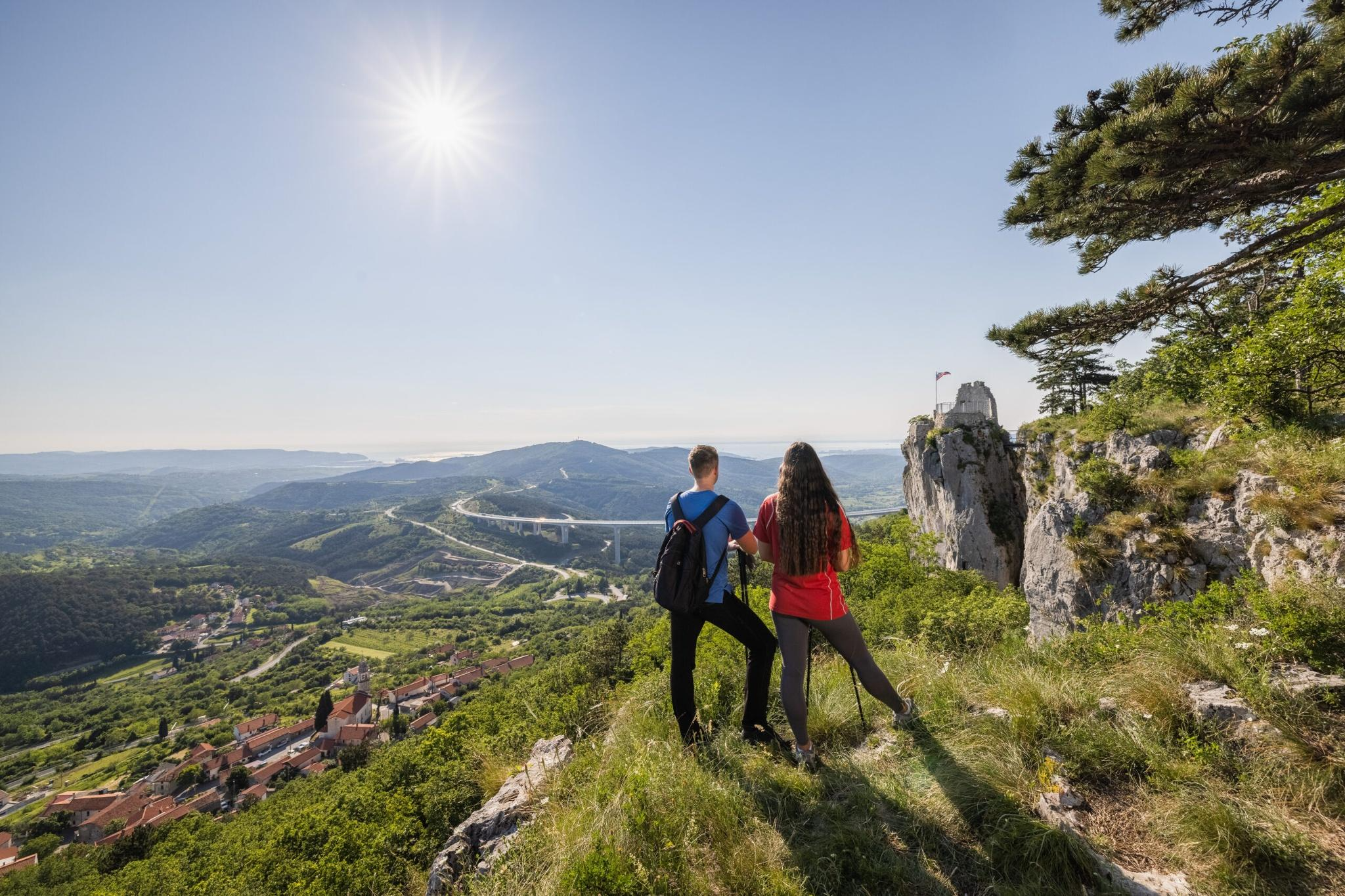
Urban hiking trails around Hrpelje-Kozina are set within a diverse Karst landscape, featuring distinctive limestone topography, wooded valleys, and elevated terrain. The region is characterized by natural features such as dolines and extensive forests, providing varied settings for walks. While Mount Slavnik offers higher elevations, many urban routes explore the lower, more accessible areas. The Glinščica Valley, a nature reserve, also contributes to the area's natural beauty.
Best urban hiking trails around Hrpelje-Kozina
- The most popular urban hiking route is…
Last updated: May 25, 2026
5.0
(1)
35
hikers
6.45km
01:47
110m
110m
Easy hike. Great for any fitness level. Easily-accessible paths. Suitable for all skill levels.
20
hikers
7.41km
02:00
100m
100m
Easy hike. Great for any fitness level. Easily-accessible paths. Suitable for all skill levels.

Sign up for free
6
hikers
Moderate hike. Good fitness required. Easily-accessible paths. Suitable for all skill levels.
5.0
(1)
3
hikers
8.12km
02:12
110m
110m
Moderate hike. Good fitness required. Easily-accessible paths. Suitable for all skill levels.
4
hikers
Easy hike. Great for any fitness level. Easily-accessible paths. Suitable for all skill levels.
Get access to more routes and recommendations from other explorers.
Sign up for free
Already have an account?
Our route recommendations are based on thousands of hikes, rides, and runs completed by other people on komoot.
Start today with a free account
Your next adventure awaits.
Login or Signup

Tips from the Community

👑 Who was Massimiliano? Ferdinand Maximilian of Austria (1832–1867), brother of Emperor Franz Joseph I. Admiral of the Imperial and Royal Navy and builder of Miramare Palace. He was proclaimed Emperor of Mexico in 1864 – a tragic chapter that ended with his execution in 1867. 🏛️ The Monument Unveiled: April 3, 1875, in the presence of Emperor Franz Joseph. Artist: Johann Schilling, Professor at the Academy of Arts in Dresden. Material: Bronze, total height approximately 9 meters. Depiction: Massimiliano in admiral's uniform, facing Miramare Palace. Base: With allegorical reliefs: Figures depicting the four cardinal directions – symbolizing Trieste's global trade relations. Reliefs depicting the navy and merchant marine, the city of Trieste, and Miramare. Medallions with symbols of science, poetry, art, and industry. 🕰️ Historical Turns After 1918: With Trieste's transition to Italy, the monument was removed. 1961: Temporary storage in Miramare Park. 2009: Return to its original location in Piazza Venezia – an act of historical reconciliation.
0
0
The Fontana dei Quattro Continenti in Trieste's Piazza Unità d'Italia is a Baroque masterpiece and a symbol of the city's cosmopolitan identity in the 18th century. 🗺️ Symbolism & History Origin: Created between 1751 and 1754 by the sculptor Giovanni Battista Mazzoleni to celebrate Trieste's rise to a free-trading city under Maria Theresa. Name: The "Four Continents" – Europe, Asia, Africa, and America – symbolize the global reach of trade that Trieste conducted as a port city. Australia was not yet known as a continent at the time. Location: Originally located in the center of the piazza, the fountain was removed in 1938 to make way for a political stage and was only restored and returned in the 1970s. 🧜♂️ Artistic Details Allegorical Figures: Europe with a horse and symbols of power and knowledge. Asia with a camel and exotic goods. Africa with a lion. America with an alligator and feathered headdress. Trieste as the central figure: A winged female figure enthrones the ensemble, resting on the karst cliffs, surrounded by bales, barrels, and ropes – a symbol of the cosmopolitan, welcoming city. Water Sources: Dolphins and river gods spew water into conch shells – a baroque interplay of movement and symbolism
1
0
Monument to Giuseppe Verdi – Piazza San Giovanni First version (1906): Unveiled on January 27, 1906, exactly five years after Verdi's death. At that time, Trieste was still part of the Austro-Hungarian Empire. The Carrara marble statue was created by the sculptor Alessandro Laforêt. Destruction & Symbolism: The original statue was destroyed in 1915 by pro-Austrian forces – not because of Verdi's music, but because of the inscription "VERDI," which was considered a patriotic acronym for "Vittorio Emanuele Re D'Italia." A subtle act of Italian national pride in the heart of Habsburg territory. Re-enactment (1926): After the First World War and the incorporation of Trieste into Italy, the statue was re-erected – this time in bronze, cast from captured Austrian cannons. A triumphant statement that blends art and history. Current condition: The statue underwent extensive restoration in 2024 – including cleaning, a protective varnish, and a layer of wax for preservation. The inscriptions were made legible again, and the monument now shines in renewed splendor. Location: Piazza San Giovanni, behind the Church of Sant'Antonio Taumaturgo, at the end of the Grand Canal – a location that fits perfectly into a cultural and historical itinerary through Trieste.
0
0

Parenzana is a nice route, I recommend it
1
0

Piazza della Borsa is one of the most elegant squares in Trieste – a place that reflects the city's economic rise in the 18th and 19th centuries. Often referred to as the city's "second living room," it is located right next to Piazza Unità d'Italia and marks the transition to the modern city center. 🕰️ Historical Background Originally "Piazza della Dogana" – named after the customs building, later replaced by Palazzo Tergesteo Namesake: The neoclassical Palazzo della Borsa Vecchia, built in 1806 by Antonio Mollari, served as the headquarters of the commercial exchange Importance: Center of commercial life during the Habsburg period – merchants, bankers, and shipowners met here Changes: 1844: Relocation of the stock exchange to Palazzo Tergesteo (Borsa nuova) 1928: Move to Palazzo Dreher
0
0
The Fontana di Nettuno in Trieste is an elegant fountain honoring the Roman sea god Neptune (Italian: Nettuno), located in Piazza della Borsa, one of the city's central squares. Although less monumental than its counterparts in Bologna or Florence, it is a charming example of Trieste's neoclassical urban design. 🏛️ Location & Surroundings 📍 Piazza della Borsa, right next to the old town and close to Piazza Unità d'Italia Surrounded by historic buildings such as the old stock exchange (Borsa Vecchia) and the neoclassical Palazzo Dreher The fountain stands centrally in the square, embedded in the city's life – often crossed by locals and visitors alike 🎨 Design & Symbolism Depiction: Neptune with a trident, flanked by sea creatures – including a stylized horse, which alludes to the mythological connection to the waves Material: Light-colored stone, with bronze accents Style: Neoclassical, with echoes of Baroque fountain art The fountain symbolizes Trieste's maritime identity – as a port city, as a gateway to the Adriatic, and as a place where water and trade have converged for centuries.
0
0
After extensive research, it can be determined: There is no officially confirmed statue of Hermann Hesse in Trieste. Most of the well-known monuments honoring the writer are located in Calw, his birthplace in the Black Forest, including: The statue "Between Staying and Departure" on the Nikolaus Bridge The Knulp sculpture at Sparkassenplatz The Hesse Garden along the Hagbrunnenbach stream 📍 More about the statue in Calw at Komoot 🧭 Hesse and Trieste – a connection? Although Hermann Hesse was not directly connected to Trieste like James Joyce or Italo Svevo, it is conceivable that his work is read and appreciated there – especially in the context of literary modernism and German-language exile literature. If you saw a sculpture in Trieste that resembled Hesse or appeared to be dedicated to him, it could be a temporary installation, a private homage, or a mistake for another author.
3
0
Frequently Asked Questions
How many urban hiking trails are available in Hrpelje-Kozina?
There are 11 curated urban hiking trails around Hrpelje-Kozina, offering a variety of experiences for exploring the city on foot. These routes range from easy strolls to more moderate walks.
Are there easy urban walks suitable for beginners or families?
Yes, Hrpelje-Kozina offers several easy urban walks perfect for beginners or families. For example, the San Genna' Pizzeria Napoletana – Teatro Rossetti loop from Trieste is an easy 5.2 km route that allows for a pleasant exploration of the city without significant elevation changes.
What are some popular circular urban walks in the area?
Many of the urban trails in Hrpelje-Kozina are designed as circular routes, allowing you to start and end at the same point. A popular option is the Unity of Italy Square – Fountain of the Four Continents loop from Trieste, which is an easy 7.4 km walk through notable city areas.
What kind of viewpoints can I expect on urban hikes around Hrpelje-Kozina?
While urban hikes focus on the city, the broader Hrpelje-Kozina region is known for its elevated terrain. Some routes might offer glimpses of the surrounding landscape. For more expansive views, consider exploring highlights like the View of the Gulf of Trieste from Grmada, which provides stunning panoramas.
Are there any challenging urban trails for experienced hikers?
The urban hiking guide for Hrpelje-Kozina primarily features easy and moderate routes. While there are no 'difficult' urban trails listed, some moderate options, such as the Fountain of the Four Continents – Unity of Italy Square loop from Trieste (8.1 km), offer a longer distance and slightly more elevation gain for those seeking a bit more of a workout within the city.
What can I see along the urban hiking trails in Hrpelje-Kozina?
Urban trails often lead through historic quarters and past city landmarks. While specific attractions vary by route, the region itself is rich in history and natural beauty. You might encounter highlights like the State border or enjoy sections of the Friendship Trail that pass through urban fringes.
What do other hikers enjoy most about urban hiking in Hrpelje-Kozina?
The komoot community highly rates the hiking experiences in the Hrpelje-Kozina area, with an average score of 4.6 out of 5 stars from over 2700 ratings. Hikers often praise the diverse Karst landscape, the blend of natural features with cultural monuments, and the well-maintained trail network that allows for varied explorations.
Are there any urban routes that pass by significant historical sites?
Yes, some urban routes in the region are designed to take you past historical points of interest. For example, the Tsumi Home – Water trough loop from Risiera di San Sabba / Rižarna pri Sveti Soboti is a moderate 8.8 km route that includes areas with historical significance, such as the Risiera di San Sabba.
What is the longest urban hike available in this guide?
The longest urban hike featured in this guide is the Tsumi Home – Water trough loop from Risiera di San Sabba / Rižarna pri Sveti Soboti, which spans approximately 8.87 kilometers and is rated as moderate.
Can I find urban hikes that are relatively short but still offer a good experience?
Absolutely. If you're looking for a shorter urban walk, the Tsumi Home – Chiesa di San Giacomo loop from Stadio Giuseppe Grezar is an excellent choice. This easy route covers about 6.45 kilometers, perfect for a refreshing stroll through the city.
Most popular routes around Hrpelje-Kozina
Most popular attractions around Hrpelje-Kozina

Get inspired with the komoot mobile app


Explore more
Browse the best Hikes in other regions.
