The best MTB trails around Saint-Mesmin
4.3
(6)
42
riders
5
rides
There are some great mountain biking routes around Saint-Mesmin — but how do you know where to go? Well, we’ve reviewed our full collection of mtb routes around Saint-Mesmin to bring you the best. Explore them all below.
Last updated: June 27, 2026
4.0
(1)
14
riders
Moderate mountain bike ride. Good fitness required. Suitable for all skill levels.
4.5
(2)
11
riders
62.1km
03:07
70m
70m
Moderate mountain bike ride. Good fitness required. Suitable for all skill levels.

Sign up for free
3.5
(2)
7
riders
22.8km
01:15
20m
20m
Easy mountain bike ride. Great for any fitness level. Suitable for all skill levels.
1
riders
22.4km
01:47
180m
180m
Easy mountain bike ride. Great for any fitness level. Suitable for all skill levels.
4.5
(2)
2
riders
18.5km
01:25
140m
140m
Easy mountain bike ride. Great for any fitness level. Suitable for all skill levels.
Our route recommendations are based on thousands of hikes, rides, and runs completed by other people on komoot.
Start today with a free account
Your next adventure awaits.
Login or Signup
Tips from the Community

Église Saint-Pantaléon (Troyes) This 16th-century church is a hidden gem in the heart of Troyes' old town. From the outside, it looks rather simple, but be sure to step inside: the interior is richly filled with exceptional wooden sculptures and stained-glass windows that beautifully filter the warm, soft light. The statues and saints seem to come to life and offer a beautiful glimpse into religious art in Champagne during the Renaissance. The church is dedicated to Saint Pantaléon, the patron saint of physicians, a fact reflected in some of the details and ornamentation. Thanks to its tranquil atmosphere and refined craftsmanship, it's a place to slow down—perfect for a stroll through Troyes. Tip: Take your time looking up; the wooden sculptures are at various heights and are easy to miss if you walk too quickly. (Troyes) This 16th-century church is a hidden gem in the heart of Troyes' old town. From the outside, it looks rather simple, but be sure to step inside: the interior is richly filled with exceptional wooden sculptures and stained-glass windows that beautifully filter the warm, soft light. The statues and saints seem to come to life and offer a beautiful glimpse into religious art in Champagne during the Renaissance. The church is dedicated to Saint Pantaléon, the patron saint of physicians, a fact reflected in some of the details and ornamentation. Thanks to its tranquil atmosphere and refined craftsmanship, it's a place to slow down—perfect for a stroll through Troyes. Tip: Take your time looking up; the wooden sculptures are at various heights and are easy to miss if you move too quickly.
1
0
Fun facts & legends • In 1789, the police wanted to put up fences because the alley was notorious as a meeting place for lovers. • A local legend tells of a pregnant woman who was miraculously saved when a wall “moved aside” in front of her belly. • The street is also said to have played a role during epidemics: the many cats helped keep rat populations under control. Why visit? • Very photogenic: One of the most photographed places in Troyes – often featured on postcards. • Historic and romantic: Perfect for those who love medieval towns and hidden gems. • Nearby: You’ll also find cozy cafés and a cat café (“Troyes Petits Chats”), plus a pretty courtyard called Cour du Mortier d’Or and the Jardin Juvénal-des-Ursins.
3
0
The Ruelle des Chats, or Cat Alley, is one of the most charming and famous streets in the old town of Troyes, located in the Champagne region of France. ⸻ 🏛️ History & Architecture • Medieval origins: The alley dates back to the 15th century and was rebuilt after a major fire in 1524. • Why the name “Cat Alley”?: The houses are built so that their upper floors almost lean against each other. It is said that a cat could jump from one roof to the other — hence the name. • Typical half-timbering: The street is paved with a gutter in the middle for rainwater, and the houses are half-timbered with wooden beams that stabilize the whole. ⸻ 🌆 Atmosphere & charm • Romantic appearance: The narrow passage and leaning facades create a mysterious, almost fairytale-like atmosphere. • Reconstruction: In 2014, several half-timbered houses were rebuilt based on old prints and photos. • Preserved thanks to heritage protection: In the 1960s, the street was saved from demolition by the efforts of heritage organisations and Minister André Malraux.
3
0
Troyes Cathedral (in French: Cathédrale Saint-Pierre-et-Saint-Paul de Troyes) is the main religious building in the French city of Troyes. The cathedral is dedicated to the holy apostles Peter and Paul. Construction of the cathedral began in 1208 and was not completed until the 17th century, in the Gothic style. The church is the seat of the bishopric of Troyes in the Roman Catholic Church. In 1420, the cathedral was the solemn meeting place for the signing of the Treaty of Troyes. Nine years later, Joan of Arc visited the cathedral when she accompanied King Charles VII to Reims. The building was protected as immovable heritage and was given the status of a French classified monument historique in 1862.
3
0
Place de la Libération in Épernay is a historic and symbolic place. It is the focal point of the commemoration of the liberation of the city, which took place on 28 August 1944. This square is also known for the monument to the martyrs of the Resistance, which honours the memory of the resistance fighters who died.
3
0

The impressive Troyes Cathedral was begun in the 12th century and completed in the 17th century. The structure is truly impressive. Don't miss a visit to the interior.
1
0

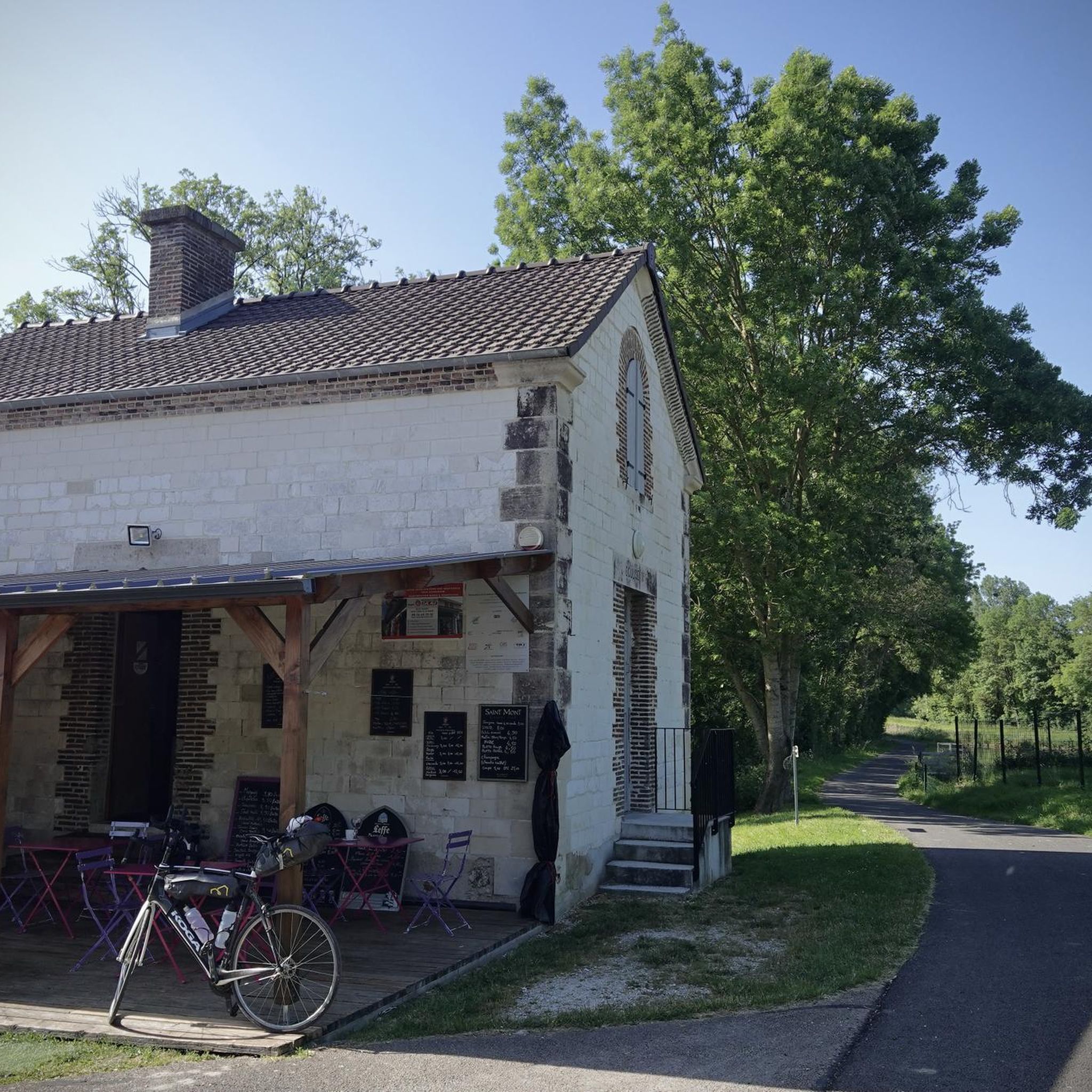
A "chemin de halage", in German "treidelpfad", which runs alongside the waterway right next to the bed of the river or canal, was an indispensable part of the transport infrastructure in earlier times. Before ships could move using motor power, horses ran along the bank and pulled the ship against the current. This was called "treideln", and this is how the "treidelpfads" got their name, which has been passed down to this day. Where these paths directly on the bank have been preserved, they are often used by hikers and cyclists.
0
0
The cathedral in Troyes was dedicated to Saints Peter and Paul (SAINTS PIERRE et PAUL), also known as the "Prince of the Apostles." Their common feast day in the calendar of saints is June 29th. * Simon, nicknamed Peter (Rock), was a fisherman on the Sea of Galilee when he, along with his brother Andrew, was called by Jesus Christ to be a "fisher of men." According to Catholic understanding, he is the highest apostle, and the two-millennia-long line of popes—currently Francis—follows his succession. In statues and paintings, Peter is almost always depicted with two keys in his hand; this attribute refers to the biblical passage in Matthew: "I will give you the keys of the kingdom of heaven; whatever you bind on earth will be bound in heaven, and whatever you loose on earth will be loosed in heaven." (Chapter 16, Verse 19). * Paul was initially an opponent of the Christian movement and, unlike the other apostles, was not called to the apostleship by Jesus Christ during his lifetime. Instead, he was converted later with the famous "Damascus Experience." His attribute is the sword with which he was executed. According to Roman law at the time, such a sentence was a "privilege" (a quick death, not a long, painful death struggle like other forms of execution) reserved for the citizens of Rome.
3
1
Most popular attractions around Saint-Mesmin

Get inspired with the komoot mobile app


Explore more
Browse the best MTB trails in other regions.
