Top 4 Castles around Faches-Thumesnil
Best castles around Faches-Thumesnil are found in the surrounding region, as the commune itself, located south-east of the Lille agglomeration in the Nord department of France, does not feature prominent historical castles open to the public. The area offers several notable châteaux, providing opportunities to explore the rich history and architectural heritage of the Nord department. These historical sites near Faches-Thumesnil include structures with significant architectural features and cultural offerings.
Best castles around Faches-Thumesnil
- The most popular castles is Kasteel…
Last updated: June 25, 2026
Citadel Pasture
Highlight • Historical Site
Translated by Google •
Tip by

Château de La Fontaine
Highlight • Castle
Translated by Google •
Tip by

Sign up now to discover places like this
Get recommendations on the best single tracks, peaks, & plenty of other exciting outdoor places.
Sign up for free
Kasteel van Flers
Highlight • Other
Translated by Google •
Tip by

Citadel of Lille
Highlight • Historical Site
Translated by Google •
Tip by

Robersart Castle
Highlight • Castle
Translated by Google •
Tip by

Start today with a free account
Your next adventure awaits.
Login or Signup


Tips from the Community

Nice, rolling section with no traffic.
0
0

The Château de Flers, bearing the date "1661" on its facade, was originally the residence of the Lords of Flers. It was destroyed during the French Revolution of 1789, but not confiscated because it belonged at that time to a foreign nobleman, the Baron de Diesbach. In the 19th and 20th centuries, the château enjoyed a second life as a farm: the salon, apartment, and reception hall were converted into a barn, cowshed, and stables. In 1968, with a view to the development of a new town east of Lille, the château was expropriated by the state and, in 1973, entrusted to the Public Institution for the Development of the New Town of Lille-East. The municipality of Villeneuve-d'Ascq became the owner in 1986. They completed the restoration of the building, which had been entrusted from the outset to architect Maurice Salembier. After restoring its 17th-century appearance, the Château de Flers began a third life as a municipal building in 1991. Today, it houses various services, the tourist office, rooms for official receptions, and a museum. Source: Information board on site
0
0

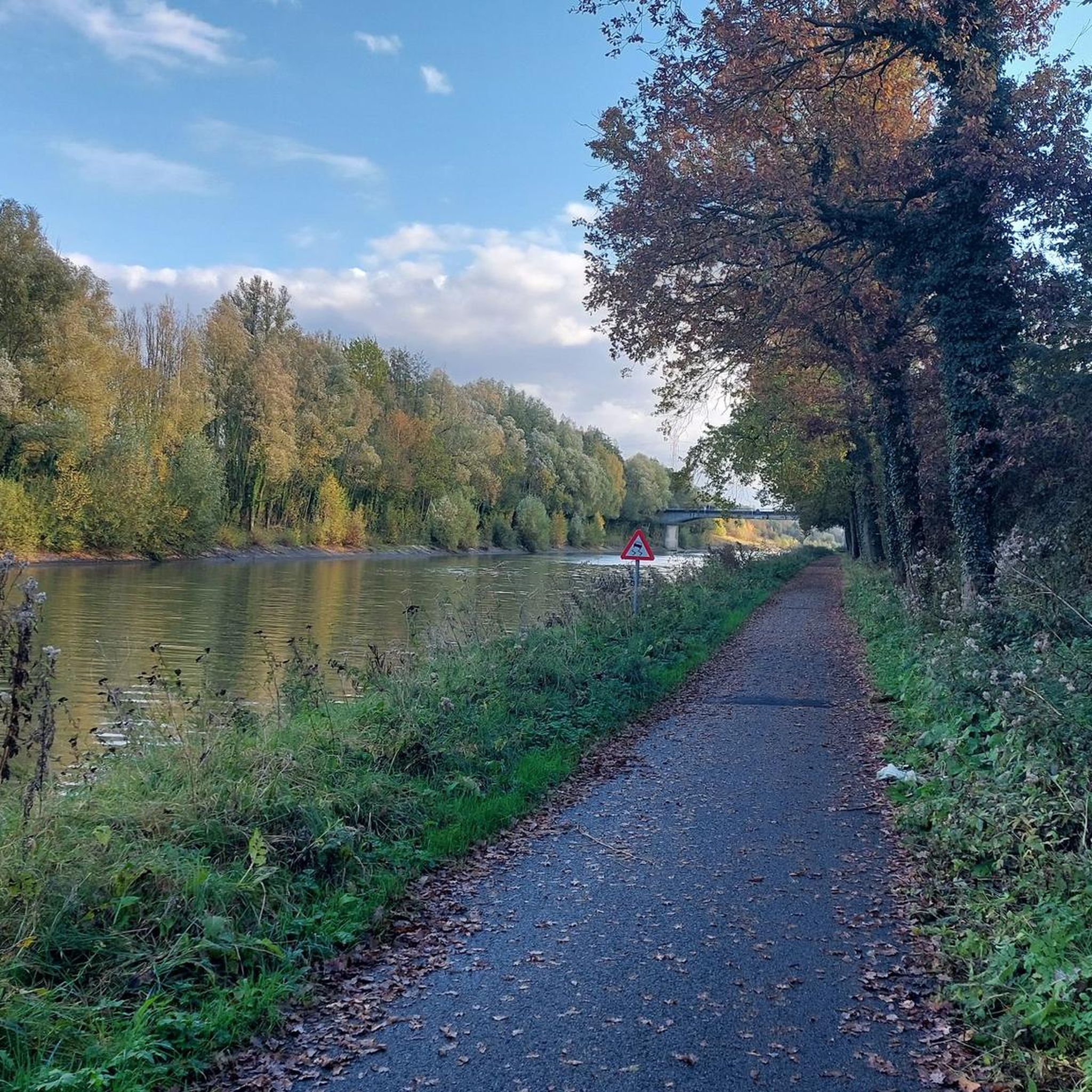
Along the fortified moats of the Citadel of Lille.
1
0

If you are patient, you might see the Countess...
0
1


The Citadel of Lille was built between 1667 and 1670 on the orders of Louis XIV when he conquered the city. It is Vauban's first major fortified work. The large wood surrounding the citadel is surrounded by the Deûle and its canals. You will find superb single tracks there, with small bumps and passages over roots.
2
0

This historical monument, under the control of the Ministry of Defense, is the Citadel of Lille and the Museum of the Sedentary Artillerymen. It is called the Queen of Citadels, built by Vauban in 1670. The building is in the shape of a regular pentagon, reinforced by powerful bastions, within which the buildings are arranged in a star shape to form a large central courtyard. Around it and open to the public at all times is a beautiful park (with a zoo and a playground), but if you stay on the path, you walk along this star.
6
0

Always nice to be able to get out of the city center so easily!
0
1
Frequently Asked Questions
What kind of historical castles can I visit near Faches-Thumesnil?
While Faches-Thumesnil itself doesn't have traditional castles open to the public, the surrounding region offers several notable châteaux. You can explore the 17th-century Flemish architecture of Kasteel van Flers, the Renaissance-style Robersart Castle, or the impressive bastion fortress of the Citadel of Lille.
Are there any family-friendly castles or historical sites in the area?
Yes, several sites are suitable for families. The Citadel of Lille is surrounded by a large park with a zoo and a playground, offering plenty of space for children to explore. Kasteel van Flers also has a surrounding park that visitors can enjoy.
Can I find castles with significant architectural styles near Faches-Thumesnil?
Absolutely. The region boasts diverse architectural styles. Kasteel van Flers is a prime example of 17th-century Flemish architecture, built with red brick and stone. Robersart Castle showcases a beautiful Renaissance style, primarily constructed from red brick and white Lezennes stone. The Citadel of Lille is a masterpiece of military architecture by Vauban.
What outdoor activities are available around the castles near Faches-Thumesnil?
Many castles are set within large parks or natural areas, perfect for outdoor activities. Around the Citadel of Lille, you can enjoy walking and cycling through its extensive park, which also features superb single tracks for mountain biking. For more structured routes, you can explore various cycling and hiking trails around the region. For example, the 'Deûle Canal – Canteraine Park loop' is popular for cycling, and the 'Pavé des Periseaux loop' offers easy hiking. You can find more details on these routes in the Cycling around Faches-Thumesnil and Hiking around Faches-Thumesnil guides.
Is there parking available at these castles?
Yes, parking is generally available. For instance, Robersart Castle has a parking lot directly in front of it. The Citadel of Lille is surrounded by a large park, and parking can typically be found nearby.
Are there any castles that are easily accessible by public transport?
Yes, both Kasteel van Flers in Villeneuve-d'Ascq and the Citadel of Lille are generally well-served by public transport from the Lille metropolitan area. For specific routes and schedules, it's best to check local public transport information.
What is the best time of year to visit the castles near Faches-Thumesnil?
The castles and their surrounding parks are enjoyable throughout the year. Spring and summer offer pleasant weather for exploring the grounds and enjoying outdoor activities. Autumn provides beautiful foliage, while winter visits can offer a quieter, more atmospheric experience, though some indoor attractions might have reduced hours. Always check specific opening times before your visit.
Are dogs allowed at the castles or in their surrounding parks?
While specific rules vary by site, the large parks surrounding places like the Citadel of Lille are generally dog-friendly, often with designated areas or trails where dogs are permitted on a leash. For indoor museum areas or specific château interiors, dogs are typically not allowed. It's advisable to check the individual site's policy before visiting.
Are there any hidden gem castles worth exploring near Faches-Thumesnil?
The Château de La Fontaine in Croix is considered a hidden gem. This majestic 19th-century residence, rebuilt after the First World War, houses the Institut Fontaine and features a beautiful 40-hectare park. It offers a tranquil escape and a glimpse into the region's history and permaculture.
Do these castles offer guided tours or cultural events?
Many of the châteaux serve as cultural venues. Kasteel van Flers houses a museum and tourist office, often hosting exhibits. Robersart Castle has been fully restored and functions as a cultural venue for the municipality. The Château de La Fontaine also offers guided tours to learn about its history and environment. It's recommended to check their official websites for current event schedules and tour availability.
What is the historical significance of the castles in this region?
The castles around Faches-Thumesnil offer a rich tapestry of regional history. Kasteel van Flers, dating back to 1661, provides insight into 17th-century Flemish life before the region's reattachment to France. The Citadel of Lille is a crucial example of 17th-century military engineering by Vauban, built under Louis XIV. Robersart Castle, with origins in the 13th century, reflects the evolution of seigniorial dwellings in the area.
Most popular routes around Faches-Thumesnil
Most popular attractions around Faches-Thumesnil

Get inspired with the komoot mobile app


Explore more
Looking for the best castles somewhere else? Discover other guides around Faches-Thumesnil:
