The best gravel rides around Lissey
4.5
(2)
32
riders
5
rides
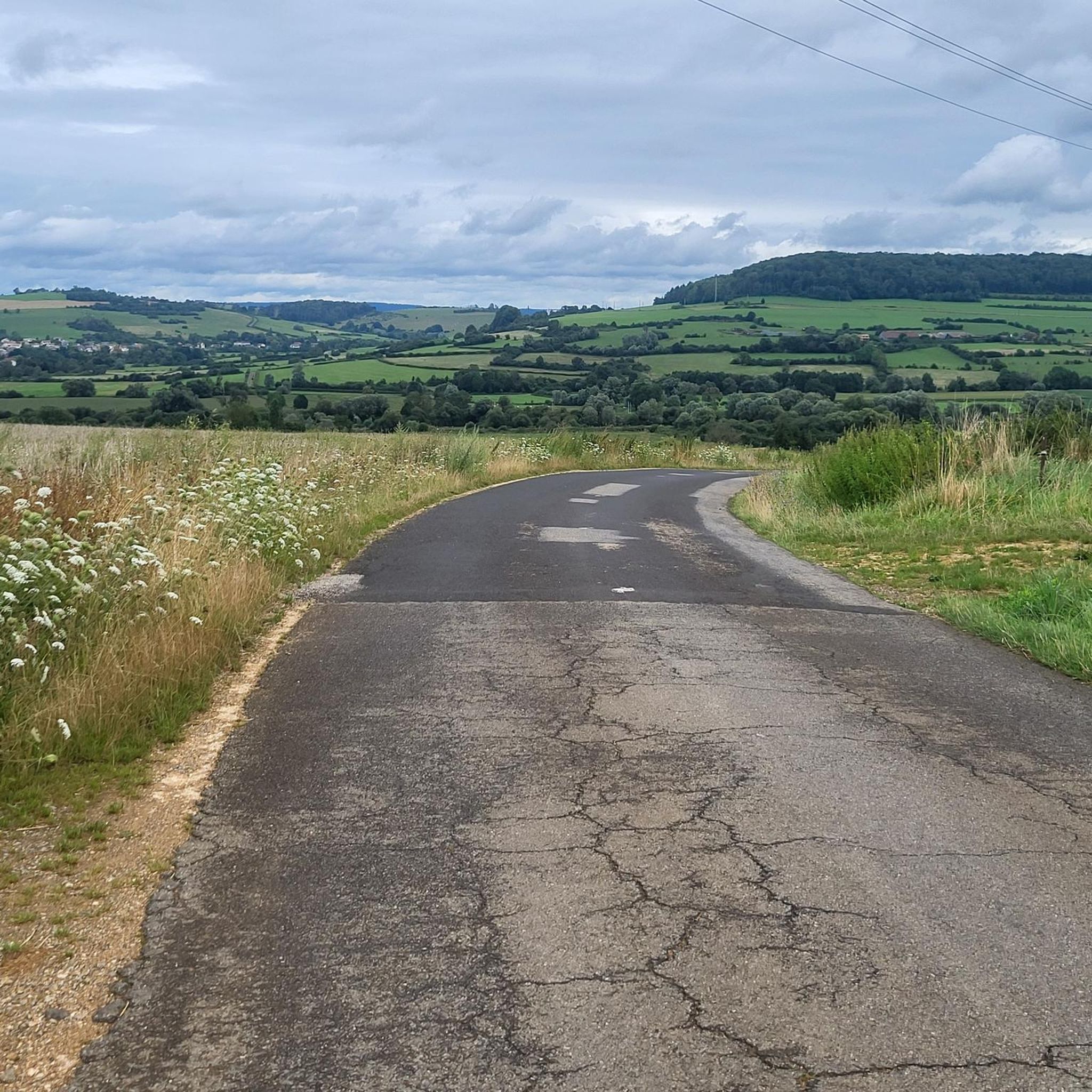
Gravel biking around Lissey offers a diverse landscape characterized by rolling countryside, river valleys, and historical landmarks. The region features a network of unpaved roads and trails suitable for gravel bikes, often traversing through forests and open fields. Riders can expect varied terrain, including sections along the Meuse river and routes connecting historical sites. The area provides opportunities for long-distance rides with notable elevation gains.
Best gravel bike trails around Lissey
- The most popular gravel bike trail is Mouzon – The Meuse loop from Murvaux, a difficult 110.6 miles (178.0 km) trail that takes about 10 hours 18 minutes to complete. This route explores the Meuse river valley with significant elevation changes.
- Another top favourite among local gravel bikers is Verdun Citadel – The Meuse loop from Murvaux, a difficult 83.9 miles (135.0 km) path. This trail combines historical exploration around Verdun with scenic stretches along the Meuse.
- Local gravel bikers also love the Citadel of Montmédy – Saint Martin's Church loop from Damvillers, an 80.3 miles (129.2 km) trail leading through varied terrain with substantial climbing, often completed in about 8 hours 30 minutes.
- Gravel biking around Lissey is defined by river valleys, historical sites, and rolling countryside, with routes offering options for moderate to difficult ability levels.
- The routes in Lissey are highly rated by the komoot community with an average score of 4.5 stars from over 2 reviews. More than 31 gravel bikers have used komoot to explore Lissey's varied terrain.
Last updated: July 5, 2026
11
riders
135km
07:50
710m
710m
Hard gravel ride. Very good fitness required. Mostly paved surfaces. Suitable for all skill levels.
5.0
(1)
14
riders
178km
10:18
1,140m
1,140m
Hard gravel ride. Very good fitness required. Mostly paved surfaces. Suitable for all skill levels.

Sign up for free
2
riders
33.9km
02:43
570m
570m
Hard gravel ride. Very good fitness required. Mostly paved surfaces. Suitable for all skill levels.
4.0
(1)
4
riders
129km
08:37
1,490m
1,490m
Hard gravel ride. Very good fitness required. Mostly paved surfaces. Suitable for all skill levels.
1
riders
31.3km
02:00
370m
370m
Moderate gravel ride. Good fitness required. Mostly paved surfaces. Suitable for all skill levels.
Our route recommendations are based on thousands of hikes, rides, and runs completed by other people on komoot.
Start today with a free account
Your next adventure awaits.
Login or Signup


Tips from the Community

Verdun is a very beautiful city that has been very important since the Middle Ages. It's lovely to walk through the place and admire it.
1
0

You can walk all the way around the ramparts. We found it unique and impressive. The museum was also interesting.
0
0

The Meuse at Verdun plays a crucial role in both the landscape and the history of the region. Cutting deeply through the hilly terrain, it has provided a natural defensive advantage—something that became painfully clear during the Battle of Verdun in 1916, one of the longest and bloodiest battles of the First World War. In addition to its strategic importance, the Meuse also has a more peaceful face: it flows peacefully along the banks of the city of Verdun, connecting the past with the present in a landscape that breathes history.
6
0
It is nice to see that the water level of the canal is much higher than the water level of the stream.
8
0
This impressive American WWI memorial was dedicated in 1937 to commemorate the victory of the American First Army during the Meuse-Argonne Offensive (26 September – 11 November 1918). The 54-metre-high Doric granite column, designed by John Russell Pope, is topped by a statue symbolising liberty. The monument stands on the hill of Montfaucon, where a medieval monastery once stood and where the Americans achieved a strategic victory in 1918.
9
0
Inaugurated in 1928, this war memorial in Verdun honours the city’s inhabitants who died for France in both world wars. It was built on the remains of a military butcher’s shop, on the crescent of the Chaussée, a 17th-century fortification. The sculpture depicts five soldiers – a cavalier, an engineer, an infantryman (poilu), an artilleryman and a territorial – forming a symbolic wall under the motto of Verdun: “On ne passe pas”.
8
0
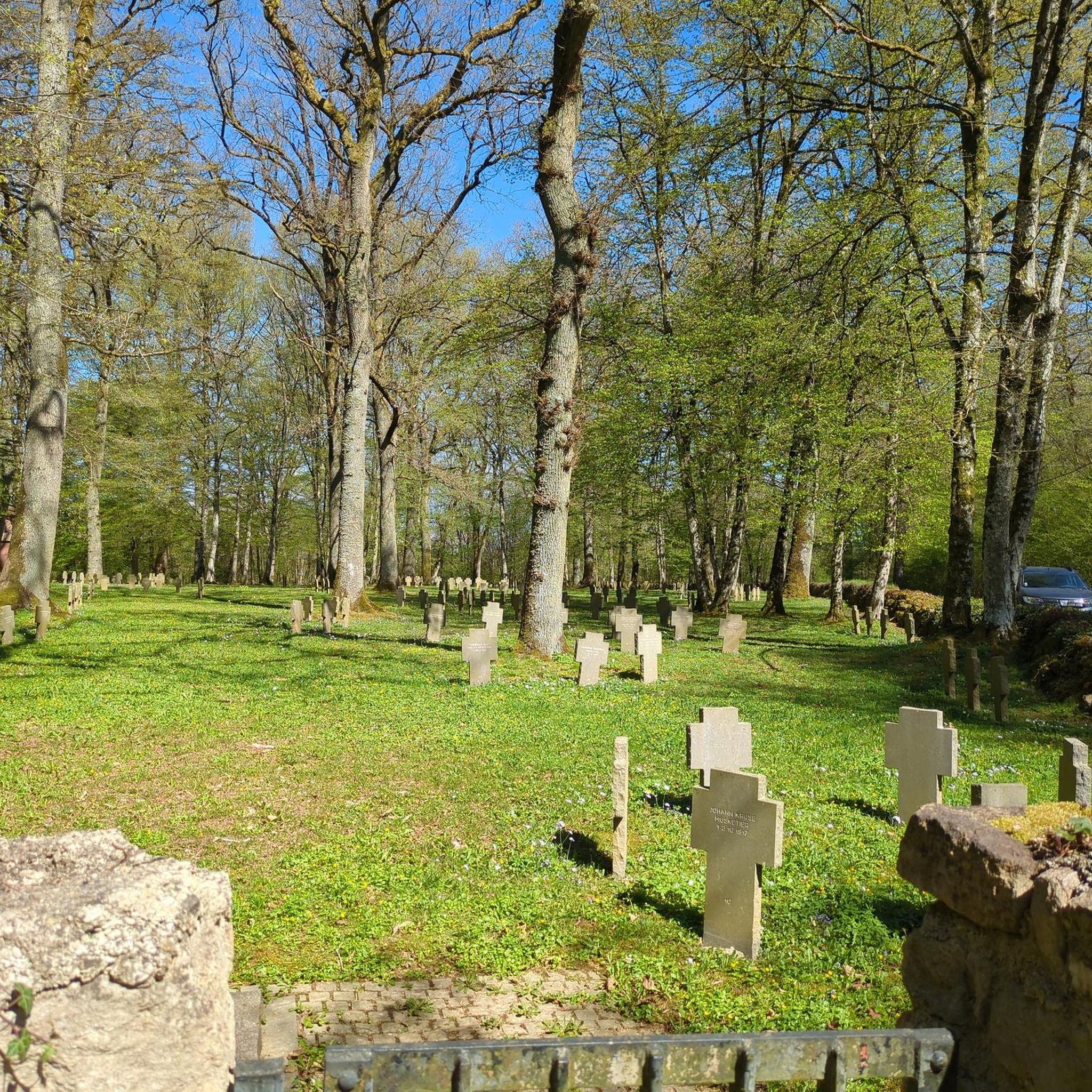
Among the thousands of fallen soldiers who rest here is Caporal Louis Micol, a soldier of the 19th Battalion of Chasseurs à Pied. He was not only a soldier, but also the founder of one of the first French front newspapers: Le Son du Cor, a trench newspaper written by and for soldiers. Micol died on 18 September 1915 in Brabant-en-Argonne and is buried in grave no. 390. His story is a reminder that even in the midst of the violence of war, soldiers sought ways to make their voices heard, share experiences and preserve their humanity.
7
2
Military cemetery created in 1916 during the Battle of Verdun. It contains the remains of 6,537 French soldiers, including 2,000 in ossuaries. Most of them died in 1916 on the right bank of the Meuse, near strategic points such as Côte 344 and Thiaumont. In 1961, 151 soldiers who died in the Second World War were also buried there. The necropolis covers 3.2 hectares and was set up between 1919 and 1934
7
2
Frequently Asked Questions
How many gravel bike trails are available around Lissey?
There are 5 curated gravel bike routes around Lissey, offering a range of experiences for different skill levels.
What is the general difficulty level of gravel biking routes in the Lissey area?
The majority of gravel bike routes around Lissey are considered difficult, with 4 out of 5 routes falling into this category. These routes often feature significant elevation changes and longer distances, providing a challenging experience for seasoned riders.
Are there any moderate gravel bike routes suitable for intermediate riders?
Yes, there is one moderate gravel bike route available: the Louppy-sur-Loison Castle – Marville Renaissance Village loop from Louppy-sur-Loison. This route offers a less strenuous option while still providing an engaging ride through the local landscape.
What kind of landscapes can I expect to see while gravel biking near Lissey?
While specific details for Lissey are limited, regions ideal for gravel biking typically offer diverse terrain. You can expect to traverse varied surfaces like dirt roads and forest paths, often through rolling hills and river valleys. The area likely provides scenic views and a blend of lowland byways and backcountry roads.
Are there any family-friendly gravel biking options in the Lissey area?
Given that most routes around Lissey are rated as difficult, and the moderate route is still quite long (31.3 km), there are no explicitly family-friendly gravel biking options listed that would be suitable for young children or beginners. These routes are generally geared towards more experienced riders.
Can I bring my dog on the gravel bike trails around Lissey?
While many outdoor trails in France are dog-friendly, it's always best to check local regulations for specific paths or protected areas. Generally, if dogs are permitted, they should be kept on a leash, especially in areas with wildlife or livestock. Be prepared to carry water for your dog, as sources may be limited on longer routes.
What are some notable landmarks or attractions I can visit along the gravel bike routes?
Several routes pass near interesting historical sites and attractions. For instance, you can explore the Marville Renaissance Village and the Saint-Nicolas Church of Marville. Another route takes you close to the Beautiful castle, church and ancient fortifications, and the Fresco tribute to the soldiers of 14-18.
Are there any circular gravel bike routes available?
Yes, several routes are designed as loops. For example, the Main Square of Marville loop from Marville and the Marville Renaissance Village loop from Louppy-sur-Loison are both circular, allowing you to start and end at the same point.
What is the best time of year to go gravel biking in Lissey?
The best time for gravel biking in the Grand Est region of France, where Lissey is located, is typically during spring (April to June) and autumn (September to October). During these seasons, the weather is generally mild, and the landscapes are particularly beautiful. Summers can be warm, while winters may bring colder temperatures and potentially challenging trail conditions.
Where can I find parking for gravel biking routes near Lissey?
While specific parking locations are not detailed for each route, it is common for trailheads in rural French areas to have small parking lots or designated roadside parking. For routes starting from villages like Marville or Louppy-sur-Loison, you can often find parking in or near the village center.
Is it possible to access the gravel bike trails around Lissey using public transport?
Public transport options in rural areas like Lissey can be limited. While some larger towns in the Meuse department may have train or bus connections, reaching specific trailheads directly by public transport with a bike might be challenging. It's advisable to check regional bus schedules or consider driving to the starting points.
Are there any places to stop for refreshments or food along the gravel bike routes?
The routes often pass through or near small villages such as Marville, Louppy-sur-Loison, or Damvillers. These villages may offer local cafes, bakeries, or small shops where you can refuel. However, it's always recommended to carry sufficient water and snacks, especially on longer routes, as services can be sparse in rural areas.
What do other gravel bikers say about the trails in Lissey?
The gravel biking experience around Lissey is highly rated by the komoot community, with an average score of 4.5 stars. Riders often praise the challenging nature of the routes and the opportunity to explore the region's diverse landscapes and historical sites.
Most popular attractions around Lissey

Get inspired with the komoot mobile app


Explore more
Browse the best Gravel rides in other regions.
