Top 20 Natural Monuments around Selbitz
Natural monuments around Selbitz, a town in Upper Franconia, Bavaria, are characterized by diverse geological formations and rich biodiversity. The region features the Selbitz river valley, including the notable Höllental, which has carved deep gorges over millions of years. Surrounding areas offer significant natural landmarks such as the Döbraberg, providing expansive views. These natural features contribute to a landscape valued for both its ecological importance and recreational opportunities.
Best natural monuments around Selbitz
- The most popular natural monuments is König David Viewpoint, a viewpoint offering expansive views of the Höllental and the Franconian Forest. This spot provides a rewarding panorama after a climb.
- Another must-see spot is Höllental (Frankenwald Nature Park), a gorge known for its natural beauty and accessibility. It serves as a central point for hiking and cycling, featuring viewpoints like König David and Hirschsprung.
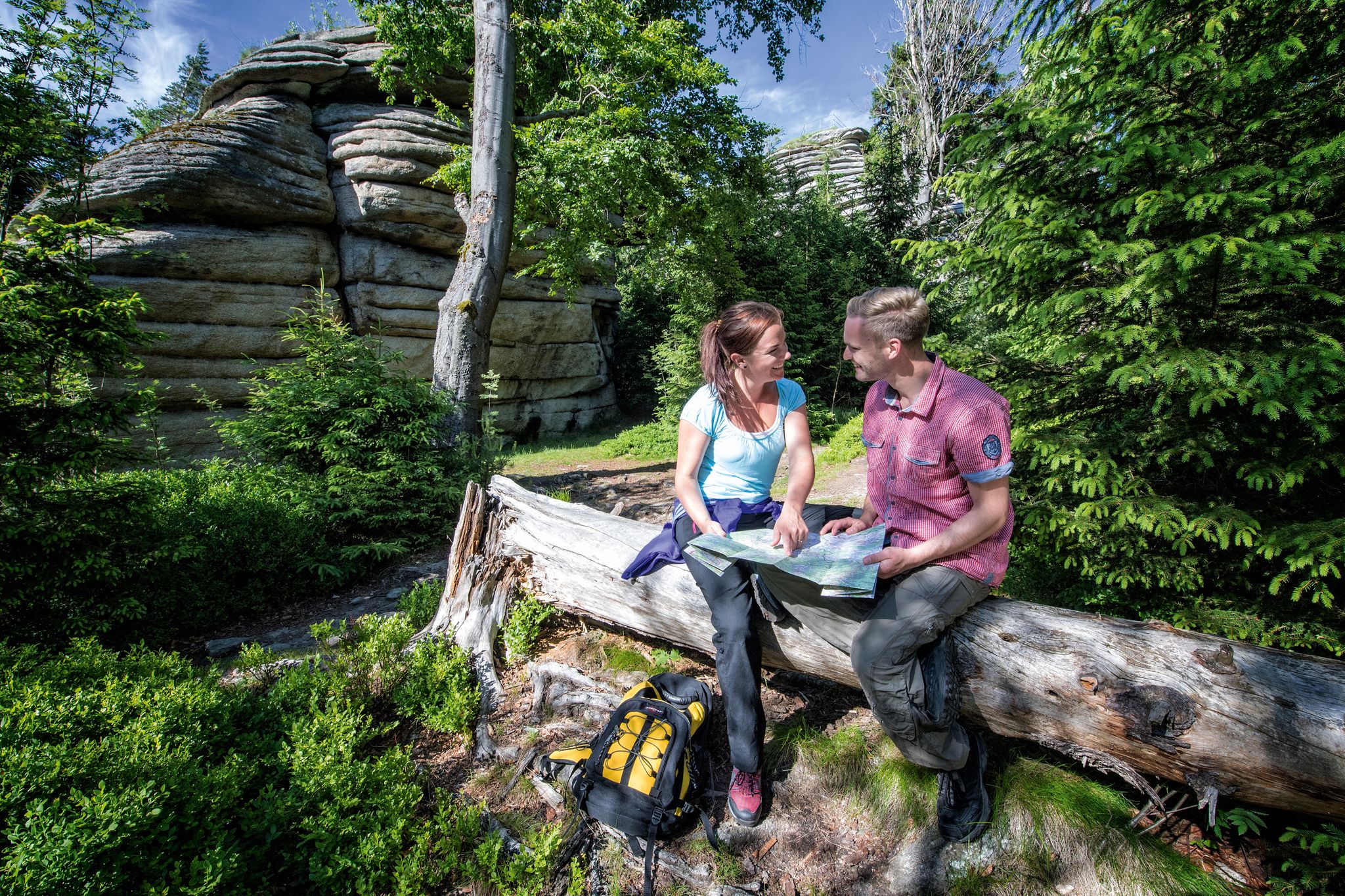
- Visitors also love Rock Path Höllental, a varied hiking trail. This path offers an alternative route through the Höllental with viewpoints and sections over rocks.
- Selbitz is known for its gorges, valleys, and viewpoints. The region offers a variety of natural monuments to see and explore, from deep river valleys to elevated scenic overlooks.
- The natural monuments around Selbitz are appreciated by the komoot community, with more than 1000 upvotes and nearly 1000 photos shared by visitors.
Last updated: September 28, 2026
👹 Höllental (Hell Valley)
Highlight (Segment) • Bridge
Source and further information
frankenwald-tourismus.de/de/poi/detail/595260c3975aaf0aba5a1fab
Translated by Google •
Tip by

Teufelssteg — Across the Selbitz
Highlight (Segment) • Bridge
Translated by Google •
Tip by

Sign up now to discover places like this
Get recommendations on the best single tracks, peaks, & plenty of other exciting outdoor places.
Rock Path Höllental
Highlight (Segment) • Trail
Translated by Google •
Tip by

König David Viewpoint
Highlight • Viewpoint
Translated by Google •
Tip by
Höllental (Frankenwald Nature Park)
Highlight • Gorge
Translated by Google •
Tip by
Sign up for free to discover even more natural monuments around Selbitz.
Already have an account?
Start today with a free account
Your next adventure awaits.
Other adventures around Selbitz

Tips from the Community

A remarkable wooden bridge over the Selbitz River and a very popular photo subject in the Höllental Valley. According to legend, the Prince of Hell was once seen on the Devil's Bridge.
12
0

A very impressive wooden bridge over the Sebnitz in the Höllental, it is an angled bridge
12
1
A very impressive wooden bridge over the Sebnitz in the Höllental.
11
0

There are some worthwhile viewpoints on rocky outcrops along the rock path 👍🏻
9
1
Great wooden bridge 🤩 I personally find the view from the bridge fascinating 😊, almost like a gorge in the Alps with lots of small rocks 🫶🏻
12
1

A beautiful and very varied hiking trail. A good alternative to the valley path.
14
1
A beautiful wooden bridge worth seeing. There are two wooden bridges in the Höllental Valley. The Jungfernsteg and the Teufelssteg.
18
1

Really nice tour through the Höllental. Nature is still fine there. Along the Selbitz stream you can listen to the rushing of the water and the chirping of the birds. Just gorgeous. Not to forget the rock formations to the right and left.
3
0
Frequently Asked Questions
What natural features can I explore around Selbitz?
The Selbitz region offers a diverse landscape of natural monuments. You can explore deep river valleys like the Höllental, which has been carved by the Selbitz river over millions of years. There are also elevated scenic overlooks such as the König David Viewpoint, offering expansive views of the Franconian Forest. Additionally, the area features unique geological sites like the Former Quarry east of Selbitz, known for its fossil-bearing slate and diabase intrusions.
Are there any significant geological sites near Selbitz?
Yes, the region around Selbitz is rich in geological interest. The Former Quarry east of Selbitz is particularly notable, featuring fossil-bearing Tentakulitenschiefer (tentaculites slate) and local intrusions of Diabas (diabase). The Höllental itself is a geological marvel, formed by the Selbitz river cutting up to 170 meters deep into the ground over millennia. The summit of the nearby Döbraberg is also composed of hard Kieselschiefer (chert slate).
What makes the Höllental a popular natural monument?
The Höllental is a central point for natural beauty and recreation. Visitors appreciate its romantic scenery, accessibility, and the variety of hiking and cycling opportunities it offers. It features picturesque spots like the Teufelssteg (Devil's Steg), and provides access to viewpoints like König David and Hirschsprung. The gorge is also known for its unique ecosystem and the powerful water fountain at the Höllenthal hydroelectric power station.
What kind of hiking trails can I find near these natural monuments?
The area around Selbitz offers a variety of hiking trails. For instance, the Rock Path Höllental provides a varied route with viewpoints and sections over rocks, requiring good footwear. Many routes lead through the Höllental, connecting to places like Lichtenberg, Kemlas, and Bad Steben. You can find more detailed hiking options in the Running Trails around Selbitz guide, which includes routes like the 'View from Garlesfelsen – View of Naturpark Frankenwald loop from Selbitz'.
Are there family-friendly natural monuments or activities in the Selbitz area?
Yes, the Höllental is considered family-friendly, offering an accessible and engaging nature experience. While the Rock Path Höllental can be more challenging, the comfortable walk along the Selbitz river is suitable for families. The overall area provides gentle paths and scenic spots that can be enjoyed by all ages. Many routes are designed to integrate stops at nice restaurants, making for a pleasant family outing.
What is the Döbraberg and what does it offer visitors?
The Döbraberg is a significant natural landmark near Selbitz, standing at nearly 800 meters high. Its summit features the Prinz-Luitpold-Turm, an observation tower built in 1902, which offers expansive panoramic views of the surrounding Franconian Forest. It's a popular spot for outdoor activities, with numerous marked trails for hikers, Nordic walkers, and mountain bikers in summer, and is favored for cross-country skiing in winter.
What outdoor activities can I do near the natural monuments around Selbitz?
Beyond hiking, the region around Selbitz offers various outdoor activities. You can explore gravel biking routes, such as the 'Bleiloch Dam – Bleiloch Reservoir loop from Blankenstein (Saale)' found in the Gravel biking around Selbitz guide. Mountain biking is also popular, with trails like the 'Froschbach Stream – Höllental Forest Trail loop from Selbitz' detailed in the MTB Trails around Selbitz guide. The Höllental itself is a hotspot for both hiking and cycling.
What do visitors enjoy most about the natural monuments in Selbitz?
Visitors frequently praise the stunning views and the immersive nature experience. The König David Viewpoint is highly regarded for its rewarding panorama after a climb. The Höllental is cherished for its romantic atmosphere and the feeling of being in a 'quaint gem of nature'. Many appreciate the well-developed trails and the opportunity to enjoy a break on a bench while taking in the scenery.
Is the Former Quarry east of Selbitz accessible to visitors?
The Former Quarry east of Selbitz is recognized as a Natura 2000 site and a protected landscape component, highlighting its ecological value. While it's an important area for biodiversity and geological study, access details for visitors are best confirmed locally. It's known for its open, sparsely vegetated rock and scree sites, providing specialized habitats.
Are there any unique natural habitats or biodiversity hotspots in the Selbitz area?
Yes, the Former Quarry east of Selbitz is a significant biodiversity hotspot. Covering approximately 34 hectares, it has transformed into an 'ecological oasis' providing a variety of specialized habitats. It serves as a refuge for warm-loving species, with clear, nutrient-poor standing waters in quarry pits and rocky slopes offering microhabitats for rare plant and insect species. The area is actively maintained by goat grazing to preserve its open character.
What is the best time of year to visit the natural monuments around Selbitz?
The natural monuments around Selbitz can be enjoyed throughout the year, depending on your preferred activities. Spring and summer are ideal for hiking, cycling, and enjoying the lush greenery and biodiversity. Autumn offers beautiful scenery with changing foliage. In winter, the Döbraberg becomes a popular spot for cross-country skiing, and the snow-covered landscapes offer a different kind of natural beauty.
Are there options for food and accommodation near the natural monuments?
Yes, the region offers various options for food and accommodation. Many hiking routes, especially those integrated with the Höllental, include stops at nice restaurants. Towns like Selbitz, Lichtenberg, Bad Steben, and Naila provide cafes, guesthouses, and other lodging options for visitors exploring the natural monuments.
Most popular routes around Selbitz
Most popular attractions around Selbitz

Get inspired with the komoot mobile app


Explore more
Extend your search for the best caves by checking out these guides of the top ones around Selbitz:
