Frauenberger und Duschlberger Wald
Frauenberger und Duschlberger Wald
Top 20 Natural Monuments around Frauenberger und Duschlberger Wald
Natural monuments around Frauenberger und Duschlberger Wald encompass a 21.049 km² unincorporated territory in the Freyung-Grafenau district of Bavaria. This region is characterized by unique geological formations and diverse natural landscapes. Visitors can explore prominent features such as the Dreisessel mountain and impressive rock formations. The area offers opportunities to observe significant geotopes and historical border points.
Best natural monuments around Frauenberger und Duschlberger Wald
- The most popular natural monuments is Tripoint Monument (Germany–Austria–Czech Republic), a man-made and natural…
Last updated: July 8, 2026
Dreisessel Rock
Highlight • Natural Monument
Impressive along the way is especially the "Stone Sea", a huge cluster of large …
Translated by Google •
Tip by

Tripoint Monument (Germany–Austria–Czech Republic)
Highlight • Monument
If …
Translated by Google •
Tip by

Sign up now to discover places like this
Get recommendations on the best single tracks, peaks, & plenty of other exciting outdoor places.
Sign up for free
Stone Sea at Plöckenstein
Highlight (Segment) • Natural Monument
Translated by Google •
Tip by

ridgeway
Highlight • Trail
Translated by Google •
Tip by

Hochstein Summit (Dreisesselberg)
Highlight • Summit
Translated by Google •
Tip by

Sign up for free to discover even more natural monuments around Frauenberger und Duschlberger Wald.
Sign up for free
Already have an account?
Start today with a free account
Your next adventure awaits.
Login or Signup
Popular around Frauenberger und Duschlberger Wald
Nordwaldkamm trail – Hiking between the Czech Republic and Austria
The Goldsteig – 38 stages between Upper Palatinate and Passau
Cycling around Frauenberger und Duschlberger Wald
Hiking around Frauenberger und Duschlberger Wald
Mountain Hikes around Frauenberger und Duschlberger Wald
MTB Trails around Frauenberger und Duschlberger Wald
Road Cycling Routes around Frauenberger und Duschlberger Wald
Running Trails around Frauenberger und Duschlberger Wald

Gravel biking around Frauenberger und Duschlberger Wald
Other adventures around Frauenberger und Duschlberger Wald


Tips from the Community

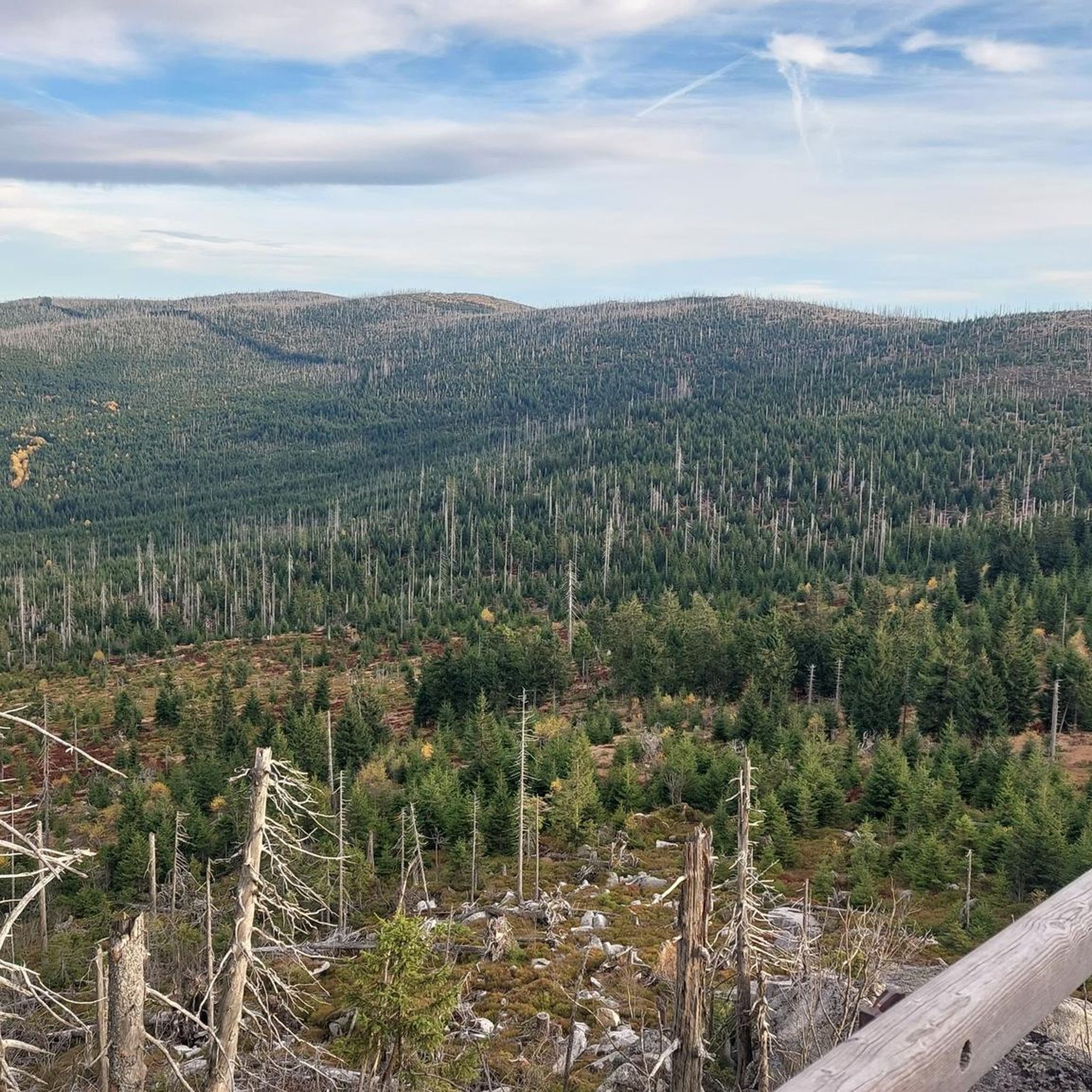
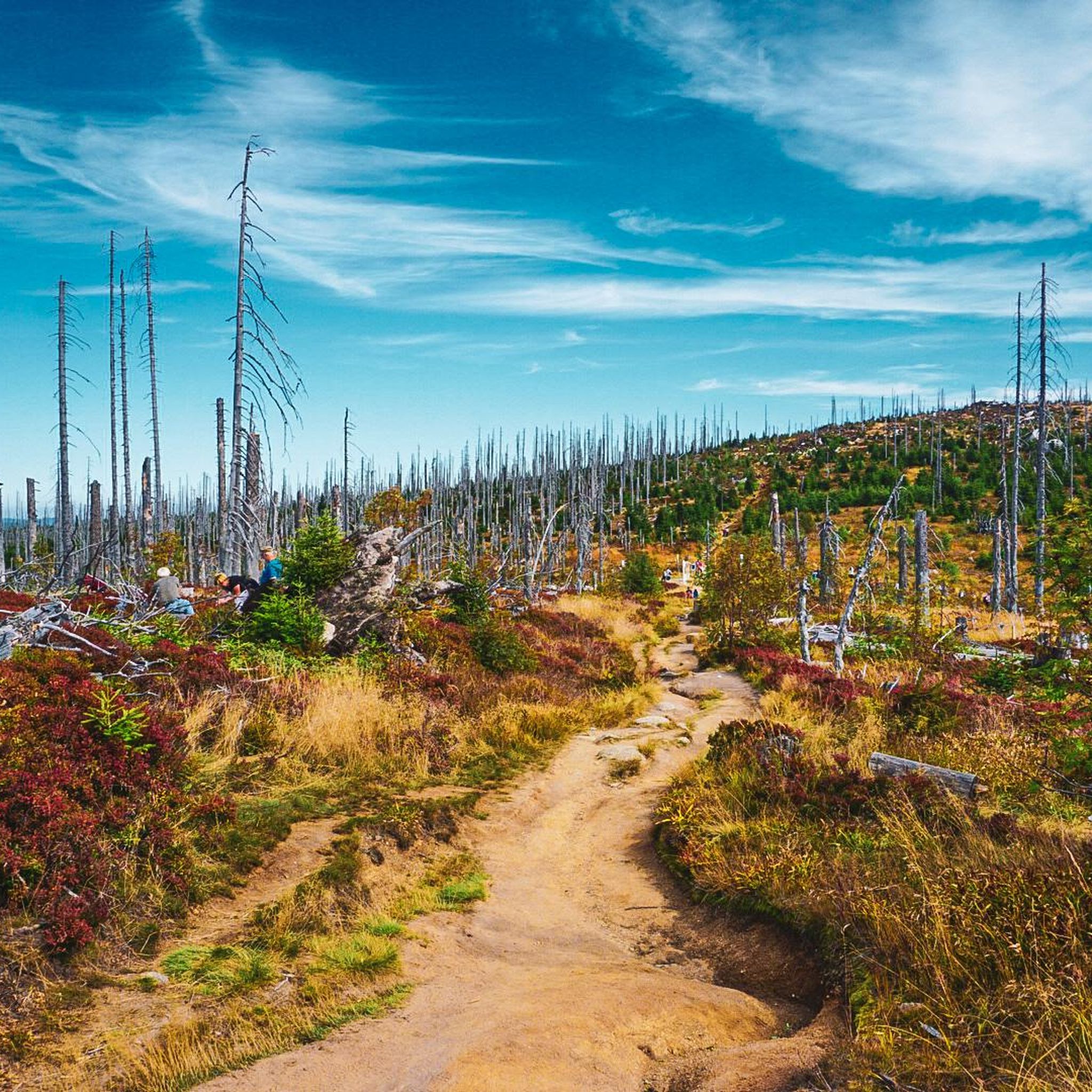
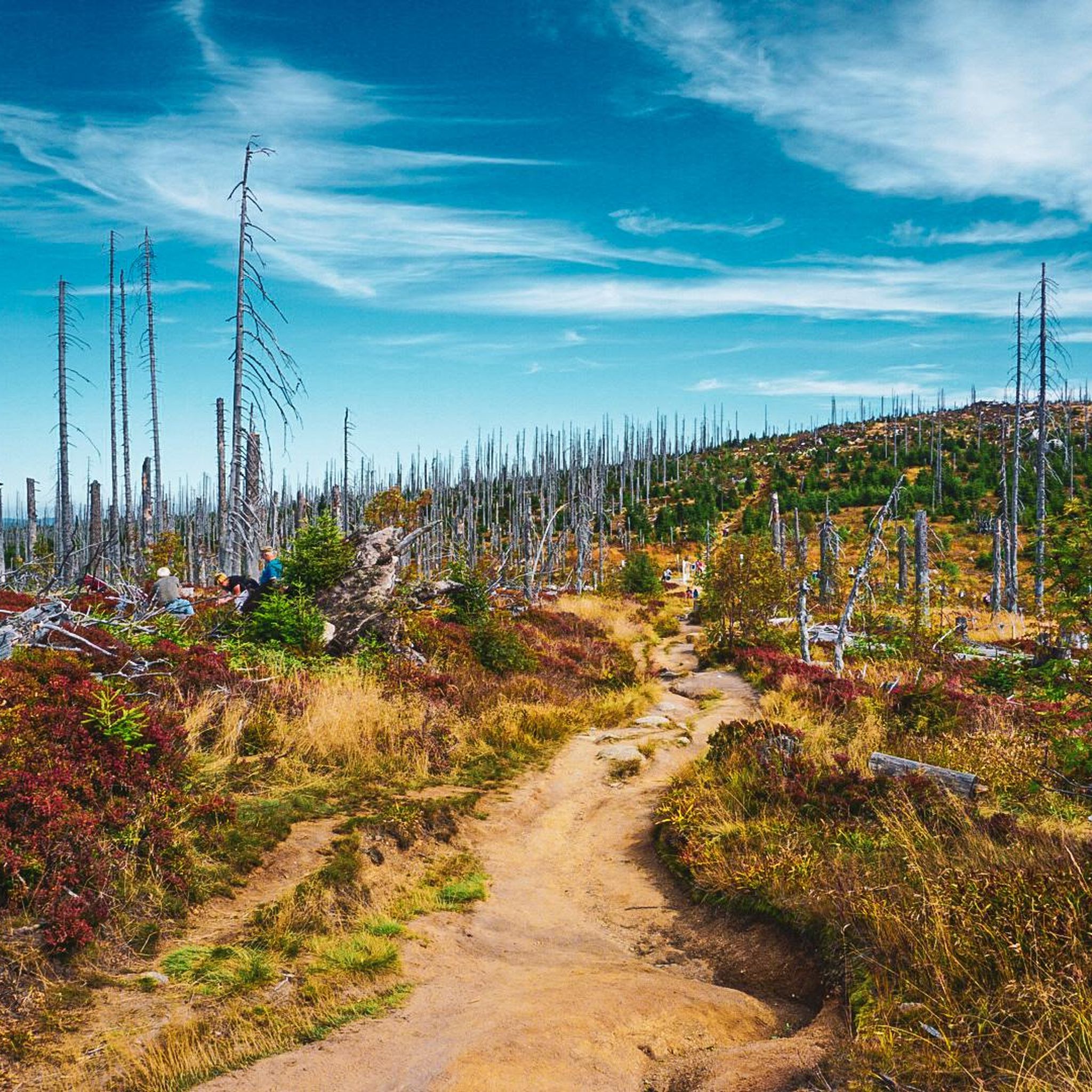
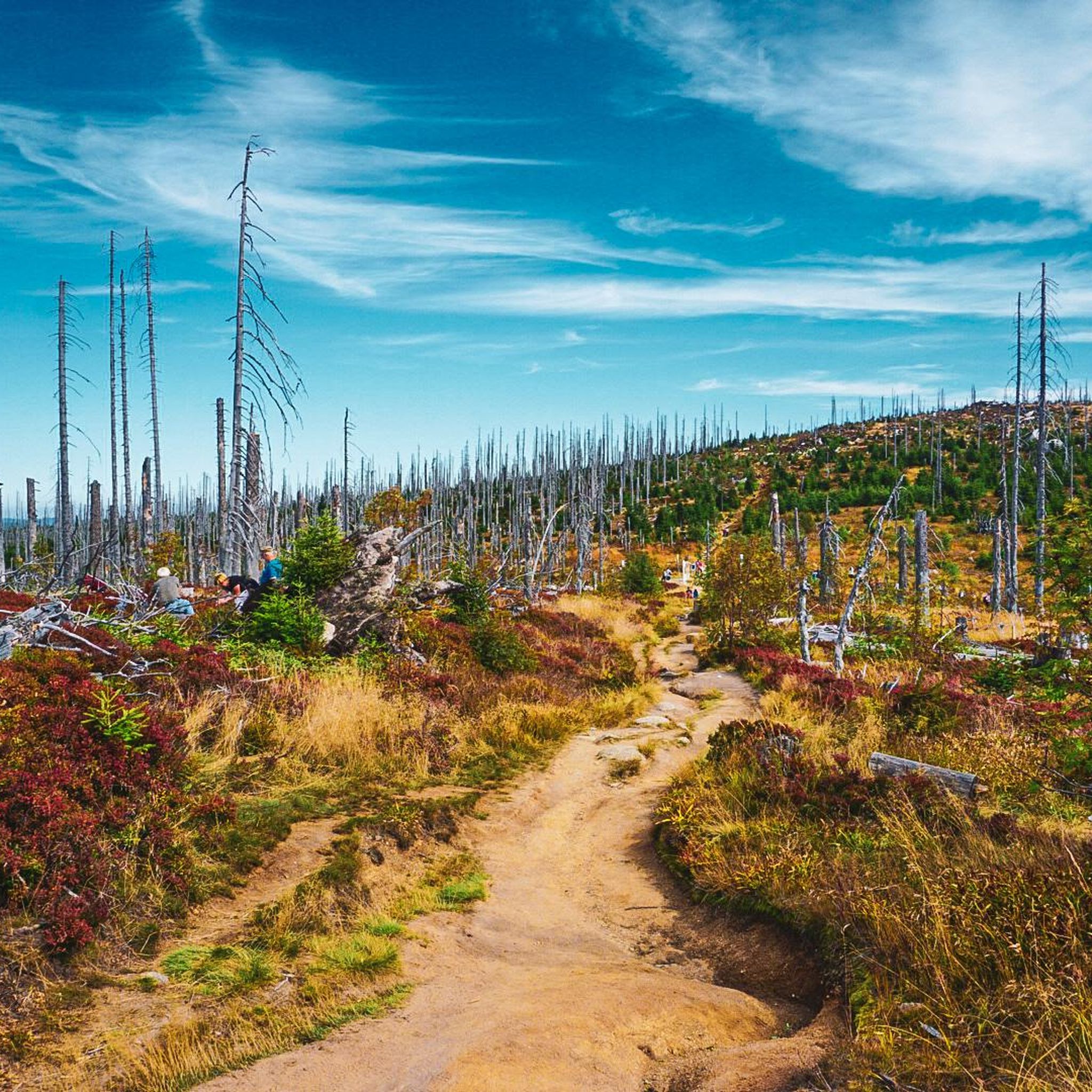
A path, which is partly heavily blocked and surrounded by thousands of dead trees, leads from the Dreisessel to the border triangle. The Hochkammweg is a really beautiful hiking trail. There are also wonderful views of the Bohemian Forest.
5
0
The Dreisessel in the Bavarian Forest border triangle is one of the most popular excursion and hiking destinations. Well-signposted paths lead to its peaks Dreisesselfels, Hochstein and Bayerischer Plöckenstein (Czech: Trojmezná hora), offering a wonderful view of the Bavarian Forest, the Bohemian Forest and the Mühlviertel.
5
0
A path, which is partly heavily blocked and surrounded by thousands of dead trees, leads from the Dreisessel to the border triangle. The ridge path is a really beautiful hiking trail. There are also beautiful views of the Bohemian Forest.
5
0

It is located in the Lower Bavarian district of Freyung-Grafenau around 370 m (as the crow flies) northwest of the German-Czech border. The mighty rock with a large summit cross can be climbed via a stone staircase. The panorama ranges from the Plöckenstein over parts of the Bohemian Forest, the Almberg, the Haidel and the Lusen to the Rachel. On a clear day, you can see as far as the Alps. Due to the public Dreisesselstraße, which leads to the Dreisesselhaus ("Berggasthof Dreisessel"), which is almost 450 m (as the crow flies) south of the Hochstein, the Dreisesselberg, especially the Hochstein, is often heavily frequented. But there are also marked hiking trails from all directions, for example from the Kreuzbachklause, from Haidmühle-Frauenberg or the Czech Nové Údolí to the Hochstein.
8
0

... worth a visit in every season ... Great hike
8
0
Always beautiful. A different, very special setting.
5
0

great view especially in the evening light
5
0

A wonderful view but also a lot going on
4
0
Frequently Asked Questions
What unique geological formations can I explore in Frauenberger und Duschlberger Wald?
The region is rich in unique geological features. You can explore the impressive Stone Sea at Plöckenstein, a vast accumulation of large granite boulders formed during earlier ice age periods. Another significant site is the Hochstein-Felsformation, known for its distinctive 'Wollsackbildung' (wool sack weathering) of coarse-grained crystal granite, showcasing ancient erosion processes.
Are there any natural monuments with historical significance in the region?
Yes, the Dreisessel Rock holds historical anecdotes. Legend has it that the name 'Dreisessel' (three chairs) originated from a meeting where the kings of Bavaria, Bohemia, and Austria sat on the rock to define their kingdoms' borders. Additionally, the Tripoint Monument (Germany–Austria–Czech Republic) marks a historical border convergence point.
What kind of panoramic views can I expect from the natural monuments?
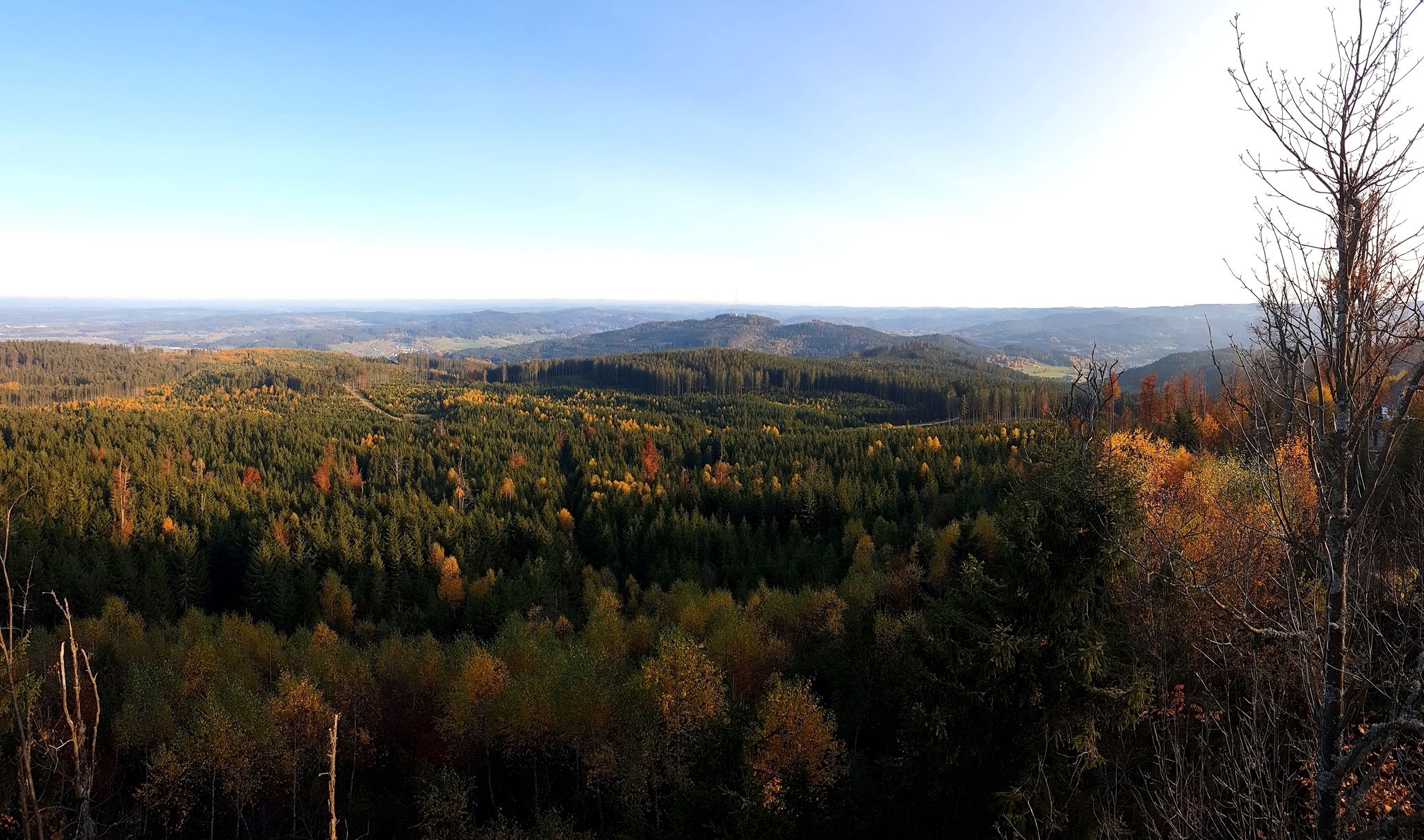
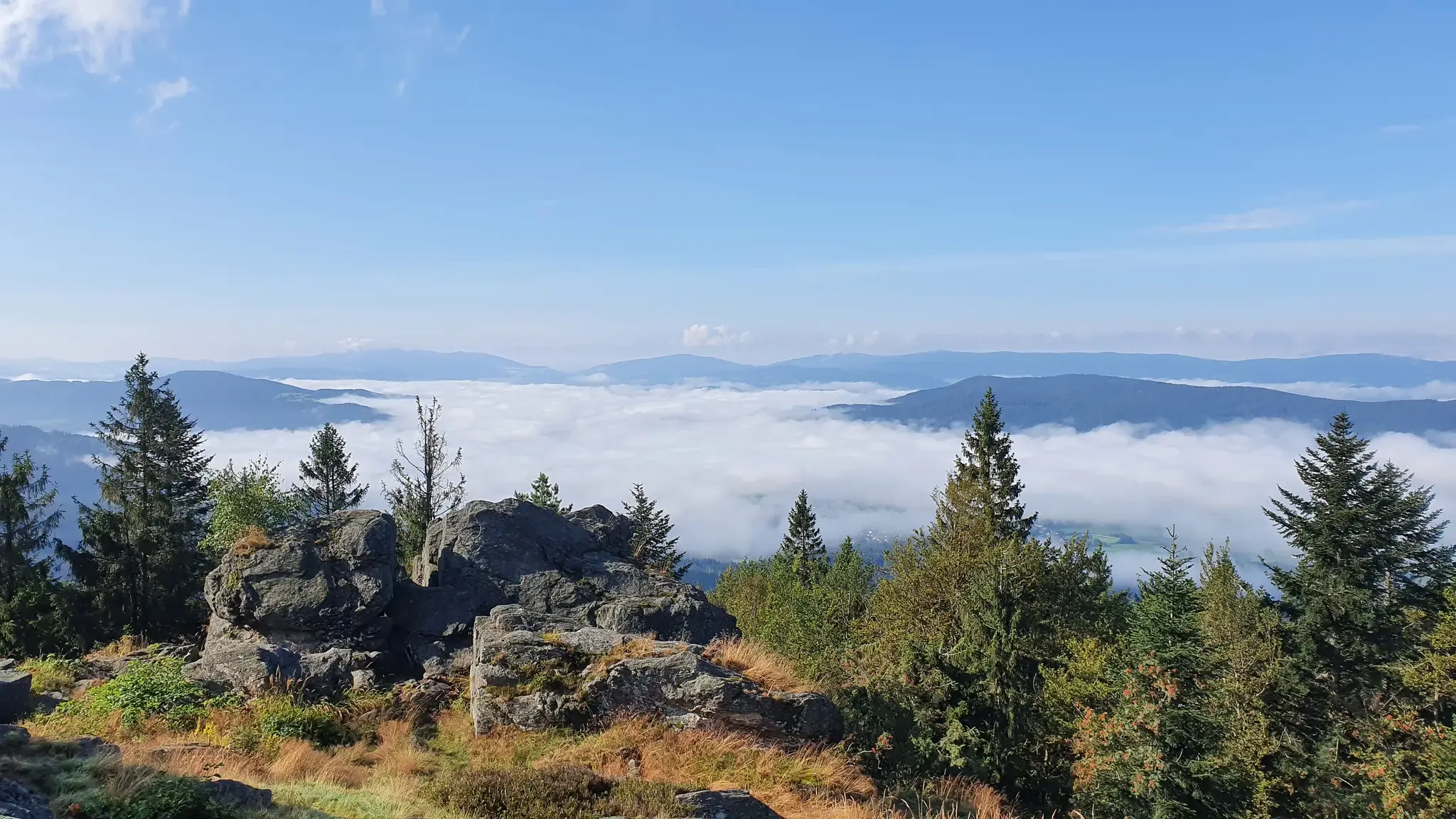
From the summit of Dreisessel Rock, you can enjoy unparalleled panoramic views over the Bavarian Forest and the Passau region. Even from the Stone Sea at Plöckenstein, there are great vistas of the Bavarian Forest.
What do visitors particularly enjoy about the natural monuments here?
Visitors appreciate the combination of challenging hikes, unique geological formations, and breathtaking panoramic views. The Dreisessel Rock is particularly popular for its striking appearance and the historical context. The Tripoint Monument offers a unique experience of crossing three national borders within a few steps, and the Stone Sea at Plöckenstein is considered one of Bavaria's most beautiful geotopes.
Are there hiking trails suitable for different difficulty levels near the natural monuments?
Yes, the area offers a variety of hiking trails. For example, you can find an easy 5.3 km loop from Frauenberg to the Dreisesselhaus Mountain Inn and Dreisessel Rock. More challenging options include a 7.5 km difficult loop from Urwald am Dreisessel to Kreuzbach Pond and Guardian Rock, or a 19 km difficult trail to Plöckenstein and the Hochwald Deadwood Area. You can find more details on these and other routes in the Hiking around Frauenberger und Duschlberger Wald guide.
Can I find family-friendly natural monuments or trails in the Frauenberger und Duschlberger Wald area?
While specific 'family-friendly' tags are not always present for natural monuments, many trails in the region are suitable for families. The 3.9 km easy loop from Urwald am Dreisessel to Stiftermühle Water Wheel and Kreuzbach Waterfalls offers a pleasant experience. When planning, consider the 'easy' difficulty rated hiking routes in the Hiking around Frauenberger und Duschlberger Wald guide.
Are the natural monuments and trails dog-friendly?
Many natural areas in the Frauenberger und Duschlberger Wald are dog-friendly, but it's always recommended to keep dogs on a leash, especially in nature reserve areas or near wildlife. Be mindful of other hikers and ensure you clean up after your pet. Good footwear is required on trails, and some paths can be slippery, so ensure your dog is comfortable with varied terrain.
What other outdoor activities are available near the natural monuments?
Beyond hiking, the Frauenberger und Duschlberger Wald area offers excellent opportunities for cycling and mountain biking. You can explore routes like the 46.6 km moderate bike loop from Haidmühle celnice, or the 17.3 km moderate MTB trail to the Haidel Observation Tower. For more options, check out the Cycling around Frauenberger und Duschlberger Wald and MTB Trails around Frauenberger und Duschlberger Wald guides.
What is the best time of year to visit the natural monuments in Frauenberger und Duschlberger Wald?
The natural monuments are beautiful year-round. Spring and autumn offer pleasant temperatures for hiking and vibrant foliage. Summer is ideal for longer days and warmer weather, though it can be busier. Winter provides a unique, quiet experience with snow-covered landscapes, especially around the Tripoint Monument, but requires appropriate winter gear and caution on potentially icy paths.
Are there parking facilities available near the natural monuments' trailheads?
Yes, parking facilities are generally available near popular trailheads leading to the natural monuments. For instance, there are parking areas accessible for visitors heading towards the Dreisessel Rock and the Tripoint Monument. It's advisable to check local signage for specific parking regulations and fees.
What should I wear or bring for a visit to the natural monuments?
Good footwear is essential, especially when traversing areas like the Stone Sea at Plöckenstein, where paths can be uneven and slippery, particularly after rain. Layered clothing is recommended to adapt to changing weather conditions, and bringing water, snacks, and a map or GPS device is always a good idea for longer hikes.
Can I observe wildlife around the natural monuments?
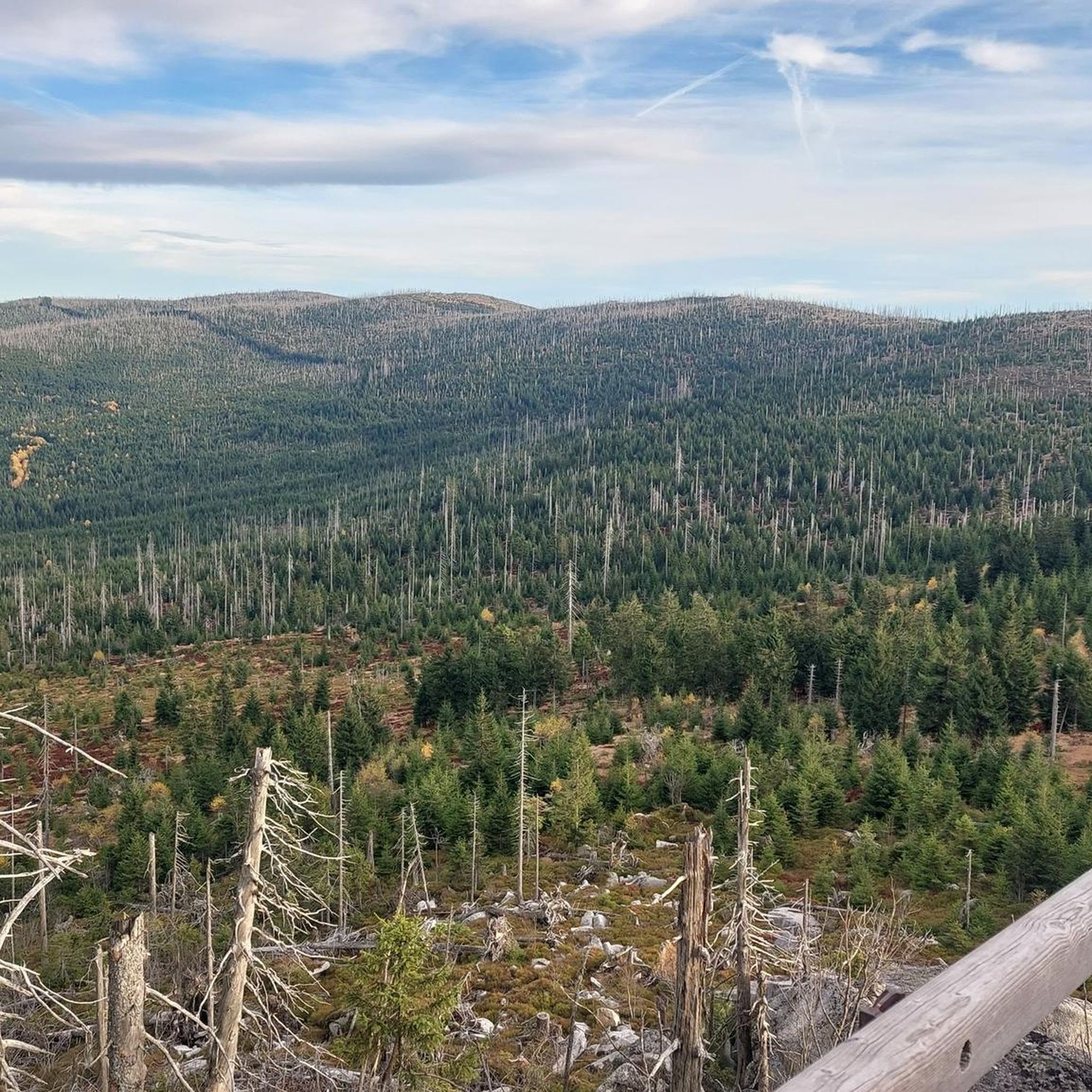
The Frauenberger und Duschlberger Wald area is part of a natural landscape, offering opportunities for wildlife spotting. While specific sightings are never guaranteed, you might encounter various forest animals and birds. The Hochwald Deadwood Area, where nature is reclaiming its habitat, can be a particularly interesting spot to observe ecological regeneration and the creatures that thrive in such environments.
Are there any 'hidden gems' or less-known natural features worth exploring?
Beyond the prominent sites, the region features the Felsformation Teufelsschüssel (Devil's Bowl Rock Formation), a 'rock castle' with impressive, water-filled bowl-shaped depressions. The Kreuzbach-Wasserfälle (Kreuzbach Waterfalls) also offer beautiful natural scenery and are part of the scenic landscape, providing a tranquil experience away from the more frequented spots.
Most popular routes around Frauenberger und Duschlberger Wald
Most popular attractions around Frauenberger und Duschlberger Wald

Get inspired with the komoot mobile app


Explore more
Extend your search for the best caves by checking out these guides of the top ones around Frauenberger und Duschlberger Wald:
