Top 16 Natural Monuments around Hinrichshagen
Best natural monuments around Hinrichshagen are found within a region known for its natural beauty in Mecklenburg-Vorpommern. The area features diverse landscapes, including historic parks, lakes, and unique ecological sites. These locations offer opportunities to explore natural formations and observe local flora and fauna. The municipality serves as a starting point for discovering the natural heritage of the surrounding area.
Best natural monuments around Hinrichshagen
- The most popular natural monuments is Söllkensee near Potthagen, a lake that was created…
Last updated: May 11, 2026
Credner Park
Highlight • Rest Area
Translated by Google •
Tip by

Söllkensee near Potthagen
Highlight • Lake
Translated by Google •
Tip by

Sign up now to discover places like this
Get recommendations on the best single tracks, peaks, & plenty of other exciting outdoor places.
Sign up for free
Behrenhoff Landscape Park
Highlight • Natural Monument
Translated by Google •
Tip by

Hill for wild bees
Highlight • Natural Monument
The hill was pushed up …
Translated by Google •
Tip by

Friedrich-Ludwig-Jahn-Gymnasium and Russian Cemetery
Highlight • Historical Site
Translated by Google •
Tip by
Sign up for free to discover even more natural monuments around Hinrichshagen.
Sign up for free
Already have an account?
Start today with a free account
Your next adventure awaits.
Login or Signup

Tips from the Community

For several years now, there has been a refuge here for the important little helpers in the landscape of fields and meadows: the wild bees. The hill was pushed up by the agricultural company and is kept clear by the kindergarten group in Guest, because these bees and bumblebees don't like vegetation. They prefer full sun and sand so that they can build breeding tubes and their eggs can develop well. They are therefore typical open land species and live in lean grassland, ruderal areas and fallow land with a corresponding supply of wild flowers. Until 2023, they were able to visit plenty of flowers on the lean meadow or fallow land here. In spring and early summer, on sunny days, you're sure to find a few sand bees to observe. On the other side of the path you can find wild flowers. More information on the board at the other end of the path just before the edge of town. More information about wild bees, including in gardens and parks: https://de.wikipedia.org/wiki/Sandbienen https://www.deutschland-summt.de/wildbienenarten.html
0
0

The Credner facilities are located in the immediate vicinity of the Greifswald Zoo. The park was donated by the German geologist and geographer Rudolf Credner, who went down in history as an associate professor at the University of Greifswald. He was also the founder of the Geographical Society of Greifswald, which erected a monument to him in the Credner complex in 1912. You can take beautiful walks in the spacious park. There is also a small pond here, which gives the place an idyllic ambience. https://www.online-destination.de/deutschland/greifswald/credner-anlagen.html#google_vignette
4
1
Today's Friedrich-Ludwig-Jahn-Gymnasium is one of the oldest in Germany and was founded in 1561 as Schola Senatoria (council school) by combining the three local trivial schools and housed in a wing of the “Gray Monastery” - this was the name of the Franciscan monastery that was abandoned after the Reformation Greifswald. With the new curriculum introduced in 1816 after the transfer of Swedish Pomerania to Prussia, the institution took on the character of a learned school. Around 1820 the school was converted into a grammar school. In 1848 a real department was opened. Because of the increasing number of students, the current building on Wall was moved into in 1870. In 1913, the high school was transferred from municipal to Prussian administration and was later included in the group of 17 educational institutions of particular importance to the state. Since 1937 the high school was called “Friedrich-Ludwig-Jahn-Schule”. (Source https://de.wikipedia.org/wiki/Friedrich-Ludwig-Jahn-Gymnasium_Greifswald) In front of the building on Dietrich-Bonhoeffer-Platz there is an oak tree as a (natural) monument. Across the street is the Russian Cemetery. Honorary cemetery for at least 24 fallen members of the Red Army.
0
0

Landscape park with old trees and an eventful history. https://de.wikipedia.org/wiki/Landschaftspark_Behrenhoff#Schloss_Behrenhoff The landscape park is around ten hectares in size, the swan pond (former peat pond) in the southern part is three hectares. It extends from the northern edge of the village, where the old farm buildings of the former estate are still located, in a southwesterly direction. It is divided in two by the village street. The area is separated from the street and the historic estate village by a wall, which also includes the cemetery with the Behrenhoffer Church. The entrance to the northern part is dominated by the striking Bärentor, built around 1900. The two plastered pillars have coupled double half-columns at the front and back. They are crowned by bears with heraldic shields. The bear on the left holds the coat of arms of the von Heyden family, the one on the right that of the von Behr family. The park's rich dendrological stock includes a leatherbush tree, two copper beeches, a tulip tree, a red oak with a witch's broom, a multi-stemmed sweet chestnut and a multi-stemmed silver linden tree. There are also several lily magnolias and rhododendrons in the complex. In spring, larger populations of Märzenbecher characterize the park.
0
0

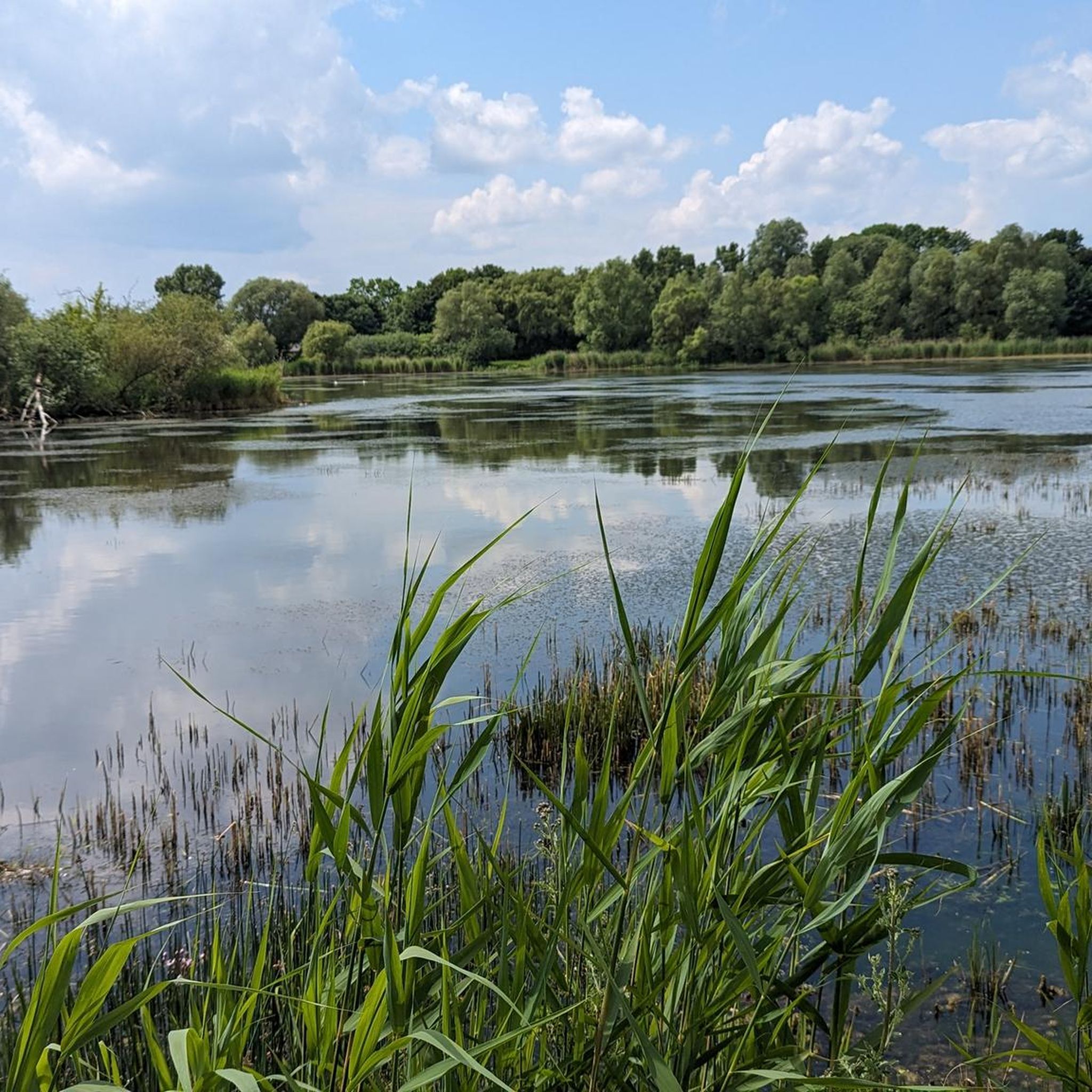
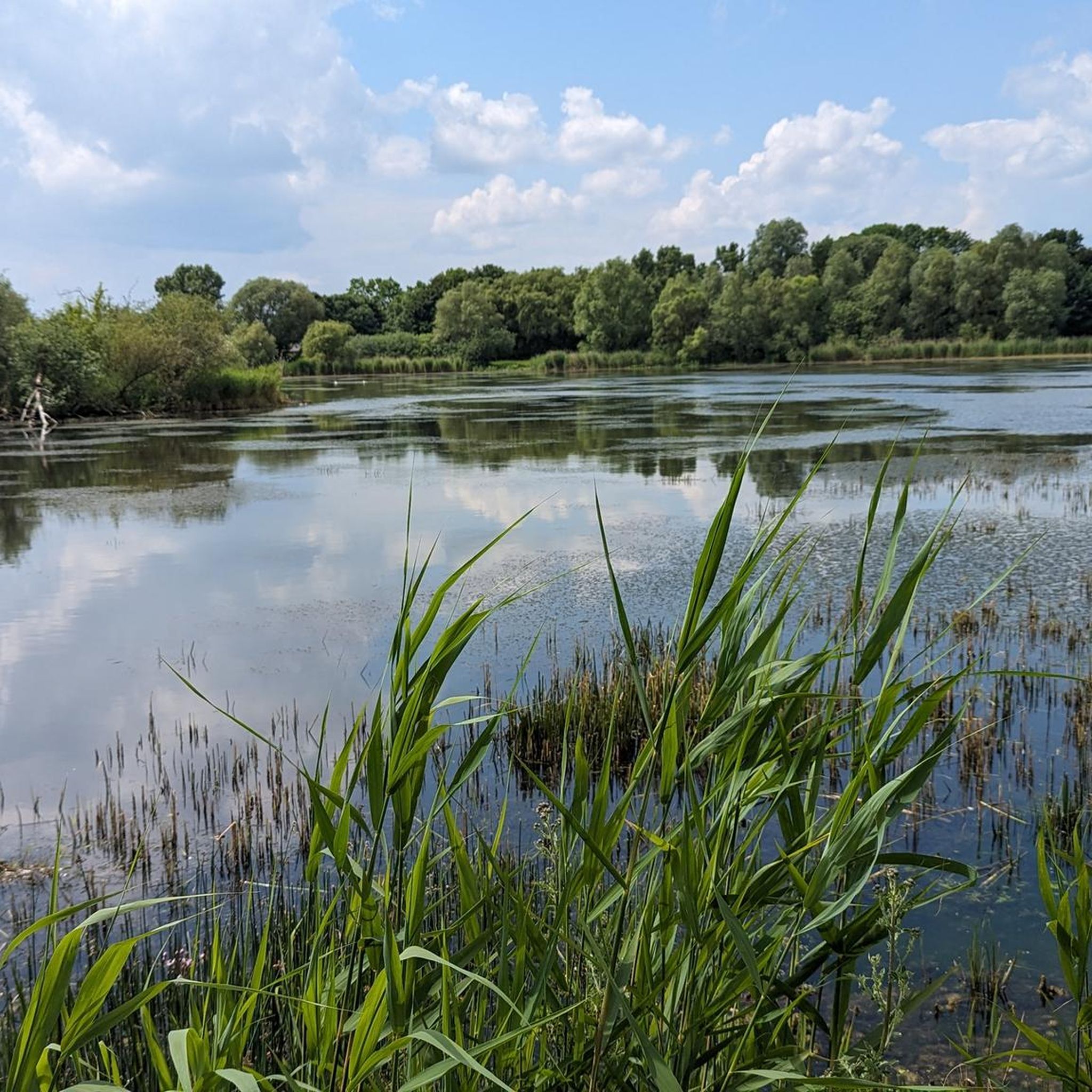
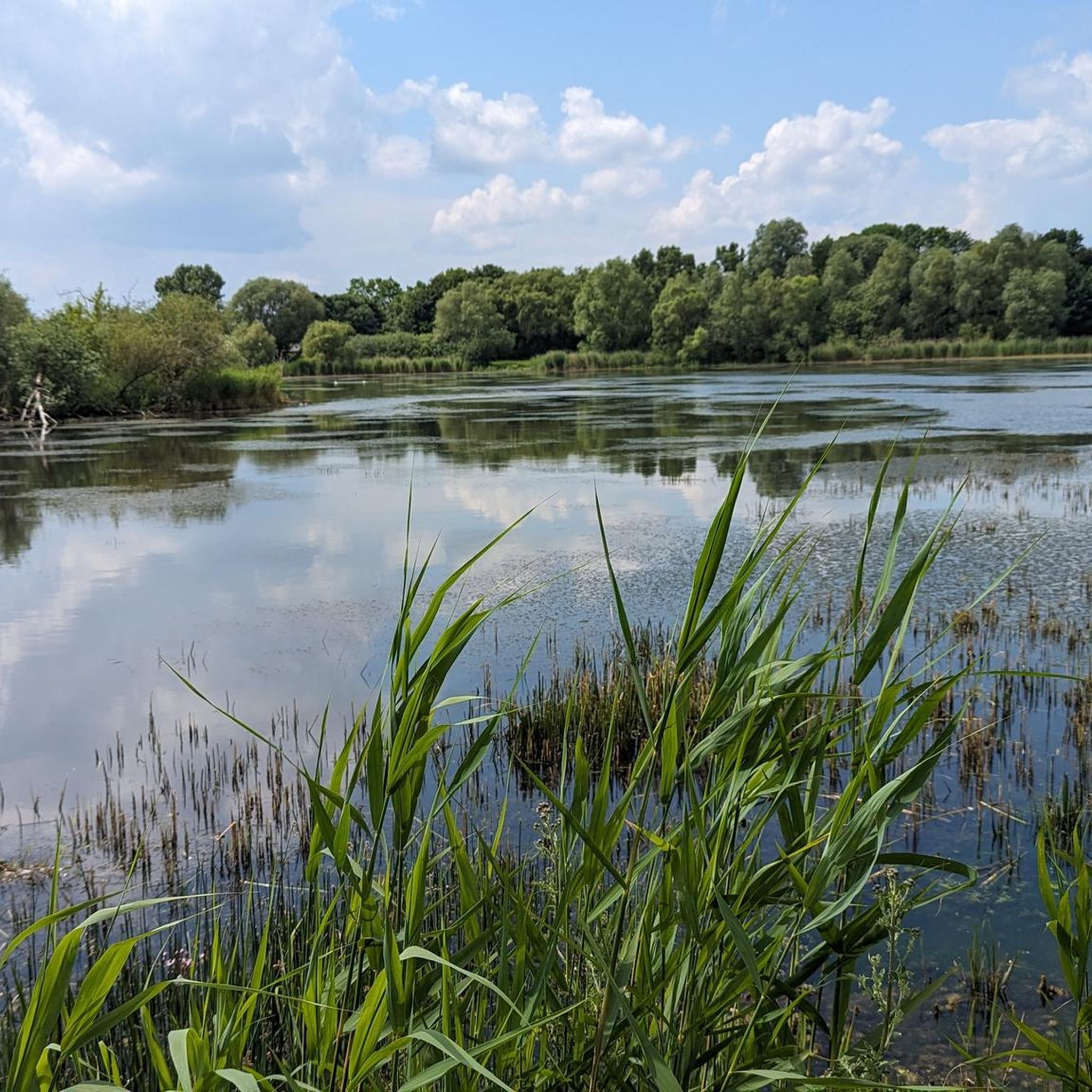
The Söllkensee was created in the 19th century by peat extraction in "Küsterbäcks Moor", a meltwater channel of the Greifswald terminal moraine. Today it is a natural monument and spawning ground for common toads and moor frogs. In the north-eastern part, the new siltation process is clearly visible. A cotton grass peat bog has formed here, which is partly forested with downy birches.
4
0

A lovely little park that also has a playground at the west end.
1
0

Very well maintained and crowded... busy and still beautiful. Illuminated in the dark
3
0
Very nice, well-kept facility. Well lit even in the dark.
1
0
Frequently Asked Questions
What are some unique natural features to explore around Hinrichshagen?
You can discover diverse natural features, including the unique cotton grass peat bog at Söllkensee near Potthagen, which is a spawning ground for common toads and moor frogs. The region also features ancient trees in historic parks and rewilded moorlands, offering a variety of ecological insights.
Are there family-friendly natural monuments in the area?
Yes, several natural monuments are suitable for families. Credner Park offers a spacious area with a pond and a playground. Söllkensee near Potthagen is also considered family-friendly, and the Hill for wild bees provides an interesting educational stop for children to learn about pollinators.
Where can I observe wildlife near Hinrichshagen?
For wildlife observation, Söllkensee near Potthagen is known as a spawning ground for common toads and moor frogs. Further afield, the Anklamer Torfmoor is a vital habitat for migratory birds, numerous butterfly species, otters, and even sea eagles. The Ivenacker Eichen also host fallow deer, wild horses, and wild boars.
What historical natural sites can I visit?
The Behrenhoff Landscape Park, laid out between 1840 and 1860 by Peter Joseph Lenné, features old trees and a rich dendrological stock, including copper beeches and a tulip tree, within a historically significant setting. Additionally, the Ivenacker Eichen are remnants of a historic 'Hutewald' (wooded pasture) system, with some oaks estimated to be around a thousand years old.
Are there any natural monuments with unique accessibility features?
While not directly in Hinrichshagen, the Ivenacker Eichen, a significant natural monument in the broader Mecklenburg-Vorpommern region, offers a barrier-free treetop walkway over 600 meters long, allowing visitors to experience the ancient trees from a unique perspective. It also has an observation tower accessible by elevator.
What kind of outdoor activities can I do near these natural monuments?
The region around Hinrichshagen offers various outdoor activities. You can find numerous routes for cycling, running, and gravel biking. Many of these routes pass through natural landscapes, allowing you to combine your visit with an active outdoor experience.
Is there a place to see ancient trees in the area?
Yes, the Behrenhoff Landscape Park is home to old trees and a rich dendrological stock, including impressive copper beeches and a tulip tree. For truly ancient specimens, the Ivenacker Eichen, Germany's first National Natural Monument, boasts some of Europe's oldest and largest living oaks, some estimated to be a thousand years old.
What is the Anklamer Torfmoor and why is it significant?
The Anklamer Torfmoor is an extensive rewilded bog area on the western shore of the Stettin Lagoon. It's significant as a prime example of passive rewilding, having formed after a storm surge in 1995. This process created a vast, wild landscape that is now a vital habitat for diverse flora and fauna, offering a rare wilderness experience and a testament to nature's recovery.
Are there any viewpoints to enjoy the natural scenery?
While specific viewpoints for the natural monuments listed are not detailed, the Behrenhoff Landscape Park offers scenic walks through its historic grounds. For panoramic views over ancient oaks and a nearby lake, the Ivenacker Eichen features a 40-meter-high observation tower.
What is the 'Hill for wild bees' and what can I see there?
The Hill for wild bees is a refuge created for important pollinators. It's a sandy, sunny area kept clear of vegetation, allowing sand bees and bumblebees to build breeding tubes. In spring and early summer, you can observe these wild bees, which are crucial for the local ecosystem, and learn about their habitat.
Can I find any natural monuments with a connection to local history or notable figures?
Yes, Credner Park was donated by Rudolf Credner, a German geologist and geographer associated with the University of Greifswald. Additionally, the Friedrich-Ludwig-Jahn-Gymnasium, one of Germany's oldest schools, has an oak tree in front of its building designated as a natural monument, connecting nature with educational and historical heritage.
What makes the Ivenacker Eichen a special natural monument?
The Ivenacker Eichen are special because they are Germany's first National Natural Monument, home to some of Europe's strongest and oldest living oaks, with some trees estimated to be around a thousand years old. They are part of a historic 'Hutewald' system and offer unique visitor facilities like a treetop walkway and an observation tower, making them a blend of natural grandeur and historical land use.
Most popular routes around Hinrichshagen
Most popular attractions around Hinrichshagen

Get inspired with the komoot mobile app


Explore more
Extend your search for the best caves by checking out these guides of the top ones around Hinrichshagen:
