Top 20 Natural Monuments around Aurach
Natural monuments around Aurach offer a blend of natural beauty and unique experiences within the Kitzbühel Alps. The region features prominent natural landmarks and diverse ecosystems. Visitors can explore ancient trees, serene bodies of water, and areas with significant ecological value. The landscape provides opportunities to observe natural formations and local wildlife.
Best natural monuments around Aurach
- The most popular natural monuments is Kreuzeiche (Cross Oak), a natural monument that is over 600 years old and a prominent landscape…
Last updated: June 24, 2026
Kreuzeiche (Cross Oak)
Highlight • Natural Monument
Translated by Google •
Tip by

Scheer Pond
Highlight • Lake
Translated by Google •
Tip by

Sign up now to discover places like this
Get recommendations on the best single tracks, peaks, & plenty of other exciting outdoor places.
Sign up for free
Kreuzeiche near Lehrberg
Highlight • Natural Monument
Translated by Google •
Tip by

Scheerweiher Nature Reserve
Highlight • Natural Monument
Translated by Google •
Tip by

Gumbertus Spring
Highlight • Natural Monument
Translated by Google •
Tip by

Sign up for free to discover even more natural monuments around Aurach.
Sign up for free
Already have an account?
Start today with a free account
Your next adventure awaits.
Login or Signup
Tips from the Community

It's a beautiful place! Totally idyllic.
0
0

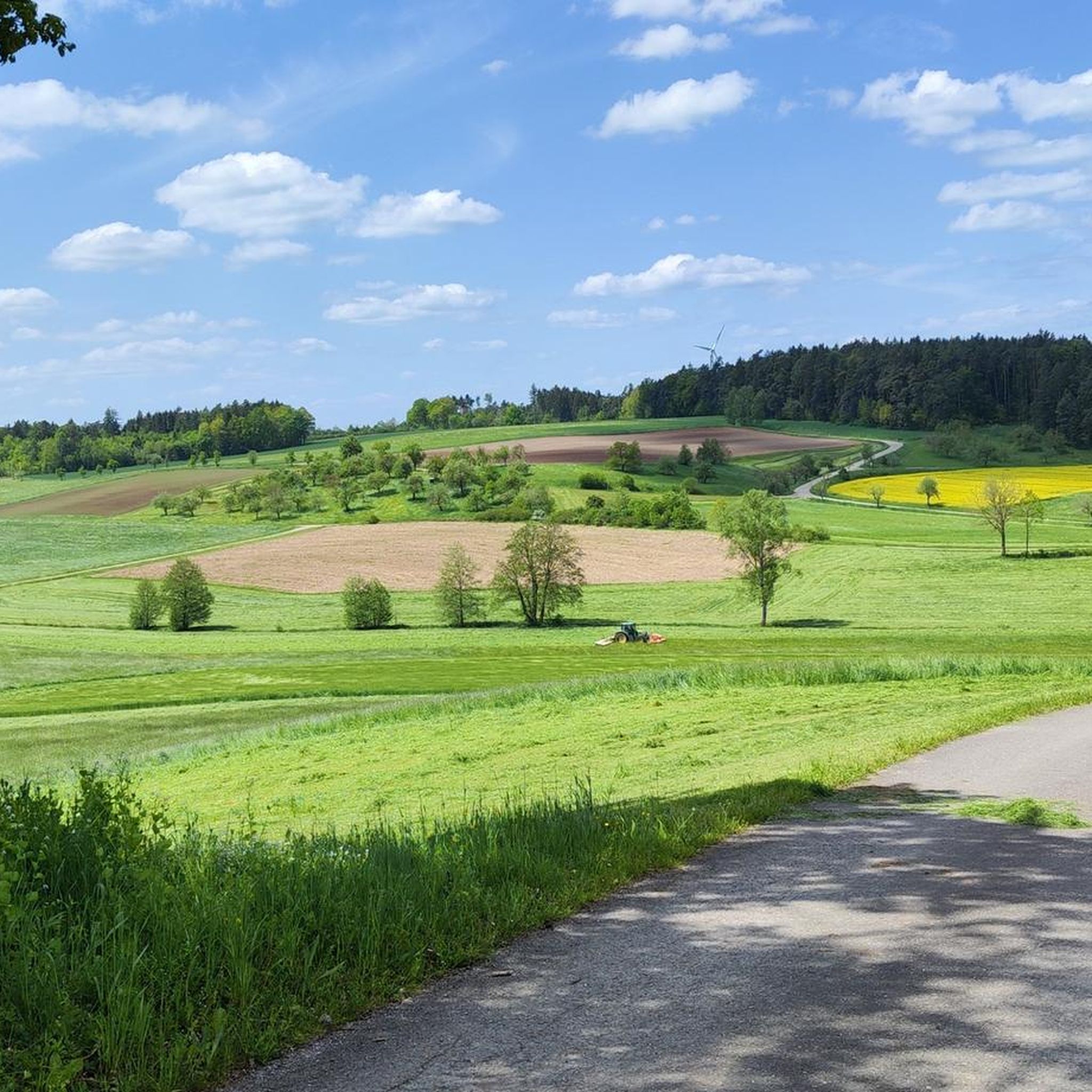
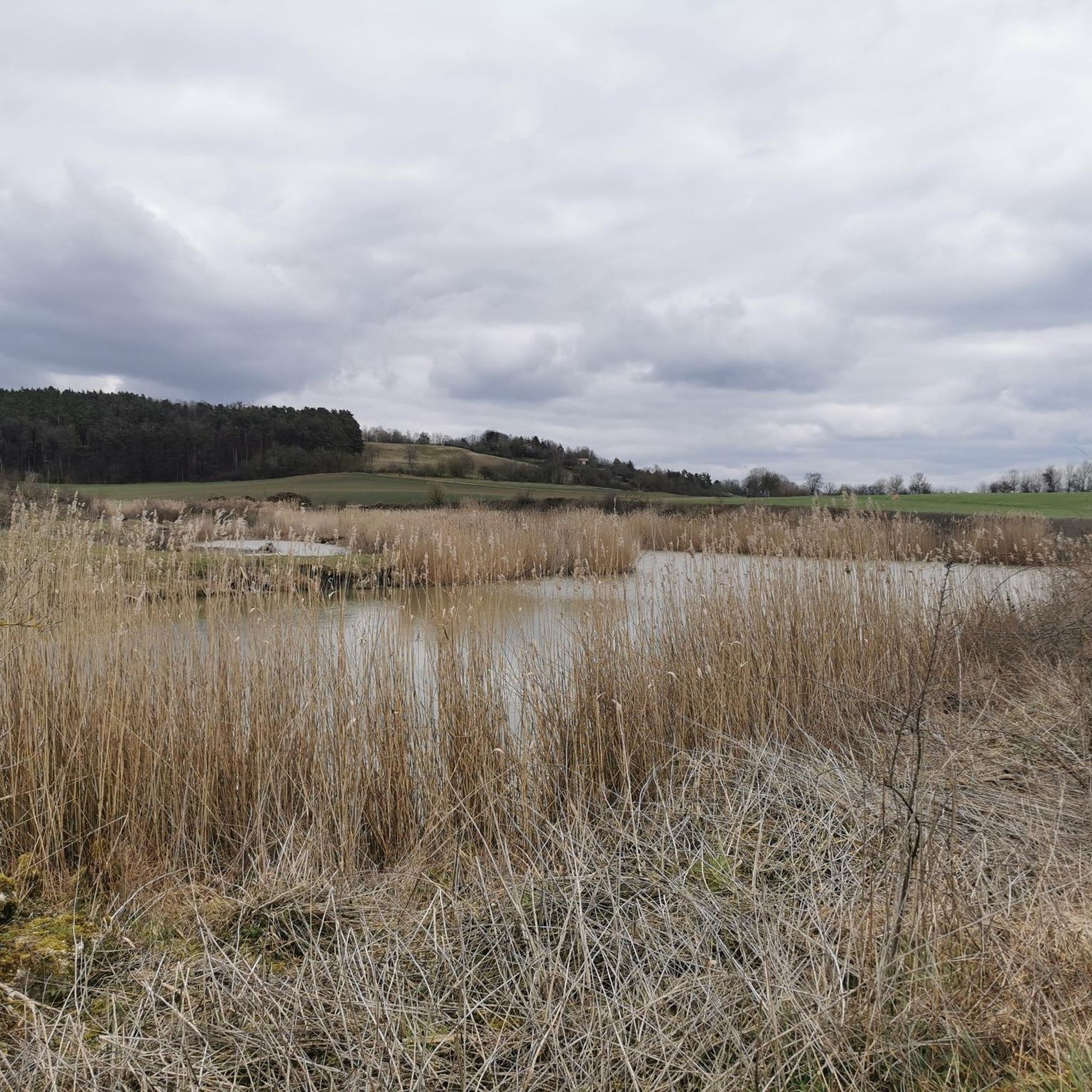
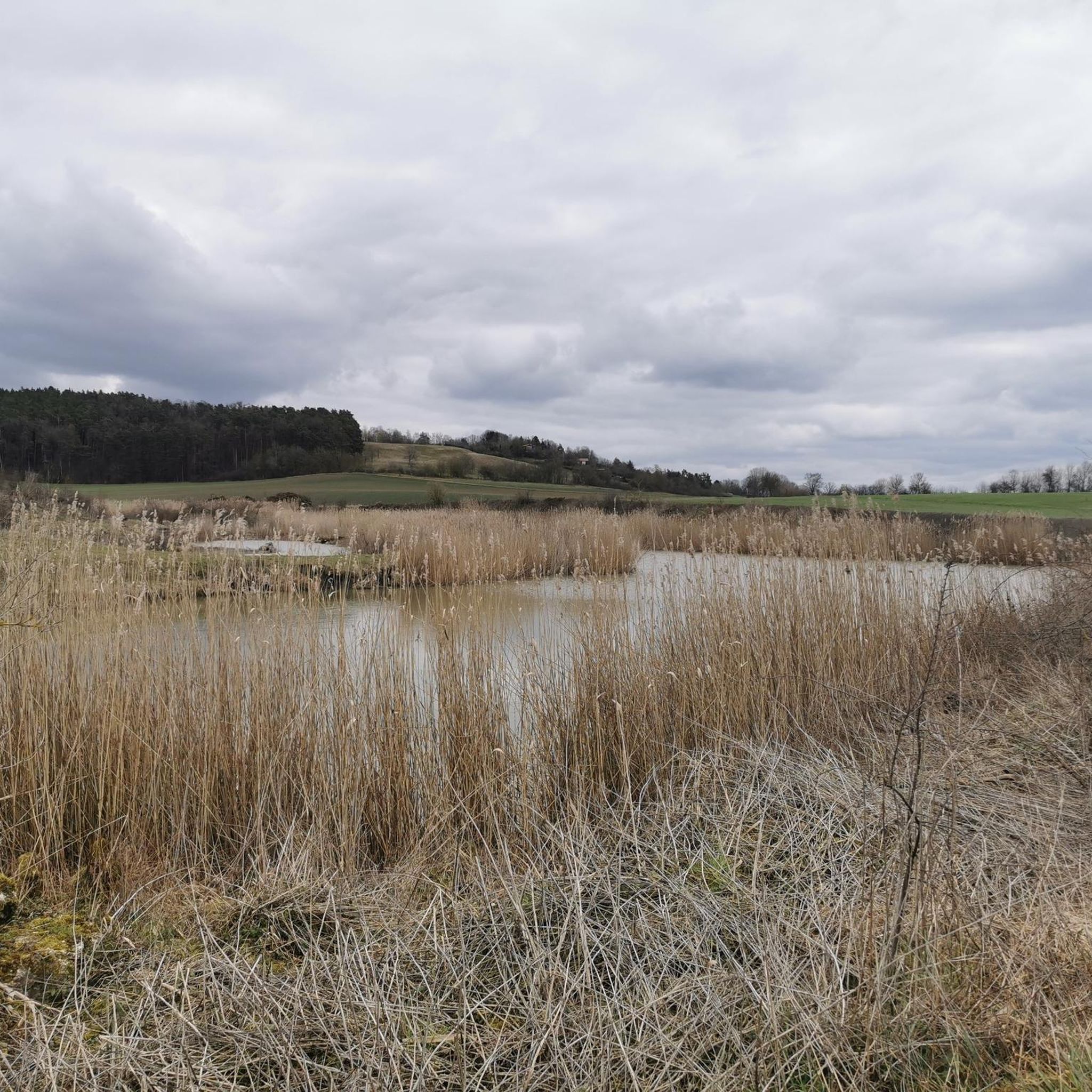
The only nature reserve in the city of Ansbach with an area of 52 hectares. The eponymous Scheerweiher was created in the Middle Ages as a fish pond by damming two streams. Since then, the pond has developed into an ecologically mature body of still water in Middle Franconia. Coming from Schalkhausen, there is a car park immediately after the railway underpass. The unmarked circular path around the nature reserve leads from the car park to the small observation tower, which offers a beautiful view of the extensive pond area with just a few steps. Following the road, you reach the Scheermühle via the Scheerweiher dam. The water from the pond was used to operate the Scheermühle, which was built in the 17th century, until 1930. This is indicated by a wooden coat of arms in the gable of the roof of the half-timbered house. Continuing through the forest towards Neudorfer Mühle, the path finally leads in an arc back towards the car park. The last section of the path runs along a former road, parallel to the railway tracks, back to the starting point. More than 60 species of birds breed in the area, and toads and newts use the nearby pond to spawn. Over five thousand common toads form one of the largest populations in the Franconian Heights natural area.
0
0

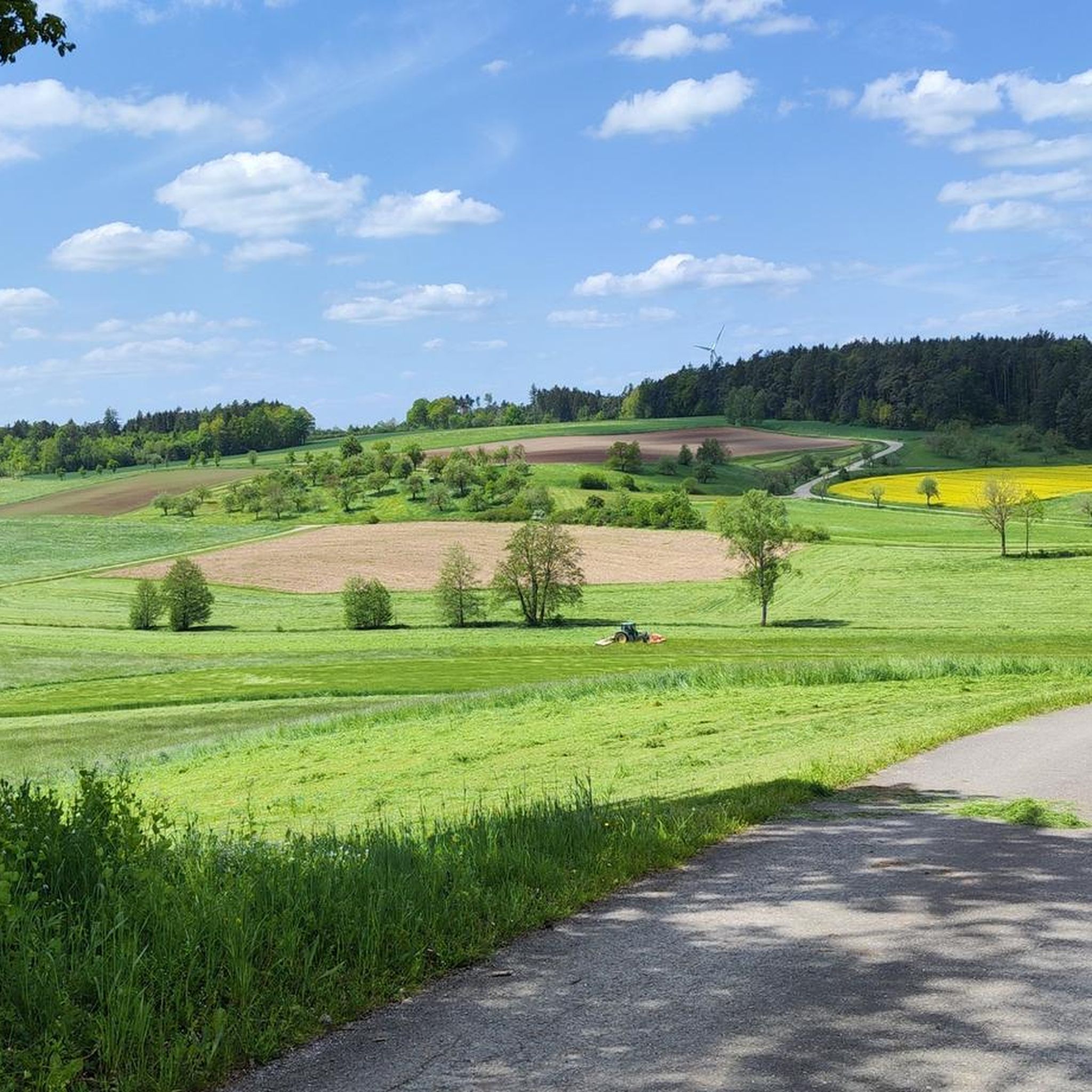
The "Gumbertsbrunnen" is a "captured" spring, idyllically located in the forest, where there is also a place to rest. The spring collects the "Onoldsbach" which flows into the Rezat near Ansbach. There is a legend about this spring: Gumbertus, the founder and abbot of the Benedictine monastery of the same name, and his monks refreshed themselves on the delicious water of the spring during walks, hence the name "Gumbertus Spring". The water of the spring is said to have been used by Gumbertus to baptize the heathens who were to be converted in this area.
0
0
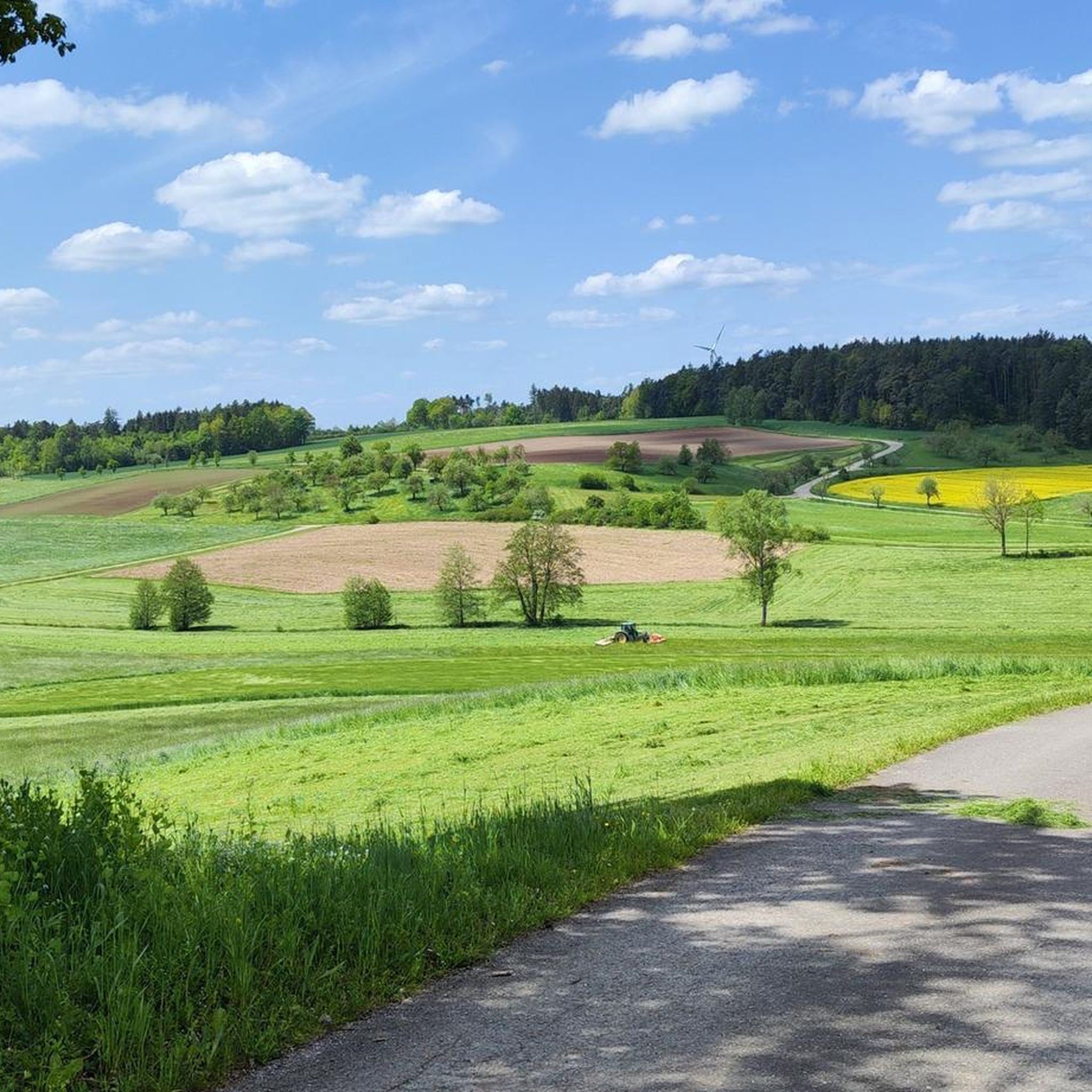
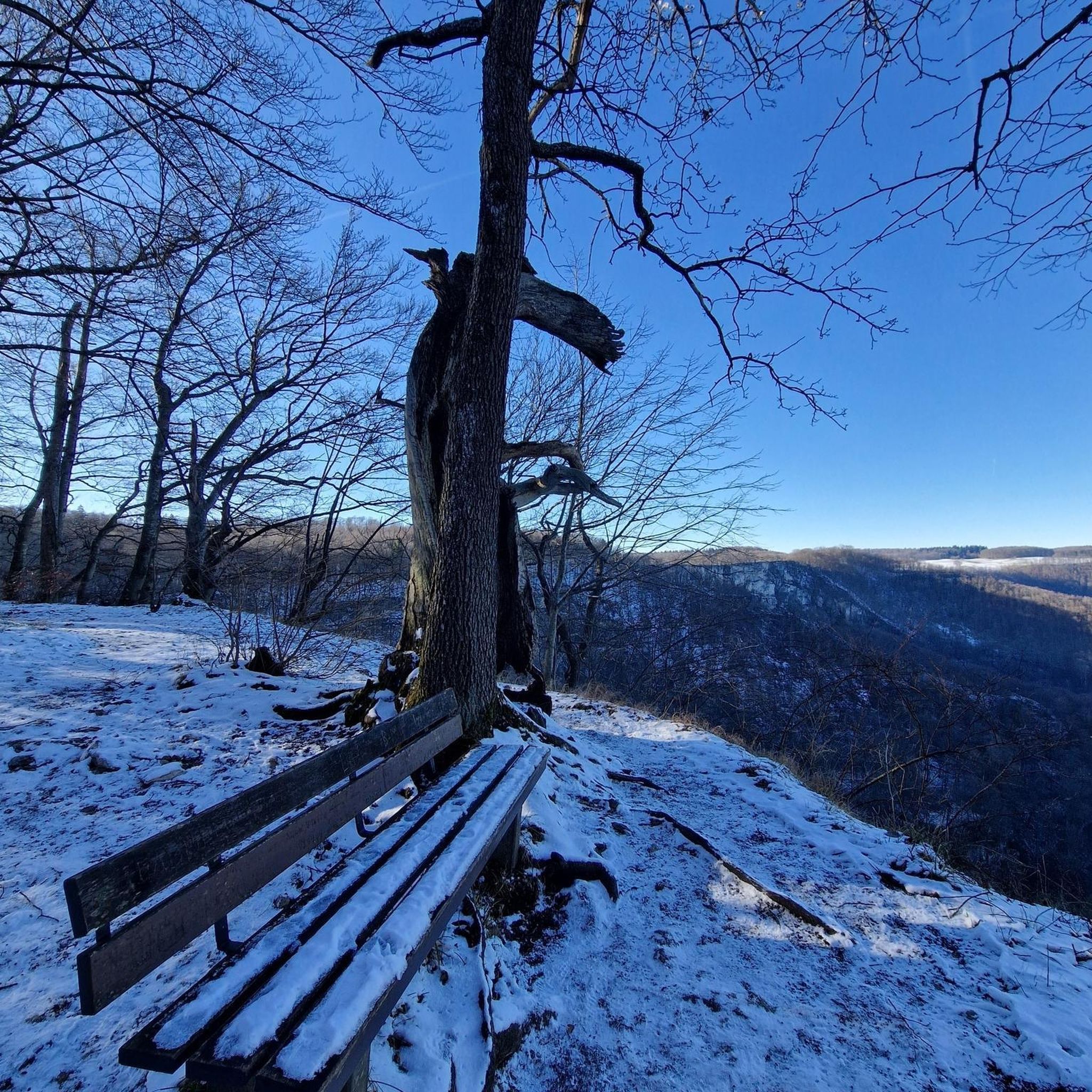
Near Hürbel am Rangen, a district of Lehrberg, you can find the oldest tree in the Frankenhöhe Nature Park, the Kreuzeiche (Cross Oak). Various sources seem to dispute the age of this impressive tree. According to the information board on site, the Kreuzeiche is about 600 years old. Other sources say it's 800 years old. In any case, it is a truly impressive tree, with a circumference of about 6.5 meters at breast height. There are two possible explanations for the name "Kreuzeiche": One is that it stands at the intersection of the old high-altitude trail from Hinterholz to Steinersdorf and from Neudorf to Lehrberg; the other is that the crown of the oak tree grows like a cross. Numerous legends also surround the Kreuzeiche: One example is that of Hans Roi, a restless wagon driver who, every night during Advent, rides from the Kreuzeiche around the Bocksberg on a black horse with his head tucked under his arm.
2
0

There are some benches from which you can observe and enjoy nature and the pond.
0
0


The Gumbertus Fountain is worth a short detour.
0
0

A small spring in the middle of the forest.
0
0
Frequently Asked Questions
What are some unique natural monuments to visit around Aurach?
Aurach offers a blend of natural beauty and historical significance. You can explore the ancient Kreuzeiche (Cross Oak), a 600-year-old tree with panoramic views and local legends. Another notable spot is Scheer Pond, an ecologically mature body of water known for its diverse birdlife. For a historical natural site, visit the Gumbertus Spring, the source of the Onoldsbach, with ties to Ansbach's founding.
Are there natural monuments suitable for families with children in Aurach?
Yes, several natural attractions cater to families. The Kreuzeiche (Cross Oak) offers a barbecue area and benches for relaxation. The Scheer Pond and Scheerweiher Nature Reserve are excellent for bird watching and easy walks. Additionally, the nearby Aurach Wildlife Park, though not a natural monument itself, is a fantastic family destination with a petting barn, a large play area, and opportunities to see alpine and exotic animals in a semi-natural habitat.
What kind of wildlife can I expect to see at natural monuments near Aurach?
The Scheer Pond and Scheerweiher Nature Reserve are particularly rich in wildlife, especially birds. Over sixty species of birds breed in the area, including the snipe, water rail, and reed warbler. You might also spot lapwings, red kites, and ospreys. The area is also home to large populations of toads and newts. For a guaranteed wildlife experience, the Aurach Wildlife Park features around 300 alpine and exotic animals like red deer, ibex, lynx, yaks, and kangaroos.
Are there any natural monuments with historical significance in the Aurach region?
Absolutely. The Kreuzeiche (Cross Oak) is over 600 years old and steeped in local legends. The Gumbertus Spring is historically significant as the source of the Onoldsbach and is named after St. Gumbertus, who founded the first monastery in Ansbach. The Scheer Pond itself was created as a fish pond in the Middle Ages, with its water historically used to operate the Scheermühle until 1930.
What are the best natural monuments for scenic views around Aurach?
For breathtaking panoramic views, the Kreuzeiche (Cross Oak) is an excellent choice. Standing on a hill, it provides a 360-degree vista of the surrounding landscape. The Scheerweiher Nature Reserve also features a small observation tower offering beautiful views of the extensive pond area.
Are there any impressive waterfalls near Aurach?
While not directly in Aurach, the spectacular Sintersbacher Waterfall is located in the nearby region of Tirol. It is recognized as one of Tirol's tallest waterfalls and is surrounded by untouched wilderness, offering a powerful display of nature's force and beauty. Aurach serves as a gateway to the southern mountains where such natural wonders can be found.
What outdoor activities can I do near the natural monuments around Aurach?
The region around Aurach offers various outdoor activities. You can find numerous running trails, including loops from Aurach itself. For cyclists, there are road cycling routes and MTB trails that explore the scenic landscape, often passing by natural features and historical sites.
Are there easy walking trails or circular routes around the natural monuments?
Yes, the Scheerweiher Nature Reserve offers an unmarked circular path around the pond, which is suitable for easy walks and leads to an observation tower. The areas around the Kreuzeiche (Cross Oak) also provide pleasant, accessible paths for a leisurely stroll.
Is the Kreuzeiche near Lehrberg the same as the Kreuzeiche (Cross Oak) in Aurach?
No, these are two distinct natural monuments, though both are impressive ancient oaks. The Kreuzeiche (Cross Oak) near Aurach is a prominent landscape point with 360-degree views. The Kreuzeiche near Lehrberg is considered the oldest tree in the Frankenhöhe Nature Park, with a circumference of about 6.5 meters at breast height, and has its own unique legends.
What do visitors enjoy most about the natural monuments around Aurach?
Visitors frequently appreciate the tranquility and natural beauty of the area. Many enjoy the impressive age and size of trees like the Kreuzeiche (Cross Oak), as well as the expansive views it offers. The ecological richness and birdlife at Scheer Pond are also highly valued for peaceful relaxation and nature observation.
Are there any natural monuments that are dog-friendly?
Many natural monuments and trails in the Aurach region are generally dog-friendly, provided dogs are kept on a leash and owners clean up after them. Areas like the Scheer Pond and the paths around the Kreuzeiche (Cross Oak) are suitable for walks with dogs. Always check local signage for specific restrictions in nature reserves or protected areas.
Most popular attractions around Aurach

Get inspired with the komoot mobile app


Explore more
Extend your search for the best caves by checking out these guides of the top ones around Aurach:
