Top 20 Natural Monuments around Espenau
Best natural monuments around Espenau are found in this municipality in the Kassel district of Hesse, Germany. The region features a blend of local natural heritage and easily accessible, well-known natural attractions. Espenau offers diverse landscapes, from designated natural monuments within its borders to expansive natural parks nearby. This area provides numerous opportunities for outdoor exploration and appreciating geological formations.
Best natural monuments around Espenau
- The most popular natural monuments is Helfensteine, a natural monument featuring imposing rock formations. This site was inhabited around 5,000 years ago and offers a wide view over the Habichtswald.
- Another must-see spot is Neptune Basin and the Cascades, Bergpark Wilhelmshöhe, a man-made monument and historical site. This impressive water feature is part of the UNESCO World Heritage Site, where water flows over cascades and through various structures, culminating in a 50-meter fountain.
- Visitors also love Hoher Dörnberg, a summit and natural monument. With its striking shape, it is a landmark of the Habichtswald Nature Park, known for its unique flora, fauna, and diverse hiking opportunities.
- Espenau is known for its basalt formations, historical sites, and significant summits. The region offers a variety of natural monuments to see and explore, from ancient rock formations to elaborate water features.
- The natural monuments around Espenau are appreciated by the komoot community, with more than 3200 upvotes and over 3200 photos shared by visitors.
Last updated: November 21, 2026
Hercules Monument, Wilhelmshöhe Mountain Park
Highlight • Monument
Translated by Google •
Tip by

Neptune Basin and the Cascades, Bergpark Wilhelmshöhe
Highlight • Monument
Translated by Google •
Tip by

Sign up now to discover places like this
Get recommendations on the best single tracks, peaks, & plenty of other exciting outdoor places.
View of Kassel from the Bergpark Wilhelmshöhe
Highlight • Viewpoint
Translated by Google •
Tip by

Helfensteine
Highlight • Natural Monument
Translated by Google •
Tip by

Hoher Dörnberg
Highlight • Summit
Showing Translation
Tip by

Sign up for free to discover even more natural monuments around Espenau.
Already have an account?
Start today with a free account
Your next adventure awaits.
Other adventures around Espenau

Tips from the Community

With its striking shape, the Hohe Dörnberg is the landmark of the Habichtswald Nature Park, whose settlement during the Ice Age is proven by archaeological finds. Its geology and cultural history, as well as its special animal and plant communities, have always attracted many people. Species-rich juniper heaths, the treeless plateau, and the striking Helfensteine offer a varied hiking experience.
4
1

The Hohe Dörnberg was selected in 2020 by the Presidium for Geosciences and Geotechnologies and certified with the title "National Geotope"! This award has been presented since 2006. There are a total of 77 significant geotopes in Germany, ten of which are in Hesse. – The Hoher Dörnberg is one of them! He is thus in a row with the "Chalk Cliffs on Rügen" or the "Grube Messel". Source: https://www.naturpark-habichtswald.de/media/attractions/doernberggebiet#/article/d63cc544-5258-4cb6-80bd-4bedddd3edbf
14
1

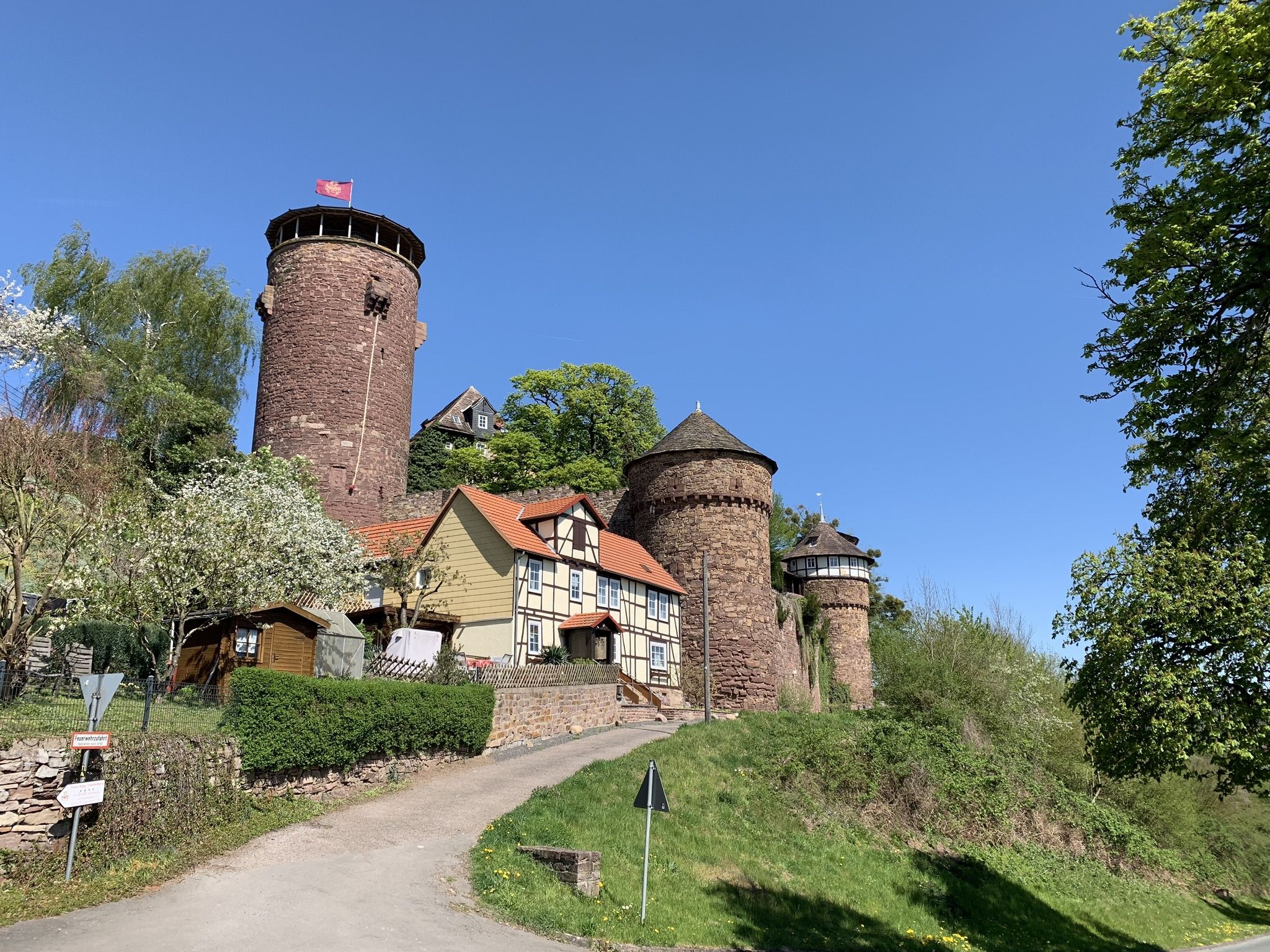
Here you enter a place steeped in history: finds from prehistoric times prove a settlement as early as the Neolithic Age. The oldest pottery sherds found here date from the 6th and 5th centuries BC. The ramparts on the largest rock of the Helfenstein, with an artificial ditch about 100 meters long from the 12th/13th century, indicate a former high medieval castle.
15
1

Easy to hike mountain peak with a great view. The summit tour is to be embedded in a beautiful circular hike. Flyers for the possible path constellations are available in the nature park center at the Helfensteinen. The stamping point for the summiteers of North Hesse is also located near the summit.
9
1

The water bubbles over the cascades, the Steinhöfer waterfall, the Devil's Bridge and falls over the aqueduct and the Peneus cascades down to the castle pond. Here the water pressure causes the "Great Fountain" to shoot up over 50 meters. This spectacle is the conclusion and highlight of the water games. Always on Wednesdays, Sundays and on public holidays at certain times.
26
1

The statue, which is considered a landmark of the city of Kassel, is located at the top of a pyramid that stands on the octagon, the giant castle. Today, the name "Hercules" not only stands for the statue, but for the entire building, which is also the starting point for the summer water games in the mountain park. The octagon and the Hercules go back to different construction phases. Since June 23, 2013, the Hercules - as part of the Bergpark Wilhelmshöhe - has been on the UNESCO World Heritage List as an example of absolutist architecture.
21
1

In 1696, Landgrave Carl von Hessen-Kassel decided to create a mountain park directly behind his Weißenstein hunting lodge, which was to be on a par with the gardens of Versailles. The Huguenot inventor Denis Papin was to develop a steam-powered fountain for this purpose, as he was one of the developers of the first steam engine. Since there were repeated setbacks, Papin was no longer financed and Gottfried Wilhelm Leibniz declined due to lack of interest. Instead, a 60 m long model for a mountain park was designed with the Italian architect Guerniero, of which only a third was ultimately realized. From 1701, the expansion for the elaborate water features began, which only took place 13 years later for the first time. Instead of using steam power, the fountains now worked exclusively with the water pressure from a higher pond. The water covers a height difference of 320 m over a 2 km flow distance. The finale is a 50 m high fountain, which shoots up solely due to the water pressure. With these impressive water features, Landgrave Carl wanted to express the power of his county on the one hand, and the power of man over nature. Over 130 years, his successors expanded the mountain park. Only when the county was abolished by Prussia did the expansion come to an end, but Prussian rulers such as Kaiser Wilhelm II also liked to stay in Kassel, where they used the Bergpark. The site was preserved and still functions as it did more than 300 years ago. A visit to the mountain park is a must! If you want to hike the entire park, you should be able to walk well and plan enough time and a few meters of altitude. The always new views and numerous sights are worth all the effort. Even without the water games, which take place every Wednesday and Sunday, the mountain park is a unique attraction. Those who are not good on foot should at least enjoy the incredible view of Kassel in front of the Hercules.
24
2

You have a great view of Kassel. For 6 euros you can go up the Herkukes.
21
1
Frequently Asked Questions
What are the most impressive natural monuments to visit near Espenau?
Near Espenau, you'll find several remarkable natural monuments. The Helfensteine are imposing basalt rock formations with a wide view over the Habichtswald. Another must-see is the Hoher Dörnberg, a striking mountain known for its unique flora, fauna, and diverse hiking opportunities. The Hercules Monument and the Neptune Basin and the Cascades within Bergpark Wilhelmshöhe offer a unique blend of natural beauty and historical engineering.
Are there any natural monuments directly within Espenau?
Yes, within Espenau itself, you can find officially designated natural monuments such as the Two Oaks near Hohenkirchen. These individual trees are protected due to their age, rarity, or significant ecological role, offering a quiet connection to the local natural heritage.
What unique geological features can I find among the natural monuments?
The region around Espenau is rich in geological wonders. The Helfensteine are notable for their powerful basalt rock formations. Similarly, the Hohlestein Basalt Felsen are significant basalt rock formations that even offer climbing opportunities. The Hoher Dörnberg is also recognized as a 'National Geotope' for its unique geology, including species-rich juniper heaths and a treeless plateau.
What historical significance do these natural monuments hold?
Many natural monuments in the area have deep historical roots. The Helfensteine were inhabited around 5,000 years ago, with archaeological finds dating back to the Neolithic Age. The Hoher Dörnberg also has archaeological finds confirming settlement during the Ice Age. Bergpark Wilhelmshöhe, with its Hercules Monument and elaborate water features, is a UNESCO World Heritage Site, showcasing 18th-century engineering and baroque landscape architecture.
What outdoor activities can I do near the natural monuments around Espenau?
The area offers a variety of outdoor activities. You can explore numerous hiking trails, such as those found in the Hiking around Espenau guide, including routes like the 'Espenau Local History Museum – View of Three Churches loop'. For cyclists, the Gravel biking around Espenau guide features routes like the 'Fulda Cycle Route'. Mountain biking enthusiasts can find trails in the MTB Trails around Espenau guide, such as the 'Erlenloch Trail'.
Are there family-friendly natural monuments or trails suitable for children?
Yes, several spots are great for families. The Höllenteich, with its scenic bridge and connection to the water features of Bergpark Wilhelmshöhe, is considered family-friendly. The Bergpark Wilhelmshöhe itself offers vast spaces for exploration, though some climbs can be challenging. The Helfensteine also offer narrow paths between basalt rocks, suitable for children who enjoy a bit of climbing.
Can I go climbing at any of the natural monuments?
Yes, for those seeking active outdoor experiences, the Hohlestein Basalt Felsen are particularly noted for offering climbing opportunities, requiring some experience but providing secure footing. Additionally, at the Helfensteine, visitors can climb a little among the basalt rocks.
When is the best time to visit the natural monuments around Espenau?
The best time to visit largely depends on your interests. For enjoying the dramatic water features at Bergpark Wilhelmshöhe, the warmer months (typically from May to October) are ideal, as the water displays run on specific days. Spring and autumn offer pleasant temperatures for hiking and cycling, with beautiful foliage in autumn. Winter can also be magical, especially in places like the Höllenteich, though some paths might be slippery.
Are the natural monuments around Espenau accessible for everyone?
Accessibility varies among the natural monuments. While large parks like Bergpark Wilhelmshöhe have paved paths in some areas, many natural monuments, such as the Helfensteine and Hoher Dörnberg, involve natural terrain, uneven paths, and climbs. The Hercules Monument, for instance, requires climbing stairs. It's advisable to check specific site information for detailed accessibility before your visit.
Where can I find parking when visiting these natural monuments?
Parking availability varies by location. For popular sites like Bergpark Wilhelmshöhe, there are designated parking areas, though they can fill up quickly during peak times. For natural areas like the Hoher Dörnberg and Helfensteine, you can often find parking lots at trailheads or nearby villages. It's recommended to check local signage or online maps for specific parking options before heading out.
What do visitors enjoy most about the natural monuments near Espenau?
Visitors frequently praise the breathtaking views, the unique geological formations, and the rich historical context. The impressive water features and the sheer scale of Bergpark Wilhelmshöhe are often highlighted. The Helfensteine are loved for their imposing rock formations and wide vistas, while the Hoher Dörnberg is appreciated for its diverse hiking opportunities and unique flora and fauna. Many also enjoy the sense of history and natural wonder these sites evoke.
Are there opportunities for cycling near the natural monuments?
Yes, the region offers excellent cycling opportunities. The Fuldaradweg (Fulda Cycle Path) is a beautiful route that largely runs alongside the Fulda river, providing scenic views, especially below Kassel. You can find more cycling routes, including gravel biking options, in the Gravel biking around Espenau guide.
Most popular routes around Espenau
Most popular attractions around Espenau

Get inspired with the komoot mobile app


Explore more
Extend your search for the best caves by checking out these guides of the top ones around Espenau:
