Top 20 Natural Monuments around Rheinbreitbach
Best natural monuments around Rheinbreitbach are found in a region characterized by its location on the northern Middle Rhine and at the southern edge of the Siebengebirge. This area features officially designated natural monuments within its municipal boundaries and significant natural attractions nearby. The landscape includes diverse volcanic formations, dense forests, and geological outcrops, providing varied natural experiences. Visitors can explore a range of natural features, from ancient trees to panoramic viewpoints over the Rhine Valley.
Best natural monuments around…
Last updated: May 11, 2026
Drachenfels Castle Ruins
Highlight • Castle
Translated by Google •
Tip by

Siegfried Pulpit
Highlight • Viewpoint
Showing Translation
Tip by

Sign up now to discover places like this
Get recommendations on the best single tracks, peaks, & plenty of other exciting outdoor places.
Sign up for free
View of Drachenburg Castle
Highlight • Viewpoint
Showing Translation
Tip by

Stenzelberg Rock Formations
Highlight • Natural Monument
Geologically, the Stenzelberg is a …
Translated by Google •
Tip by

Drachenburg Castle
Highlight • Castle
Translated by Google •
Tip by

Sign up for free to discover even more natural monuments around Rheinbreitbach.
Sign up for free
Already have an account?
Start today with a free account
Your next adventure awaits.
Login or Signup

Tips from the Community

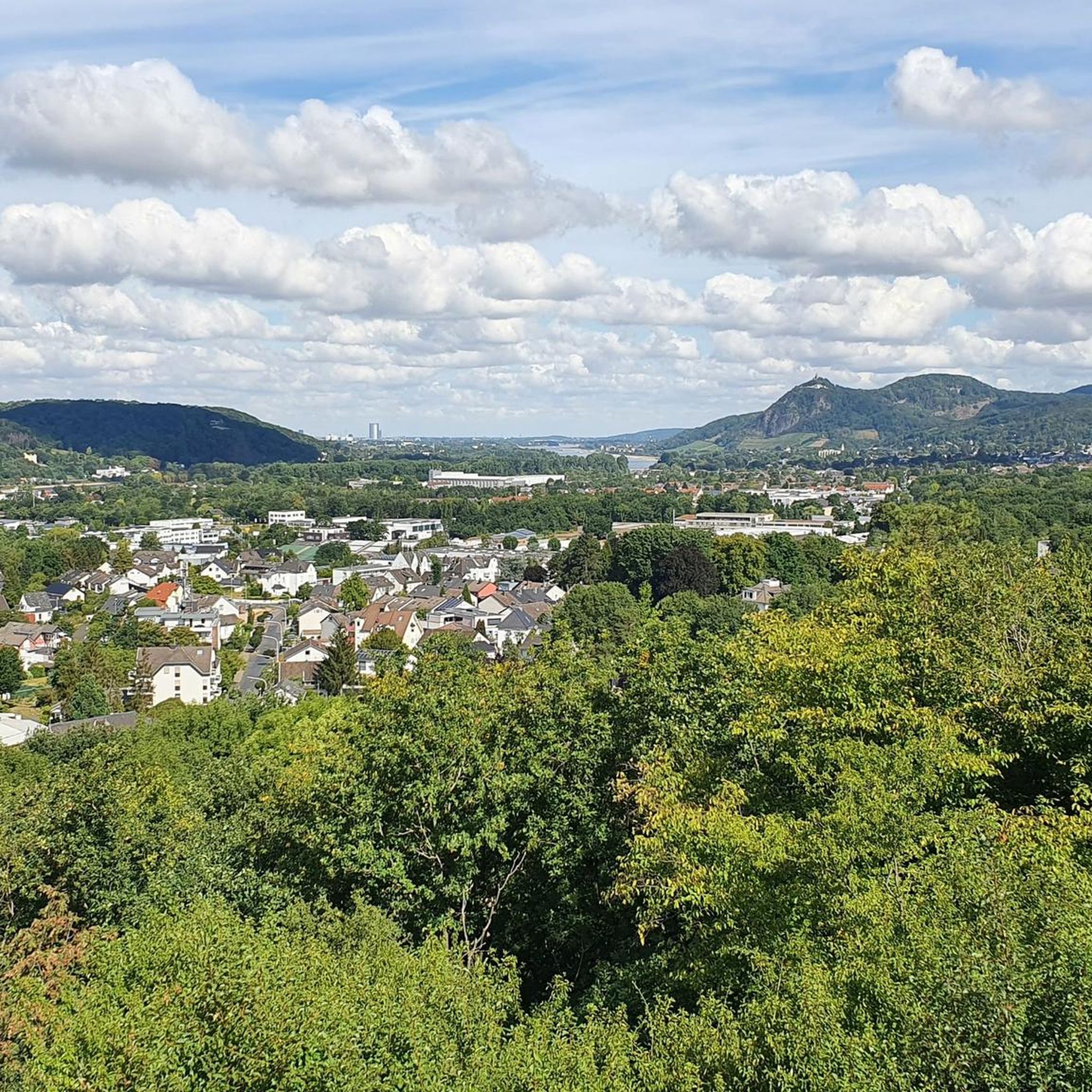
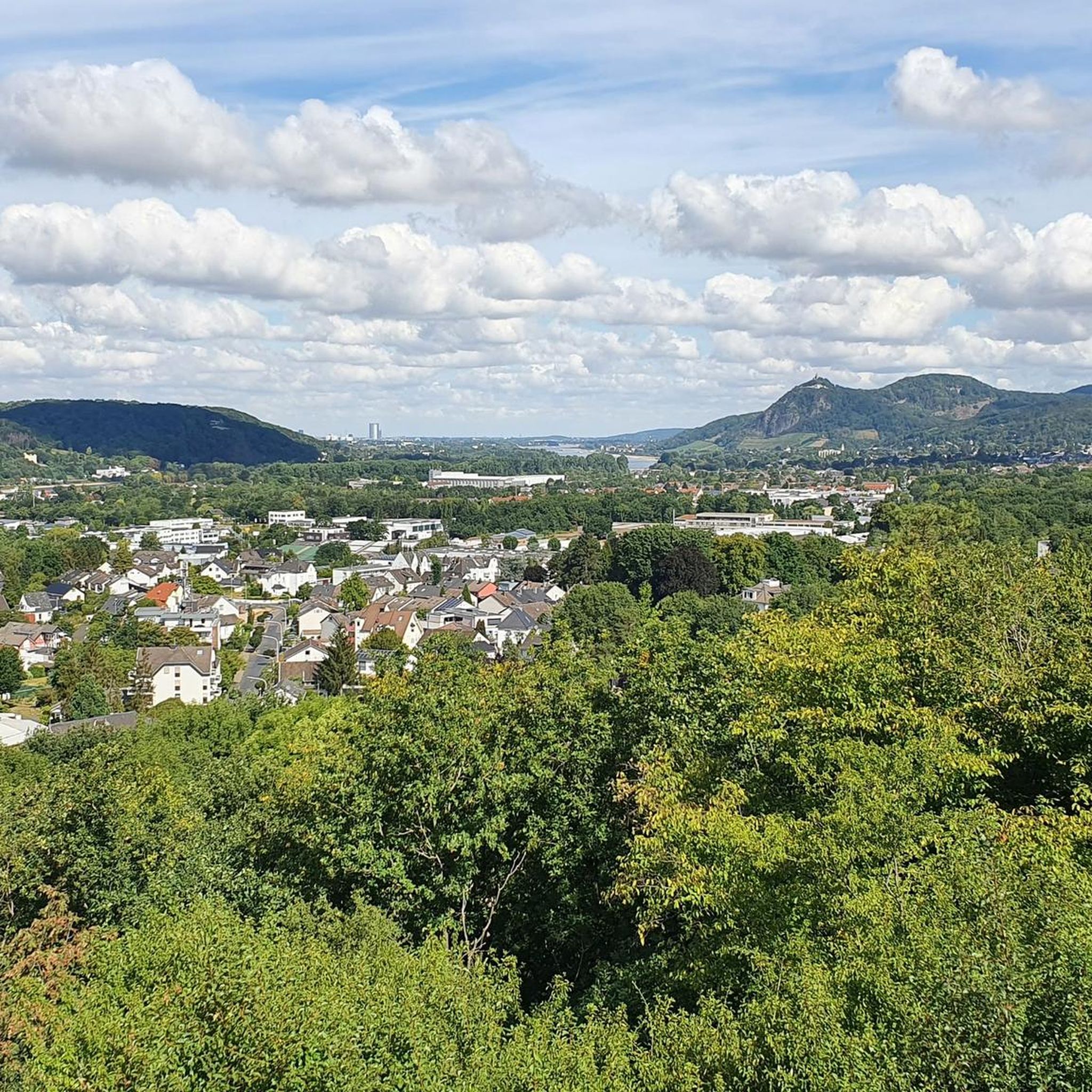
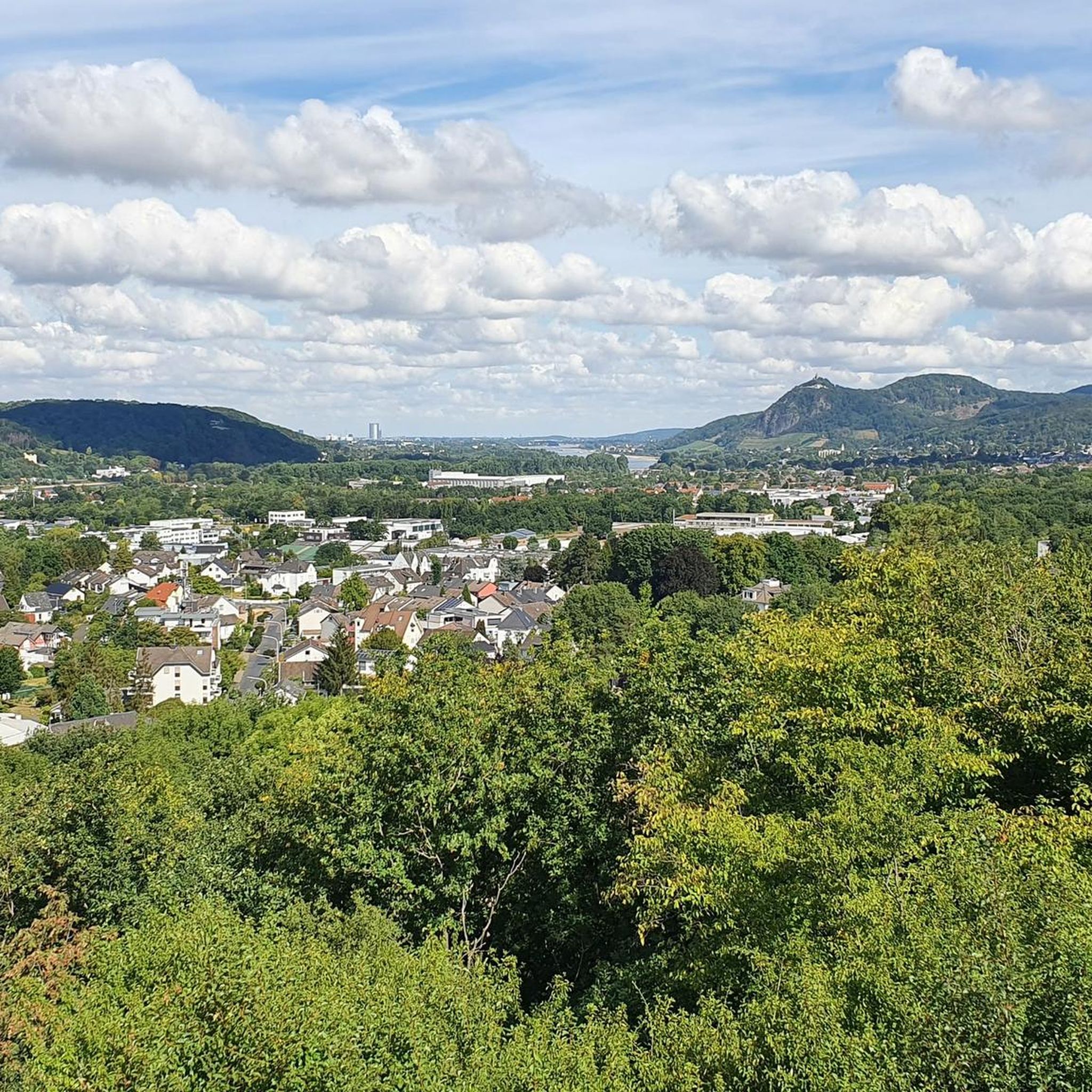
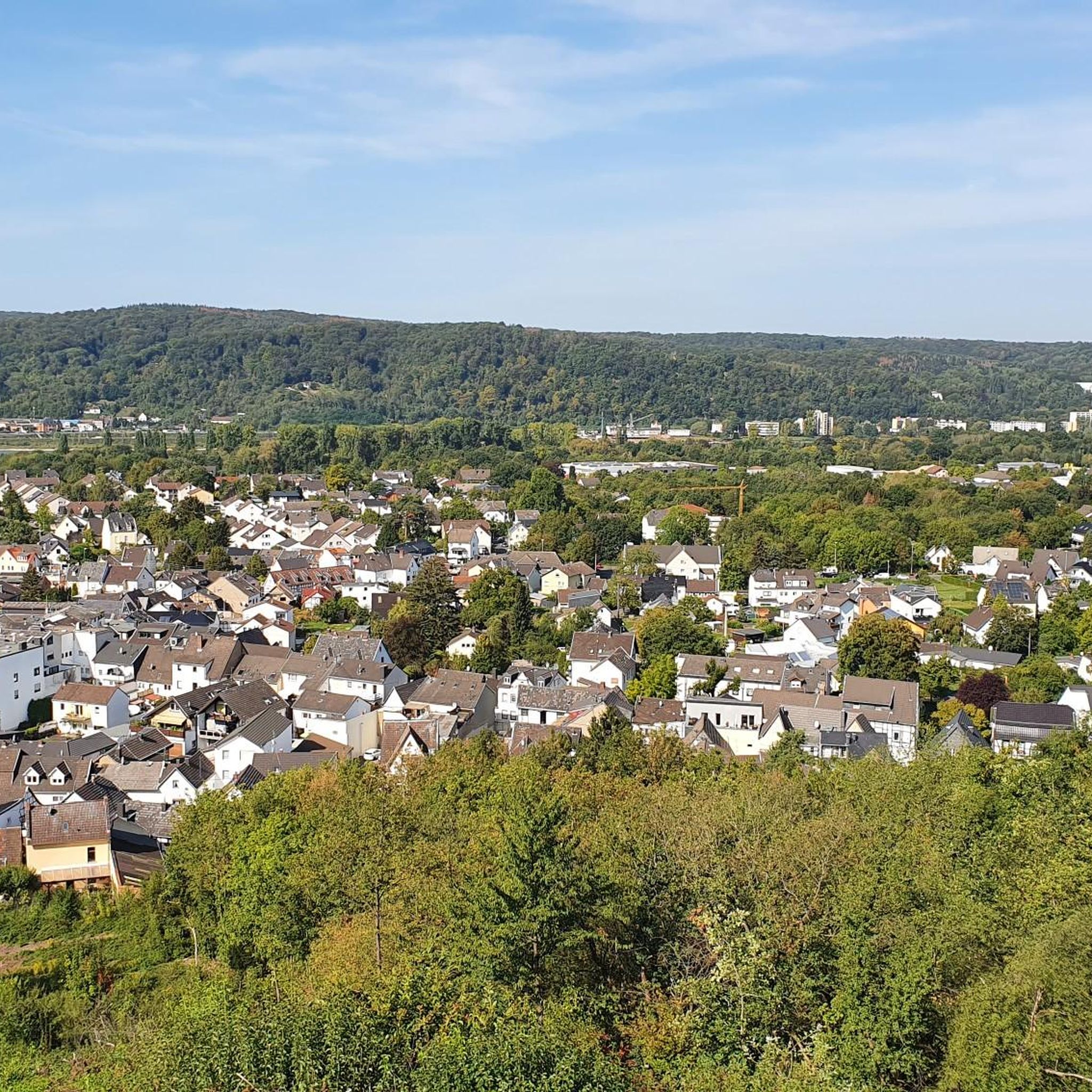
A little below the Plateau you will pass this vantage point of Drachenburg Castle on the way. The view of the (almost kitschy) castle with the Rhine and the Bonn skyline in the background is great. Photos from the small platform almost automatically have postcard quality.
18
0

Climbing on the Stenzelberg has been expressly forbidden since June 2005. Previously, the Rhein-Sieg district had tolerated climbing, although the Stenzelberg, like the entire Siebengebirge, had been designated as a nature reserve (NSG) since 1920. The climbing ban became necessary due to the new nature reserve ordinance in the course of the recognition of the Siebengebirge as FFH area 5309-301 (Fauna-Flora-Habitat) of the European Union. In particular, the occurrence of the wall lizard was concerned and egg-laying sites at the foothills of the fields were destroyed. Despite the ban, climbing continued illegally after 2005. The path to the rocks was therefore closed by the forestry department.
13
0

The Stenzelberg is geologically a spring dome from the volcanic rock Latit. The rising magma did not reach the earth's surface here, but got stuck in the surrounding tuff cover rock. The softer tuff was later eroded away, exposing the harder latite. The Stenzelberg has been used as a quarry since the 11th century, in which quartz latite rock was mined. The Heisterbach Abbey also operated a quarry on the Stenzelberg. The quarried material was also used to build the monastery buildings and the abbey church. Furthermore, rock from the Stenzelberg was used for the Propsteikirche in Oberpleis, the Nikolauskapelle in Heisterbacherrott and the Bonn Minster, and later also for the churches in Niederdollendorf, in Oberdollendorf and in Asbach. The operation of the quarry ended in 1931. Source: https://www.kuladig.de/Objectansicht/O-FJK-20100630-0032
13
0

The Stenzlberg offers rugged rocks, exciting views, history and beautiful narrow paths.
14
0

A bizarre rocky landscape in the Siebengebirge.
13
0
Has its appeal even in fog.
13
0

The Stenzelberg has retained its attractiveness even after stone quarrying ended. Stones have not been quarried since 1931. Due to its picturesque rocky landscape, the Stenzelberg is still a popular destination for many hikes. In addition, the 287-meter-high summit offers habitat for animals such as smooth snakes and wall lizards. For this reason, it is kept free of shrub and tree growth.
15
2

The Stenzelberg is a 287 meter high mountain in the Siebengebirge and is located southwest of the Heisterbacherrott district of Königswinter near the Heisterbach monastery. Geologically, the Stenzelberg is a spring dome from the volcanic rock Latit, whereby the rising magma did not reach the earth's surface, but got stuck in the surrounding tuff cover rock. Erosion later eroded the softer tuff and exposed the harder latite. The Stenzelberg has been used as a quarry for quartz latite since the 11th century. The stone was used, among other things, for the Propsteikirche in Oberpleis, the Nikolauskapelle in Heisterbacherrott and the Bonn Minster, and later also for the churches in Niederdollendorf, Oberdollendorf and Asbach. Quarrying ended in 1931.[3] After the closure of the quarries, a characteristic landscape developed on the Stenzelberg, which offers the special flora and fauna of a dry biotope. (Info taken from https://de.wikipedia.org/wiki/Stenzelberg)
20
0
Frequently Asked Questions
What types of natural monuments can I explore around Rheinbreitbach?
The area around Rheinbreitbach offers a diverse range of natural monuments. You can find impressive geological formations like the Stenzelberg Rock Formations, which are remnants of volcanic activity. There are also significant trees, such as a Red Oak and a Copper Beech officially designated within Rheinbreitbach, and numerous scenic viewpoints offering expansive panoramas of the Rhine Valley and the Siebengebirge.
Are there family-friendly natural monuments or activities in the area?
Yes, several natural monuments are suitable for families. The View of the Rhine Valley from the Siegfried Pulpit is noted as family-friendly, offering beautiful scenery without overly strenuous effort. The View of the Seven Hills (Siebengebirge) from Petersberg is also family-friendly, and you can even take a cog railway up to the Drachenfels, making it accessible for all ages.
What hiking opportunities are available near the natural monuments?
The region provides excellent hiking opportunities. You can find various trails, including those leading to the Stenzelberg Rock Formations, which is a popular hiking destination. The broader Siebengebirge Nature Park, easily accessible from Rheinbreitbach, offers diverse routes. For more detailed hiking options, explore the Mountain Hikes around Rheinbreitbach guide.
Can I bring my dog to the natural monuments and trails?
Many natural areas and trails around Rheinbreitbach, especially within the Siebengebirge Nature Park, are dog-friendly. It's generally recommended to keep dogs on a leash, particularly in nature protection zones and during wildlife breeding seasons, to ensure the safety and comfort of both your pet and local wildlife. Always check local signage for specific rules.
What historical or cultural sites are integrated with the natural monuments?
The region beautifully blends natural beauty with history. The Drachenfels Castle Ruins is a prominent example, offering both historical significance and panoramic views as a natural monument. The 'Auge Gottes' (Eye of God) east of Breite Heide, while a wayside shrine, is considered a significant natural feature due to its forest location, providing a point of interest for those exploring the local woodlands.
Are there any specific trees designated as natural monuments in Rheinbreitbach?
Yes, within Rheinbreitbach's municipal area, two impressive trees are officially recognized as natural monuments: a Red Oak (Roteiche) and a Copper Beech (Blutbuche). These ancient trees are located north of the town center and are significant for their age, size, and species.
What are the best viewpoints to experience the Rhine Valley and Siebengebirge?
For breathtaking views, the Drachenfels Castle Ruins offers expansive vistas of the Rhine and surrounding landscape. Another excellent spot is the View of the Rhine Valley from the Siegfried Pulpit, which provides a clear perspective of the river. The View of the Seven Hills (Siebengebirge) from Petersberg also offers a stunning panorama.
What other outdoor activities can I do near these natural monuments?
Beyond hiking, the area is great for other outdoor pursuits. You can explore various running trails, such as those mentioned in the Running Trails around Rheinbreitbach guide. Road cycling is also popular, with routes like the 'Rhine Cycle Path at Rolandseck' detailed in the Road Cycling Routes around Rheinbreitbach guide.
What geological features are prominent among the natural monuments?
The region's geology is heavily influenced by its volcanic past. The Stenzelberg Rock Formations are a prime example, showcasing a picturesque rocky landscape formed from volcanic latite. This area was once a quarry, and the exposed rock formations now create a unique dry biotope, home to rare animals.
Where can I find refreshments or places to eat near the natural monuments?
Rheinbreitbach village itself offers cafes and restaurants. Additionally, popular destinations like the Drachenfels often have facilities nearby. For example, the Petersberg, which offers the View of the Seven Hills (Siebengebirge), has a beer garden where you can take a break and enjoy the view.
Is the Rheinsteig Trail accessible from Rheinbreitbach?
Yes, sections of the long-distance Rheinsteig Trail are directly accessible from Rheinbreitbach. This trail runs along the Rhine, providing spectacular views and opportunities to explore the region's diverse landscapes, including forests and vineyards, making it an excellent choice for extended natural excursions.
What makes the Siebengebirge Nature Park significant for natural monuments?
The Siebengebirge Nature Park, one of Germany's oldest, significantly enhances Rheinbreitbach's natural appeal. It's a diverse volcanic landscape with dense deciduous forests, geological outcrops, and stunning views of the Rhine Valley. Many of the region's prominent natural monuments, such as the Drachenfels and Stenzelberg, are located within or are easily accessible from this nature park.
Most popular routes around Rheinbreitbach
Most popular attractions around Rheinbreitbach

Get inspired with the komoot mobile app


Explore more
Extend your search for the best caves by checking out these guides of the top ones around Rheinbreitbach:
