Top 20 Natural Monuments around Höchheim
Best natural monuments around Höchheim are found within the tranquil Milzgrund valley, situated in Bavaria's Rhön-Grabfeld district near the Thuringian border. This region offers a serene natural setting characterized by its rural Bavarian countryside. The landscape features subtle yet noteworthy natural features, providing opportunities to explore diverse natural areas. Visitors can discover various natural monuments and geological features that define the local terrain.
Best natural monuments around Höchheim
- The most popular natural monument is Summit of Großer Gleichberg, a summit and natural monument. This 679-meter-high mountain offers views towards Franconia and Thuringia, making the strenuous climb worthwhile.
- Another must-see spot is Source of the Franconian Saale (Alsleben) with rest area and information board, a river source and natural monument. This is the origin point of the Franconian Saale, rising at 313 meters above sea level, and features a rest area.
- Visitors also love Delphin Spring (Wiesenbrünnle), a natural spring and natural monument. This historic, restored spring is located on the western slope of the Kleiner Gleichberg, offering a shady rest area in the forest.
- Höchheim is known for its summits, river sources, and natural springs. The area provides a variety of natural monuments to see and explore, including historical sites and viewpoints.
- The natural monuments around Höchheim are appreciated by the komoot community, with 327 upvotes and 224 photos shared by visitors.
Last updated: July 8, 2026
Summit of Großer Gleichberg
Highlight • Summit
Translated by Google •
Tip by

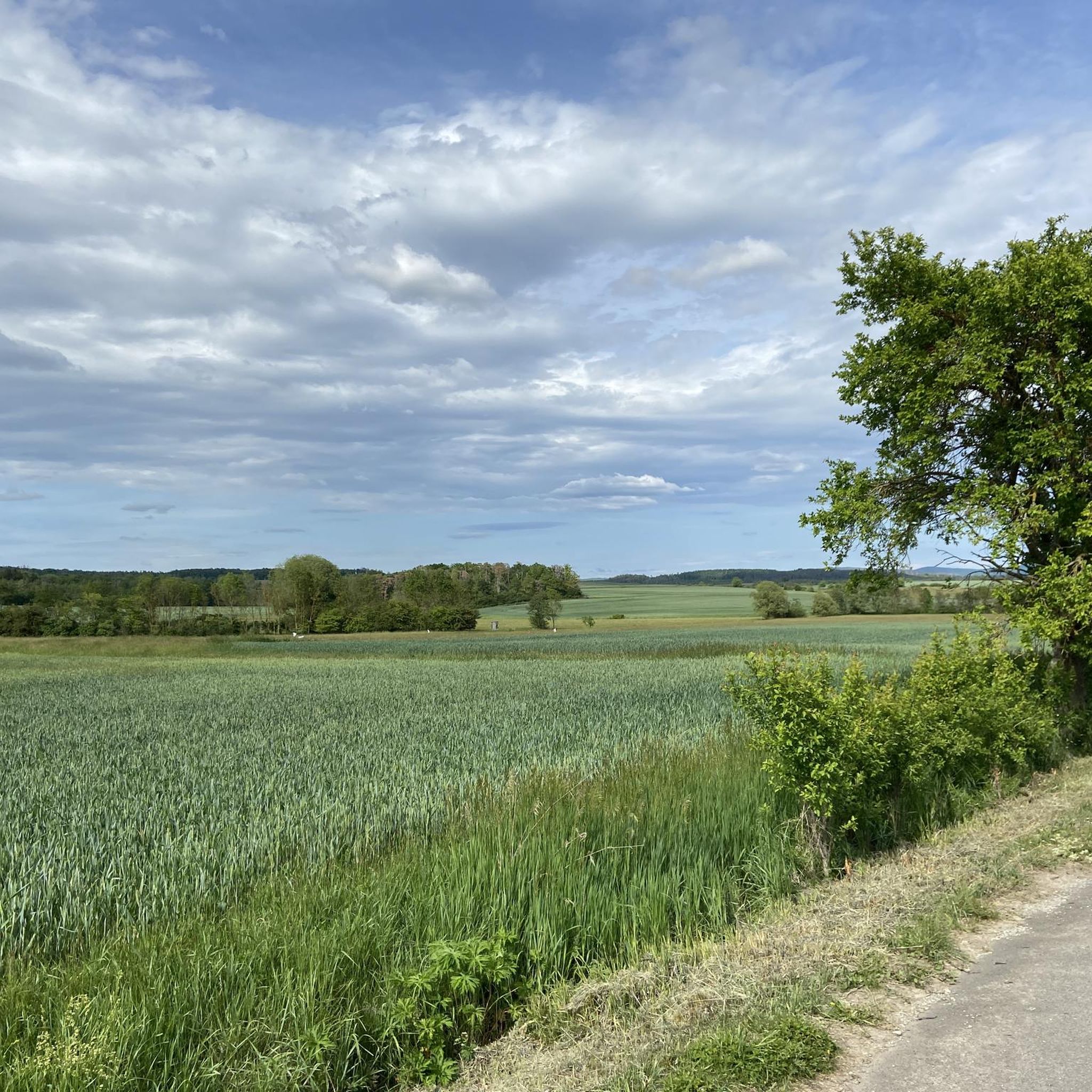
Its right and northern source streams originate from the Saalbrunnen (not to be confused with the Saalbrunnen, also located in Franconia), approximately 1.7 kilometers east of Alsleben, a district of Trappstadt. The spring is located in an open field, less than 500 meters from the Thuringian border, just off the NES 45 district road, which leads to Gompertshausen. The young Franconian Saale rises there at 313 meters above sea level, below the Kapellenberg (390 meters above sea level).
Source: de.m.wikipedia.org/wiki/Fr%C3%A4nkische_Saale
Translated by Google •
Tip by
Sign up now to discover places like this
Get recommendations on the best single tracks, peaks, & plenty of other exciting outdoor places.
Sign up for free
Delphin Spring (Wiesenbrünnle)
Highlight • Natural Monument
Translated by Google •
Tip by
Römhild Labor Education Camp Memorial
Highlight • Historical Site
The Große Gleichberg is 679 meters above sea level. NN the higher of the two singular equal mountains east of Römhilds in the Grabfeld landscape in the Hildburghausen district in Thuringia.
Basalt was mined in two quarries on the Großer Gleichberg, the Gleichamberger Steinbruch and the Römhilder Steinbruch.
There was a cable car with which the basalt was transported in Loren to the basalt works in Römhild at the station and to Gleichamberg.
The stones were used to build paved Chausseestrassen, then so-called artificial streets, and cobblestone streets, but also to build buildings.
Basalt from the quarries of the Großer Gleichberg can still be found on cobblestone streets all over Germany today.
During the time of National Socialism, from August 1943 to March 1945, there was a labor education camp in the Römhild quarry in which a maximum of about 400 "foreign nationals who were in breach of contract" were interned.
The prisoners had to work in the basalt quarry or in the basalt works at Römhild Bahnhof.
It must be assumed that at least 500 prisoners died in the camp or on the evacuation march in 1945.
During the Cold War, from 1968 to 1991, there was a restricted military area on the summit of the Großer Gleichberg with a radio and radar station of the Soviet armed forces, who left their autographs in the crushing plant.
In 1942, the Große Gleichberg was declared a nature reserve and is now a nature reserve.
(Source: fotowiesel.de)
Translated by Google •
Tip by

St. Ursula Natural Cemetery and Pilgrimage Church
Highlight • Religious Site
But first, the question is: why build another natural cemetery at all?
One impetus was to create the opportunity for the citizens of the Rhön-Grabfeld district to find their final resting place in a natural cemetery.
Another reason was to develop a unique concept that fully meets the requirements of the Protestant Church and the Roman Catholic Church.
Source: naturfriedhof-sankt-ursula.de/der-naturfriedhof
Translated by Google •
Tip by
Sign up for free to discover even more natural monuments around Höchheim.
Sign up for free
Already have an account?
Start today with a free account
Your next adventure awaits.
Login or Signup
Tips from the Community

A very nice place to rest.
4
0

The Dolphin Fountain (also known as the Meadow Fountain) on the Kleiner Gleichberg near Römhild is a historic, restored spring located on the western slope near the Celtic hillfort. It was inaugurated around 1903, renovated in 2013, and is a popular rest stop along the mountain's hiking trails. It lies on the western slope of the 641-meter-high Kleiner Gleichberg, below the hillfort. The fountain was restored and rebuilt after a long period of disrepair. It is considered a gem by nature lovers. It is the source of the Wiesleinbach stream. Celtic settlement remains and dry stone walls are located nearby. The fountain exemplifies the dedication of the Friends of Steinsburg Association to the upkeep of the site.
6
0
Fountain with seating, pure nature.
16
0
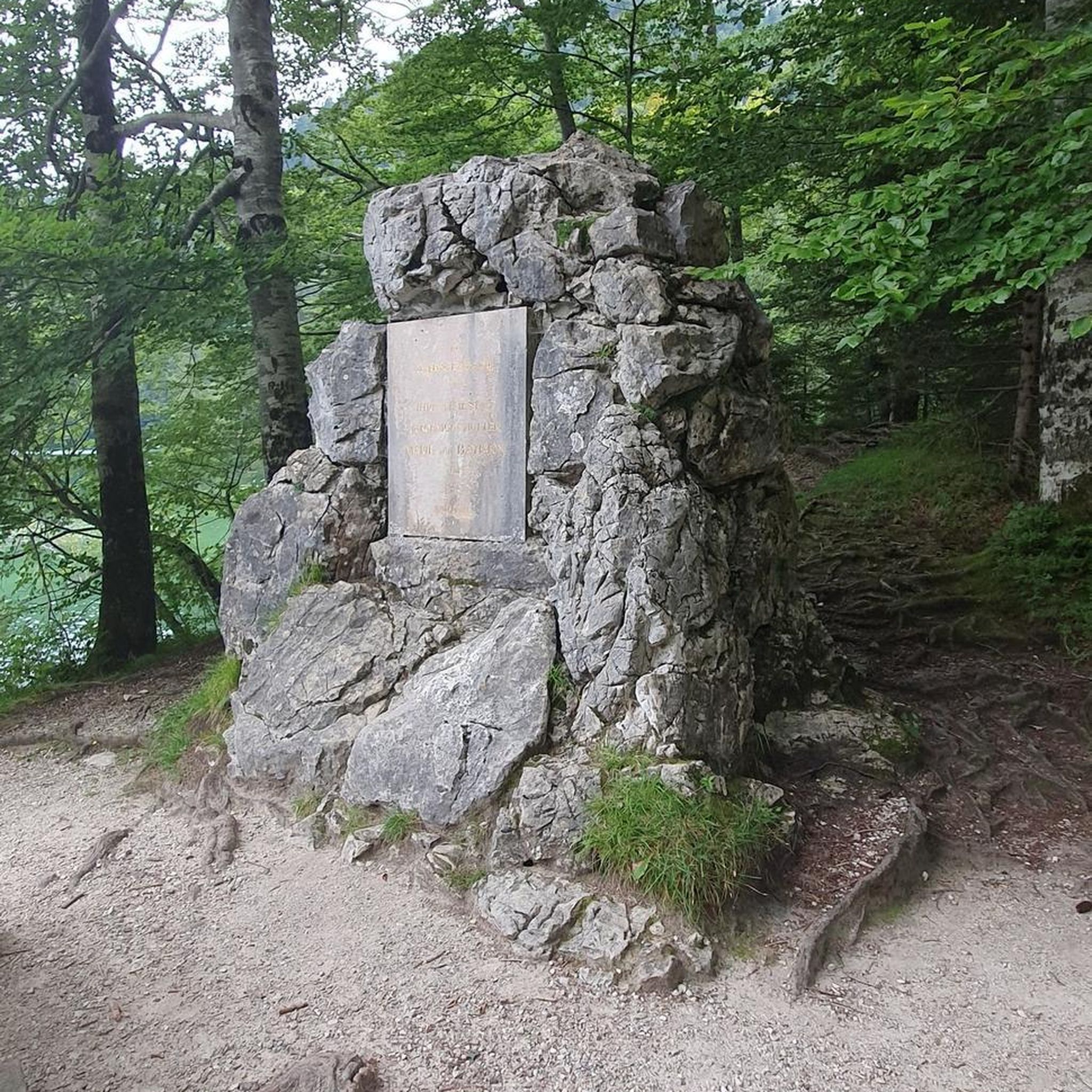
The first sandstone spring casing from the 1940s was redesigned in 1973 and acquired its current representative appearance in 1985. A bronze plaque by Erich Husemann from Trappstadt has commemorated the importance of the Franconian Saale since 1987. The spring stream flows southwest through Alsleben, where it joins the Fleusengraben, and joins the left source stream north of Bad Königshofen-Untereßfeld. Source: https://de.m.wikipedia.org/wiki/Fr%C3%A4nkische_Saale
13
0
The Franconian Saale originates in the Grabfeld near the Haßberge Mountains, east and southeast of Bad Königshofen, respectively, from two roughly equal, 3.9 km long source streams: Its right and northern source streams originate from the Saalbrunnen (not to be confused with the Saalbrunnen, also located in Franconia), approximately 1.7 kilometers east of Alsleben, a district of Trappstadt. The spring is located in an open field, less than 500 meters from the Thuringian border, just off the NES 45 district road, which leads to Gompertshausen. The young Franconian Saale rises there at 313 meters above sea level, below the Kapellenberg (390 meters above sea level). Source: https://de.m.wikipedia.org/wiki/Fr%C3%A4nkische_Saale
13
0

Probably a former guardhouse.
0
0
Be careful at the edge!!!
0
0
The St. Ursula Natural Cemetery was established in April 2014 by the municipality of Trappstadt in the Alsleben district. The natural cemetery is located in a wooded area directly adjacent to the old pilgrimage church of St. Ursula near Alsleben. A forest cemetery is a very special form of forest use and requires forestry expertise. The municipality was therefore supported in its development and establishment by the Franconian Rhön and Grabfeld Forestry Association. But first, the question is: why build another natural cemetery at all? One impetus was to create the opportunity for the citizens of the Rhön-Grabfeld district to find their final resting place in a natural cemetery. Another reason was to develop a unique concept that fully meets the requirements of the Protestant Church and the Roman Catholic Church. Source: https://naturfriedhof-sankt-ursula.de/der-naturfriedhof
17
0
Frequently Asked Questions
What unique natural features can I explore in the Höchheim area?
Beyond specific monuments, the Höchheim area is characterized by the tranquil Milzgrund Valley, where the Milz river meanders through villages like Irmelshausen. This verdant riverine landscape offers a serene backdrop for leisurely walks. You can also find stately lime trees, such as the one marking the culmination of the Malmweg ascent near Gollmuthhausen, or the historic Court Lime Tree in Rothausen, which adds a layer of cultural heritage to its natural presence.
Are there any challenging natural monuments for experienced hikers?
Yes, the Summit of Großer Gleichberg offers a strenuous climb. This 679-meter-high mountain, a former volcano, provides expansive views towards Franconia and Thuringia, making the effort worthwhile for those seeking a more demanding ascent.
Where can I find a significant river source in the region?
You can visit the Source of the Franconian Saale (Alsleben) with rest area and information board. This is the origin point of the Franconian Saale, rising at 313 meters above sea level, and features a dedicated rest area for visitors.
Are there family-friendly natural monuments around Höchheim?
Absolutely. The Delphin Spring (Wiesenbrünnle) is a great option. This historic, restored spring is located on the western slope of the Kleiner Gleichberg, offering a shady rest area in the forest, perfect for families. The Source of the Franconian Saale is also considered family-friendly.
What kind of historical sites are integrated with natural monuments in this area?
The Römhild Labor Education Camp Memorial on the Großer Gleichberg is a significant historical site. It commemorates a former quarry that operated from 1901 to 1968, with ruins of the crusher still standing. During WWII, it was also the site of a labor education camp. Additionally, the St. Ursula Natural Cemetery and Pilgrimage Church combines natural surroundings with historical and religious significance.
What outdoor activities can I do near these natural monuments?
The region around Höchheim offers various outdoor activities. For hiking, you can explore trails like the 'St. James's Church Höchheim – Lime Tree Natural Monument loop'. Cyclists can enjoy road cycling routes such as the 'Mittelstreu–Unsleben cycle path' or gravel biking tours like the 'Steinsburg Museum – Hotel Waldhaus Römhild loop'. You can find more details on these and other routes in the Hiking around Höchheim, Road Cycling Routes around Höchheim, and Gravel biking around Höchheim guides.
Are there any natural monuments with good viewpoints?
Yes, several natural monuments offer excellent viewpoints. The Summit of Großer Gleichberg provides extensive views towards Franconia and Thuringia. The Delphin Spring (Wiesenbrünnle), while a spring, is situated in a scenic forest setting that offers pleasant views, and the Source of the Franconian Saale also has a viewpoint.
What is the best time of year to visit the natural monuments around Höchheim?
While there's no single 'best' time, the spring and autumn months generally offer pleasant weather for exploring the outdoor natural monuments and trails. Spring brings lush greenery to the Milzgrund Valley, and autumn showcases vibrant foliage, especially around forested areas like the Kleiner Gleichberg near the Delphin Spring. Summer is also suitable, though it can be warmer.
Can I bring my dog to the natural monuments and trails?
Many natural areas and hiking trails around Höchheim are generally dog-friendly, especially those in the Milzgrund Valley and around the various springs and summits. However, it's always recommended to keep dogs on a leash and to check specific local regulations or signage at each site to ensure a pleasant visit for everyone.
Are there any natural monuments that are particularly serene or offer a quiet escape?
The Milzgrund Valley itself, with its meandering river and rural Bavarian countryside, provides a very serene and quiet experience. Additionally, the St. Ursula Natural Cemetery and Pilgrimage Church, located in a wooded area, offers a peaceful and contemplative atmosphere, blending natural beauty with a sense of tranquility.
What geological features are notable in the Höchheim region?
The Großer Gleichberg is a significant geological feature, being a former volcano. Basalt was historically mined from its quarries, and evidence of this geological past can still be seen. The region's landscape, including the Milzgrund Valley, is shaped by its riverine and plateau geology, offering diverse natural formations.
Most popular routes around Höchheim
Most popular attractions around Höchheim

Get inspired with the komoot mobile app


Explore more
Extend your search for the best caves by checking out these guides of the top ones around Höchheim:
