Top 8 Natural Monuments around Ruden
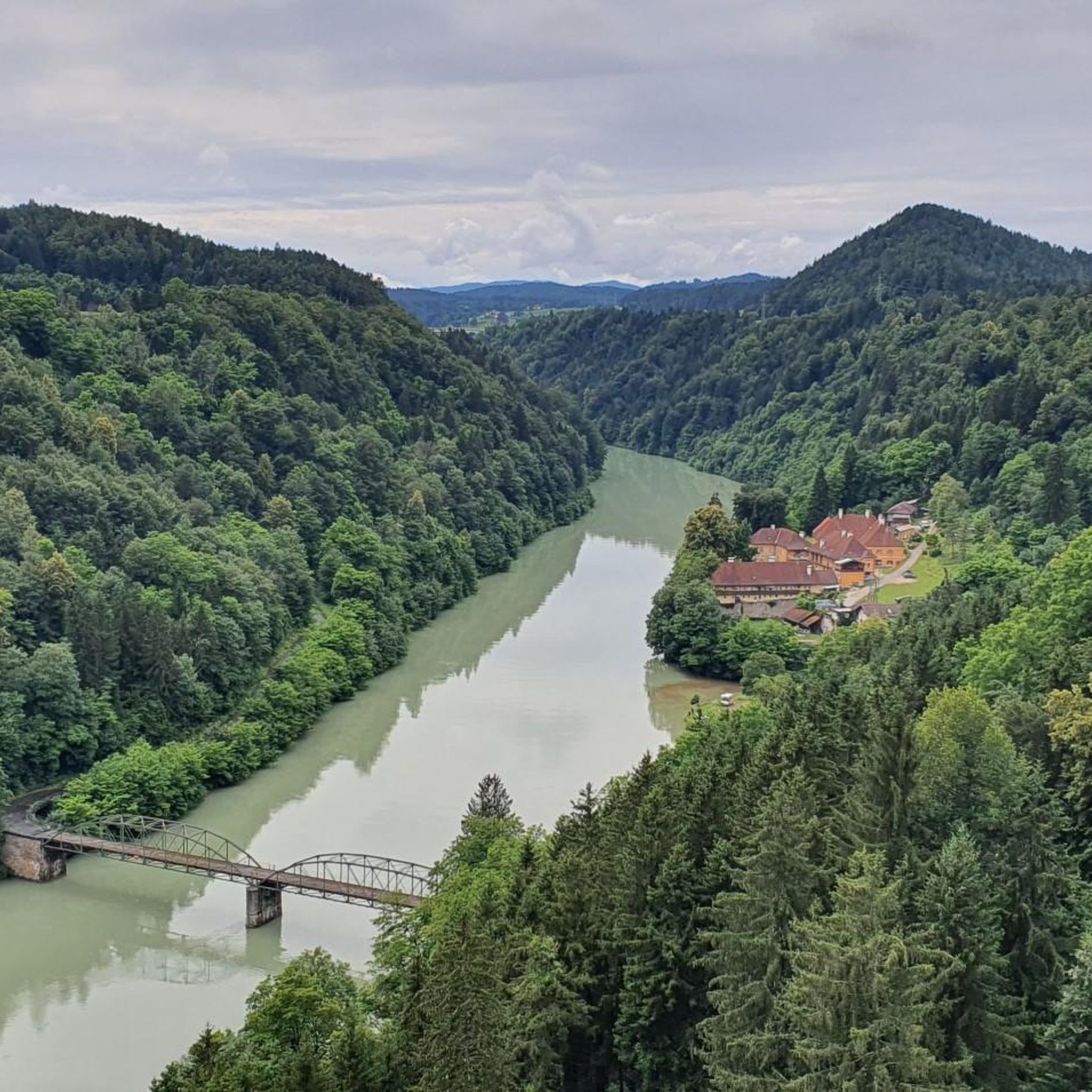
Best natural monuments around Ruden offer diverse natural scenery and opportunities for outdoor activities. The region features a landscape conducive to appreciating nature, with geographic features that include hills, valleys, and mountain foothills. Visitors can explore various natural features, from unique rock formations to elevated viewpoints.
Best natural monuments around Ruden
- The most popular natural monuments is Devil's Stone near Globasnitz, a natural monument and viewpoint. According to local legend, this rock was thrown into the Jauntal valley by…
Last updated: June 24, 2026
Devil's Stone near Globasnitz
Highlight • Natural Monument
Translated by Google •
Tip by

Zauberkogel in Diex
Highlight • Summit
Translated by Google •
Tip by

Sign up now to discover places like this
Get recommendations on the best single tracks, peaks, & plenty of other exciting outdoor places.
Sign up for free
Natural monument
Highlight • Natural Monument
Translated by Google •
Tip by

Strojna
Highlight • Settlement
Showing Translation
Tip by

Devil's Rock (Teufelsfelsen)
Highlight • Natural Monument
According to legend, the rock was broken off from the Petzen (a 2126 meter high mountain peak a little further south) by the devil in anger over an …
Translated by Google •
Tip by
Sign up for free to discover even more natural monuments around Ruden.
Sign up for free
Already have an account?
Start today with a free account
Your next adventure awaits.
Login or Signup
Tips from the Community

Natural monument According to legend, the rock was broken off from the Petzen (a 2126 meter high mountain peak a little further south) by the devil in anger over an escaped soul and hurled into the Jauntal valley. The devil's "thumbprint" can still be seen on the front.
2
0

The Devil's Stone in the Jauntal valley near Globasnitz in Carinthia. According to legend, the rock was broken off the Petzen (a 2126 meter high mountain peak a little further south) by the devil in anger over an escaped soul and hurled into the Jauntal valley. The devil's thumbprint can still be seen on the front today.
3
0
Its name already suggests that the approximately six-meter-high structure made up of three rock blocks piled on top of each other cannot simply be a freak of nature. According to legend, the devil is not only the eponym, but is said to have had a hand in the construction of the stone himself. Seen from a distance, the walls of the stone initially appear quirky and crooked. Up close, however, a flat surface is revealed. This could have been formed either by the weather or by human hands. Several scientific studies have already dealt with this question as well as the question of the astronomical significance of the stone. Measurements have shown that the Teufelstein, together with the Königskogel and four old churches in the area, forms a geometric pattern in the shape of a dragon or deltoid. Another astronomical peculiarity is the orientation of the large, flat wall, which points to the axis of the great lunar solstice as well as that of the winter and summer solstices. According to scientists, this cannot be just a coincidence, but rather the stone tower was precisely aligned. (Source: http://www.calendersign.com/de/aa_teufelstein.php.3.8.2014) Perhaps it was the devil himself who placed the rocks on top of each other in exactly this way? In any case, the legend of the Devil's Stone says that the fallen angel Lucifer tried to build a tower to heaven on Christmas Eve. He would have had time until the second bell rang during communion to be taken back to heaven. When this attempt failed, he is said to have left the unfinished tower on earth in a rage and returned to hell himself. In any case, it seems certain that the Devil's Stone, as it is popularly known, has always had a special attraction for people. The Styrian poet Peter Rosegger once reported on a mass, the so-called "Teufelsteinkirtag", which is said to have taken place annually on St. Lawrence's Day at least until 1890. Now, more than 100 years later, around 500 people gather at the Teufelstein on the morning of the winter solstice to watch the sunrise. For a long time, the Teufelstein was considered a pagan cult site and was demonized by the church, but today the site is a mystical place that many people find to be filled with a unique atmosphere and power and that still poses a mystery to science.
2
0

The Teufelsstein is located between Jaunstein and Globasnitz and can be recognized from afar. At the top is a cross. According to legend, the devil broke off this rock from the Petzen out of anger at a lost soul and threw it into the Jauntal. The "thumbprint" of the devil can still be seen on the front
1
0
The Teufelsstein is a 6 m high carbonate rock that has come to rest in the middle of a field. The rock is flanked by a small-leaved linden tree and a pedunculate oak and surrounded by hazel bushes, on top of which there is a crucifix. The rock is overgrown with numerous drought-loving herbaceous plant species such as meadow sage, privet, blood-red dogwood, blackberries and raspberries.
2
0

As described in the legend, the devil is said to have thrown this rock there because he couldn't get a soul. 🤔Good explanation because it really doesn't belong here 😉
2
0

Somehow this stone seems completely in the wrong place. The area around it is flat with fields and the stone in the middle.
2
0
Frequently Asked Questions
What unique natural features can I explore around Ruden?
The Ruden area is known for its diverse natural scenery, including unique rock formations and scenic summits. You can explore features like the legendary Devil's Stone near Globasnitz, which is a distinctive rock formation with a local legend attached to it. Another notable feature is Zauberkogel in Diex, a summit offering expansive views.
Which natural monuments are most popular with visitors around Ruden?
Among the most popular natural monuments, visitors frequently highlight the Devil's Stone near Globasnitz, known for its unique appearance and local folklore. Another favorite is Zauberkogel in Diex, a summit prized for its panoramic views. Strojna, a settlement and summit with a historic church, also attracts many visitors.
Are there any natural monuments with historical significance near Ruden?
Yes, some natural monuments in the area also hold historical significance. The Devil's Stone near Globasnitz is steeped in local legend, with tales of the devil's 'thumbprint' on its surface. Additionally, Strojna, while a natural monument and summit, is also home to a historic church built in 1848, adding a cultural and historical dimension to your visit.
Are there family-friendly natural monuments to visit in the Ruden area?
Several natural monuments around Ruden are considered family-friendly. The Devil's Stone near Globasnitz and the unnamed Natural monument (also referring to the Devil's Stone) are suitable for families, offering an interesting legend and easy access. Strojna, with its info point and historic church, is another good option for families.
Can I bring my dog to the natural monuments around Ruden?
Generally, the natural landscapes around Ruden are welcoming to dogs, especially on trails and in open areas. However, it's always advisable to keep your dog on a leash, especially near wildlife or other visitors, and to check for any specific local regulations at each site. Always carry water for your dog and clean up after them.
What kind of outdoor activities can I do near the natural monuments around Ruden?
The region around Ruden offers a variety of outdoor activities. You can enjoy hiking, with options ranging from easy walks to more challenging trails. There are also opportunities for gravel biking and road cycling. For detailed routes and guides, you can explore options like Easy hikes around Ruden, Gravel biking around Ruden, and Road Cycling Routes around Ruden.
Are there hiking trails suitable for beginners near Ruden's natural monuments?
Yes, there are several easy hiking trails available near Ruden that are suitable for beginners. For example, the guide for Easy hikes around Ruden features routes like the 'Griffen Castle Ruins – Castle Ruins loop from Griffen' and 'St. Paul's Abbey loop from Sankt Martin,' which are classified as easy and perfect for those new to hiking or looking for a relaxed walk.
Where can I find challenging hiking trails around Ruden?
While the immediate natural monuments might not feature extreme challenges, the broader region around Ruden, known for its 'Mountain climbing' opportunities, offers more demanding routes. For challenging cycling, you can find difficult gravel biking routes like the 'Drau Cycle Path (Drava Cycle Path) loop from Mittlern' or difficult road cycling routes such as the 'Bad Eisenkappel loop from Wiederndorf-Aich' in the respective guides. For hiking, look for trails with higher elevation gains or longer distances in the surrounding mountainous areas.
Are there any viewpoints among the natural monuments near Ruden?
Yes, several natural monuments in the Ruden area double as excellent viewpoints. Devil's Stone near Globasnitz offers a viewpoint, as does Zauberkogel in Diex, which provides wonderful views of the Jauntal, Klagenfurt Basin, and the Karawanken peaks. Strojna is also a summit and viewpoint.
What is the best time of year to visit the natural monuments around Ruden?
The Ruden area is generally beautiful throughout the warmer months, from spring to autumn, when the weather is most conducive for outdoor activities like hiking and cycling. During these seasons, you can fully appreciate the 'Natural scenery' and 'Nature and wildlife.' While winter hiking might be possible, specific conditions can vary, so it's best to check local forecasts if planning a visit during colder months.
Is public transport available to reach natural monuments near Ruden?
Information on specific public transport routes directly to each natural monument is limited. However, Ruden itself is a locality, and public transport options might connect to nearby towns. For reaching the natural monuments, it's often recommended to combine public transport to a nearby hub with a short walk or a local taxi service. Planning your route in advance using local transport schedules is advisable.
Are there cafes or places to eat near the natural monuments?
While direct cafes at every natural monument might be rare, the settlement of Strojna, which is also a natural monument, features an info point and is part of a scattered settlement where you might find local amenities. For broader options, you would typically find cafes, pubs, and accommodation in the larger towns and villages surrounding Ruden, such as Griffen or St. Paul im Lavanttal, which are often starting points for routes in the area.
Are there any wild swimming spots near Ruden's natural monuments?
While specific wild swimming spots directly adjacent to the listed natural monuments are not detailed, the broader region around Ruden is described as having 'Beaches and shores' and opportunities for 'Boat tours,' suggesting the presence of water bodies. The Drau River, for instance, flows nearby and might offer suitable spots, but always check local regulations and safety information before attempting wild swimming.
Most popular attractions around Ruden

Get inspired with the komoot mobile app


Explore more
Extend your search for the best caves by checking out these guides of the top ones around Ruden:
